

Starting a surgical instruments distribution business can be a rewarding endeavor. Hospitals, clinics and dental practices use these products consistently, and they reorder frequently, making a steady demand.
However, there are steps to take before launching into a surgical instruments distribution business. In addition to studying your target market, you must also understand the specific regulations in your country, choose a reliable supplier, and set a realistic price that makes you profit.
This guide walks you through the nine steps to start a surgical instruments distribution business, from selecting your customers to finding a reliable manufacturing partner. If you are looking for a factory supplier at this moment, you can also see our wholesale surgical instruments supplier page.
What Is a Surgical Instruments Distribution Business?
A surgical instruments distribution business buys instruments from a manufacturer and resells them to customers. Your customers could be hospitals, clinics, dental practices, surgical centers, other distributors or retail medical stores.
The distributor acts as an intermediary between the factory and the end user. You identify the products, manage the import and storage, provide local customer service and offer post-sale support. The manufacturer creates the instruments. You develop the relationships and the local market presence.
Instruments you might be distributing include:
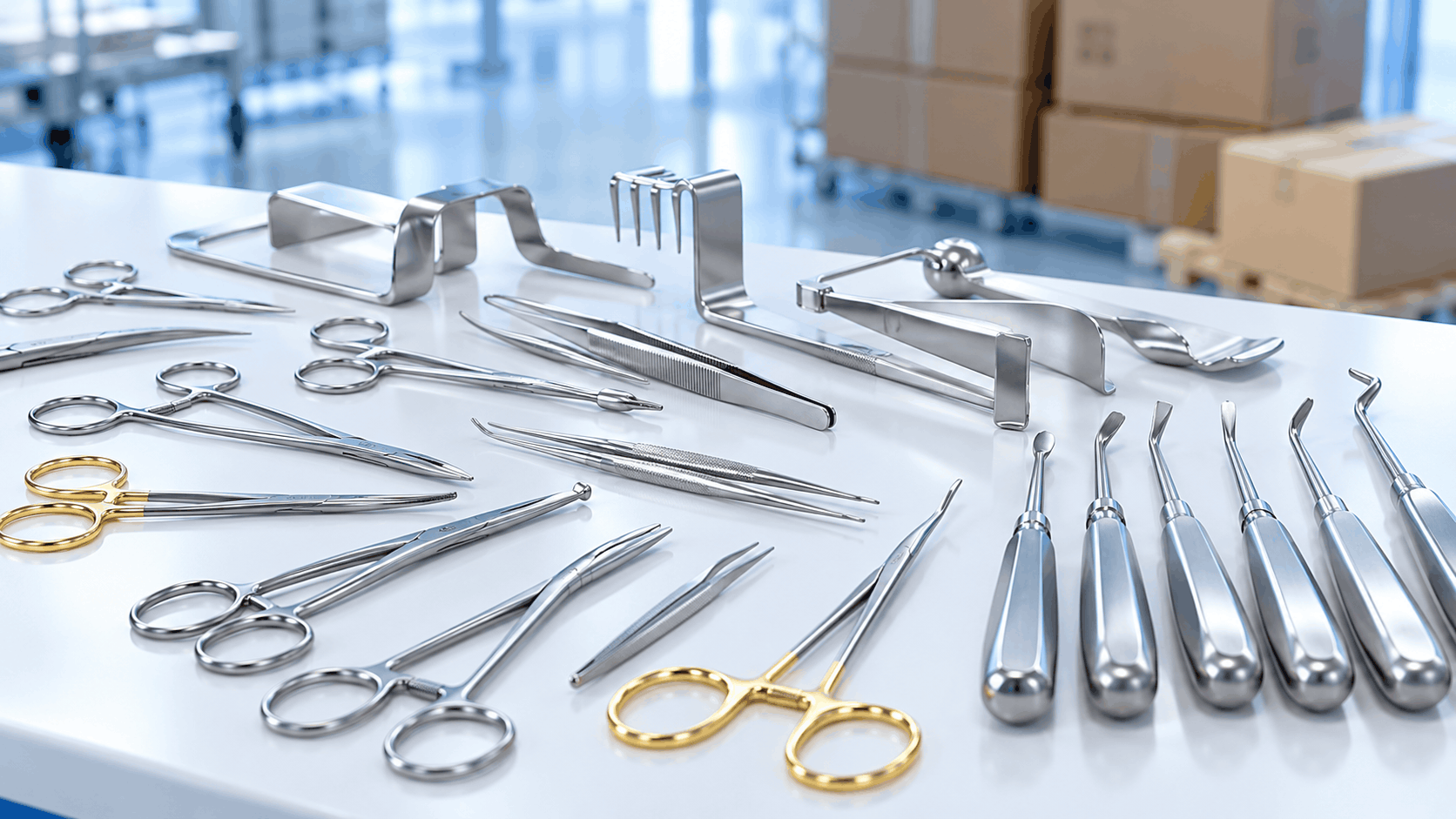
- General surgical instruments: forceps, scissors, retractors, clamps and needle holders
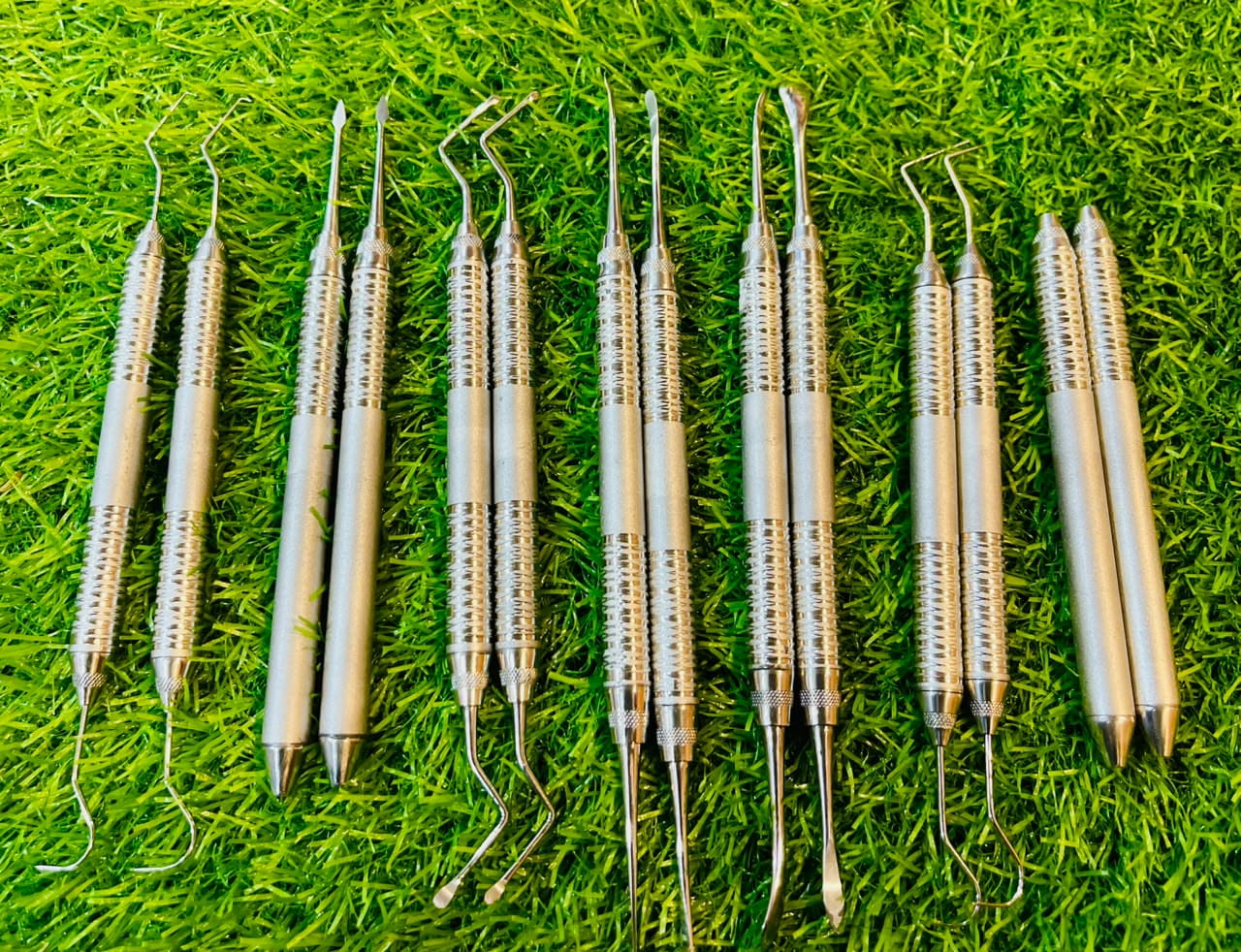
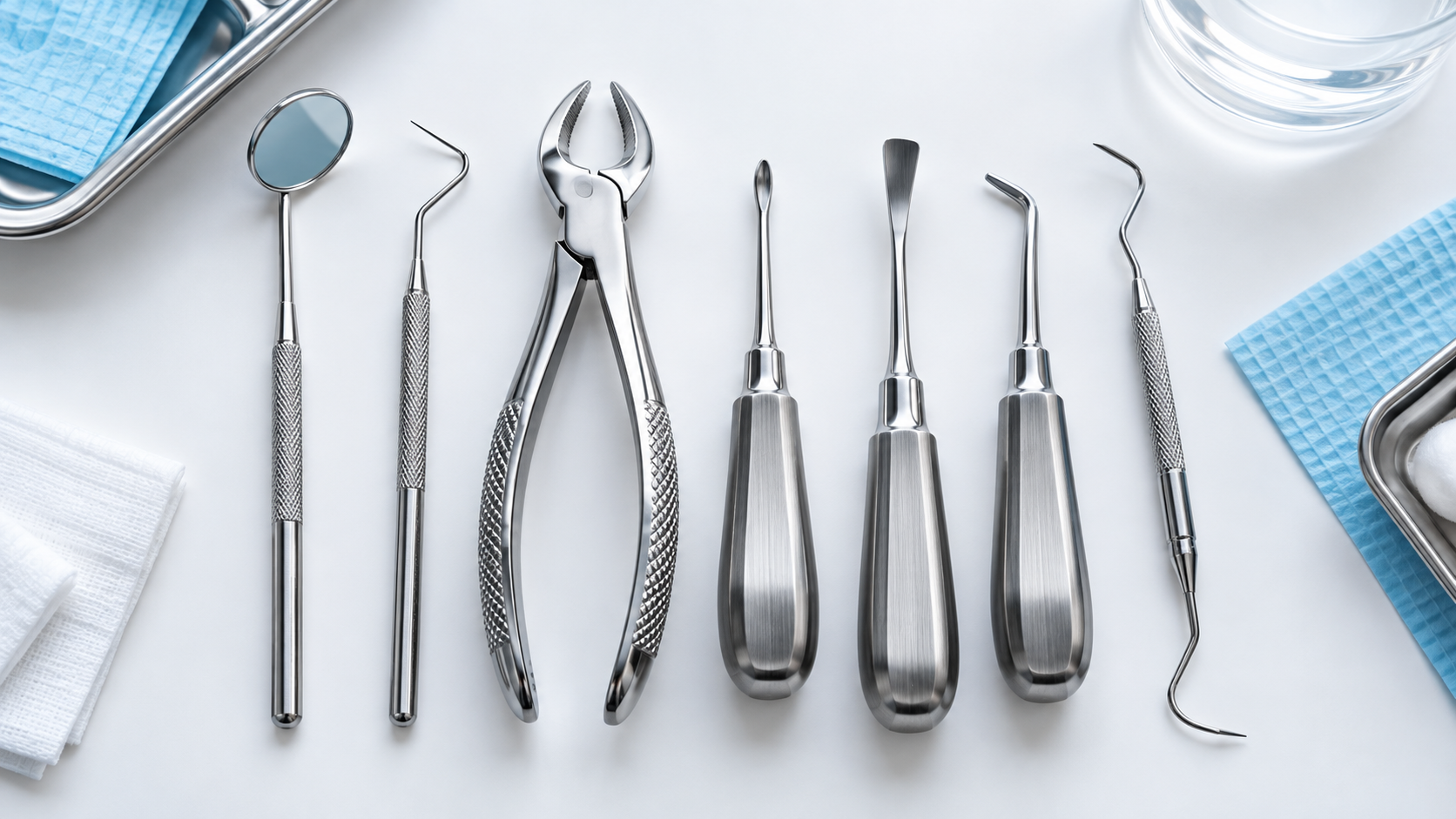
- Dental instruments: extraction instruments, surgical kits and implant instruments
- Orthopedic instruments: instrument sets, spinal instruments, plates and screws
- Specialty sets: ENT, ophthalmic and neurosurgery instruments
Why Start a Surgical Instruments Distribution Business?
There are four major reasons for entering this market.
- Repeat demand. Reusable instruments get worn down and replaced. Hospitals and clinics also expand and install new rooms, so they purchase again.
- Many customer types. You can sell to hospitals, private clinics, dental practices and smaller distributors at the same time, so you are not tied to one buyer.
- Room to grow. You can start with one product category and one city, and then add on to what you sell.
- Brand opportunity. With private label, you can sell the instruments under your own name, building your loyalty and protecting your margin.
The business also carries risks, however. Quality flaws, incorrect paperwork and weak suppliers can hurt you quickly, so the steps below are essential.
Step 1: Choose Your Market and Customers
Before purchasing a single instrument, decide who you’ll sell to. A clear target makes every other decision in your surgical instruments distribution business easier, from product choice to the amount of cash you need.
Hospitals and clinics
Hospitals purchase in larger quantities and typically through tenders or an approved vendor list. Orders are larger, but payment can be slow and paperwork extensive. Private clinics make quicker decisions and buy in smaller volumes.
Dental practices
Dental clinics require the regular use of extraction forceps, elevators, mirrors, scalers and surgical kits. This is a large market segment, consisting of many small buyers, which is well-suited to a distributor who can provide quick and regular delivery. Our wholesale dental instruments buyer’s guide covers this segment in detail.
Other distributors and retailers
You can also sell to smaller distributors and medical stores in your region. These buyers want a good wholesale price and reliable supply.
How to decide. Three questions can help you decide which to target:
- Which customers do I already know or can access easily?
- Which segment buys often enough to give me repeat orders?
- What does this segment need most: low price, fast delivery or strict quality?
Start with one or two segments. It’s better to serve a small market well than a larger one badly.
Step 2: Check Licenses and Regulations for Your Distribution Business
Surgical instruments are classified as medical devices, so most countries have regulations about who can run a surgical instruments distribution business and import these products. For global background, see the WHO overview of medical devices and the U.S. FDA medical devices page. The rules vary from one nation to another, and change over time. This is general guidance only, so confirm the details with your local health authority.
Areas to check include:
- Business registration. Register a company and obtain tax and import registrations.
- Medical device import license. Most countries require a license or registration to let you import and sell medical devices.
- Product registration or approval. Some markets require the product itself to be registered or have a conformity mark. Examples include the CE mark in the European Union, and registration with the health authority in the United States, the United Kingdom and the Gulf countries.
- Quality system requirements. Authorities and large buyers often prefer manufacturers whose quality management follows ISO standards for medical devices. Ask your supplier for proof, and read the official ISO 13485 medical devices standard overview. Our buyer’s checklist for CE marked, ISO 13485 certified manufacturers explains what to ask for.
- Labeling. Check what must appear on the product and the packaging, such as the manufacturer’s name, batch or lot number and language requirements.
- Customs classification. Surgical, medical and dental instruments are usually classified under heading 9018 of the Harmonized System. Your customs broker will confirm the exact code and duty rate.
A simple tip: ask your supplier which documents they can provide, such as a certificate of origin, ISO certificate, commercial invoice and packing list. Your regulator or customs office will request them.
Step 3: Decide Which Instruments Your Distribution Business Will Sell
Do not attempt to sell every instrument on the first day. A focused range makes a surgical instruments distribution business easier to purchase for, store and sell.
| Category | Typical customers | Reason to start |
|---|---|---|
| General surgical instruments | Hospitals, clinics | Wide demand, many product types |
| Dental instruments | Dental practices | Frequent reorders, many small buyers |
| Orthopedic instruments | Hospitals, orthopedic centers | Higher value per order |
| Plates and screws | Orthopedic hospitals | Specialist product, needs strong supplier support |
A useful plan is to start with one core category, such as general surgical or dental instruments, and to add a second category when your first customers reorder. If you are new to the range, read our guide to essential surgical instruments and their uses, or browse bone rongeurs and our spinal surgery instruments guide for specialist lines.
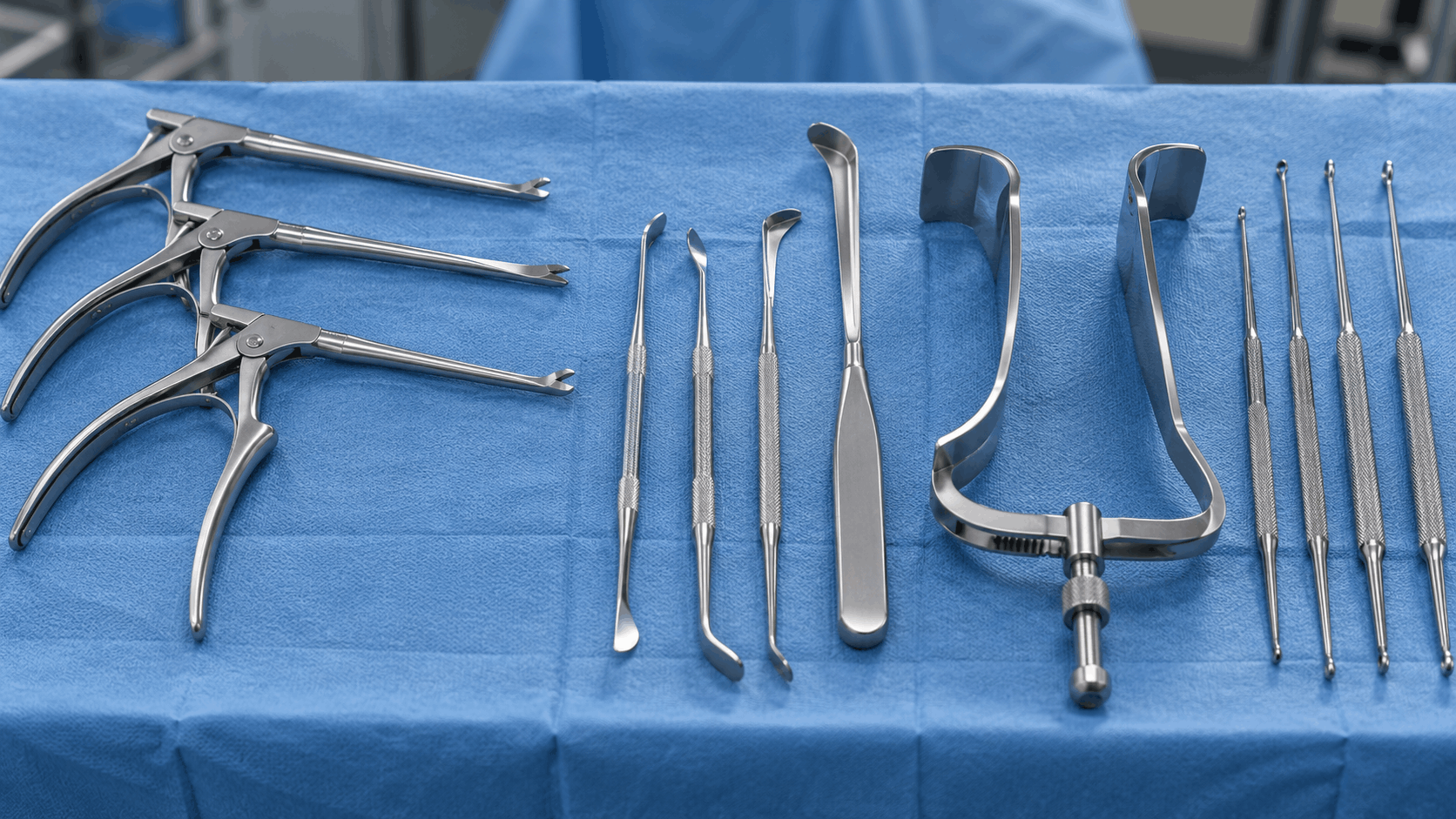
Step 4: Find a Reliable Supplier for Your Distribution Business
Your supplier determines your quality, your price and your delivery, so this is the most important step to starting a surgical instruments distribution business.
What to check before choosing
- Manufacturer or trader. Buying from a manufacturer usually gives a lower price and better control over quality.
- Certification. Ask for ISO certification and, for the European market, the CE documents your buyers need.
- Materials. Good instruments use medical grade stainless steel, such as SS 410, SS 420 or SS 316, depending on the instrument. Ask which grade is used for each product, and see our SS410 vs SS420 vs SS316 steel comparison.
- Minimum order quantity. A low MOQ allows you to test the market before you invest large sums.
- Export documents. Your supplier should supply the commercial invoice, packing list and certificates without delay.
- Customization. If you plan to sell under your own brand, check that they offer OEM and private label.
- Communication. A supplier who responds quickly to your questions before the sale is likely to support you well after the sale.
For a deeper checklist, read how to choose a bulk surgical instruments supplier and how to choose a dental instrument manufacturer in Sialkot.
Why buying direct from a manufacturer lowers your cost
Every middleman adds their margin. When you buy from the factory, you remove that layer and can offer a better price to your customers or maintain a higher profit margin. Sialkot, Pakistan, is one of the world’s best known centers for surgical instrument manufacturing, and many international distributors source from there.
For a surgical instruments distribution business, a factory partner in Sialkot gives you the best price and control. OrthoGear Surgical is a manufacturer based in Sialkot. Learn about our factory or see how we supply partners through bulk orders.

Step 5: Order Samples and Test Quality
Never place a large order before you’ve held the product in your hands. A sample order costs little and protects you from a potentially expensive mistake.
When the samples arrive, check:
- Finish and polish. The surface should be smooth, with no rough edges.
- Joints and box locks. Forceps and scissors should open and close smoothly and meet precisely at the tips.
- Cutting edges. Scissors and cutting instruments should be sharp and aligned.
- Corrosion resistance. Test how the instrument behaves with repeated washing and sterilizing.
- Markings and packaging. The instrument should carry the correct markings and the packing should protect it.

Show the samples to a surgeon, a dentist or a purchasing manager in your market. Their feedback will show you if the product meets local needs. Ask your supplier about their sample policy before placing an order.
Step 6: Plan Pricing and Margins for Your Distribution Business
Many new distributors price by guessing, and this hurts a surgical instruments distribution business quickly. Work out your real cost first.
Landed cost is the full price of one unit when it reaches your warehouse:
Landed cost = product price + shipping + customs duty + taxes + bank and handling charges
Add your running costs, such as storage, staff, marketing and delivery to customers. Then decide on a margin on top. Do not emulate a competitor’s price without knowing their costs.
Tips for sound pricing:
- Price by customer type. Hospitals, clinics and smaller distributors expect different prices.
- Offer volume tiers. A better price for a larger order encourages bigger purchases.
- Leave room for discounts. Larger buyers will negotiate.
- Check payment terms. A low price is not worth much if the customer pays after 120 days and you must pay your supplier first.
A lower MOQ from your supplier also helps your cash flow, because you can order smaller batches more often.
Step 7: Set Up Import, Shipping and Storage
After you place an order, three things determine whether it reaches your customer smoothly: shipping terms, paperwork and storage.
Shipping terms (Incoterms). These terms state who pays for what and who carries the risk. The ones you will meet most are:
- EXW (Ex Works): you collect the goods at the factory and carry the cost and risk from there.
- FOB (Free on Board): the supplier loads the goods onto the ship or plane, and you take over from that point.
- CIF (Cost, Insurance and Freight): the supplier pays freight and insurance to your destination port.
If you are new to importing, ask your supplier to quote the terms you understand best and compare the total cost.
Express or freight. Small and urgent orders usually go by courier, such as DHL, FedEx or UPS. Larger orders are cheaper by air or sea freight, but take longer.
Paperwork. Keep the commercial invoice, packing list, certificate of origin and any certificates your authority asks for. A good customs broker saves time and avoids costly delays.
Storage. Instruments must stay clean and dry. Store them in a clean room, off the floor, away from moisture and chemicals. Keep a simple stock record by product, batch and expiry or reorder date, so you can find any item quickly.

Step 8: Consider Private Label for Your Distribution Business
Selling other brands makes you one of many. Selling your own brand makes you harder to replace.
With private label, a manufacturer makes the instruments and puts your name, logo and packaging on them. You do not need a factory, but you do own the brand in your market.
Benefits of private label:
- Customers remember your brand, not your supplier’s.
- You can protect your margin, since buyers cannot easily compare your price with the same product from another seller.
- You control packaging, labeling and the look of your product range.
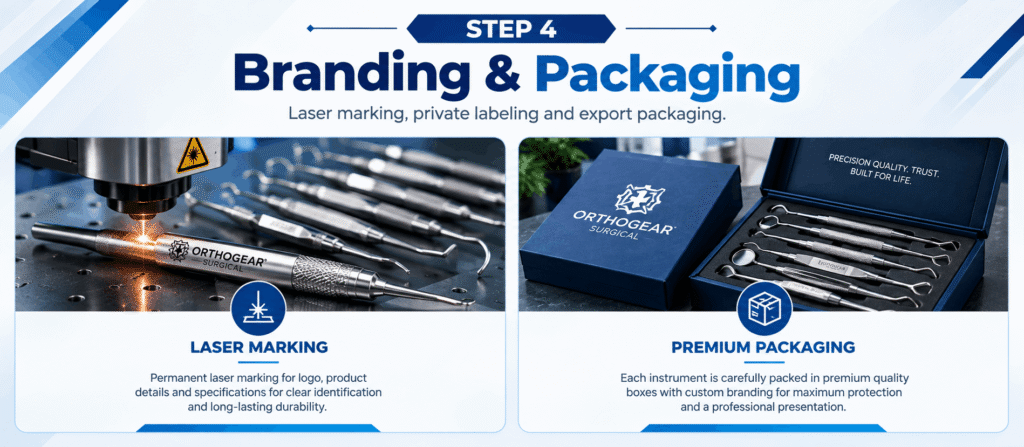
Before you start, confirm with your supplier the minimum quantity for branded orders, the marking method (such as laser marking or engraving), the packaging options and the lead time. OrthoGear offers OEM and private label manufacturing for distributors who want to build their own brand, and our step-by-step guide shows how to start a private label dental instrument brand.
Step 9: Find Customers and Grow Your Surgical Instruments Distribution Business
A good product does not sell itself. Every surgical instruments distribution business needs a steady way to reach buyers.
- Visit and call buyers directly. Purchasing managers at hospitals and clinics respond to personal contact. Bring samples and a simple price list.
- Build a professional website. Show your product range, your certificates and a clear way to request a quote. Buyers search online before they call.
- Use WhatsApp and email. Many buyers prefer a quick message to a long form. Reply quickly, because speed wins orders.
- Join trade shows and medical fairs. These events put you in front of many buyers in a few days.
- Ask for referrals. A happy dental practice will often introduce you to colleagues.
- Follow up after delivery. Check that the order arrived well and ask what they need next. This is how one order becomes a regular customer.
Track your results every month: new customers, repeat customers, best selling products and late payments. Use this to decide which products to add and which to drop.
Common Mistakes in a New Surgical Instruments Distribution Business
- Choosing a supplier by price alone. A very low price often hides weak materials or poor finish, which costs you customers later.
- Skipping samples. A bad batch of a large order is expensive to fix.
- Ignoring regulations. Goods that are held up at customs or rejected by a buyer can wipe out your profit.
- Not counting the landed cost. Shipping, duties and taxes can change your margin a lot.
- Stocking too many products. Too much stock ties up your cash. Start small and expand.
- Weak after-sales service. Instruments that arrive wrong or damaged need a fast, fair response, or buyers will move to another distributor.
How OrthoGear Supports Distributors
OrthoGear Surgical is a surgical instruments manufacturer in Sialkot, Pakistan. We help every surgical instruments distribution business we work with, supplying distributors and importers with surgical, dental and orthopedic instruments at factory prices.

Here is what you can expect when you partner with us:
- Factory-direct pricing with no middleman
- Low entry MOQ. Trial orders start at 50 units per item, with better rates at higher volumes
- Samples before bulk orders
- OEM and private label so you can sell under your own brand
- Export documents and worldwide shipping with DHL, FedEx, UPS and DPD
- A quotation within 24 to 48 hours
Ready to start? Visit our wholesale surgical instruments page and send your requirements. You can also read about our bulk orders, browse the product catalogue or contact our team.
Conclusion
Starting a surgical instruments distribution business takes planning, but the path is clear. Choose your customers, check the rules in your country, find a reliable manufacturer, test samples, price on your real landed cost and build a brand that buyers remember.
The supplier you choose is the biggest decision of all for your surgical instruments distribution business. A manufacturer with consistent quality, a low MOQ and clear communication gives your business a strong base to grow on. Take the first step today: pick one product category, request samples and talk to your supplier about your goals. You can start by browsing our online shop.
FAQ: Surgical Instruments Distribution Business
How much money do I need to start a surgical instruments distribution business?
The cost of a surgical instruments distribution business depends on your country, your product range and your order size. The main costs are your first stock, shipping and duties, registration and licenses, storage and marketing. A supplier with a low MOQ lets you begin with a smaller first order.
Do I need a license to distribute surgical instruments?
In most countries, yes. To run a surgical instruments distribution business legally, note that surgical instruments are medical devices, so you usually need a company registration and an import or distribution license for medical devices. Check the exact rules with your health authority.
Which surgical instruments sell the most?
In a surgical instruments distribution business, general surgical instruments such as forceps, scissors and retractors, and dental instruments, are bought often and in volume. Orthopedic instruments and plates and screws have a higher value per order but need a stronger supplier relationship.
Should I buy from a manufacturer or a trader?
Buying from a manufacturer usually gives a better price and more control over quality, customization and lead time. A trader can be useful for very small orders, but each middleman adds a margin.
Can I sell surgical instruments under my own brand?
Yes. In a surgical instruments distribution business, private label lets a manufacturer make the instruments and put your logo and packaging on the products. Ask about the minimum order for branded products.
How do I find a reliable supplier for my surgical instruments distribution business?
Check the certifications, ask about materials and MOQ, order samples and test them, and see how quickly the supplier answers your questions. You can start with our wholesale surgical instruments page.
One thought on “How to Start a Surgical Instruments Distribution Business”