

Stainless Steel for Surgical Instruments: A Complete Guide
Which grades are used, why each one is chosen, and what to ask your supplier before you order. Written by the team at OrthoGear Surgical, Sialkot.
Two instruments can look exactly the same on a tray. Both shine, both have the same shape, both carry a "stainless" stamp. Yet one stays sharp and rust-free for years, while the other dulls after a few months and shows brown spots after repeated autoclaving. In most cases, the difference comes down to the steel.
Choosing the right stainless steel for surgical instruments is one of the most important decisions in instrument making, and one of the least understood by buyers. At OrthoGear Surgical, a surgical instruments manufacturer in Sialkot, Pakistan, we work with these materials every day. This guide to stainless steel for surgical instruments explains which grades are used, why each one is chosen, and what to ask your supplier before you order.
Why Is Stainless Steel Used for Surgical Instruments?
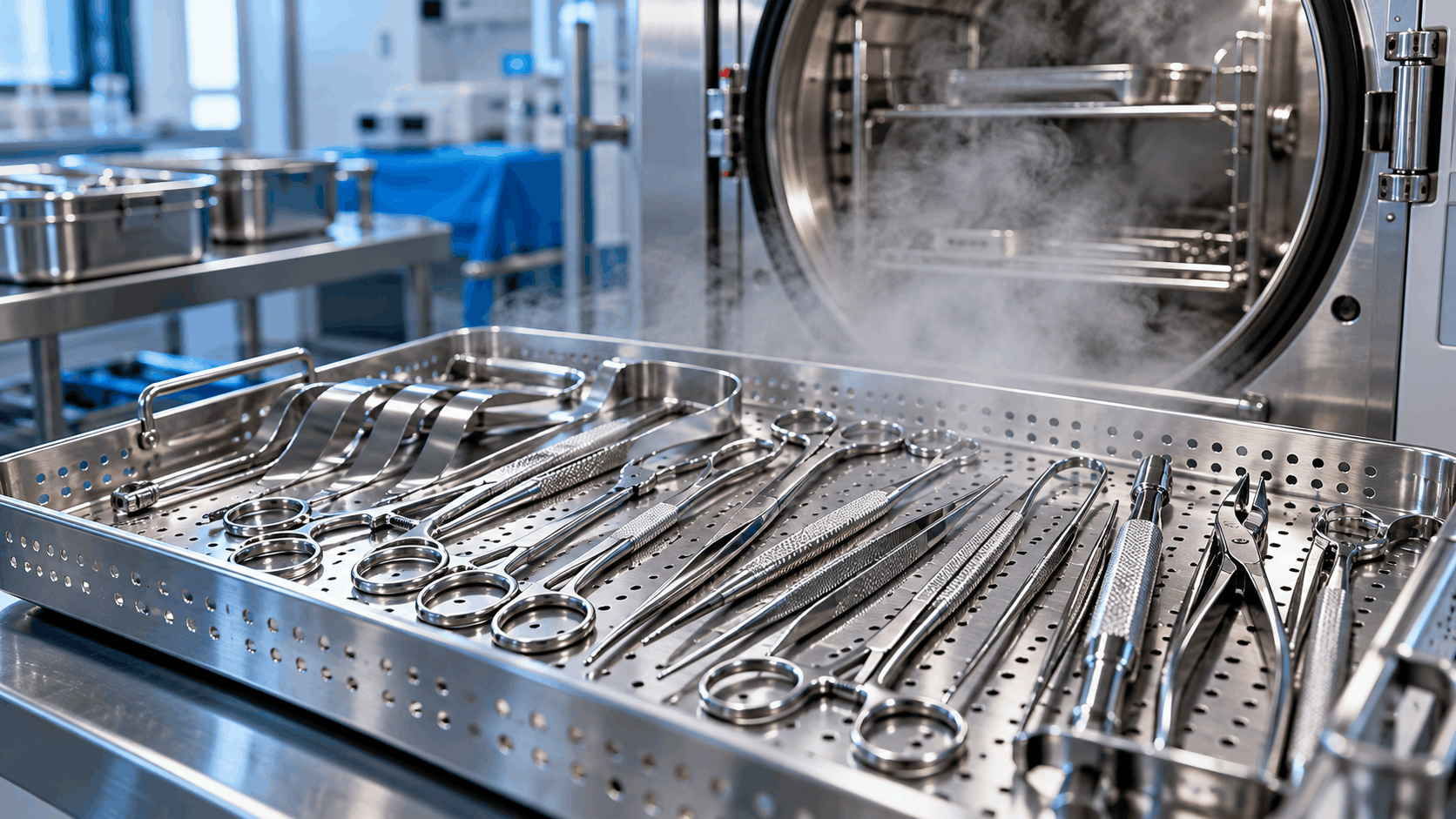
Surgical instruments are used under pressure, washed in strong detergents and sterilized with high-temperature steam again and again. Stainless steel for surgical instruments has to survive all of this while staying precise.
- Corrosion resistance. At least 10.5% chromium forms a thin, invisible oxide layer that protects against rust and re-forms if scratched.
- Strength and hardness. Certain grades can be heat treated to hold a sharp edge or keep their shape under force.
- Withstands sterilization. Good surgical grades survive repeated steam autoclaving.
- Easy to clean. A smooth, polished surface does not hold blood or tissue easily.
- Cost and availability. Excellent performance at a price that suits everyday hospital use.
It is this combination that has made stainless steel for surgical instruments the industry standard for decades.
Surgical Steel vs Stainless Steel: Is There a Difference?
"Surgical steel" is not one specific metal. It is a general term for stainless steel grades that are suitable for medical use.
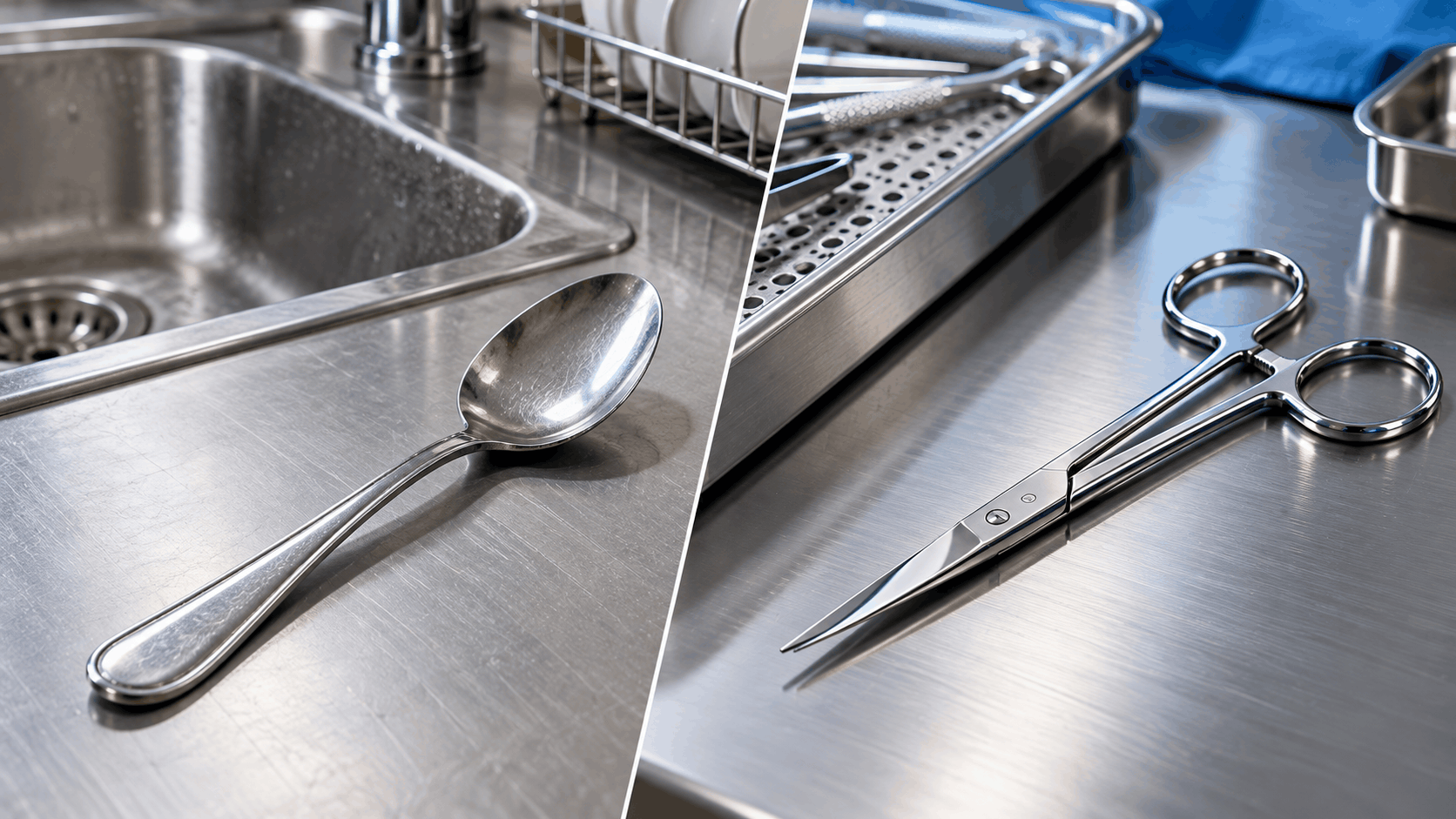
All surgical steel is stainless steel, but not all stainless steel is suitable for surgery. The steel in a kitchen sink, for example, is usually a softer grade that cannot be hardened. It would never hold an edge on a pair of surgical scissors.
When you compare stainless steel for surgical instruments from different suppliers, the term "surgical steel" alone tells you very little. What matters is the exact grade, such as AISI 410, 420 or 316. A reliable manufacturer should always tell you which grade each instrument is made from.
The Two Main Families of Stainless Steel for Surgical Instruments
Almost every grade falls into one of two families. This explains why a scissor and a suction tube are made from different metals.
Martensitic Stainless Steel
These grades contain more carbon, so they can be hardened and tempered by heat treatment, much like tool steel. They are magnetic and can be made very hard, which makes them the right martensitic stainless steel for surgical instruments that cut, grip or must keep a precise shape.
The trade-off is lower corrosion resistance than austenitic steel, which is why correct heat treatment and passivation matter so much.
Austenitic Stainless Steel
These grades contain nickel as well as chromium. They cannot be hardened by heat, but they offer excellent corrosion resistance and are generally non-magnetic.
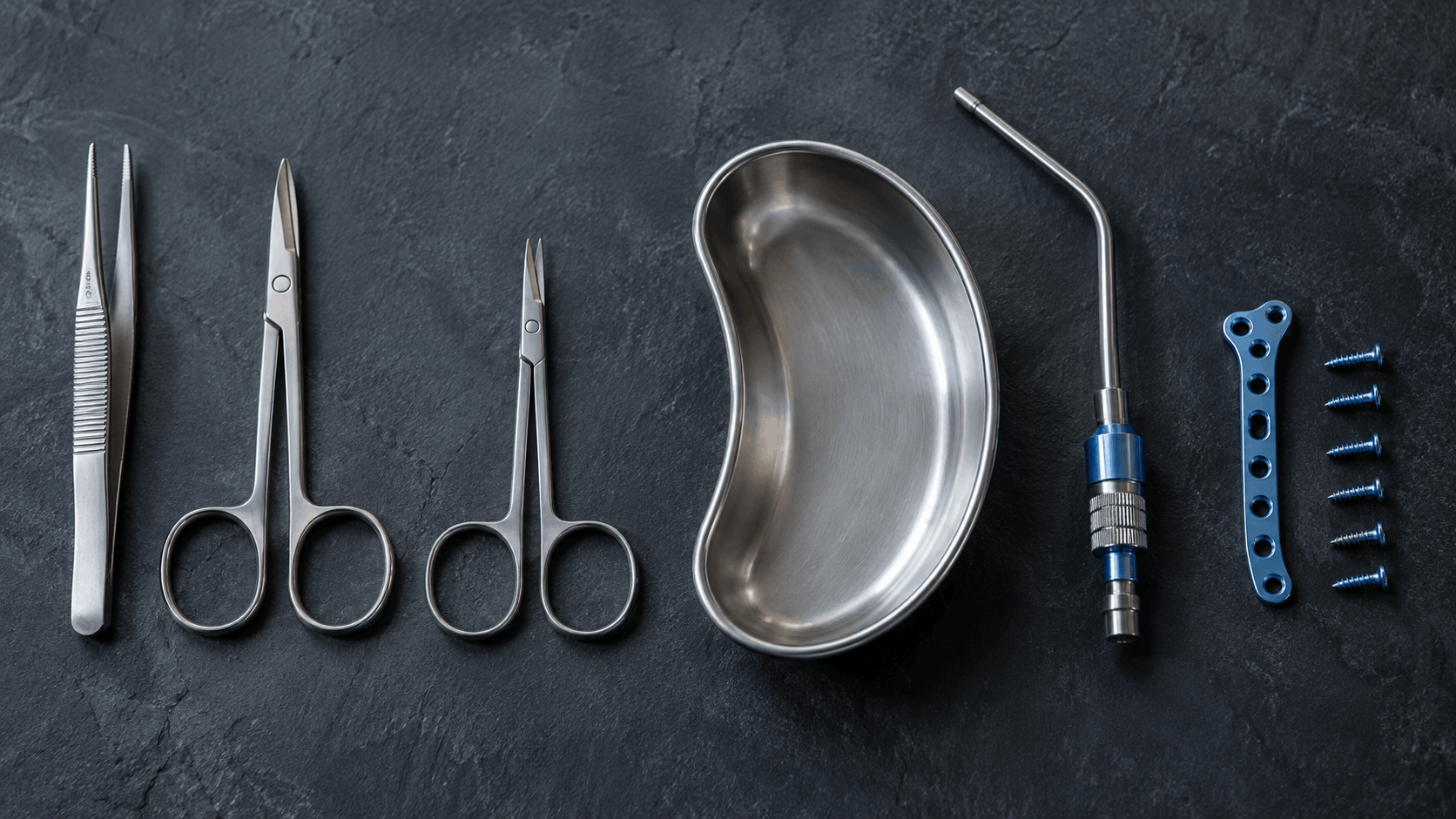
Austenitic stainless steel for surgical instruments is used where no sharp edge or spring action is needed, such as cannulas, suction tubes, trays and bowls.
Which Stainless Steel Is Used for Surgical Instruments?
Here are the grades of stainless steel for surgical instruments that are most often used, with the German DIN numbers many European buyers use in their specifications.
| Grade (AISI) | DIN number | Family | Typical hardness | Common uses |
|---|---|---|---|---|
| 410 | 1.4006 | Martensitic | Medium | Forceps, hemostats, needle holders, retractors |
| 420 | 1.4021 / 1.4028 | Martensitic | High | Scissors, osteotomes, chisels, curettes, rongeurs |
| 440A / 440C | 1.4109 / 1.4125 | Martensitic | Very high | Fine scissors and long-life cutting edges |
| 304 | 1.4301 | Austenitic | Not hardenable | Trays, bowls, kidney dishes, handles |
| 316 / 316L | 1.4401 / 1.4404 | Austenitic | Not hardenable | Cannulas, suction tubes, some implants |
| Titanium Grade 5 | 3.7165 | Titanium alloy | Medium | Bone plates, screws, micro instruments |
Hardness varies by instrument and heat treatment, so treat this table as a general guide rather than a fixed specification.
A Closer Look at Each Grade
AISI 410 Stainless Steel
Grade 410 is the most common stainless steel for surgical instruments with hinges. It is hard enough to hold its shape and tough enough to flex without cracking, which is exactly what a hemostat or forceps needs over thousands of uses. Most general surgical instruments rely on it.
AISI 420 Stainless Steel
Grade 420 contains more carbon than 410, so it can be hardened further. This makes it the preferred stainless steel for surgical instruments that cut or chip bone, including scissors, osteotomes and chisels. A well-heat-treated 420 instrument keeps its edge far longer than a softer grade.
AISI 440 Stainless Steel
Grade 440 has the highest carbon content of the common grades and reaches very high hardness. It is used for premium scissors and cutting edges where edge life matters most. Being harder, it is also less forgiving and needs careful manufacturing.
AISI 316 and 316L Stainless Steel
Grade 316 adds molybdenum, which gives excellent resistance to pitting and chloride corrosion. The "L" version has very low carbon for even better corrosion resistance. It suits tubular instruments and parts exposed to fluids that do not need hardness.
Titanium vs Stainless Steel
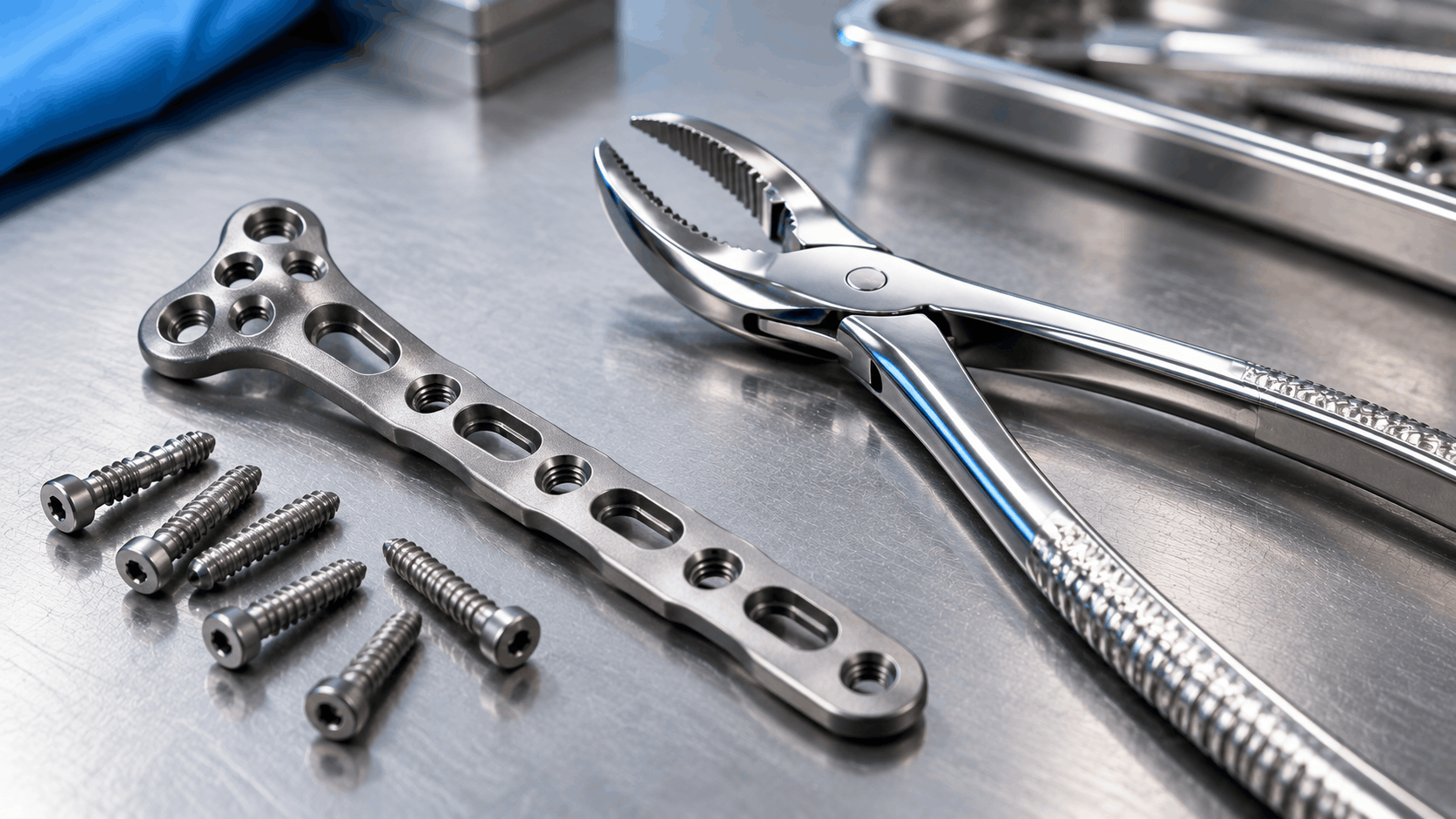
Titanium is often chosen alongside stainless steel. Titanium Grade 5 is about 40% lighter than steel, strong, non-magnetic and highly biocompatible.
It is widely used for orthopedic and maxillofacial implants such as bone plates and screws, and for micro instruments where low weight helps the surgeon. For most everyday instruments, though, stainless steel remains harder and more cost-effective.
How to Choose Stainless Steel for Surgical Instruments
The job of the instrument decides the steel.
A complete set may use three or four materials. This is a sign of good manufacturing, not inconsistency.
Why Stainless Steel for Surgical Instruments Can Still Rust
Buyers are often surprised when "stainless" instruments rust. Stainless steel resists corrosion, but it is not immune to it.
The first three causes are the manufacturer's responsibility. You can see how we check for them in our surgical instrument inspection process.
- Wrong or low-quality steel. Too little chromium or a poor composition cannot form a strong protective layer.
- Poor heat treatment. Incorrect hardening leaves the metal weak against corrosion.
- No passivation. Free iron left after grinding and polishing becomes a starting point for rust.
- Harsh cleaning. Chlorine bleach, saline and very acidic or alkaline detergents attack the protective layer.
- Contact with rusty instruments. Rust can transfer to good instruments in the same tray or autoclave.
Surface Finishes and What They Mean
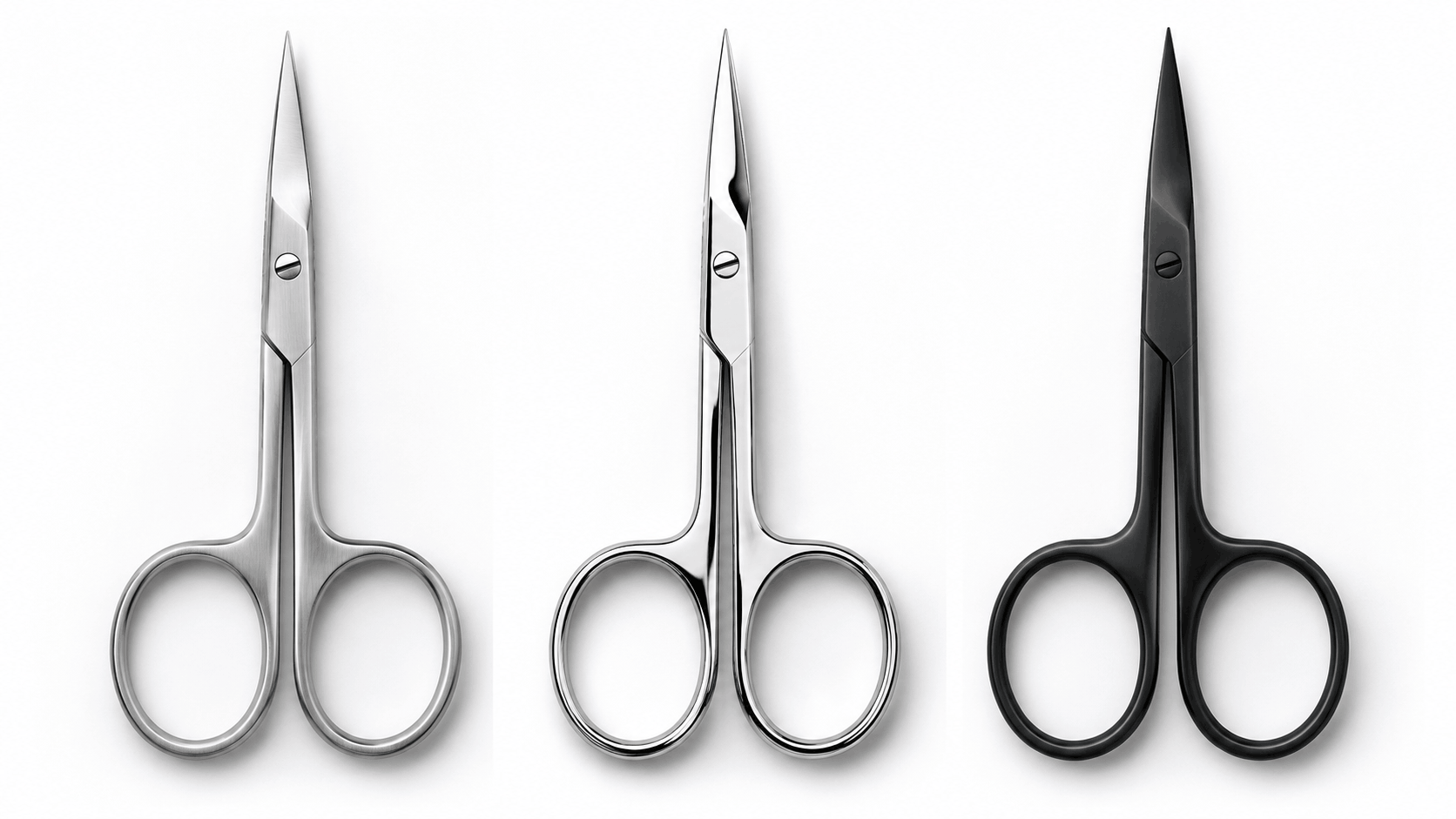
The finish does not change the steel, but it affects performance and appearance.
- Satin or matte reduces glare under operating room lights.
- Mirror is very smooth, easy to clean and looks premium.
- Black or PVD coating cuts glare further and suits specialty and micro instruments.
Whichever finish you choose, stainless steel for surgical instruments should still be passivated after polishing.
Standards for Surgical Stainless Steel
Two international standards cover stainless steel for surgical instruments:
- ISO 7153-1 lists the stainless steel grades suitable for surgical and dental instruments.
- ASTM F899 is the American specification for wrought stainless steels used in surgical instruments.
A mill test certificate confirms the grade and chemical composition of each steel batch.
Questions to Ask Your Supplier About Stainless Steel for Surgical Instruments
- Which exact grade is used for each instrument?
- Can you provide a material test certificate for the steel batch?
- What hardness range do you heat treat to?
- Are all instruments passivated after polishing?
- Can the grade and lot number be traced on each instrument?
If a supplier cannot tell you which steel they use, treat it as a warning sign.
Our Approach to Stainless Steel for Surgical Instruments
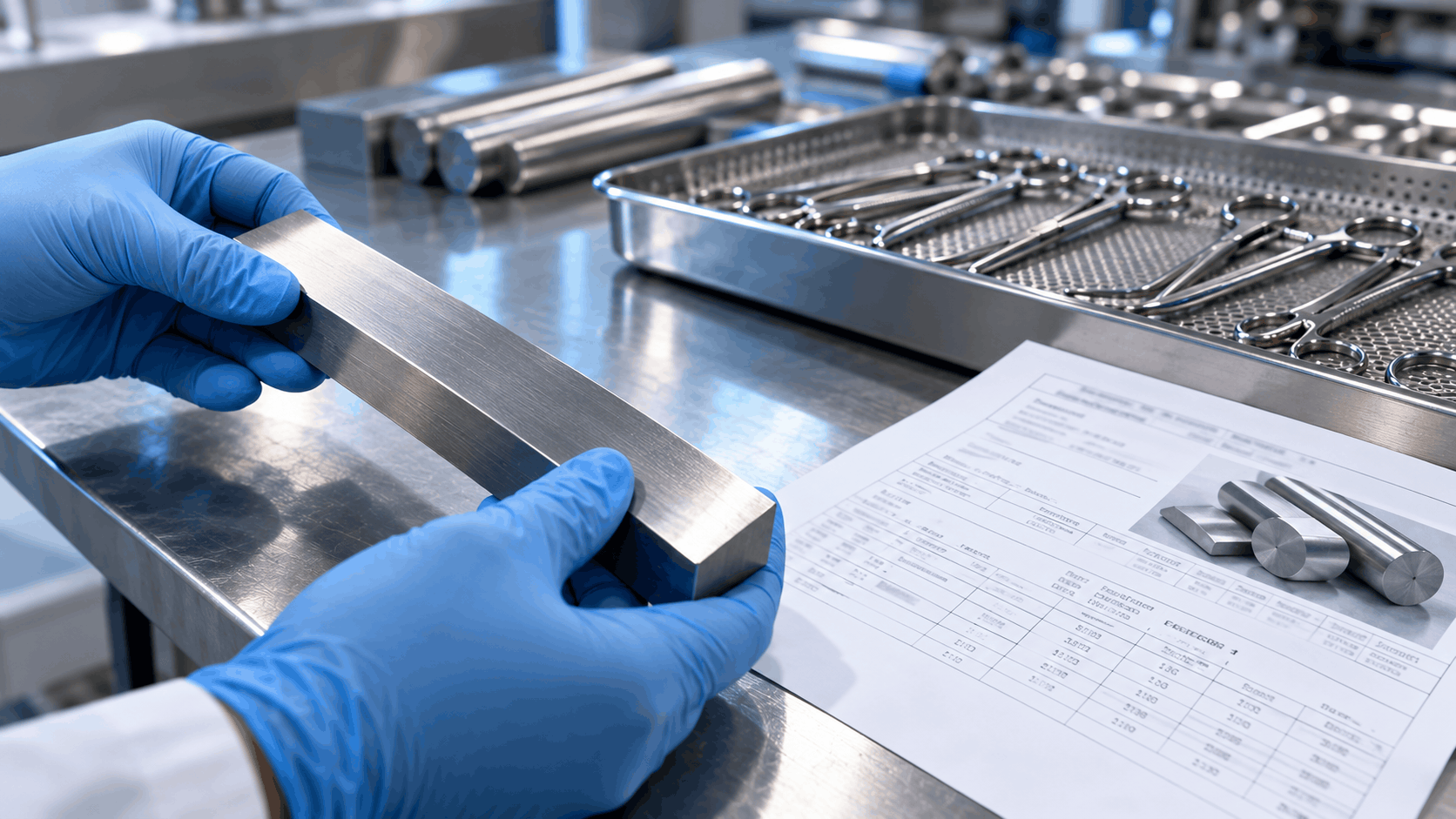
Material selection is the first step of every order. We use AISI 410, 420 and 316 stainless steel and medical-grade titanium, chosen according to the function of each instrument. Every steel batch is checked against its mill certificate before production, and the grade is recorded against the lot number for traceability.
For OEM and private label orders, we work to your material specification, finish and branding. Browse the full range in our surgical instruments catalogue or shop, or test our quality first under our Sample Policy.
Frequently Asked Questions
Which type of stainless steel is used for surgical instruments?
The most common stainless steel for surgical instruments is martensitic grade 410, 420 or 440 for cutting and gripping instruments, and austenitic grade 304 or 316 for tubes, trays and bowls.
What is surgical steel?
Surgical steel is a general name for stainless steel grades suitable for medical use. It is not one specific alloy, so always ask for the exact grade.
Is surgical steel the same as stainless steel?
All surgical steel is stainless steel, but not all stainless steel is suitable for surgery. Surgical grades are chosen for hardness, corrosion resistance and their ability to survive repeated sterilization.
Which stainless steel is best for surgical scissors?
Grade 420 or 440, because they can be hardened to hold a sharp edge for longer.
Are surgical instruments magnetic?
Instruments made from martensitic grades such as 410 and 420 are magnetic. Grade 316 and titanium instruments are generally non-magnetic.
Is titanium better than stainless steel for surgical instruments?
Not always. Titanium is lighter and more biocompatible, which makes it ideal for implants and micro instruments. Stainless steel is harder and less expensive, which suits most everyday surgical instruments.
Related Buyer Guides
Need Instruments Made From the Right Steel?
Tell us which instruments you need, your preferred finish and your expected quantity. We will recommend the right stainless steel for surgical instruments in your order and reply with a quotation, material details and samples on request. You can also email info@orthogearsurgical.com.