

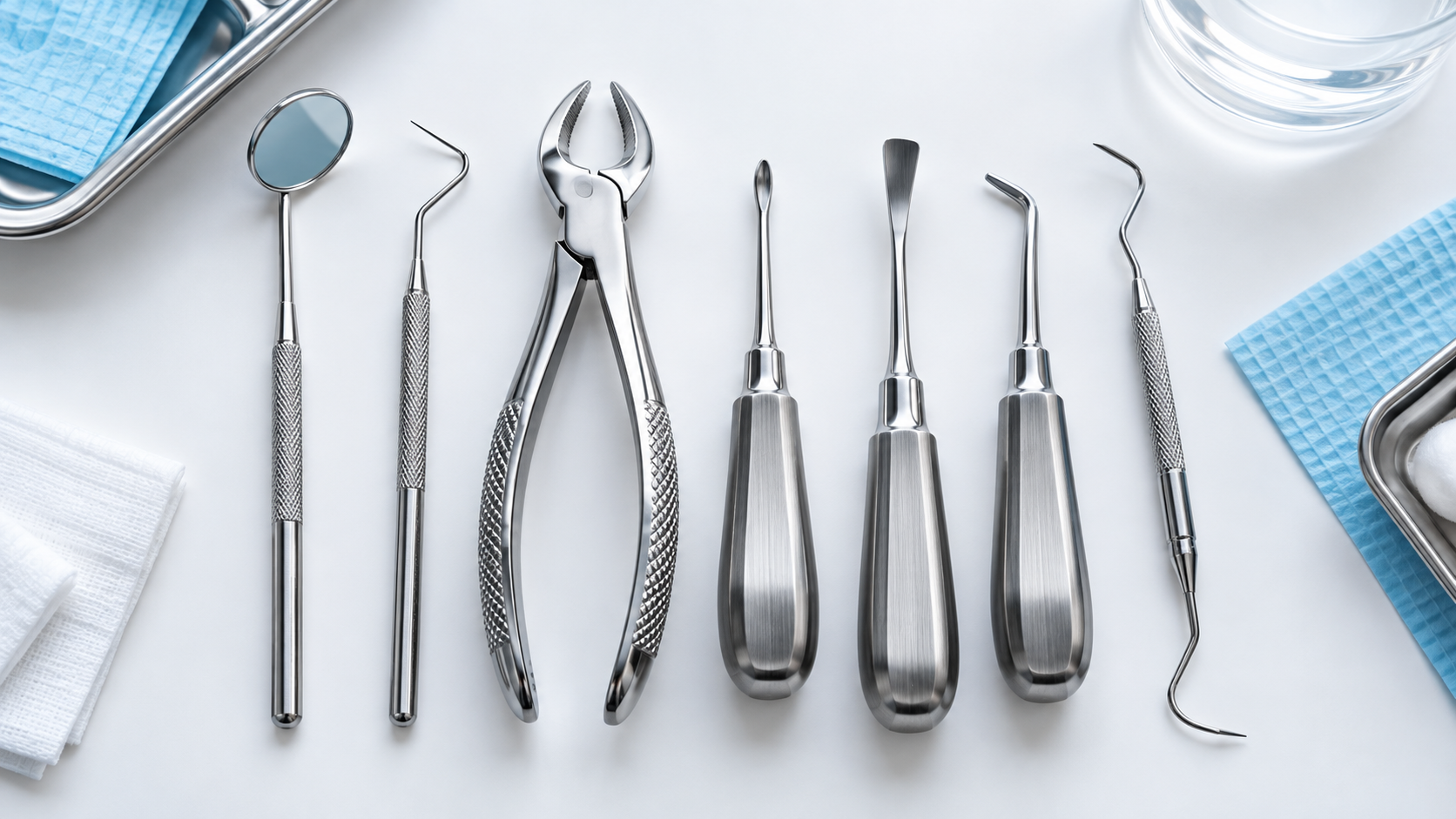
Picking a dental instruments manufacturer is one of the biggest sourcing decisions a distributor, clinic group or hospital procurement team will make. A poor choice shows up as uneven steel quality, shipments held at customs, missing paperwork, late deliveries and, at worst, an instrument that fails in a patient’s mouth. A good choice gives you steady quality, complete documentation, stable pricing and a partner that grows with you.
This guide is written for buyers in the USA, the UK and Europe. It explains what CE marked dental instruments really are, why an ISO 13485 dental instruments manufacturer is the starting point for serious B2B trade, how to judge steel quality, how dental instruments OEM and private label dental instruments programs work, and which red flags should send you elsewhere. By the end, you’ll have a clear scorecard for any dental instruments supplier before you place a bulk order.
Quick answer: A reliable dental instruments manufacturer holds a valid ISO 13485 certificate, can document compliance with the EU Medical Device Regulation (MDR) for CE marked products, uses traceable surgical-grade stainless steel, runs batch-level quality control, and is open about MOQ, lead time and OEM terms. If a supplier can’t prove these things on paper, keep looking.
In This Guide
- Why your choice of manufacturer matters
- What are CE marked dental instruments?
- What ISO 13485 means for a dental instruments manufacturer
- The 7-point buyer’s checklist
- Dental instruments wholesale: MOQ, pricing and lead time
- OEM and private label dental instruments explained
- Red flags when evaluating a dental instruments supplier
- UK and USA specifics: UKCA, MHRA and FDA
- Why many buyers source from Sialkot, Pakistan
- How to run a low-risk first order
- Frequently asked questions
- Final thoughts and next steps
1. Why Your Choice of Dental Instruments Manufacturer Matters
Dental instruments look simple. An extraction forceps, an elevator, a mirror handle or a periodontal probe can seem like “just a piece of steel.” In reality, each one is a precision tool. It has to keep its edge, resist corrosion through hundreds of sterilization cycles, sit comfortably in the hand and meet strict regulatory requirements.
Three things separate a dependable manufacturer from a risky one.
Consistency. Anyone can make one good sample. A dependable dental instruments manufacturer delivers the same quality on the 5,000th piece as on the first. That takes controlled raw materials, standardized heat treatment, documented inspection and trained operators.
Compliance. Dental instruments are medical devices. In Europe they fall under the Medical Device Regulation (EU) 2017/745, in the UK under the UK medical device framework, and in the USA under the Food and Drug Administration. A factory without a working quality management system can’t reliably produce the documents these authorities expect, and the importer carries the legal risk.
Commercial reliability. Dental distribution runs on repeat orders. If your supplier misses delivery windows, switches steel grade between batches or ships with poor labeling, your customers notice first and your reputation takes the hit.
The checklist below is designed to test all three before any money changes hands.
2. What Are CE Marked Dental Instruments?
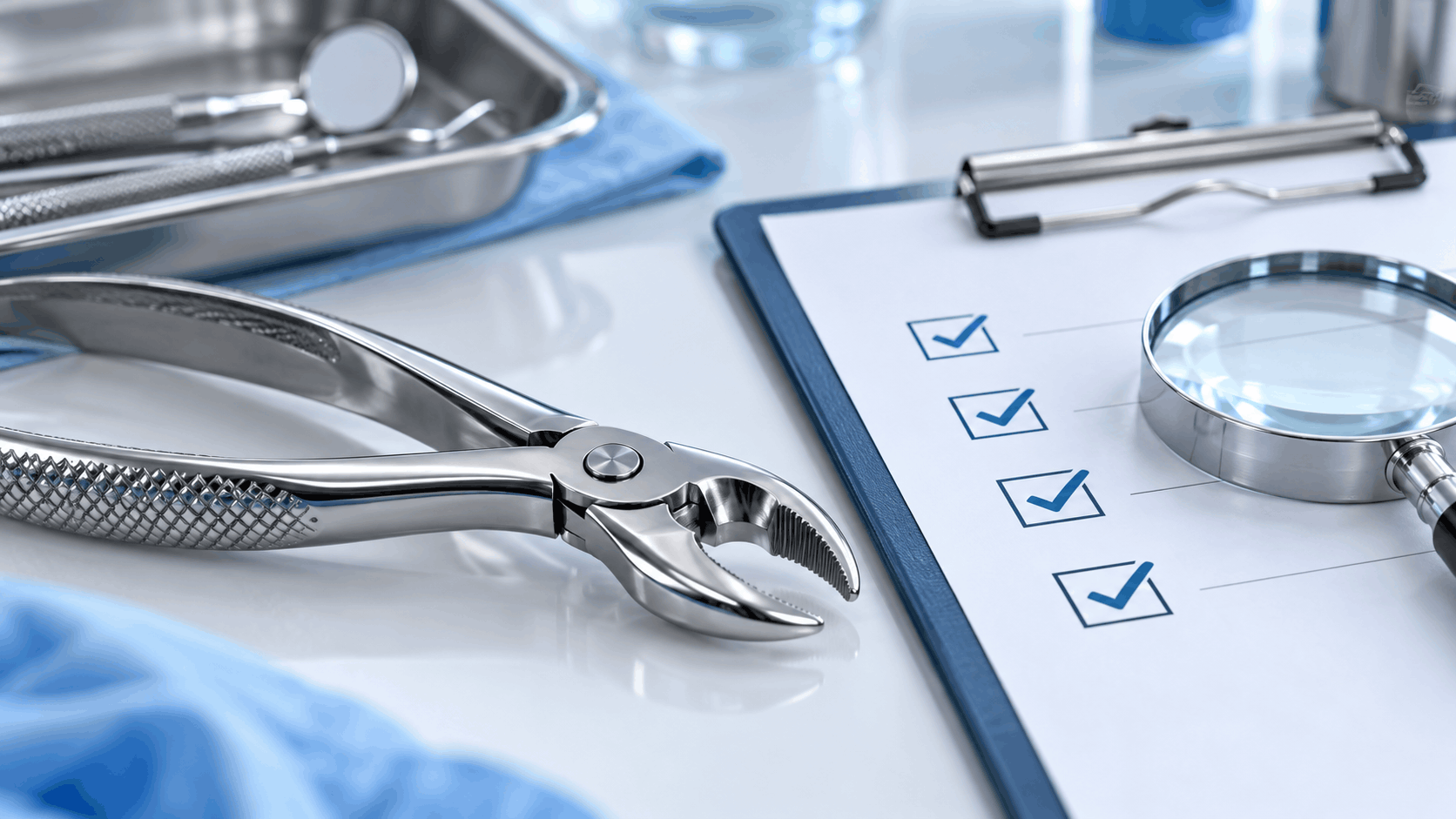
CE marked dental instruments are instruments whose manufacturer has declared them compliant with the applicable European Union law and has applied the CE mark. For medical devices, that law is the Medical Device Regulation (EU) 2017/745, known as the MDR, which replaced the older Medical Device Directive.
What the CE mark actually means
The CE mark isn’t a quality award, and it doesn’t mean an instrument is “the best.” It’s a declaration of conformity. By applying it, the manufacturer states that the product meets the general safety and performance requirements of the regulation and that the required conformity assessment has been completed.
For a buyer, a valid CE mark should come with documents you can request and read:
- EU Declaration of Conformity naming the manufacturer, the product or product group, and the regulation applied.
- Technical documentation held by the manufacturer, covering design and manufacturing information, risk management, materials and verification data.
- Notified Body certificate, where the device class requires one. Most reusable dental hand instruments are classed as reusable surgical instruments (Class I, often written Class Ir). For these, the notified body’s role is limited to the aspects of reuse, such as reprocessing information. Your manufacturer should tell you the exact class for every product and show you the matching certificate.
- Unique Device Identification (UDI) and labeling that follow MDR rules, including manufacturer name and address, lot or batch number and the correct symbols.
- An EU Authorised Representative. A manufacturer outside the EU must appoint one, and the label and documents should name it.
Why this matters to you as a buyer
If you import into the EU, the MDR gives you obligations as an importer or distributor. You must verify that the product carries the CE mark, that a declaration of conformity exists, that labeling is correct and that the manufacturer has an authorised representative. A supplier of CE marked dental instruments who understands this will send you the documents before you ask. One who stays vague about the notified body, the authorised representative or the device class is telling you something.
A simple test
Put three questions in your first email:
- Which MDR class applies to this instrument, and why?
- Can you send the EU Declaration of Conformity and the relevant certificate?
- Who is your EU Authorised Representative?
A prepared manufacturer replies within a day. An unprepared one changes the subject.
3. What ISO 13485 Means for a Dental Instruments Manufacturer
An ISO 13485 dental instruments manufacturer runs a quality management system built specifically for medical devices. ISO 13485:2016 is the international standard that describes how a medical device company should control design, purchasing, production, inspection, traceability, complaints and corrective action.
What ISO 13485 covers in practice
- Document control. Procedures, drawings and specifications are approved and versioned, so production doesn’t drift.
- Supplier control. Steel, packaging and outsourced steps such as heat treatment or surface finishing come from approved, verified suppliers.
- Production control. Every stage has written instructions, trained staff and recorded results.
- Inspection and testing. Incoming material, in-process checks and final inspection are all documented.
- Traceability. A batch can be traced back to raw material lots and forward to customers. That matters if a recall or field action is ever needed.
- Complaint handling and corrective action. Problems are investigated and fixed at the root.
- Risk management. Risks are identified and controlled across the product life cycle, usually in line with ISO 14971.
ISO 13485 and CE marking work together
For most device makers, an ISO 13485 system is the foundation the MDR builds on, because the regulation expects a quality management system. That’s why experienced buyers treat ISO 13485 as the entry ticket and CE documentation as the next layer.
How to verify an ISO 13485 certificate
Don’t settle for a screenshot. Check that:
- The certification body is recognized and accredited.
- The scope names the actual products, for example “manufacture of dental and surgical instruments.”
- The company name and address match the factory and the company you’re contracting with.
- The validity dates are current.
- The certificate number can be confirmed with the issuing body, which most bodies allow.
A genuine manufacturer is happy to let you verify, because a verified certificate wins deals.
4. The 7-Point Buyer’s Checklist for Choosing a Dental Instruments Manufacturer
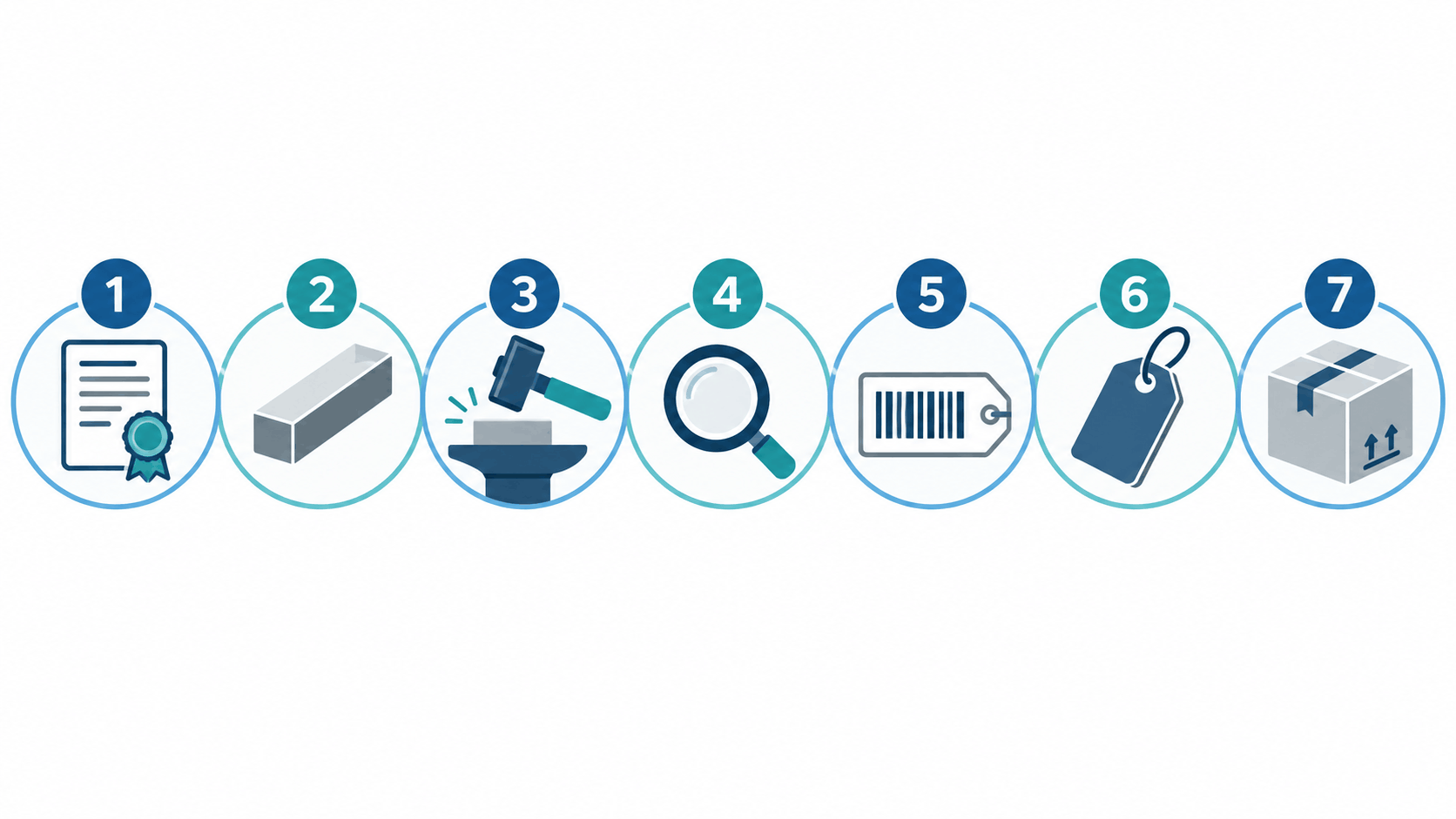
Use these seven checks as a scorecard. Rate each supplier from one to five on every point and compare the results side by side.
| # | Check | What to ask for |
|---|---|---|
| 1 | Certifications and documents | ISO 13485, CE documents, authorised representative, material certificates |
| 2 | Steel grade and raw material | Exact grade per product, mill test certificates |
| 3 | Manufacturing and finishing | Forging, heat treatment, passivation, factory tour |
| 4 | Quality control and testing | Inspection reports, autoclave and corrosion tests |
| 5 | Traceability and labeling | Lot numbers, laser marking, UDI, correct symbols |
| 6 | OEM and private label | Logo marking, custom packaging, design ownership, NDA |
| 7 | Commercial terms | MOQ, lead time, payment terms, Incoterms, warranty |
Check 1: Certifications and regulatory documents
Start with the paperwork. It filters out most unqualified suppliers fast. Request and review:
- ISO 13485:2016 certificate, with scope and validity
- CE documentation, including the Declaration of Conformity and the notified body certificate where applicable
- Name and details of the EU Authorised Representative
- For the UK market, UK Responsible Person arrangements and registration
- For the USA, FDA establishment registration status and the product’s regulatory classification
- Material certificates for the steel
- Instructions for use covering cleaning, sterilization and reprocessing of reusable instruments
If anything is missing, ask why and when it will arrive. Never place a large order on a promise to “arrange it later.”
Check 2: Steel grade and raw material quality
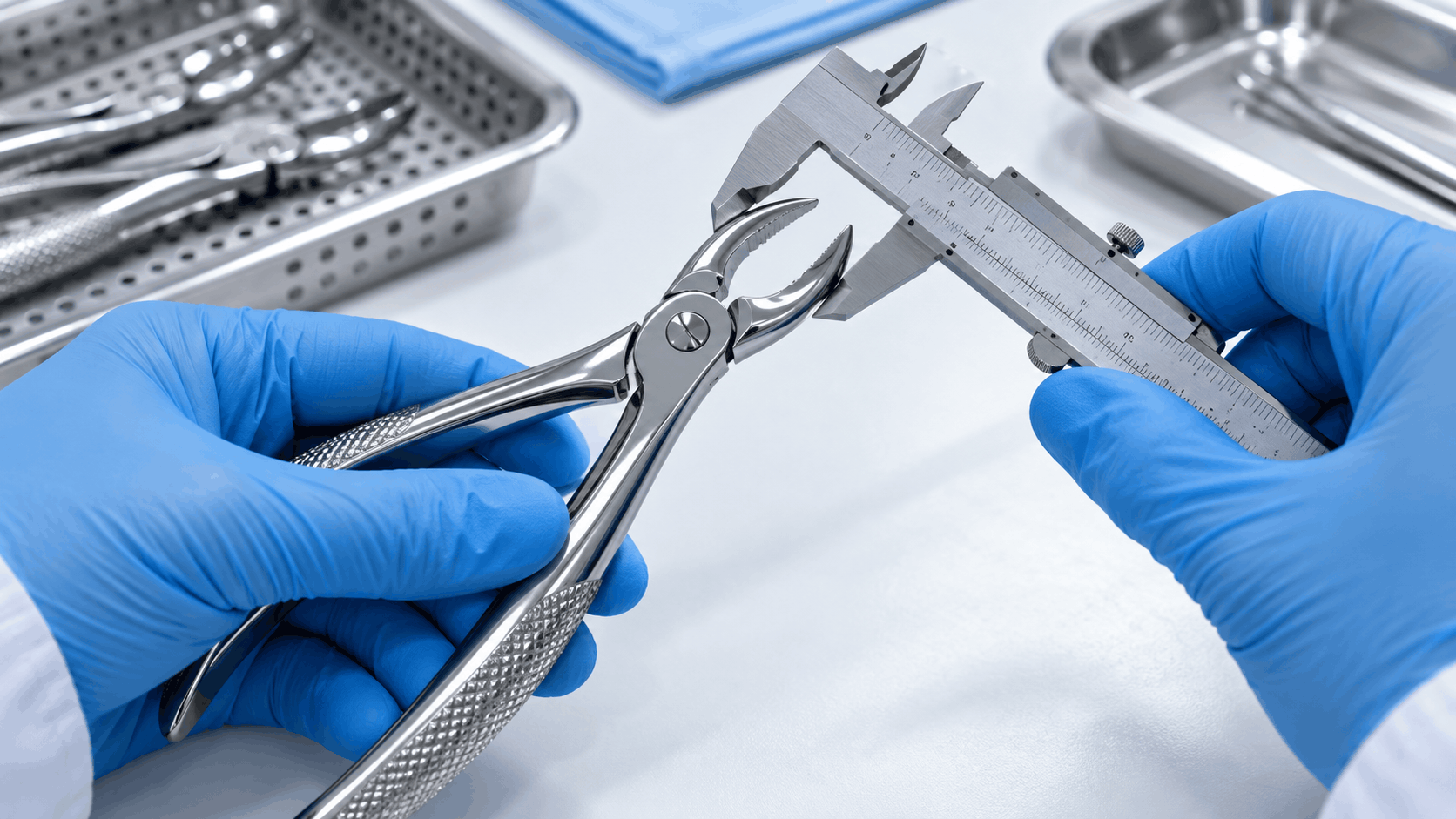
Steel is the heart of an instrument. The grade decides hardness, edge retention and corrosion resistance.
- Martensitic stainless steels (400 series, such as 410 and 420) can be hardened. They’re common for forceps, elevators and scissors, where strength, a cutting edge or a firm grip is needed.
- Austenitic stainless steels (such as 304 and 316) resist corrosion very well but don’t harden by heat treatment in the same way. They suit non-cutting items, trays, cassettes and some handles.
Ask the manufacturer to name the exact grade for each product group and to supply mill test certificates from the steel producer. Standards such as ISO 7153-1 (metallic materials) and ISO 13402 (resistance to sterilization and corrosion) are useful reference points in a technical conversation.
Be wary of vague phrases like “premium steel” or “best quality steel.” Ask for the grade, the source and the certificate. Many factories do use excellent steel, including imported European steel, and a good one will document it.
Check 3: Manufacturing process and finishing
Quality is built into the process, not added at the end. Ask how the instruments are made.
- Forging versus cutting. Forged blanks usually give a better grain structure than parts cut from sheet, especially for load-bearing instruments.
- Heat treatment. Controlled hardening and tempering balance hardness against toughness. Ask whether hardness is tested and recorded for every batch.
- Machining and milling. Serrations, jaws and tips must line up. Misaligned jaws on extraction forceps cause slipping and tooth fracture.
- Surface finish. Mirror polish and matte (satin) finish are the common options. Matte reduces glare under dental lights. Ask about passivation, which restores the protective oxide layer and improves corrosion resistance.
- Cleaning before packing. Polishing residue should be removed so instruments arrive clean.
If you can, request a factory video tour, a visit or a third-party audit. Seeing forging, grinding, polishing and inspection tells you more than any brochure.
Check 4: Quality control and testing
A credible dental instruments manufacturer documents quality at several stages:
- Incoming inspection of steel, with certificate verification
- In-process inspection after forging, heat treatment and machining
- Final inspection of dimensions, jaw alignment, box-lock or joint function, ratchet engagement, tip integrity and surface finish
- Corrosion resistance testing suited to the instrument type
- Autoclave resistance testing to confirm instruments survive repeated sterilization cycles
- Hardness testing on sampled pieces
Ask for sample inspection reports and the acceptance criteria. A factory that has to invent these on the spot probably doesn’t run them routinely.
Check 5: Traceability and labeling
Traceability protects both sides. If a problem shows up in the field, you must be able to say which batch was affected, which raw material lot was used and who received it. Confirm the manufacturer provides:
- Batch or lot numbers on instruments or packaging
- Laser marking of the manufacturer’s name or logo, reference number and lot number where practical
- Labels with the required symbols, including the manufacturer symbol, lot number symbol and CE mark, plus authorised representative details for the EU
- UDI information as required for your market
Clear marking also builds trust with clinicians, who can identify instruments, reorder correctly and keep sets organized.
Check 6: OEM, private label and customization capability
Many distributors don’t want to sell a factory brand. They want their own brand, packaging and catalog. A capable manufacturer supports this through OEM and private label programs (covered in section 6). Ask:
- Can you laser-mark my logo and part numbers?
- Can you produce custom packaging, such as pouches, boxes, cassettes and instrument kits?
- Can you modify an instrument design, and what do tooling and timelines look like?
- Who owns the designs and tooling made for my brand?
- How do you protect my brand and customer data?
Check 7: Commercial terms: MOQ, lead time, payment and logistics
Finally, make sure the commercial side works:
- Minimum order quantity (MOQ) per item and per order
- Lead time for catalog items and for custom or private label orders
- Payment terms and accepted methods
- Incoterms (EXW, FOB, CIF, DDP) and who covers freight and insurance
- Export packaging that protects against moisture and rust during sea transit
- Warranty and replacement policy for defects
- Communication speed, and who your account manager is
Poor communication before the order almost always predicts poor communication after it.
5. Dental Instruments Wholesale: Understanding MOQ, Pricing and Lead Time
Buying dental instruments wholesale is a different game from buying a few pieces for one clinic. Knowing how wholesale pricing works helps you negotiate fairly and avoid surprises.
How wholesale pricing is built
- Material and complexity. A simple mirror handle costs far less than a multi-part forceps with precision serrations.
- Quantity. Larger orders lower the price per piece because setup, tooling and handling costs are spread across more units.
- Finish and branding. Special finishes, laser marking and custom packaging add cost.
- Documentation and testing. Extra batch testing, audits or specific certificates may add cost.
- Shipping terms. A price quoted EXW or FOB doesn’t include the same costs as a DDP price.
What is a reasonable MOQ?
It depends on the product and on whether the item is a catalog product or a custom design. Catalog items usually have lower MOQs, while custom designs and private label packaging need higher quantities to justify setup. If you’d like exact figures for the items you need, send your list through our bulk order page and we’ll reply with MOQ and pricing.
If a supplier offers a very low MOQ and a very low price together, ask how that’s possible under a certified quality system. When a price looks too good, the cost has usually been cut somewhere you can’t see, such as steel quality, inspection or documentation.
Lead time: what to expect
Lead time depends on stock, order size and customization. Stocked items ship faster, while custom or private label production takes longer because of design approval, sampling and packaging. Ask for a written schedule that shows each stage: sample approval, production, inspection, packing and shipping.
Always order samples first
Before a bulk order, test samples of the exact items you plan to buy with real clinicians. Look at jaw alignment and grip, edge quality and sharpness retention, weight and balance, finish, and behavior after repeated autoclave cycles. Think of the sample cost as cheap insurance. You can read our sample policy to see how we handle it.
6. OEM and Private Label Dental Instruments Explained
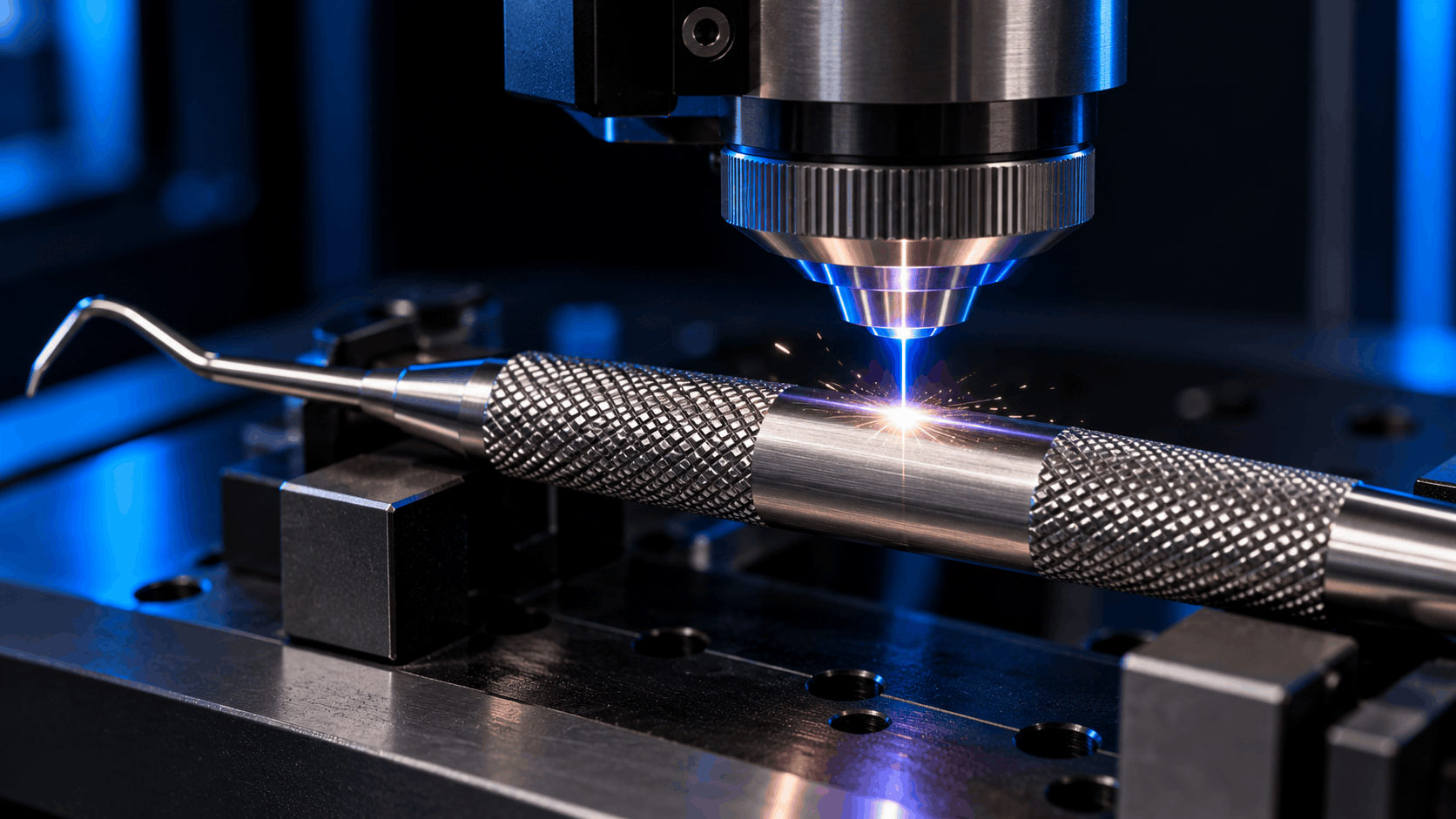
People often mix up OEM and private label, so it helps to separate them.
Private label dental instruments
With private label dental instruments, the manufacturer produces instruments from its existing catalog designs, and you sell them under your own brand. You get your logo, your packaging and your part numbers without developing any designs yourself. It’s the fastest way for a distributor to launch a branded line.
Dental instruments OEM
With dental instruments OEM (original equipment manufacturing), the factory builds instruments to your specification, often from your own drawings or a modified version of an existing design. OEM gives you more control and supports unique product lines, special sets or clinical preferences specific to your market. See how this works at OrthoGear Surgical on our custom manufacturing page.
The regulatory point many buyers miss
Under EU rules, the party that places a device on the market under its own name or trademark takes on the responsibilities of a manufacturer, even if someone else physically makes it. A private label brand owner therefore has obligations around technical documentation, labeling and post-market surveillance. A professional OEM partner understands this and will help with documents, but settle responsibilities in writing before production starts, and take regulatory advice for your situation.
What a good OEM or private label process looks like
- Briefing. You specify products, quantities, finishes, packaging and branding.
- Sampling. The manufacturer produces pre-production samples.
- Approval. You sign off on the sample, laser marking, labels and packaging artwork.
- Production. The batch is made under the quality system.
- Inspection. Final inspection is documented, and you can add a third-party inspection.
- Shipping. Goods are export-packed and shipped on the agreed terms.
- Records. The manufacturer keeps batch records for traceability.
Protecting your brand
Agree in writing on confidentiality, ownership of custom tooling and designs, and limits on selling your branded products or designs to anyone else. A trustworthy manufacturer will sign a non-disclosure agreement without fuss.
7. Red Flags When Evaluating a Dental Instruments Supplier
Experienced buyers learn to spot warning signs early. Treat these as red flags:
- No verifiable certificates. Logos on a website, but no certificates, or details that don’t match the company name or address.
- Vague steel claims. “High quality steel” with no grade, source or mill certificate.
- A trader posing as a manufacturer. If the company can’t show its factory, describe its process or answer production questions consistently, you may be dealing with a trading company. Traders aren’t always bad, but you should know who actually makes the product.
- Prices far below the market. Good steel, heat treatment, inspection and compliance cost money.
- No sample policy. Refusing or endlessly delaying samples is a poor sign.
- No traceability. No batch numbers, no marking, no records.
- Pressure tactics. Demanding full prepayment from a new buyer with no documentation.
- Slow or unclear communication. Late replies, contradictions or dodging technical questions.
- Incorrect or missing labeling. No manufacturer details, missing symbols or no authorised representative for the EU.
- Overclaiming. Saying “FDA approved” for basic instruments, when the correct term depends on classification and registration, shows a weak grasp of regulation.
If you spot two or more, pause the process and ask for clarification in writing.
8. UK and USA Specifics: UKCA, MHRA and FDA
This guide centers on CE marking because it’s key to the European market, but UK and US buyers have their own rules.
United Kingdom
Since Brexit, the UK has its own medical device framework, regulated by the MHRA. The current rules are on the MHRA medical devices guidance page. Key points for importers:
- Devices placed on the Great Britain market need to meet UK requirements, with UKCA as the UK conformity mark.
- CE marked devices have been accepted in Great Britain under transitional arrangements. Those arrangements have been extended before, so always check current MHRA guidance for the dates and conditions that apply when you import.
- Manufacturers outside the UK generally need a UK Responsible Person and must register devices with the MHRA before placing them on the Great Britain market.
- Northern Ireland follows different rules under the Windsor Framework, so check the current position if you serve that market.
United States
In the USA, medical devices are regulated by the FDA. See the FDA’s device registration and listing page for the official process. Key points:
- Foreign manufacturers must register their establishment with the FDA, list their devices and appoint a U.S. Agent.
- Devices are classified, and the classification decides whether a 510(k) or another submission is needed. Many basic reusable hand-held dental instruments sit in lower-risk classes and some are exempt from premarket notification, but this depends on the specific device and product code.
- Quality system requirements apply to manufacturers, and the FDA has been aligning its quality system regulation with ISO 13485.
- Watch your wording. Devices are generally “cleared,” “registered” or “listed,” not “approved,” and the right term depends on the pathway. Ask the manufacturer to explain exactly what applies to each product.
This section is general information, not legal or regulatory advice. Confirm the requirements for your specific import with a regulatory consultant or the relevant authority.
9. Why Many Buyers Source Dental Instruments from Sialkot, Pakistan
Sialkot, in Punjab, Pakistan, has made surgical and dental instruments for generations. Many international brands and distributors buy from the city, which has a complete ecosystem of forging shops, grinding and polishing specialists, heat treatment facilities, packaging suppliers and export logistics providers. We cover the topic in more depth in our guide on how to choose a dental instrument manufacturer in Sialkot.
Why buyers choose Sialkot manufacturers
- Specialized skills. Generations of craftsmanship in forging, finishing and assembling hand instruments.
- Cost efficiency. Competitive prices compared with many Western manufacturers, thanks to lower operating costs and a concentrated supply chain.
- Range. Everything from extraction forceps and elevators to periodontal and surgical sets.
- Flexibility. Many factories support OEM and private label programs with practical MOQs.
- Export experience. Exporters in Sialkot routinely ship to Europe, the UK and the USA.
Choose carefully inside the cluster
Quality varies widely in any manufacturing hub, and Sialkot is no exception. The same seven-point checklist applies. Favor manufacturers with a verified ISO 13485 certificate, documented CE compliance, clear traceability and open processes. A good Sialkot dental instruments manufacturer can match producers anywhere on quality and documentation, and a poor one will fail the same tests.
About OrthoGear Surgical
OrthoGear Surgical is a dental, orthopedic and surgical instruments manufacturer and exporter based in Sialkot, Pakistan. We are ISO 13485 certified and CE marked, and we supply distributors, hospitals, clinics and private label brands in the USA, UK and Europe. Our instruments are made from SS 410, SS 420 and SS 316 stainless steel, and we support OEM and private label programs with documented quality control and batch traceability. You can browse the full instrument range in our shop, including plates and screws and general surgical instruments, or download details from our catalogue page. For related reading, see our buyer’s guide to wholesale dental instruments and our overview of spinal surgery instruments.
10. How to Run a Low-Risk First Order with a New Dental Instruments Manufacturer
A structured onboarding process cuts risk sharply.
- Shortlist three to five suppliers. Screen them on paper with the 7-point checklist.
- Request documents. Collect certificates, declarations, material certificates and sample inspection reports, then verify certificates with the issuing bodies.
- Hold a video call. Ask the team to show the production floor, inspection area and packing area live, and watch how they answer technical questions.
- Order samples. Pick a representative range, such as extraction forceps, elevators, a mirror handle and one complex item, and test with clinicians.
- Check the samples against the paperwork. Do markings, labels and packaging match the documents?
- Place a small pilot order. Use realistic quantities, not your full annual volume, and watch delivery, packing quality and responsiveness.
- Inspect on arrival. Check quantity, finish, markings, rust spots, packaging damage and documents. For larger orders, consider independent inspection before shipping.
- Scale gradually. Move to bigger orders and private label programs once the pilot succeeds, and review quality, delivery and complaints regularly.
- Put it in writing. Agree a supply and quality agreement covering specifications, inspection criteria, defect handling, confidentiality and regulatory responsibilities.
11. Frequently Asked Questions
How do I choose a dental instruments manufacturer?
Verify ISO 13485 and CE documentation, confirm the steel grade with mill certificates, check quality control and traceability, order samples, and compare OEM terms, MOQ and lead time. Use the 7-point checklist above to score each supplier the same way.
Are CE marked dental instruments required in the UK?
The UK has its own conformity marking (UKCA), and CE marked devices have been accepted for a transitional period. Because the dates have changed before, check the latest MHRA guidance before importing. Non-UK manufacturers generally need a UK Responsible Person and device registration with the MHRA.
Is ISO 13485 mandatory for a dental instruments manufacturer?
ISO 13485 is a voluntary standard, but in practice it’s the baseline expectation for device makers selling into regulated markets, and it supports MDR compliance. Most serious distributors won’t work with a manufacturer who lacks it.
What is the difference between OEM and private label dental instruments?
Private label means selling the manufacturer’s existing designs under your brand. OEM means the manufacturer builds instruments to your own specification or design. Both can include custom logos and packaging, and both need clear agreements on regulatory responsibilities.
What stainless steel is used for dental instruments?
Hardenable martensitic grades such as 410 and 420 are common for instruments that need strength, a cutting edge or a firm grip. Austenitic grades such as 304 and 316 are common for non-cutting items and accessories because they resist corrosion. Ask your manufacturer to confirm the exact grade for every item.
What is a normal MOQ for dental instruments wholesale?
It depends on the product and whether the order is standard or custom. Catalog items usually have lower MOQs than private label or custom designs. Ask for the MOQ per item and per order, and compare it with your sales forecast.
How long does it take to produce a dental instruments order?
Stocked items can often ship faster, while custom production, private label packaging and larger orders take longer. Ask for a written schedule covering sample approval, production, inspection, packing and shipping.
Can I trust a dental instruments supplier from Pakistan?
Yes, if you verify them properly. Sialkot has a strong reputation in surgical and dental instruments, and many exporters serve Europe, the UK and the USA. As with any region, trust documents rather than claims: check certificates, request samples and audit the factory if possible.
How do I verify an ISO 13485 certificate?
Check the certification body, the scope, the company name and address, and the validity dates, then confirm the certificate number with the issuing body. A genuine manufacturer will support this.
What documents should I ask for before ordering?
The ISO 13485 certificate, CE documentation (declaration of conformity and notified body certificate where applicable), EU Authorised Representative details, material certificates, instructions for use and reprocessing, sample inspection reports and, for the USA, FDA registration details and device classification.
How do I test the quality of dental instruments before a bulk order?
Order samples, inspect alignment, finish and markings, have clinicians test them, run repeated autoclave cycles and watch for corrosion, dulling or loosening. Then place a small pilot order before committing to volume.
Do dental instruments need to be sterile when delivered?
Many reusable dental hand instruments are supplied non-sterile, and the end user cleans, disinfects and sterilizes them before use following the manufacturer’s instructions. Confirm the status of each product and make sure the instructions for use are included.
12. Final Thoughts: Choose Documents, Process and Partnership
The best dental instruments manufacturer for your business isn’t simply the cheapest or the one with the flashiest catalog. It’s the one that proves quality through documents, shows it through process, and sustains it through consistent communication.
To recap the checklist:
- Verify certifications and regulatory documents
- Confirm steel grade and raw material quality
- Understand the manufacturing process and finishing
- Review quality control and testing
- Check traceability and labeling
- Evaluate OEM, private label and customization capability
- Agree on workable commercial terms
Apply these checks consistently, start with samples and a pilot order, and scale only when the evidence supports it. That protects your patients, your customers and your brand.
Ready to Source CE Marked, ISO 13485 Certified Dental Instruments?
OrthoGear Surgical manufactures dental, orthopedic and surgical instruments in Sialkot, Pakistan, and supports OEM and private label programs for distributors in the USA, UK and Europe.
- Request a quote or bulk order: Bulk Order page
- Start your own brand: Custom Manufacturing (OEM and private label)
- See our range: Shop | Catalogue
- Order samples: Sample Policy
- Talk to us: Contact Us
Email: info@orthogearsurgical.com
Phone / WhatsApp: +92 317 6207726
Address: Street No. 10, Hunter Pura, Kashmir Road, Sialkot, Pakistan
Website: orthogearsurgical.com
Follow OrthoGear Surgical
Facebook | Instagram | YouTube
Disclaimer: This article provides general information for buyers and is not legal or regulatory advice. Regulatory requirements change, so confirm current rules with the relevant authority (EU competent authorities, MHRA, FDA) or a qualified regulatory consultant before importing.
One thought on “How to Choose a CE Marked, ISO 13485 Certified Dental Instruments Manufacturer: A Buyer’s Checklist”