


Surgical Instrument Inspection & Quality Control
Our surgical instrument inspection covers every piece, from raw steel to final packing, so it works properly every time a surgeon picks it up.
Why Surgical Instrument Inspection Matters
Scissors that do not cut cleanly, forceps that slip, or a needle holder that rusts after a few sterilization cycles are more than an inconvenience. They cost hospitals money and put patients at risk.
That is why surgical instrument inspection is part of every stage of our work. OrthoGear Surgical is a surgical instruments manufacturer based in Sialkot, Pakistan, supplying dental, orthopedic and general surgical instruments to hospitals, clinics and distributors worldwide.
Most instrument problems cannot be seen at first glance. A pair of scissors can look perfect and still be too soft to hold an edge. Good inspection catches these problems before the instrument leaves the factory. We would rather reject an instrument at our own inspection table than have you find the fault in your warehouse.
What this means for you
- Fewer returns and complaints from your own customers
- Longer instrument life, even with daily sterilization
- Safer procedures, because the instrument behaves as the surgeon expects
- Easier import and registration, because the paperwork matches the product
Our 7-Step Surgical Instrument Inspection Process
Every order, whether it is 50 pieces or 50,000, goes through the same seven surgical instrument inspection checks.

Raw Material Inspection
Surgical instrument inspection starts with the steel. Before production begins, we check every batch of stainless steel and titanium against the supplier's mill test certificate, which shows the grade and chemical composition of the metal.
If the material does not match the grade we ordered, it is not used. No amount of polishing can fix the wrong steel.
Forging and Machining Check
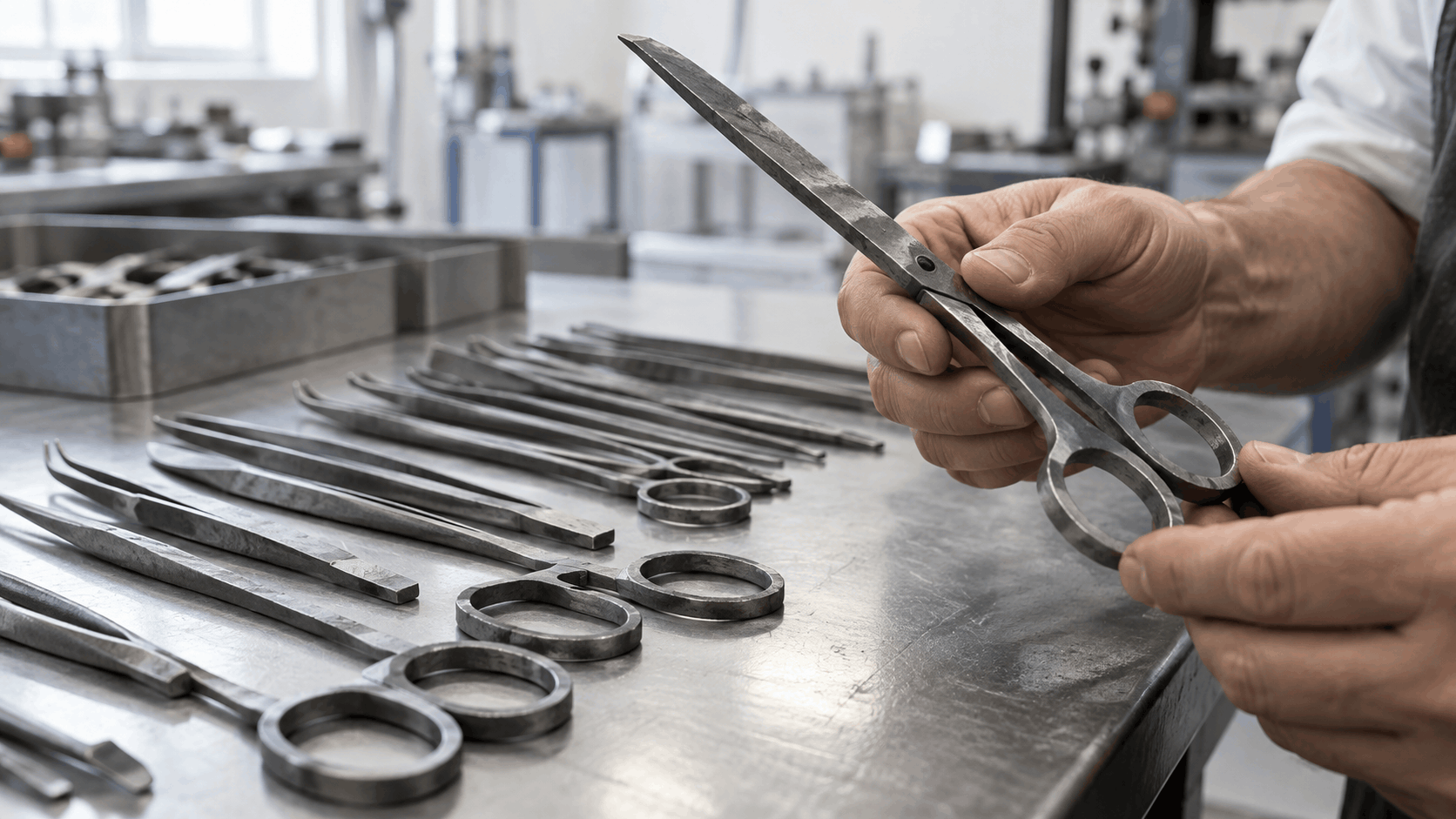
After forging, each piece is checked for cracks, folds and surface flaws. These defects are often small, but they become weak points when the instrument is under pressure.
During milling and machining we check the basic shape and key measurements such as jaw length, shank thickness and the box-lock area.
Heat Treatment and Hardness Testing
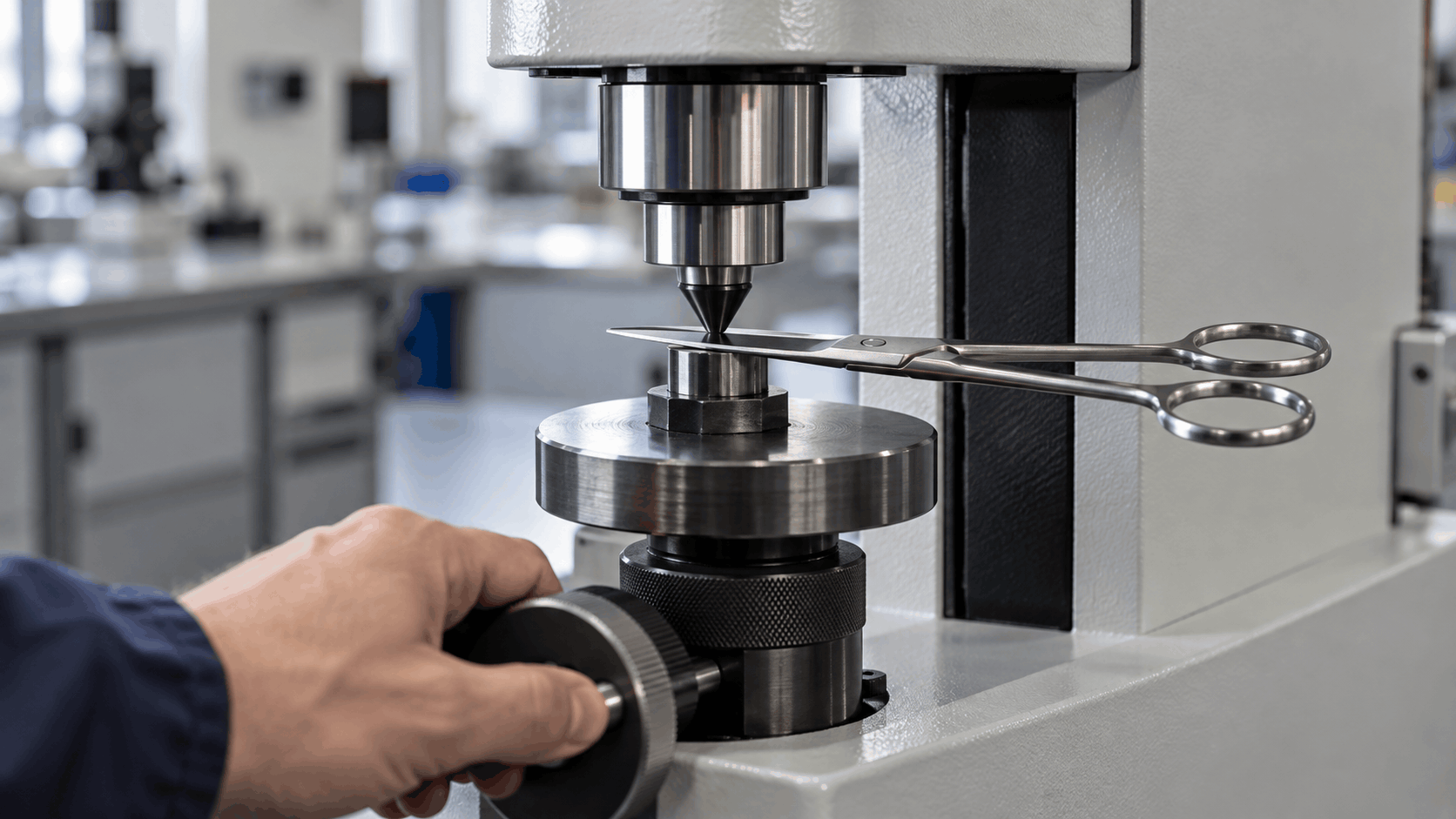
Heat treatment gives an instrument its strength. Instruments are hardened and then tempered so they keep their shape and edge without becoming brittle.
Samples from each batch are tested on a Rockwell hardness tester. Scissors and other cutting instruments need to be harder so the edge lasts, while forceps and needle holders need more flexibility so they grip without cracking.
Dimensional Inspection
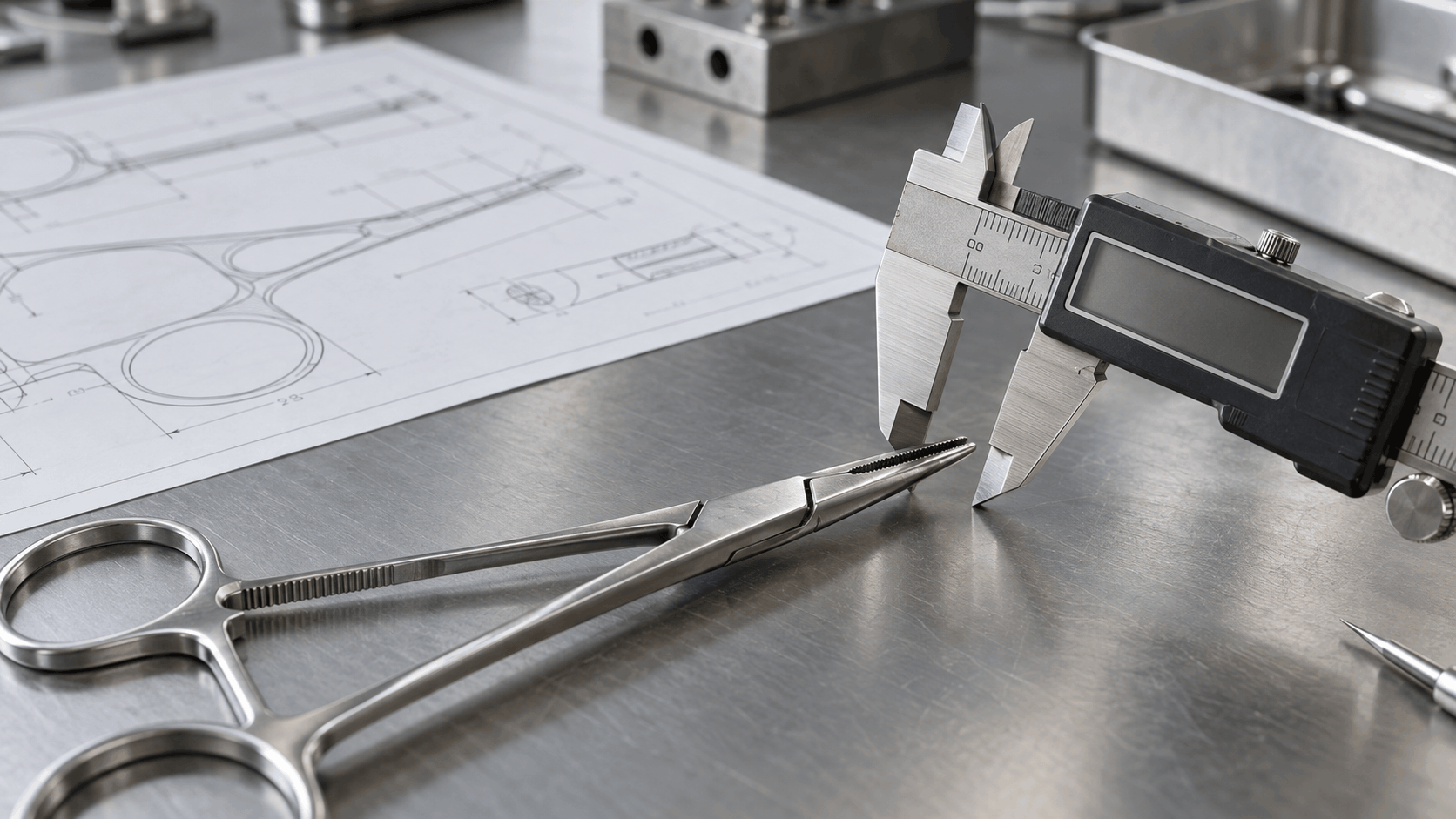
Accurate measurement is a core part of surgical instrument inspection. Our inspectors use vernier calipers, micrometers and gauges to compare each instrument against the approved drawing or your sample. We check overall length, tip width, jaw alignment and box-lock fit.
For OEM and private label orders, this keeps your instruments consistent from one shipment to the next.
Functional Testing
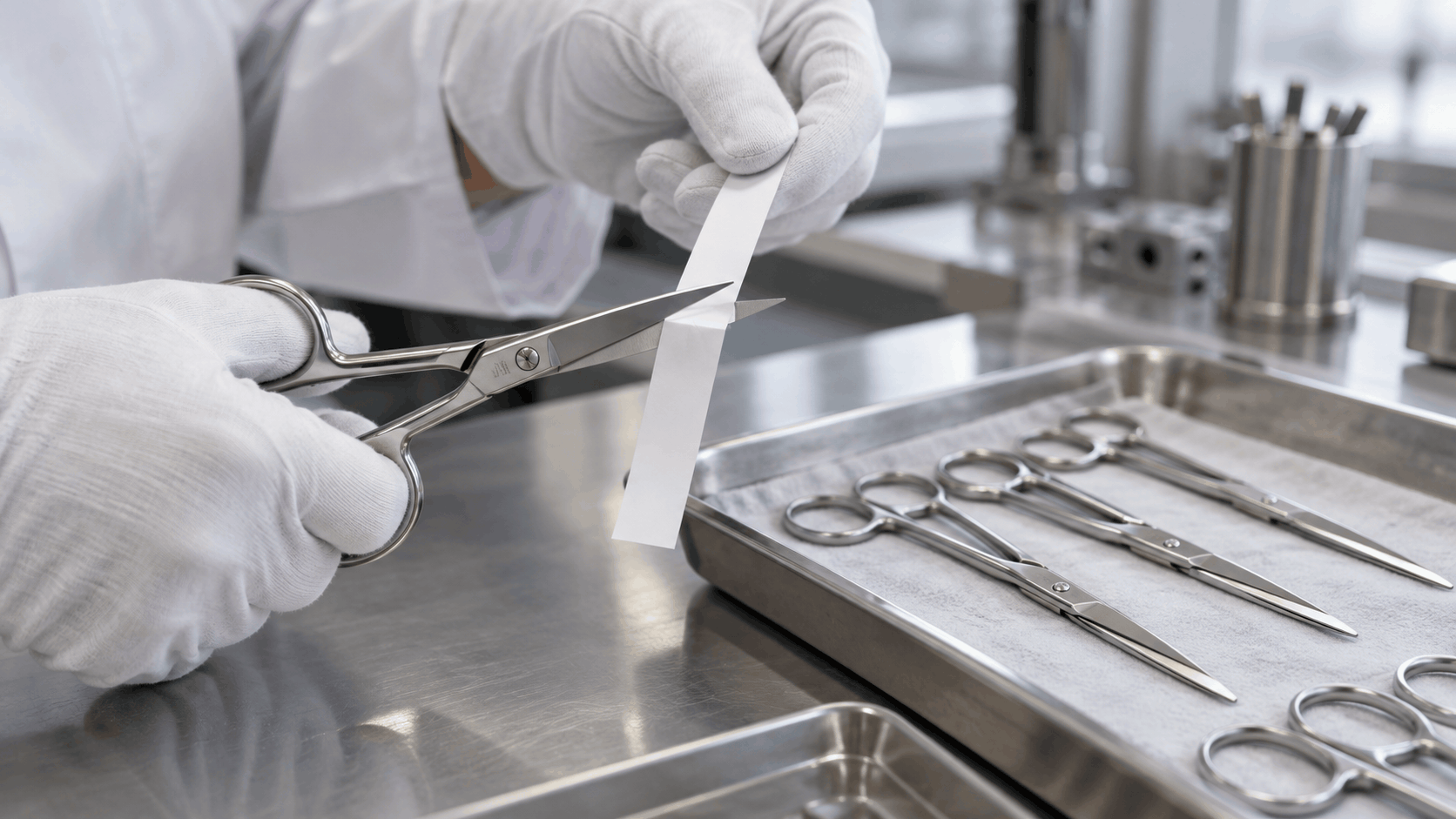
An instrument can be the right size and still not work well, so we test how each one performs.
- Scissors must cut cleanly all the way to the tip
- Forceps and clamps must close evenly with aligned serrations
- Needle holders must grip without the needle turning
- Ratchets and joints must lock firmly and move smoothly
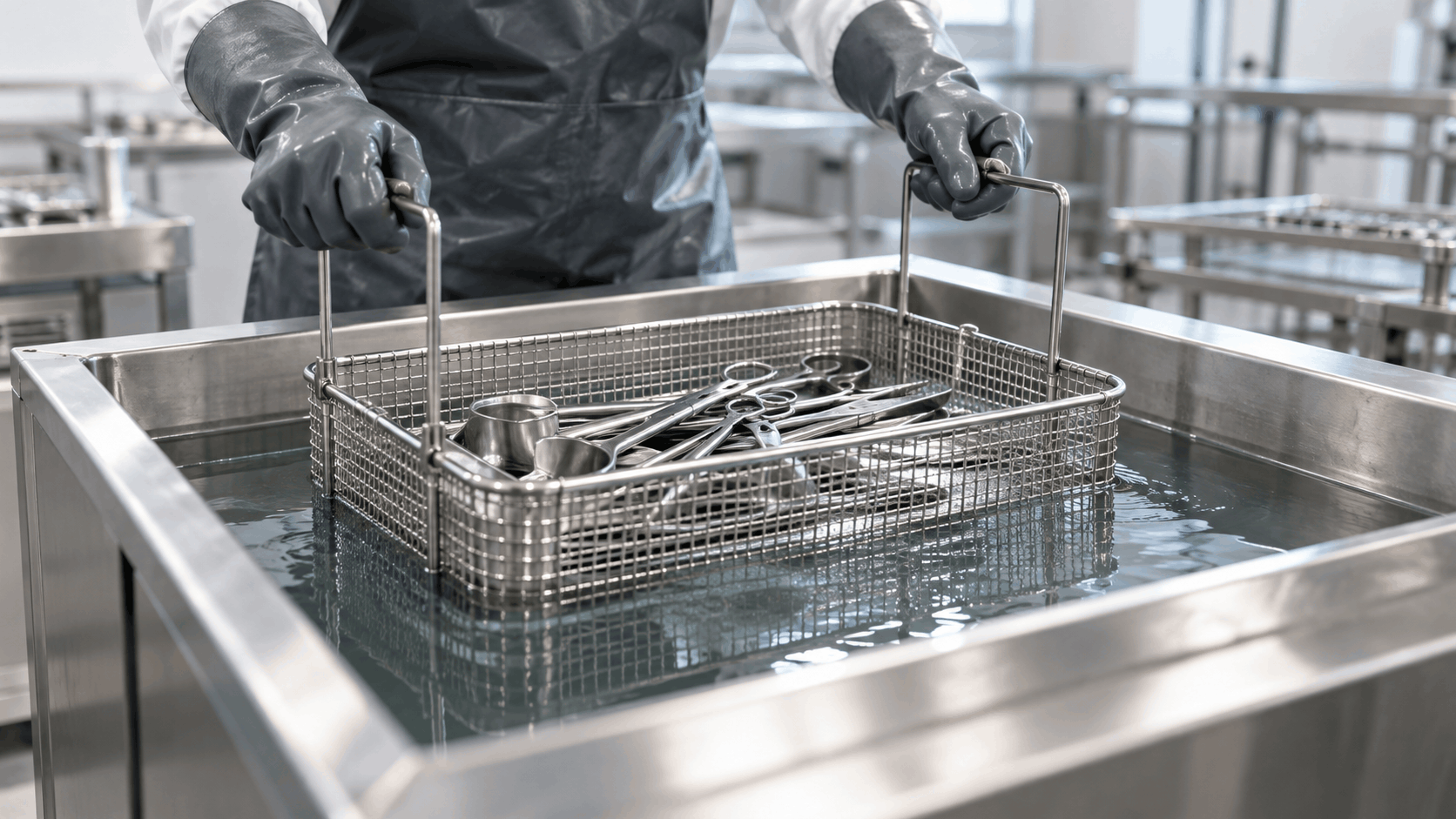
Surface Finish, Passivation and Corrosion Testing
After polishing, instruments are cleaned in an ultrasonic bath to remove oil, polishing compound and metal dust. Then they are passivated to protect them against rust.
We confirm the result with a boil test and a copper sulfate test on samples from each batch. A clean result means the protective layer has formed properly.

Final Inspection, Marking and Packing
This is the last surgical instrument inspection before packing. Each instrument is examined by hand under bright light and magnification for scratches, pits, burrs, sharp edges and uneven finish.
Approved instruments are laser-marked with the logo, item code and lot number, then packed in protective sleeves and export cartons so they reach you in the same condition they left us. You can see the full range in our surgical instruments catalogue.
Surgical Stainless Steel Grades We Use
Buyers often ask which steel is best. The honest answer is that it depends on the instrument. Different surgical stainless steel grades are made for different jobs.
| Grade | Main property | Typical use |
|---|---|---|
| AISI 420 | Hardens to a high level and holds a sharp edge | Scissors, chisels, osteotomes and other cutting instruments |
| AISI 410 | Strong and tough, with good spring quality | General surgical instruments such as forceps, clamps, retractors and needle holders |
| AISI 316 | Very high corrosion resistance | Cannulas, suction tubes, bowls and trays |
| Titanium Grade 5 | Light, strong and biocompatible | Bone plates and screws and selected instruments |
Using the right grade is just as important as surgical instrument inspection itself. That is why we verify the material at the very first step and record it against the lot number.
Surgical Instruments Passivation: Why We Never Skip It
Many people believe stainless steel cannot rust. In fact, it can, if the surface is not treated properly.
Stainless steel protects itself with a very thin, invisible layer of chromium oxide. During forging, grinding and polishing, tiny particles of free iron are left on the surface. If they stay there, they become starting points for rust spots, especially after repeated autoclaving.
Surgical instruments passivation removes this free iron in an acid bath and lets the protective layer form evenly. The result is an instrument that resists rust and staining through many cleaning and sterilization cycles.
A step that is easy to skip
Passivation does not change how an instrument looks, so some suppliers leave it out. That is exactly why our surgical instrument inspection includes a test for it.
If instruments start showing brown spots after a few weeks of use, poor passivation is one of the most common reasons.
Inspecting Surgical Instruments: Defects We Reject
When inspecting surgical instruments at the final stage, our team follows a clear list. Any piece with these faults is reworked or removed, and kept apart from approved stock.
Documents You Receive With Your Order
Clear paperwork makes importing easier and gives your own customers confidence.
- Certificate of Conformity
- Surgical instrument inspection report with lot numbers
- Material test certificate, on request
- Packing list and commercial invoice
Need a specific document or format? Tell us when you place the order.
Why Buyers Trust OrthoGear Surgical
- Direct from the factory. You deal with the manufacturer, not a trading company.
- Traceability. Lot numbers link each instrument to its material and batch.
- OEM experience. We match your drawings, samples, finish and branding.
- Open to third-party surgical instrument inspection. Send your own inspector or a third-party agency before shipment.
- Samples first. Check our quality yourself under our Sample Policy.
Frequently Asked Questions
How are surgical instruments tested for quality?
Hardness is checked on a Rockwell tester, sizes are measured with calipers and gauges, and function is checked by cutting, gripping and ratchet tests. Corrosion resistance is confirmed with boil and copper sulfate tests, and every piece gets a final visual inspection.
Do you inspect every instrument or only samples?
Every instrument is checked by hand for function and surface finish. Tests that can damage the product, such as corrosion tests, are done on samples taken from each batch.
Why do some surgical instruments rust?
The most common causes are low-grade steel, poor passivation, or harsh cleaning chemicals used after purchase. Correct material and proper passivation at the factory prevent most rust problems.
What grade of stainless steel is best for surgical instruments?
There is no single best grade. AISI 420 is preferred for cutting instruments, AISI 410 for forceps and clamps, and AISI 316 where the highest corrosion resistance is needed.
Can I get a surgical instrument inspection report with my order?
Yes. An inspection report and a Certificate of Conformity can be supplied with each shipment.
Do you accept third-party inspection?
Yes. You can appoint any inspection agency to check the goods at our facility before they are shipped.
Can I order samples before a bulk order?
Yes. Samples let you check our quality yourself before you commit. Please see our Sample Policy page for details.
Related Buyer Guides
Ready to Order Instruments You Can Rely On?
Send us your product list, drawings or samples, and we will reply with a quotation and details of our surgical instrument inspection for your order.