
Surgical and Medical Instrument Manufacturing Process
How a bar of steel becomes an instrument a surgeon can trust.
Surgical and medical instrument manufacturing is not something you can rush. A forceps that slips, a ratchet that won't hold, or a bone cutter that chips halfway through a procedure is more than a product defect. It is a problem in the operating room, with a patient on the table.
Craftsmanship and Precision in Every Instrument
At OrthoGear Surgical, we keep that in mind at every stage of surgical and medical instrument manufacturing. Each instrument we make goes through 11 controlled steps, from choosing the right steel to the final inspection before packing. Some of that work is done by modern CNC machines. A lot of it is still done by hand, by craftsmen who have spent years learning how a pair of jaws should close or how an edge should feel.
On this page we walk you through our full surgical and medical instrument manufacturing process, so you know exactly what goes into every instrument that carries our name. If you want to know more about the people behind the work, read about OrthoGear Surgical.
Why Surgical and Medical Instrument Manufacturing Needs Precision
Most people never think about how a surgical instrument is made. Surgeons do, though, even if they don't say it. They notice when a needle holder feels balanced in the hand, when scissors cut cleanly all the way to the tip, and when something rusts after a few trips through the autoclave. All of those things come down to the quality of surgical and medical instrument manufacturing behind it.
Weak Forging
Leaves a poor grain structure, so the instrument can crack under pressure.
Wrong Heat Treatment
Gives jaws that bend or edges that go dull too quickly.
Rough Finishing
Leaves tiny pits where tissue and fluids can hide, making cleaning harder.
Skipped Passivation
Means rust spots appear after only a few sterilization cycles.
None of these problems can be fixed by a final inspection alone. They have to be prevented while the instrument is being made. That is why we treat quality as part of every step, not as a checkpoint at the end.
Our Step-by-Step Manufacturing Process of Surgical Instruments
Here is how we take an instrument from raw material to a finished, packed product.
Step 1: Choosing the Right Medical-Grade Steel
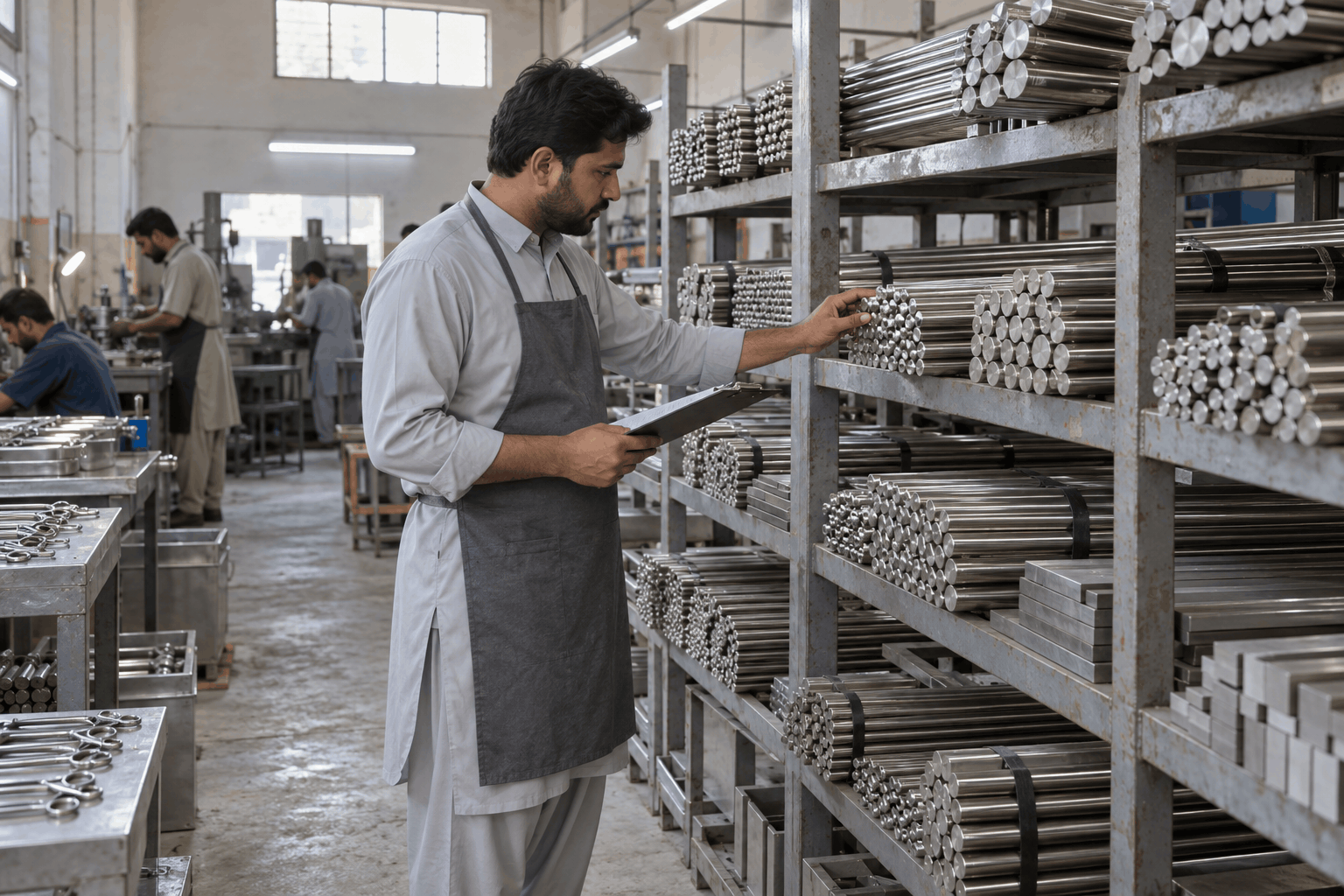
In surgical and medical instrument manufacturing, everything starts with the material. If the steel is wrong, nothing that happens later can fully correct it.
We use medical-grade stainless steel such as AISI 410, 420, 304 and 316, in line with ASTM F899, the specification for wrought stainless steels used in surgical instruments. The grade depends on what the instrument has to do:
- Cutting and gripping instruments, such as scissors, osteotomes, chisels and bone cutters, need steel that can be hardened so it holds an edge. Martensitic grades like 410 and 420 are the usual choice.
- Retractors and other non-cutting parts need toughness and higher corrosion resistance. Austenitic grades like 304 and 316 work well here.
Every batch of steel arrives with its mill test certificate. Before it goes anywhere near production, we check the grade and composition against that certificate. If something doesn't match, the material goes back. Read more on our Materials & Stainless Steel page, or see our surgical instrument steel comparison.
Step 2: Surgical Instrument Forging
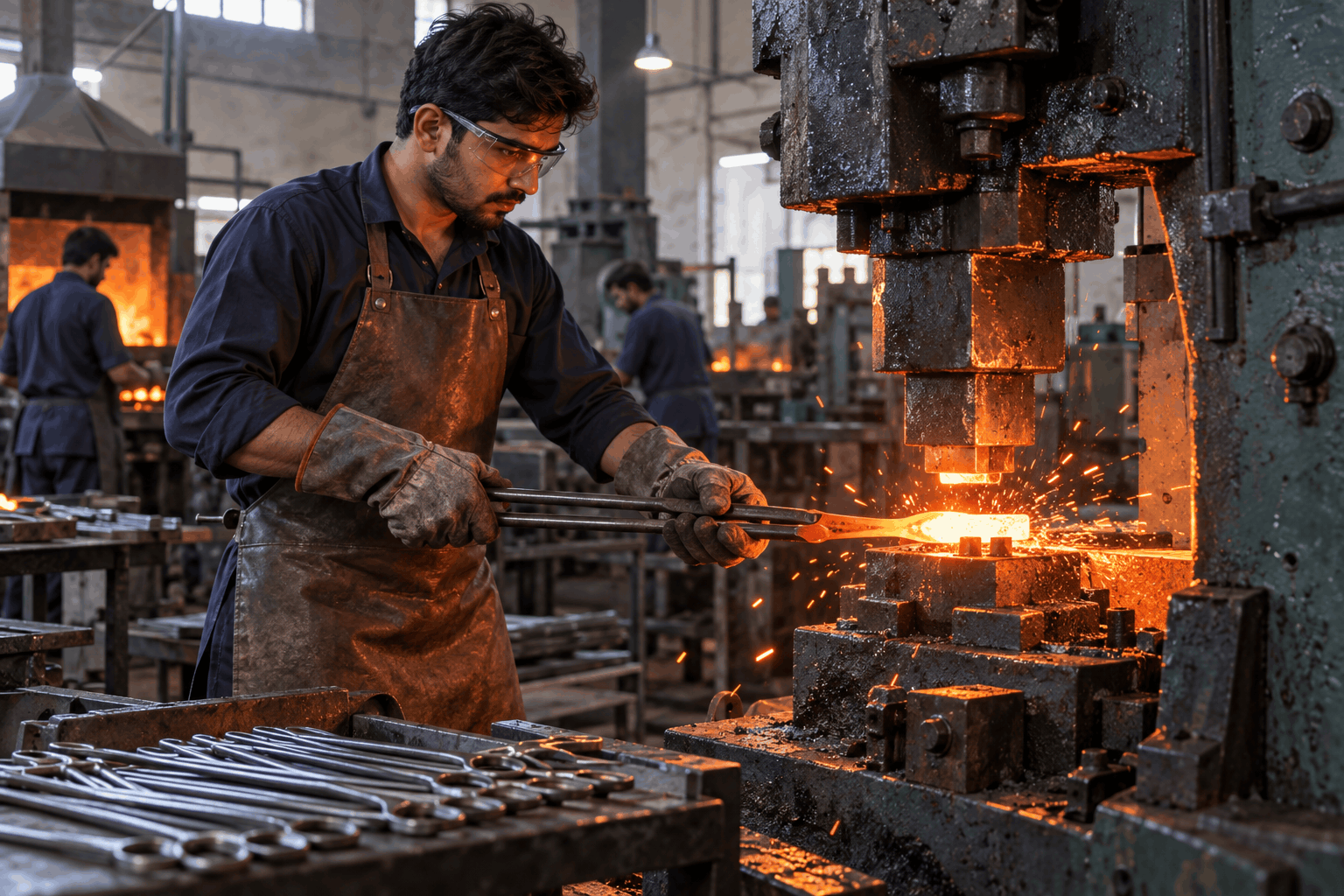
Once the steel is approved, it is cut into bars and heated until it is soft enough to shape. It is then pressed or hammered into precision dies that give it the rough outline of the instrument.
Forging is one of the main reasons a well-made instrument lasts for years. When steel is forged, its internal grain follows the shape of the instrument instead of running straight across it. That makes the finished piece far stronger and much less likely to crack under repeated stress than a part simply cut out of a flat sheet.
After forging, the extra material around the edges, called flash, is trimmed off. What is left is a "blank": a rough instrument that is ready for machining.
Step 3: CNC Machining of Surgical Instruments
This is where the instrument gets its exact shape and size. Forged blanks are machined on CNC milling and turning machines, and this is the stage where the critical features are cut: jaw serrations, box locks, ratchet teeth, threads, holes and cannulations. For orthopedic instruments that have to work alongside implants and other system parts, a fraction of a millimetre makes a real difference.
In modern surgical and medical instrument manufacturing, CNC machining gives us something hand work alone cannot: consistency. The hundredth instrument in a batch matches the first one, and both match the drawing. That matters a lot to hospitals and distributors who need every piece in a set to behave the same way.
Step 4: Heat Treatment of Surgical Instruments
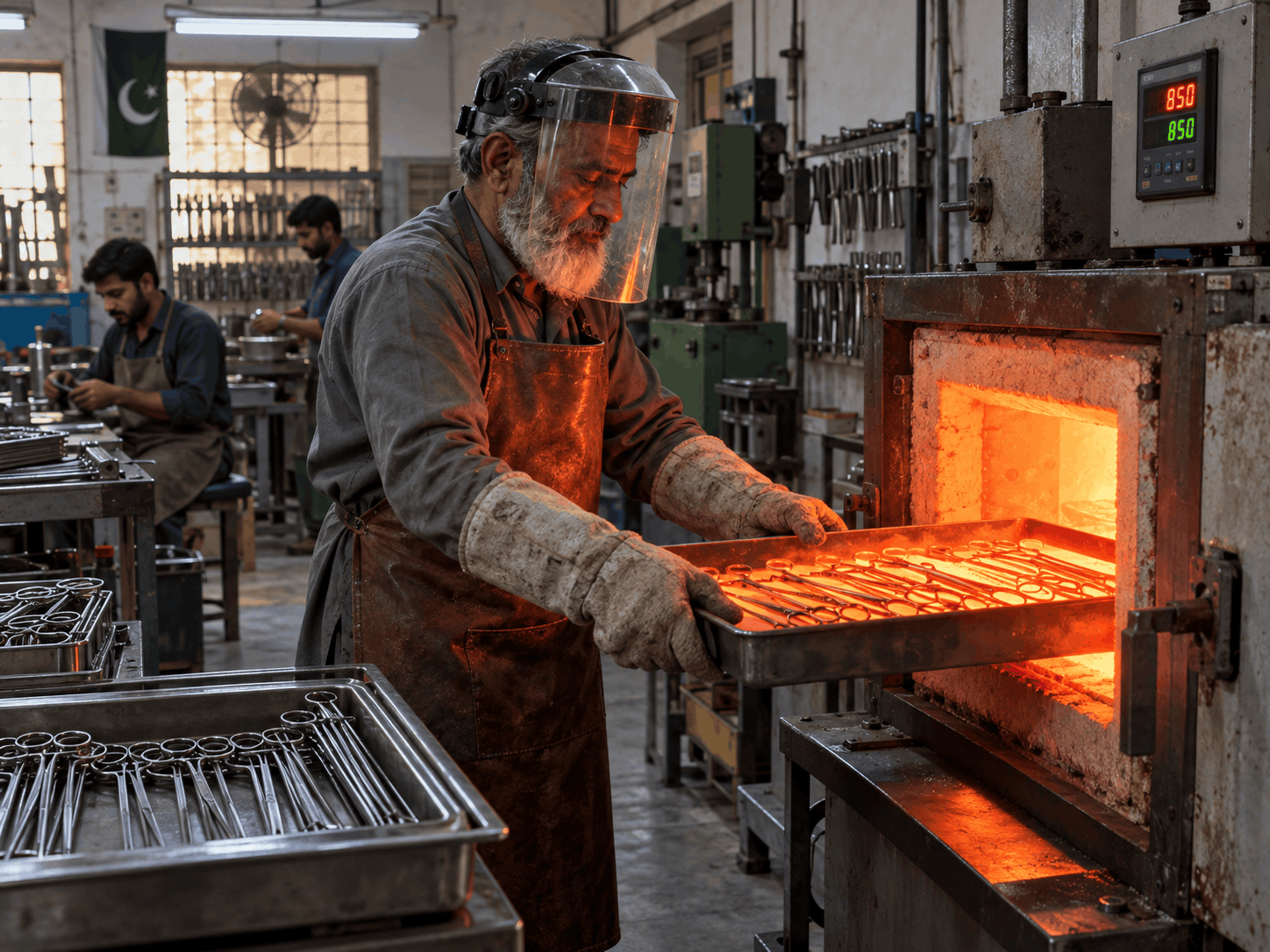
Steel straight out of machining is not yet ready for surgery. It needs the right balance of hardness and toughness, and that comes from heat treatment.
Instruments are hardened in a controlled furnace and then tempered. Hardening makes the steel strong enough to hold an edge or grip firmly. Tempering takes away some of the brittleness, so the instrument doesn't snap under load. Get this balance wrong in either direction and the instrument fails: too soft and it bends, too hard and it cracks.
We test hardness on samples from every batch using the Rockwell scale. If a batch falls outside the specified range for that instrument type, it doesn't move on.
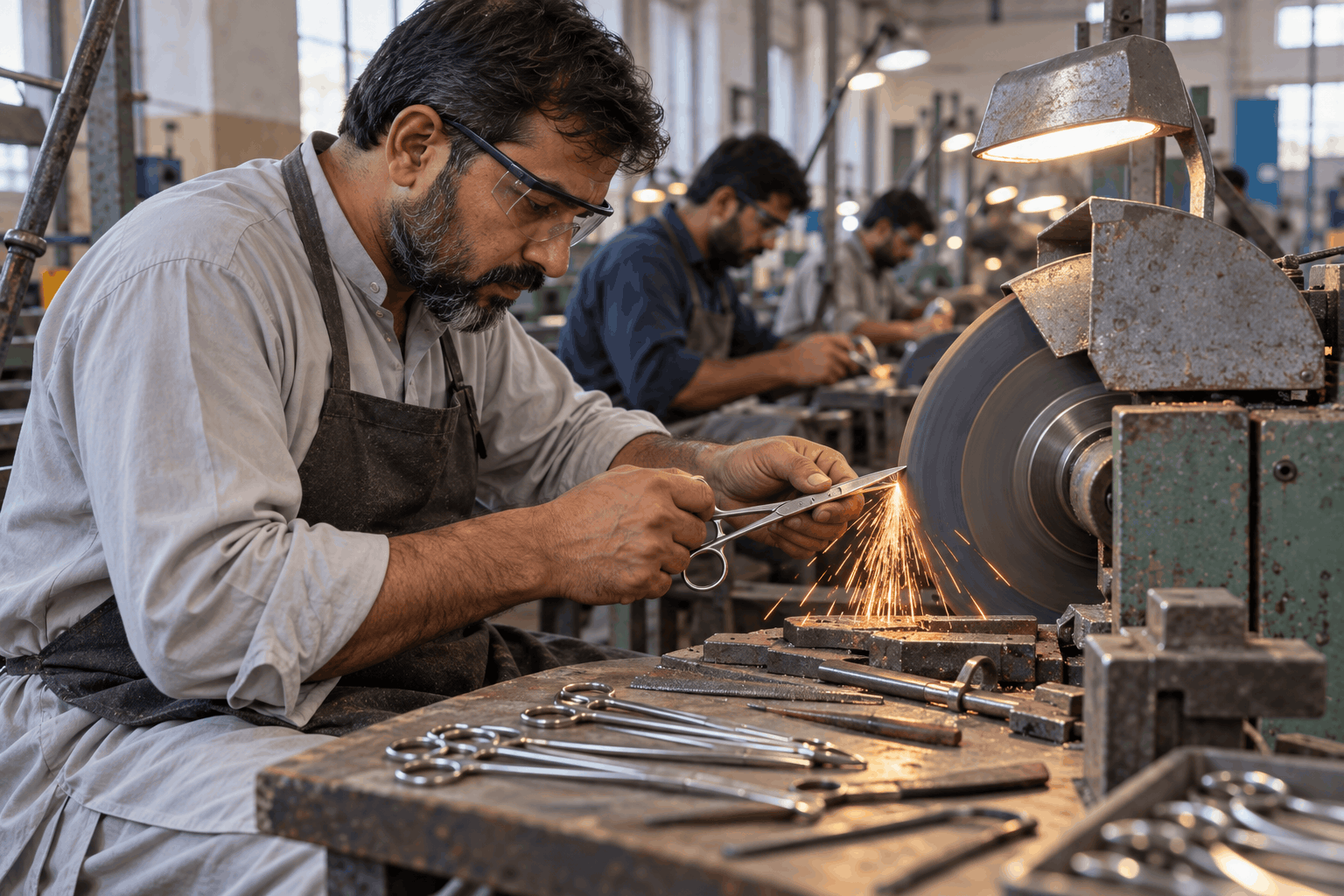
Step 5: Grinding, Filing and Hand Fitting
This is the part of the process that machines still can't fully replace.
Our technicians grind, file and shape each instrument by hand. They smooth the contours, refine the edges, and make sure every surface that will touch tissue is clean and even. Scissor blades are set so they cut smoothly from heel to tip. Forceps tips are aligned so they meet exactly. Serrations are checked so they grip without tearing.
A lot of what makes an instrument feel "right" in a surgeon's hand is decided here. It takes years of experience to know when a joint is fitted properly or when an edge is ready, and that experience is something we value highly in our team.
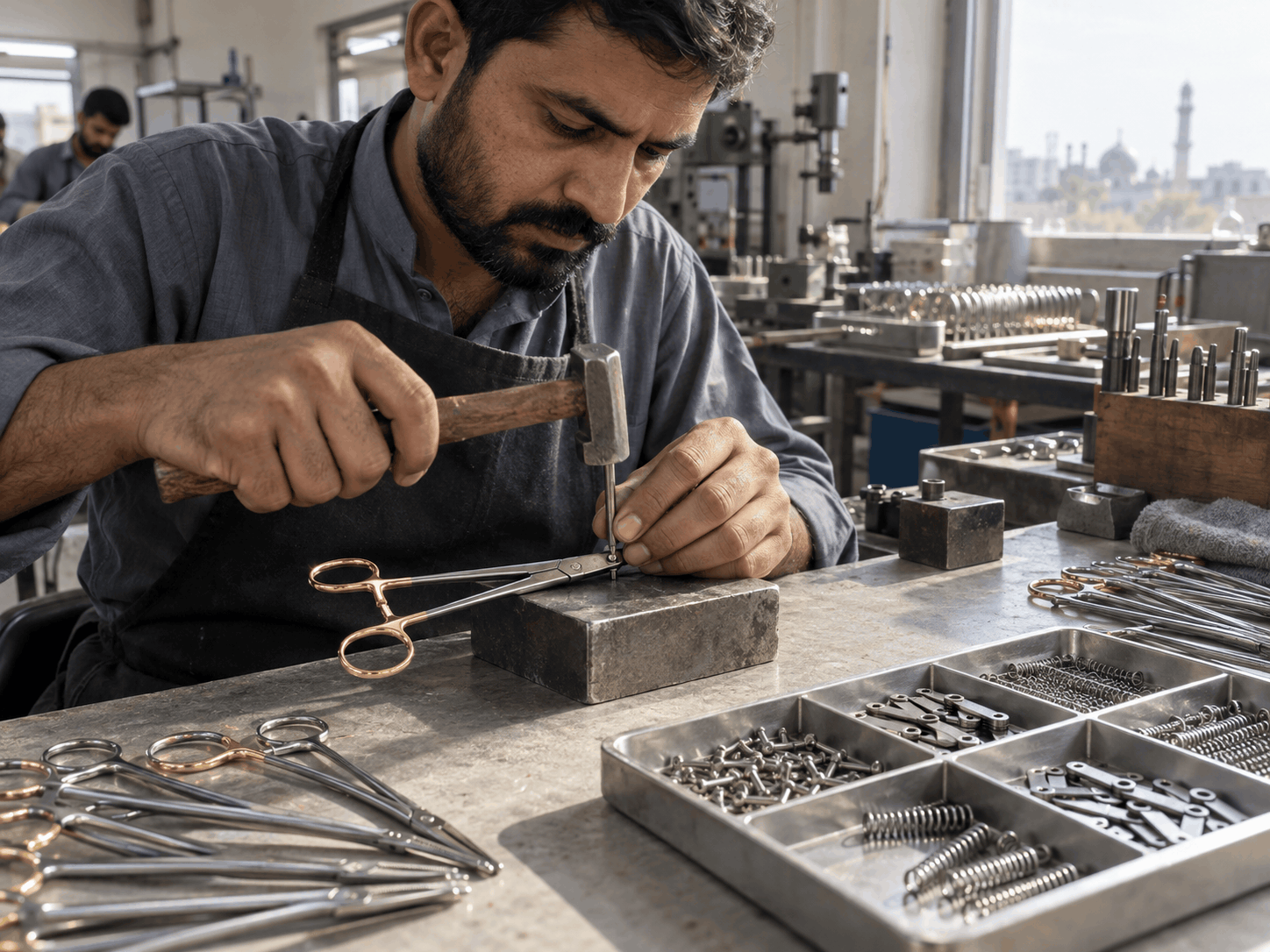
Step 6: Assembly
Many instruments are made of more than one part. Forceps, needle holders, rongeurs, bone cutters and self-retaining retractors all need careful assembly.
At this stage, joints are riveted or screwed together, springs are fitted, and ratchets are adjusted. Each assembled instrument is then opened, closed and operated by hand. We check that the action is smooth, that the ratchet engages firmly and releases cleanly, and that nothing is loose or stiff. If it doesn't feel right, it goes back for adjustment.
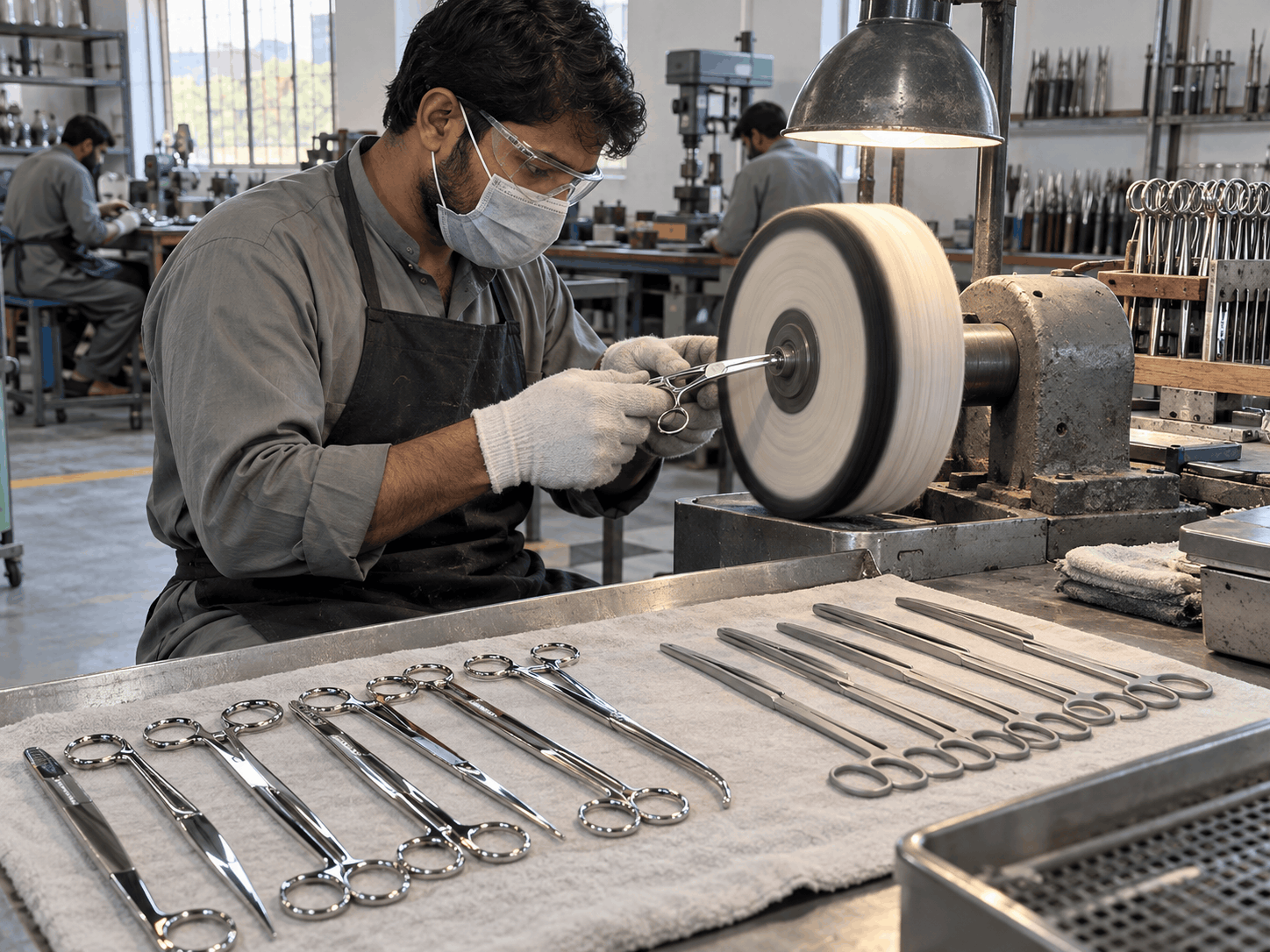
Step 7: Polishing and Surface Finishing
Next, the instrument is polished to the finish the customer needs:
- Mirror finish: a bright, highly polished surface that looks clean and is easy to wipe down.
- Satin (matte) finish: a softer, non-reflective surface that reduces glare under strong operating theatre lights.
A good finish is not only about looks. A smooth surface with no scratches, pits or burrs is much easier to clean and sterilize properly, and it gives corrosion fewer places to start.
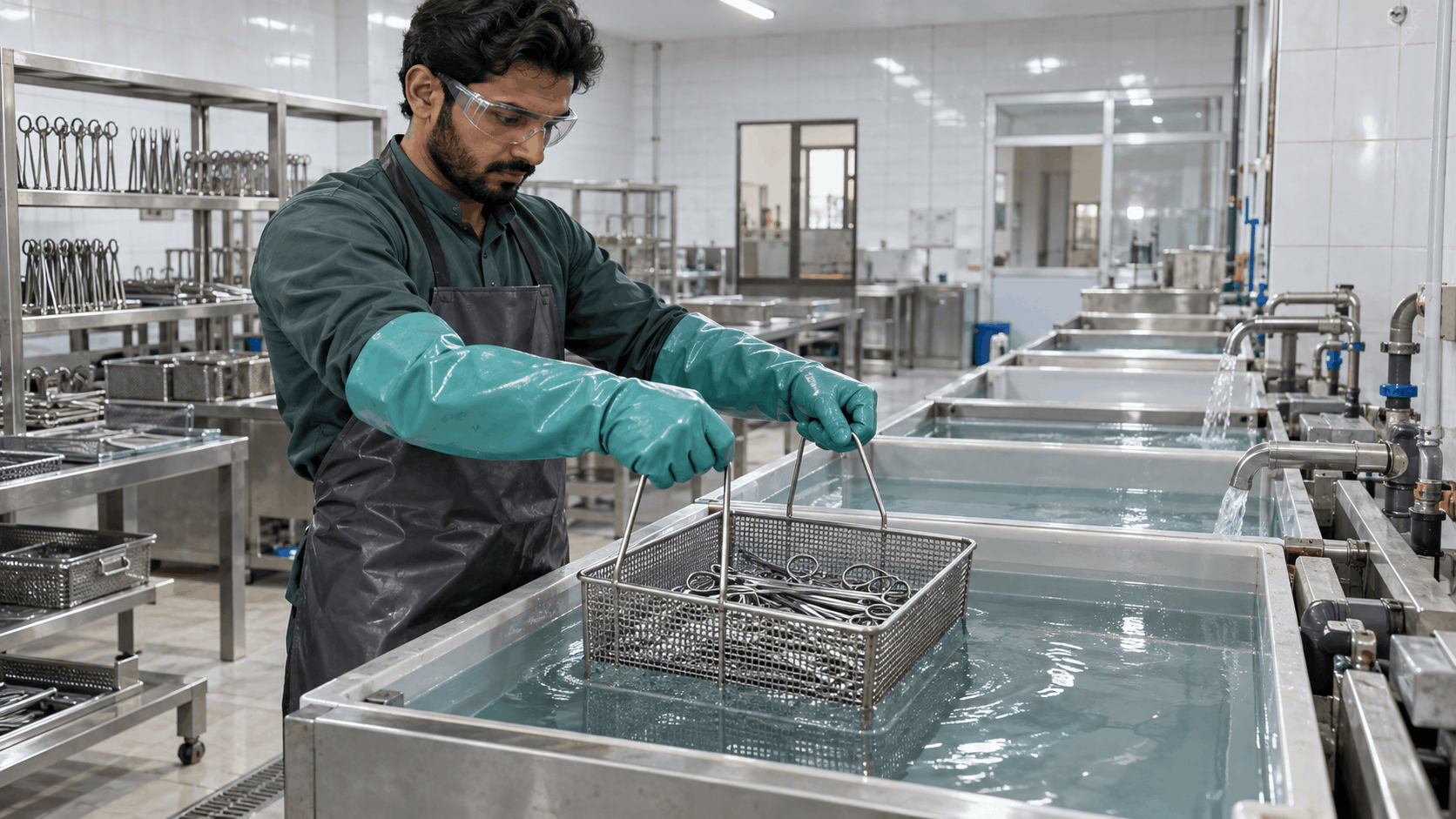
Step 8: Passivation of Surgical Instruments
Stainless steel protects itself with a very thin layer of chromium oxide. During forging, machining and polishing, tiny particles of free iron and other contaminants can get stuck on the surface and weaken that protection.
Passivation is a chemical treatment that removes those contaminants and helps the protective layer form properly again. It is one of the most important steps in surgical and medical instrument manufacturing, and it decides much of an instrument's working life. The industry reference for this treatment is ASTM A967, the standard for chemical passivation of stainless steel parts.
It is a step that is easy to cut corners on, because you can't see the difference straight away. The difference shows up months later, at the hospital. That is exactly why we never skip it.
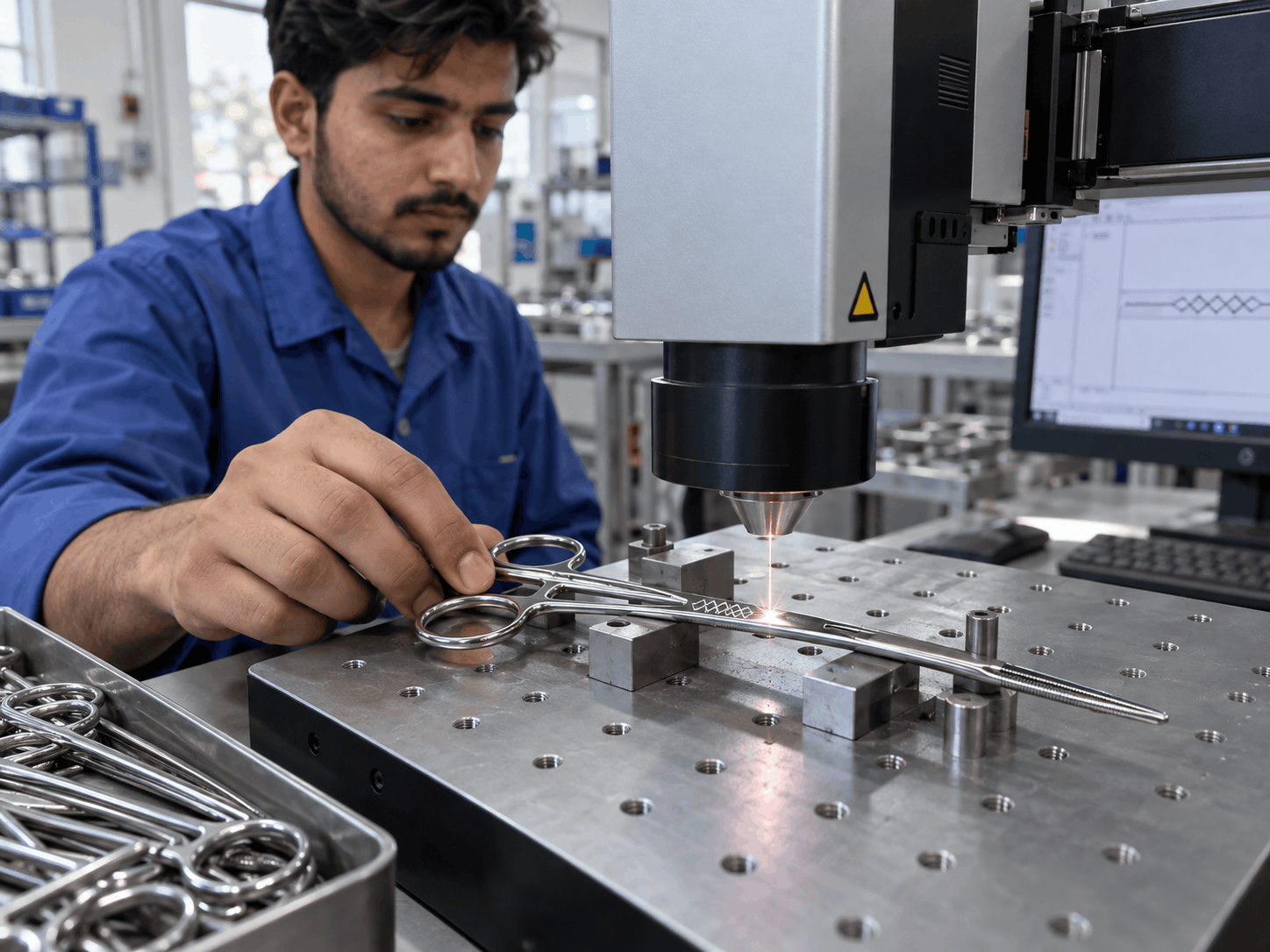
Step 9: Laser Marking for Full Traceability
Every instrument is permanently laser marked with details such as the brand name or logo, catalogue number and lot number.
We use laser marking instead of stamping or etching because it doesn't damage the surface or leave grooves where dirt and bacteria could collect. The markings stay readable after years of cleaning, and they give full traceability back to the production batch and the material it was made from.
For OEM and private label surgical instruments, this is also the stage where your own logo and product codes are added.
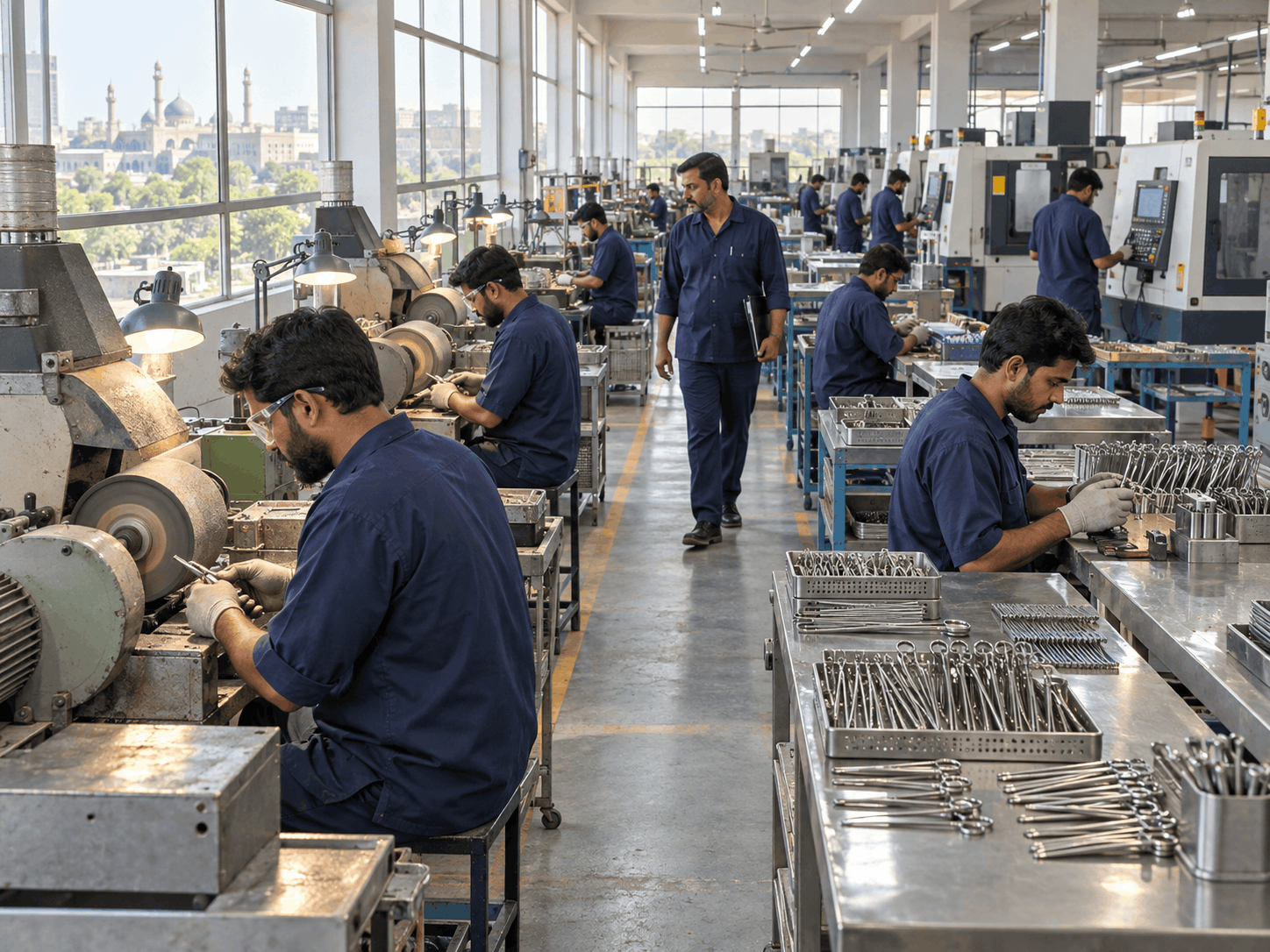
Step 10: Quality Control and Inspection
Before any instrument is released, it is inspected again, this time as a finished product. Our inspectors check:
- Dimensions against the drawing
- Function: jaw alignment, ratchet action, smooth joint movement
- Cutting performance for scissors and other cutting instruments
- Surface finish: no cracks, pits, burrs or polishing marks
- Corrosion resistance and marking quality
Anything that doesn't pass is reworked or rejected. See our full procedure on the surgical instrument inspection page.
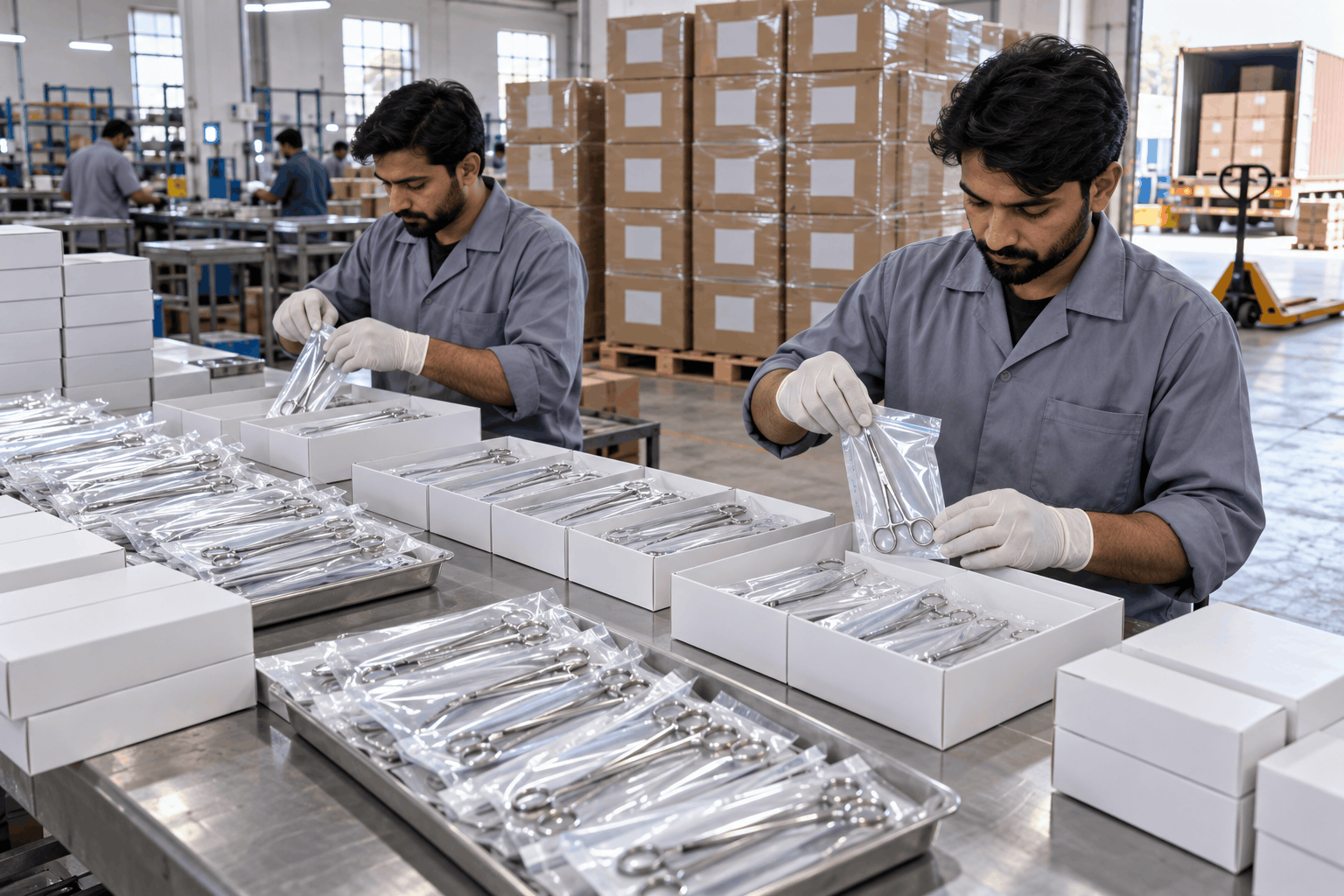
Step 11: Cleaning, Packaging and Export
Approved instruments are cleaned in ultrasonic baths to remove any polishing compound or residue, then dried thoroughly.
Each instrument is packed in protective packaging that stops tips and edges from being damaged during shipping. Labels clearly show the product name, catalogue number and lot number. Instruments are supplied non-sterile and should be cleaned and sterilized at the user's facility before first use, unless agreed otherwise.
We ship worldwide by air or sea, with export documents prepared to your requirements. For larger quantities, see our bulk surgical instruments supply options.
Instruments We Manufacture
Our surgical instruments manufacturing process covers a wide range of orthopedic and general surgical instruments. Explore our main categories:
View range → Bone RongeursFor removing and shaping bone
View range → Chisels, Gouges & OsteotomesPrecision bone cutting tools
View range → RetractorsHand-held and self-retaining
View range → Bone Levers & ElevatorsFor leverage and bone exposure
View range → Orthopedic SetsComplete instrument sets
View range → Plates & ScrewsOrthopaedic implants
View range → General Surgical InstrumentsForceps, scissors and more
View range → Dental InstrumentsExtraction and dental tools
View range →
Browse every product in our online shop or download the full product catalogue. New to orthopedic tools? Read our orthopedic surgical instruments guide.
OEM and Private Label Manufacturing
As well as our own catalogue range, we offer OEM surgical instruments manufacturing for other brands. This kind of surgical and medical instrument manufacturing follows the same 11 steps as our own range. If you have a drawing or a sample, we can produce custom surgical instruments or custom surgical instrument sets to your exact specification, with your logo laser marked and packaging made to your requirements.
- You send your drawing, sample or specification
- We review it and send a quotation
- We make samples for your approval
- Approved samples move to full production
- Instruments are inspected, marked, packed and shipped
Before ordering, check our sample policy. If you are looking for reliable surgical instruments manufacturers to work with long-term, we would be glad to talk.
Why Hospitals and Distributors Choose OrthoGear Surgical
Full Process In-House
From forging to packaging, everything happens under one controlled system, so nothing falls through the gaps between suppliers.
Medical-Grade Materials
Stainless steel with mill certificates and full batch traceability on every order.
Skilled Hands, Modern Machines
CNC machining for accuracy, experienced craftsmen for fit and feel.
Checks at Every Stage
Quality is built into each step of production, not only tested at the end.
Flexible OEM Service
Private label and custom instruments for brands and distributors worldwide.
Clear Communication
One team to talk to, from first enquiry to final delivery.
Frequently Asked Questions
What steel is used in surgical and medical instrument manufacturing?
Most surgical instruments are made from martensitic stainless steels such as AISI 410 and 420, which can be hardened for cutting and gripping. Austenitic grades such as 304 and 316 are used where higher corrosion resistance is more important than hardness. The grade is chosen according to what each instrument has to do.
How many steps are there in the surgical instruments manufacturing process?
At OrthoGear Surgical, every instrument goes through 11 main steps: material selection, forging, CNC machining, heat treatment, grinding and fitting, assembly, polishing, passivation, laser marking, inspection, and cleaning, packaging and export.
Why is passivation important for surgical instruments?
Passivation removes free iron and other contaminants from the steel surface and strengthens its natural protective layer. This greatly reduces the risk of rust and staining when instruments go through repeated cleaning and sterilization.
Are surgical instruments made by hand or by machine?
Both. Modern surgical and medical instrument manufacturing uses machines such as CNC mills to handle the precise cutting of shapes and features. Skilled technicians handle grinding, fitting, adjustment and finishing, where experience and feel are still essential.
Can you manufacture instruments to our own design?
Yes. Send us your drawing or a sample and we will produce instruments to your specification, with your own branding if you need it. Visit our custom manufacturing page to get started.
Are your instruments supplied sterile?
Our instruments are supplied non-sterile. They must be cleaned and sterilized before use, following the instructions supplied with each order.
Work With a Manufacturer Who Takes Every Step Seriously
Good surgical and medical instrument manufacturing is about doing the small things properly, every single time: the right steel, careful forging, accurate machining, correct heat treatment, patient hand finishing and thorough inspection. Skip any one of them and the surgeon will eventually feel the difference.
At OrthoGear Surgical, we don't skip them. Whether you need instruments from our catalogue or a custom OEM range under your own brand, our team is ready to help.