

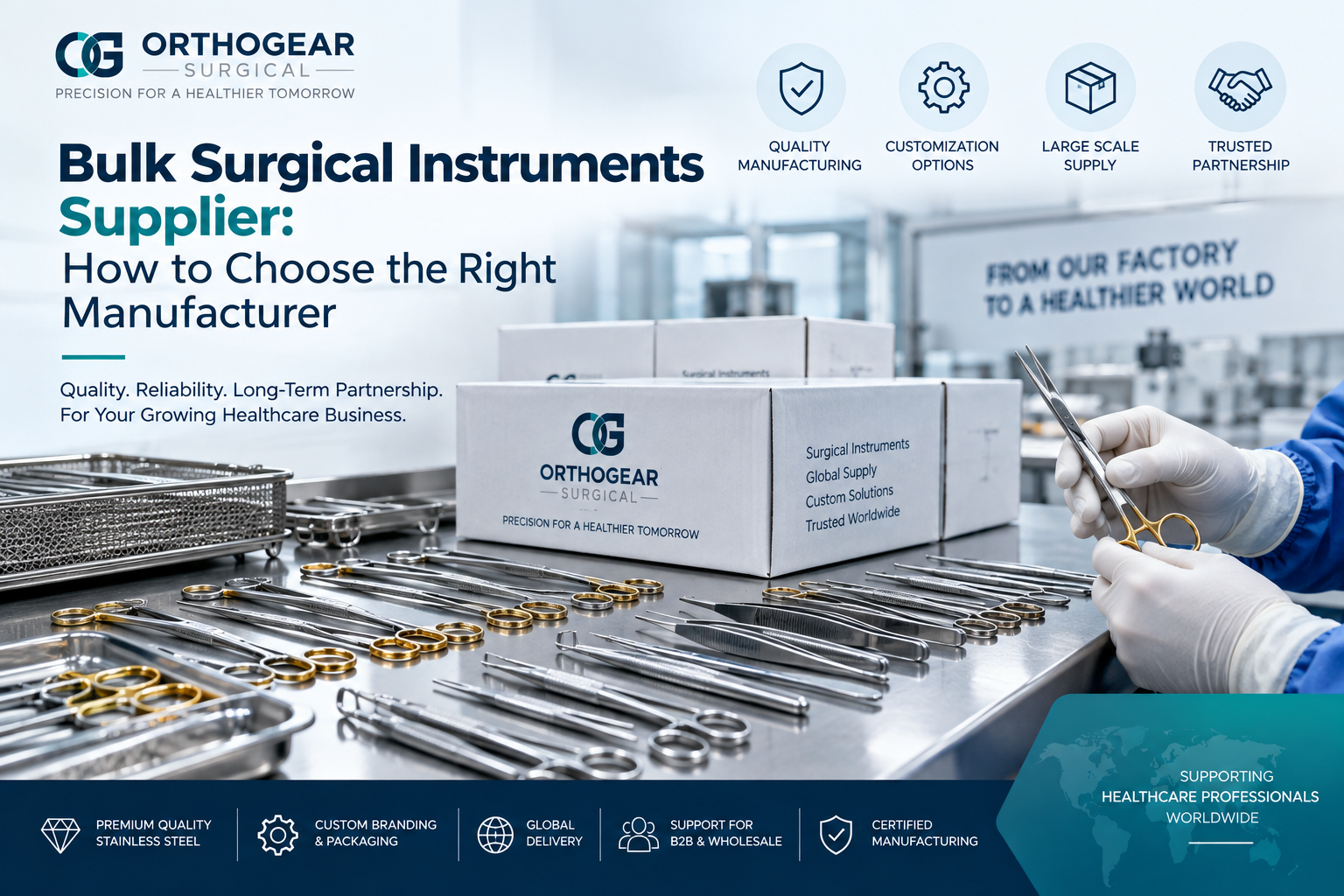
Bulk Surgical Instruments Supplier: The Essential Guide
Introduction
For a hospital, dental clinic, distributor or medical procurement agency, choosing the right bulk surgical instruments supplier is one of the most critical choices in the buying process. Compared to purchases of individual surgical instruments, a bulk order locks the buyer into a much greater commitment to the supplier. The issue is that most online and printed catalogs do not offer a clear distinction between competing manufacturers, making it easy to choose an inferior supplier by accident.
This guide covers the criteria for choosing the right bulk surgical instruments supplier, from quality and pricing to post-sale support, which allows a buyer to confidently select a supplier without engaging in guesswork.
Why Supplier Selection Is More Important in Bulk Orders
A single purchase of surgical instruments involves low risk to the buyer, since the financial and operational impact of one or a few low-quality instruments is relatively small. With a bulk purchase, the situation is different for several reasons:
The financial impact of an incorrect choice is exponentially higher.
A hospital making a bulk purchase of low-quality medical instruments may end up spending much more money on replacements and repairs. A distributor which has bought a large order of substandard surgical instruments under a private label may find their credibility as a supplier compromised.
There is a higher operational risk involved in the purchase.
Hospitals and clinics which receive an order of substandard surgical instruments will have to deal with disruptions to their operations while replacements are being sourced. Distributors will have to spend time and energy finding a new supplier in the case of an extremely disappointing order.
The long-term implications of a supplier choice are greater.
A bulk purchase typically represents the beginning of a long-term relationship between a supplier and a buyer. This means that mistakes in the selection process typically have repercussions for more than one order.
Therefore, while a poor choice of an individual instrument supplier typically has little impact, a poor choice of a bulk supplier is much more serious.
Additionally, it is important to remember that a bulk purchase is usually not the first or only purchase a hospital, distributor or private label supplier will make. Thus, the first bulk purchase represents an opportunity to establish a mutually beneficial long-term relationship with a supplier. Taking the time to choose the right bulk surgical instruments supplier is crucial to seizing this opportunity.
8 Steps to Choosing the Right Bulk Surgical Instruments Supplier
1. Verify ISO 13485 Certification
ISO 13485 certification is an international standard of quality control for medical device manufacturers. A manufacturer which has achieved ISO 13485 certification has demonstrated that its production process follows a set of quality control criteria which minimizes the likelihood of manufacturing errors.
The reasons why ISO 13485 certification is important for a bulk order are as follows:
A certified manufacturer has documented procedures which reduce errors during the production process, resulting in a lower likelihood of receiving a defective instrument in a bulk order.
ISO 13485 certification often includes documentation which demonstrates that material defects are minimized during production.
Since a bulk order often represents a higher commitment on the buyer’s end, a supplier with international certification demonstrates a higher level of commitment to its own quality control.
While some manufacturers operate under other international quality control standards, any supplier which does not have a documented quality control procedure should be viewed with suspicion.
When contacting a potential supplier, buyers should ask for a copy of their ISO 13485 certificate, if they have one.
It is important to remember that while a high standard of quality control minimizes manufacturing errors, it does not eliminate them. Therefore, potential buyers should keep in mind that even a certified manufacturer can produce a faulty instrument or an instrument which does not fulfill the buyer’s specific requirements.
2. Confirm the Material Specifications
A frequent point of disappointment for buyers of surgical instruments is the difference between the quality of material stated by the supplier and the actual quality of the received product. Some manufacturers use low-grade steel for their instruments which compromises the instrument’s durability and increases the likelihood of manufacturing defects.
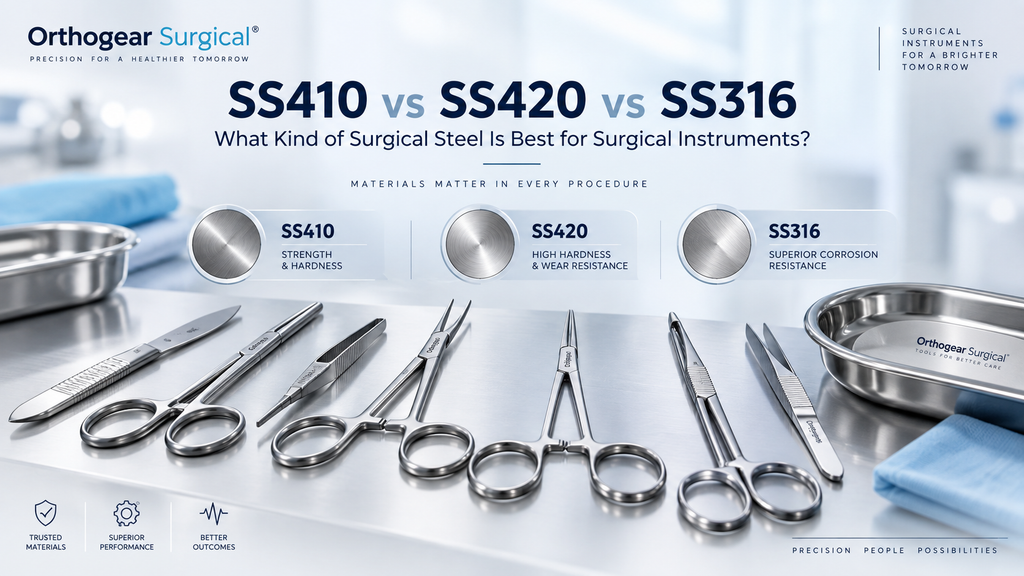
A responsible manufacturer will be able to specify the steel grade for each category of instruments. The three steel grades most commonly used in the production of surgical and dental instruments are as follows:
SS410 steel – This martensitic stainless steel is ideal for making cutting instruments due to its high hardness and durability.
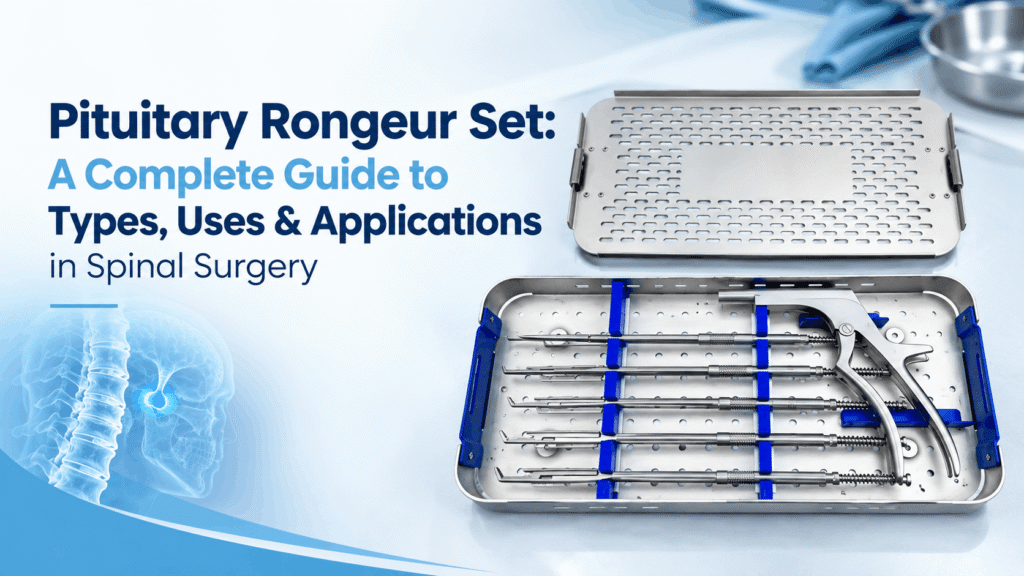
SS420 steel – This martensitic stainless steel is more resistant to oxidation than SS410 steel. Due to its durability and relative ease of forging, it is a popular choice for making forceps, elevators and rongeurs.
SS316 steel – This austenitic stainless steel has a higher degree of resistance to corrosion and is therefore used in instruments which are subjected to extreme conditions during the sterilization process.
A buyer should view a supplier’s unwillingness to specify the steel grade as a red flag.
It is important to determine the steel grade for each instrument or category of instruments before making a bulk purchase. A responsible manufacturer will be able to provide an adequate description of the material used, including such details as hardness, resistance to oxidation and brittleness. If a supplier provides vague answers or is unable to discuss the mechanical properties of the material used in the instruments, it is best to continue searching for a more honest supplier. While buyers may not have the expertise to independently determine the steel grade of the instruments, they should remember that the steel grade is directly linked to the instrument’s durability and resistance to defects.
3. Ask to See Samples
Catalogs and product descriptions should be used as a reference point during the selection process, but they should not be a sole criterion. Instrument buyers should request samples to evaluate the following:
- The alignment and finish of the instrument, especially in the case of forceps
- The hardness of the edge in the case of cutting instruments
- The quality of welding and hinges, which often serve as weak points of an instrument
A responsible manufacturer will be able to provide more than one sample of the required instrument to evaluate the consistency of the production. A bulk buyer should test the instruments returned as samples in a few sterilization cycles to rule out the possibility of defects which may emerge due to temperature changes.
4. Understand the Manufacturer’s MOQ Policy and Other Order Requirements
Minimum Order Quantity, or MOQ, represents the lowest amount of instruments which a manufacturer is willing to sell to a supplier. Different manufacturers have different MOQ requirements, and a buyer should familiarize themselves with the requirements before committing to a purchase. Some manufacturers list their MOQ requirements per SKU while others use a general figure which applies to an entire order.
A buyer should understand how the supplier’s MOQ policy will affect their purchase. Some manufacturers offer more flexibility to first-time buyers. Additionally, a higher purchase volume often correlates with a lower price per unit. Therefore, a buyer should analyze how their intended purchase volume fits into the selected supplier’s MOQ framework.
5. Evaluate Direct Factory Price vs Trading Company Option
Many instrument buyers are not aware that they are not purchasing the instruments directly from the manufacturer. Instead, buyers often purchase from a trading company which acts as an intermediary between the manufacturer and the supplier. While this may not be a deal-breaker, buyers should familiarize themselves with their options.
There are benefits to purchasing directly from a manufacturer, including greater flexibility in terms of specifications and price, more straightforward communication and more efficient dispute resolution in the case of a manufacturing error. Furthermore, a direct purchase often has a lower price per unit since there is no additional markup from an intermediary.
When contacting a potential supplier, buyers should ask if they work directly with the manufacturer and request specific details in regards to their production facilities. An open and detailed answer demonstrates that the supplier is confident in their production capabilities and is not hiding any important information.
6. Evaluate OEM and Private Label Capabilities (If Applicable)
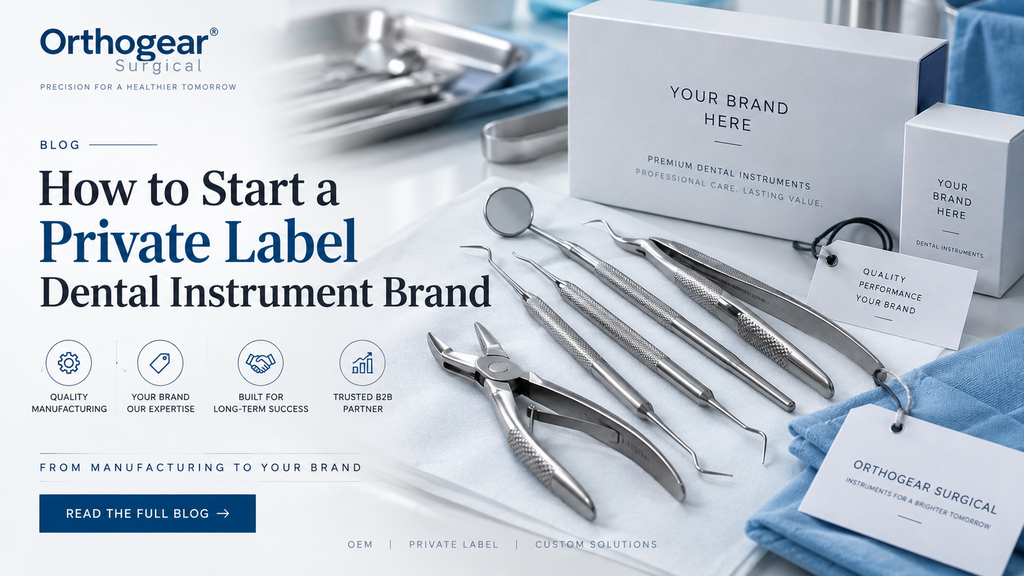
For distributors and clinic groups considering the launch of a private label product line, it is important to choose a manufacturer which has OEM and private label capabilities. Suppliers which have experience working with private labels understand the nuances of the process and can produce higher-quality results.
Suppliers with OEM capabilities will be able to offer a variety of options, including:
- Branding and logo options
- Packaging options
- Special documentation requirements, if applicable
- The ability to request design modifications for future OEM orders
Even buyers who do not intend to launch a private label line may benefit from selecting a supplier with OEM experience, since it will allow greater flexibility in the future.
7. Clarify Export and Shipping Experience for Your Market
The majority of bulk instrument buyers are not local to the surgical instruments’ production facilities. For buyers from the USA, the UK, Canada, Germany, Australia, the UAE and Saudi Arabia, shipping and export regulations are a vital consideration. Prior to making a bulk purchase, it is important to clarify the following points with the supplier:
Have you supplied instruments to buyers from [Your Country/Region] before? The shipping and export experience is a vital consideration, since it often correlates with the level of detail in documentation and customer support.
What documentation do you provide which recognizes your instruments in [Your Country/Region]? Depending on the buyer’s country or region of residence, additional documentation may be necessary to clear the instruments through customs.
What shipping options are available for [Your Country/Region]? A buyer should have a realistic understanding of how long an international bulk order will take to arrive.
What shipping responsibilities are at the buyer’s and the seller’s end? In some cases, shipping costs or responsibilities can be negotiated.
A supplier with international experience will typically have more relevant answers to the questions above than one which has exported instruments to the buyer’s region only a few times.
8. Discuss After-Sale Support and Guarantees
Despite the care taken during the selection process, there is always a possibility of receiving a faulty or unsatisfactory instrument in a bulk order. Therefore, it is important to determine how a manufacturer handles quality control issues and what support options are available after a bulk purchase is completed.
A responsible manufacturer should have established procedures for handling manufacturing defects, including a return procedure and a refund or replacement policy.
A buyer should ask the supplier if there is a general timeline for requesting a refund or replacement after a bulk order has been received. A responsible supplier should have realistic limits in regards to what they will cover and will establish realistic time limits for requesting an adjustment after discovering the issue.
For recurring bulk orders, additional considerations should be made in regards to reordering options and return/refund policies for future orders. A supplier which is not interested in a long-term relationship or which has overly limited requirements for bulk reorders may be a less reliable option than one which is looking to establish credibility as a dependable supplier.
Red Flags During Supplier Verification
During the verification process, buyers should be wary of the following red flags:
- A supplier which is vague about the steel grade of their instruments or cannot provide specific mechanical properties of the material used.
- A supplier which does not want to provide samples of the instrument, relying on the buyer’s decision to make an order based on the catalog descriptions.
- A supplier which is significantly lower-priced than the industry standard and does not have a documented quality control procedure.
- A supplier which cannot provide specific answers about MOQ, lead time or shipping experience.
- A supplier which does not have a documented quality control procedure or refuses to provide details about it.
Building a Long-Term Relationship With a Bulk Supplier
Once the selection process is complete and a supplier has been chosen, buyers should consider the long-term implications of this choice. For a hospital, a distributor or a private label supplier which plans to make additional bulk purchases in the future, the relationship with the supplier is crucial to maintaining consistent quality and favorable pricing. The following considerations will aid in establishing a long-term mutually beneficial relationship with a supplier:
Pricing: The right supplier will offer favorable pricing for long-term buyers.
Lead time: As the buyer becomes a known and regular customer, the supplier may be more motivated to maintain a steady supply of instruments.
Flexibility: A supplier which is not focused on long-term partnerships will often be less flexible in regards to special requests for bulk orders.
Communication: A supplier which is familiar with the buyer’s requirements will typically have a more efficient communication system which will benefit both sides.
Establishing long-term relationships with bulk suppliers can be beneficial to both sides of the transaction. Distributors and hospitals which purchase surgical instruments in bulk should remember that their first bulk order is an opportunity to set the foundation for a long-term relationship with a careful supplier.
Frequently Asked Questions (FAQ)
What should I look for first when evaluating a bulk surgical instruments supplier?
To begin the selection process, request information about ISO 13485 certification and confirm the steel grade for the instruments you are interested in.
Is it better to buy directly from a manufacturer or through a trading company?
Buying directly from a manufacturer often provides better pricing and more flexibility.
How do I know if a supplier’s pricing is too good to be true?
Choose a supplier with realistic pricing which matches the quality of their instruments. Avoid suppliers which significantly undercut the industry standard.
Should I always request samples before placing a bulk order?
Always request samples to assess the quality of instruments before making a bulk purchase.
Ready to place a bulk order with a manufacturer that’s transparent about materials and quality? Get a wholesale quote or request samples today
What should I expect MOQ (Minimum Order Quantity) to be for my first bulk order?
MOQs can greatly vary from manufacturer to manufacturer or even for different categories of goods, so there’s no standard rate. The more important consideration is whether a given manufacturer’s MOQ expectations would be realistic for your current level of business and whether they’ll agree to any flexibility for your first order. Some manufacturers might be willing to accept a smaller trial order at the start of your working relationship so you can feel confident about the larger MOQs they’ll want you to meet in future orders.
What sorts of documentation should I expect from an international bulk order supplier?
As you might expect, this varies considerably by the country you’re ordering from, but generally you should be looking to obtain documentation certifying the type and quality of the steel, invoices, packing lists, and certificates of origin necessary for customs inspections. Importantly, if you’re planning to make any large-scale international purchases, you should ask the supplier you’re considering whether they can tell you what paperwork they typically provide upon an order’s arrival in [country/restriction level], rather than making assumptions about what they’ll provide based on your general destination.
How long should I expect to wait for a bulk surgical instrument order to arrive?
This varies considerably depending on the size of the order, the shipping options chosen, and the degree to which the instruments needed to be customized, but it’s a good idea to request a production time estimate separately from shipping time estimates, as buyers frequently fail to consider one or the other. A reputable supplier with experience shipping orders to your region should be able to provide a rough estimate of the total time to wait without being overly vague or making guesses based on the ideal shipping conditions.
What should I do if I receive a defective instrument in my bulk order?
Any responsible supplier will have some protocol for you to follow to file a claim regarding a defective instrument in a bulk order, particularly if you’re dealing with a manufacturing defect. They should be able to tell you with some specificity what time frame you’ll have for filing a claim after receiving the defective item. It’s a good idea to ask this question before making an order, rather than when trying to deal with the fallout from one, as many companies will be willing to say broadly that they have protocols in place while also refusing to share any specifics about what those protocols actually entail.
Is it possible to negotiate pricing or other considerations with a bulk-order supplier?
It can depend greatly on the supplier in question, but in most cases there is potential for negotiation, particularly if you’re planning to buy in bulk multiple times per year. Many manufacturers will have significantly more flexibility on things like pricing, lead time, and contract length when you’re making regular repeat orders rather than simply one large one-time purchase. Even on a first-time bulk order, it’s always worth asking whether you can receive a significant discount per unit as your order’s size increases significantly above a specified amount.
Do I need to visit the factory before placing a bulk order?
Not strictly, no, not if you’re just looking to make a small first-order bulk purchase, but if you’re planning to commit to a larger bulk order, it’s always a good idea to see the manufacturing conditions for yourself if you’re able to, as doing otherwise means you’ll have to get much more specific and detailed information from whomever you’re hiring based on questions they ask you in turn. In the absence of a physical inspection, ask plenty of specific, probing questions and request physical samples in advance of making any sort of commitment.
If I don’t care about OEM or private label capabilities, but just need plain instruments right now, is it worth asking about anyway?
It can’t hurt to inquire, if only in an effort to find a manufacturer with experience with these particular processes so that later, if you do decide to move into OEM or private labeling, you won’t have to go through the painful process of finding a new supplier. The same applies to the instruments themselves, but even a company with limited or no private labeling experience should still be capable of making plain surgical instruments.
Ready to place a bulk order with a manufacturer that can provide materials and quality assurance documentation at a wholesale price? Get a wholesale quote or request samples today.