

Buying Tips for Orthopedic Surgical Instruments
Introduction
Orthopedic procedures encompasses a broad range of surgeries, from as simple as setting a fractured bone to complex joint reconstruction, and the surgical instruments that facilitate them likewise present a large variety. Unlike many other surgical specialties, orthopedic instruments in general tend to see far heavier mechanical use, as they often have to work with harder tissues such as bone.
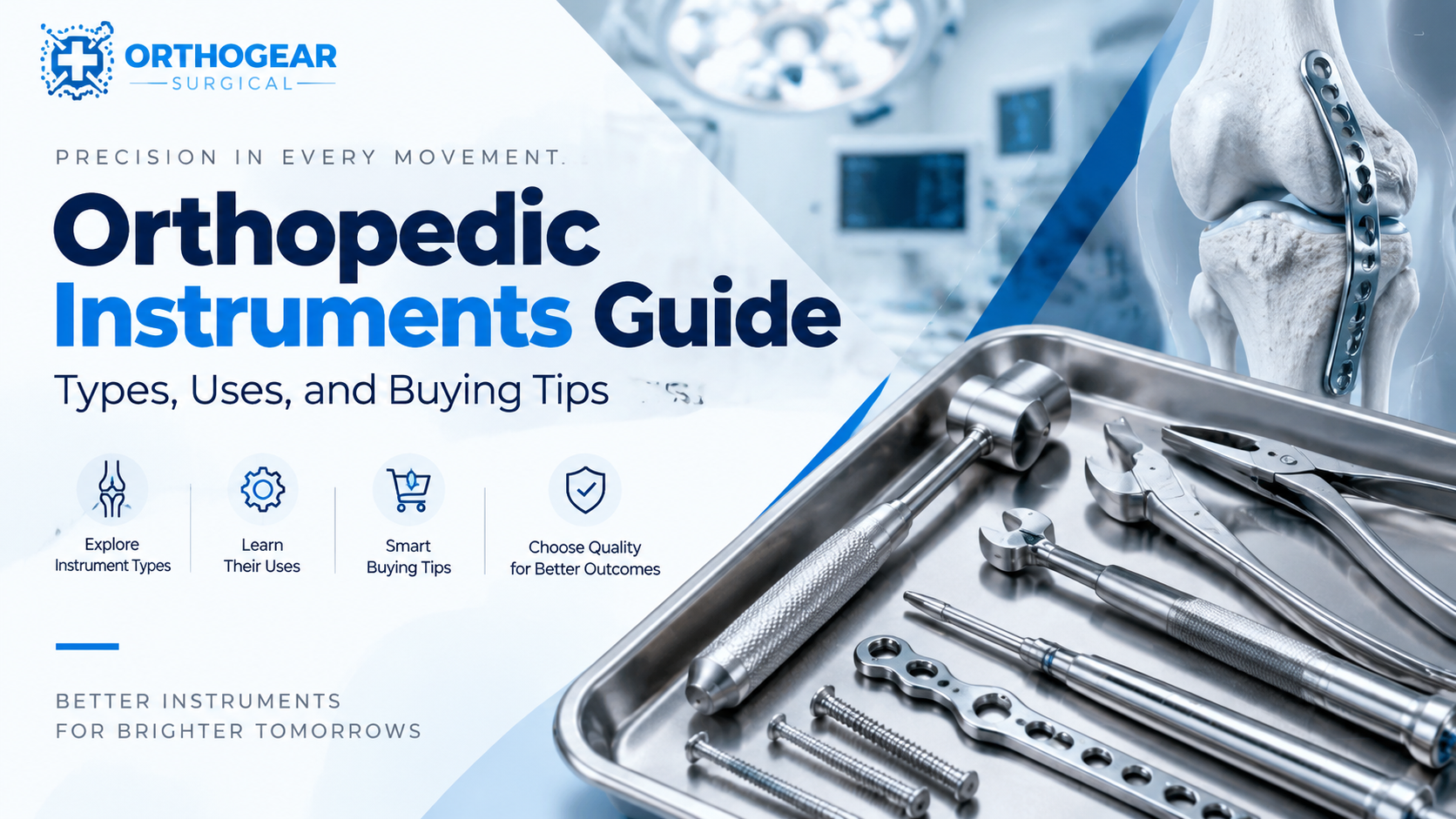
For hospitals, orthopedic clinics and orthopedic equipment distributors sourcing orthopedic instruments in bulk, familiarity with the main categories of instruments, their indications, and the characteristics that define a high-quality orthopedic tool, help assemble a comprehensive inventory. This guide covers the main types of orthopedic surgical instruments, their uses, and some buying tips for orthopedic clinics or distributors seeking to establish a complete inventory of orthopedic instruments for their orthopedic surgical teams.
Why Orthopedic Instruments Require Higher-Quality Manufacturing
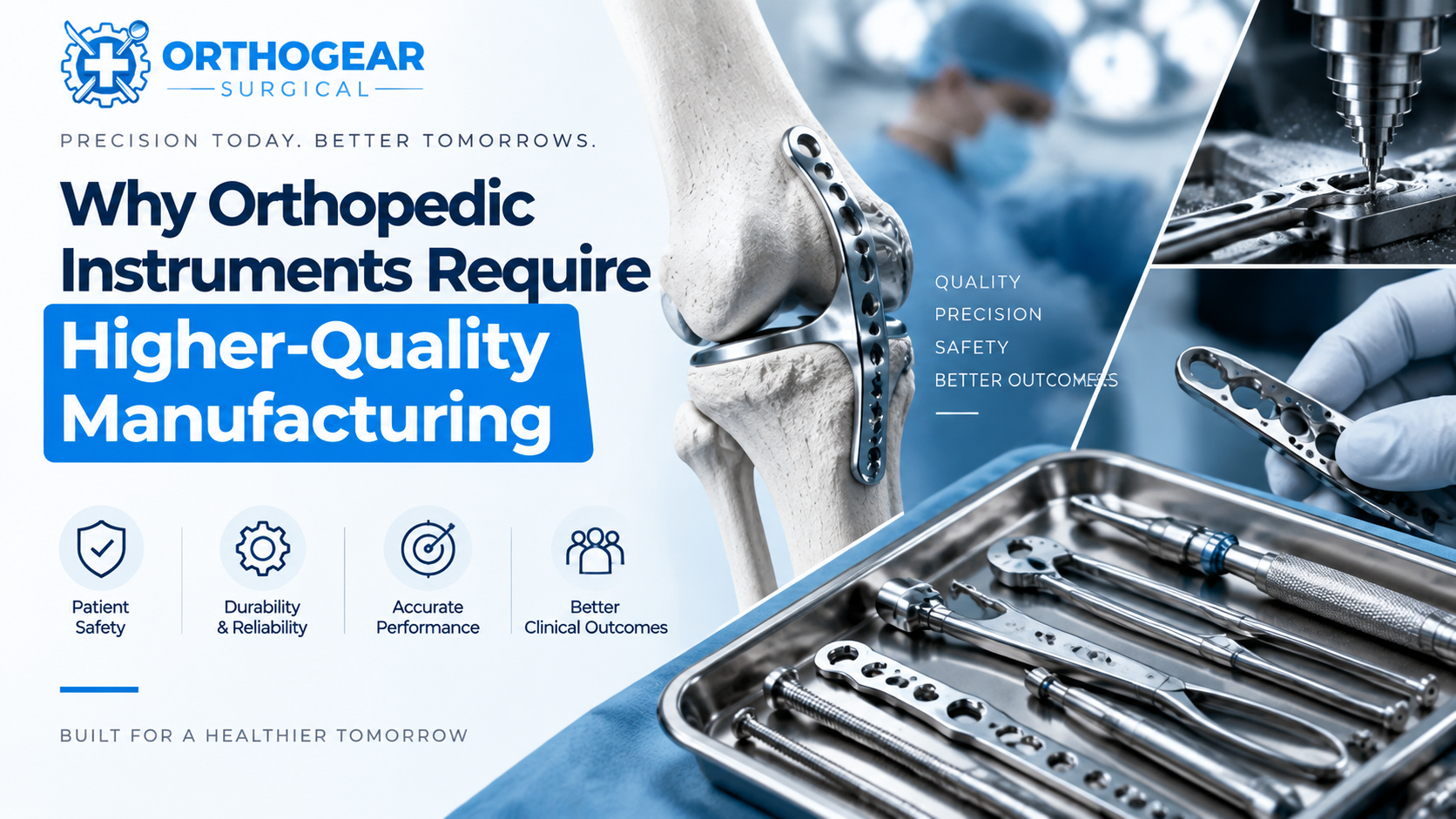
Compared to many other surgical procedures, orthopedic surgeries often involve working with harder tissues such as bone, which requires instruments to either be capable of working on bones, or at least able to withstand the kinds of mechanical stress drilling or cutting tools experience.
Orthopedic procedures, especially those involving joints, place a strong emphasis on precision, and thus orthopedic instruments benefit greatly from being produced to higher manufacturing standards.
Many orthopedic procedures are long and complex, requiring instruments to be used for extended periods of time without fatigue.
Finally, orthopedic instruments require the same level of sterilization as any other medical procedure, and thus should be manufactured from the same materials as other surgical instruments. The combination of these factors means that orthopedic instruments are usually manufactured from properly heat-treated stainless steel, primarily SS420 and, in specific applications, SS316.
Orthopedic Surgical Instruments:
Main Categories
Orthopedic Bone Drills
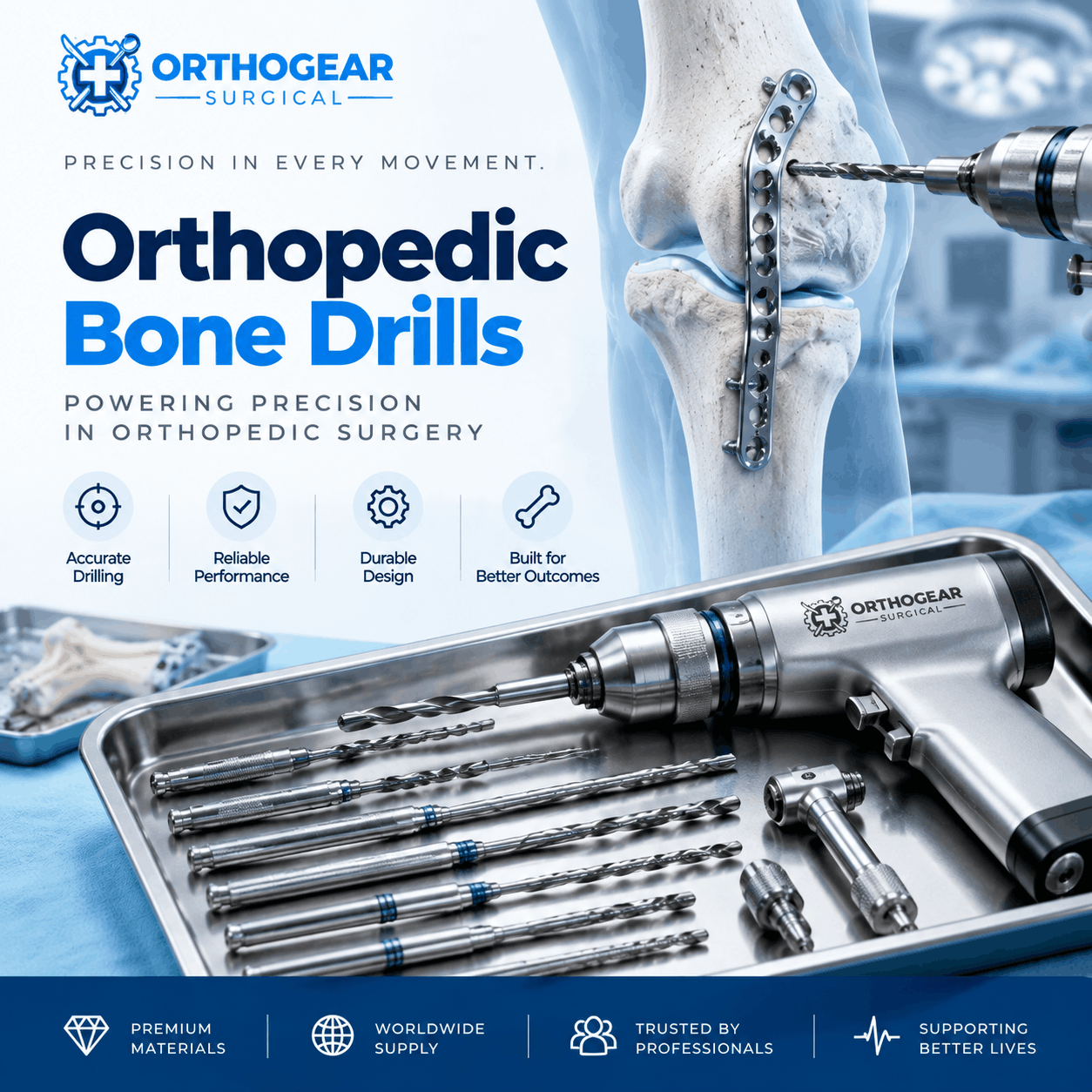
Bone drills are used to make precise holes in bone, typically to allow for the insertion of orthopedic screws, pins, or other orthopedic fixation devices. As working with bone presents higher mechanical demands than working with soft tissues, orthopedic bone drills are among the heaviest orthopedic instruments. The combination of the right cutting geometry and properly hardened steel ensures that a quality bone drill can cut through hard cortical bone without dulling prematurely. A quality bone drill will typically have a sharp cutting edge, a shaft that will not bend under pressure during drilling, and a chuck that will reliably grip the drill bit during use. Drills with poor construction may cause excessive bone heating during drilling, which can damage the bone tissues.
Orthopedic bone drills are usually available in both manual and powered variants, with powered drills having additional requirements for the chuck and drive mechanism, as these components are under constant rotational stress during use. Orthopedic surgery is a demanding procedure, and as such, orthopedic surgeons routinely use multiple sizes of drill bits during a single procedure. Having a sufficient variety of orthopedic drill bit sizes in the inventory is important, as a single orthopedic screw or pin can place different mechanical demands on a drill bit depending on its size and design.
Bone Chisels and Osteotomes
Bone chisels and osteotomes are used to cut or shape a bone. A quality bone chisel will typically have a hardened edge to allow for multiple uses, and a reliable handle that the surgeon will be able to grip securely without risking hand fatigue or slippage during the procedure. A poorly made chisel may dull easily, forcing the surgeon to expend additional effort on a procedure. For comparison, a chisel that is made properly will be able to withstand repeated autoclaving without losing its edge or becoming deformed. The working edge of the chisel should be broad enough to allow the surgeon to strike it at an angle without damaging the working surface of the chisel.
A similar set of requirements applies to osteotomes, which are otherwise similar to chisels but typically have a beveled edge on only one side of the blade.
Rongeurs
Rongeurs are orthopedic surgical pliers with a pair of sharp jaws that are used to nibble away at small pieces of bone. While similar to dental rongeurs, orthopedic rongeurs are typically more robust to be able to withstand working with harder and more dense bones. The most important quality of a rongeur is a reliable hinge mechanism that will not allow for excessive play between the jaws during use.
A rongeur’s cutting edge should also be of good quality and not dull prematurely after repeated use. Ideally, the cutting edge should be at an angle to reduce the effort needed to displace a piece of bone.
Screws, Plates, and Fixation Devices
Screws and plates form the backbone of most fracture fixation procedures, and as such, they are among the most commonly used orthopedic instruments. Screws and plates come in a variety of sizes and designs to accommodate different bones and procedures. While the requirements for screws and plates are fairly straightforward – they must be able to withstand the mechanical stress placed on the repaired bone – there are additional factors to consider when choosing between different types of screws and plates. For long-term implants, the choice of steel grade becomes particularly important, as martensitic stainless steels such as SS420 are not particularly corrosion-resistant when exposed to bodily fluids.
Reamers
Reamers are orthopedic surgical instruments that are used to enlarge the canal of a long bone. This is particularly useful when performing intramedullary nailing procedures, which allow the surgeon to stabilize the long bones with relative ease. Reamers are similar to drills but have a different cutting edge profile that allows them to cut with less pressure. The cutting edges of a reamer must be durable enough to withstand the mechanical stresses of the procedure without dulling.
The shaft of a reamer must also be flexible enough to bend easily under pressure but return to its original shape afterwards.
Bone Holding Forceps and Clamps
Bone holding forceps and clamps are orthopedic surgical instruments that serve a single, important purpose: holding a fragment of a broken bone steady. A reliable pair of bone holding forceps will allow the surgeon to keep the broken fragments in a stable position without expending additional effort. A reliable locking mechanism is essential, as is a secure grip surface on the jaws. A quality bone clamp is particularly crucial where a plate is used to stabilize the broken bone, as the plate must be mounted perpendicularly to the axis of the bone to provide sufficient healing support.
Retractors
Retractors are orthopedic surgical instruments that are used to hold back soft tissues and expose the surgical site. Orthopedic retractors are typically more robust than their general surgical counterparts, as orthopedic procedures tend to involve dissection of deeper tissues that require additional force to hold back.
Mallets and Bone Hammers
Mallets are used to deliver a forceful blow to a chisel or osteotome in order to separate two pieces of bone. Orthopedic mallets are typically fairly light but have a substantial impact due to the design of the handle. A properly balanced mallet will allow the orthopedic surgeon to place the force exactly where it is needed. Mallets that are too light or improperly balanced may fail to deliver a sufficient impact, which may prolong the procedure or lead to additional strain on the surgeon. Some orthopedic mallets may use a composite or nylon face to reduce the impact on the instrument during use.
Wire and Pin Sets
Kirschner wires or orthopedic pins are used to stabilize the broken bones. While similar to small screws, they do not provide the same level of stability and usually have to be removed at a later date. Wires and pins can be used in a variety of orthopedic procedures, from keeping track of the alignment of the broken bone to act as a guide when implanting larger screws or plates. A quality orthopedic wire or pin set will have a good surface finish to allow for easier removal afterwards. The diameter of the wire or pin must also be precise to fit a particular set of holes in a plate.
Curettes
Curettes are orthopedic surgical instruments that are used to scrape away the unwanted tissue. Unlike oral curettes, orthopedic curettes are typically spoon-shaped and have a cutting edge on the inside of the shank. Similar to chisels and osteotomes, a curette’s cutting edge must be sturdy and durable to allow the instrument to be used multiple times before it requires cleaning or sharpening.
Differences Between Orthopedic and General Surgery Instruments
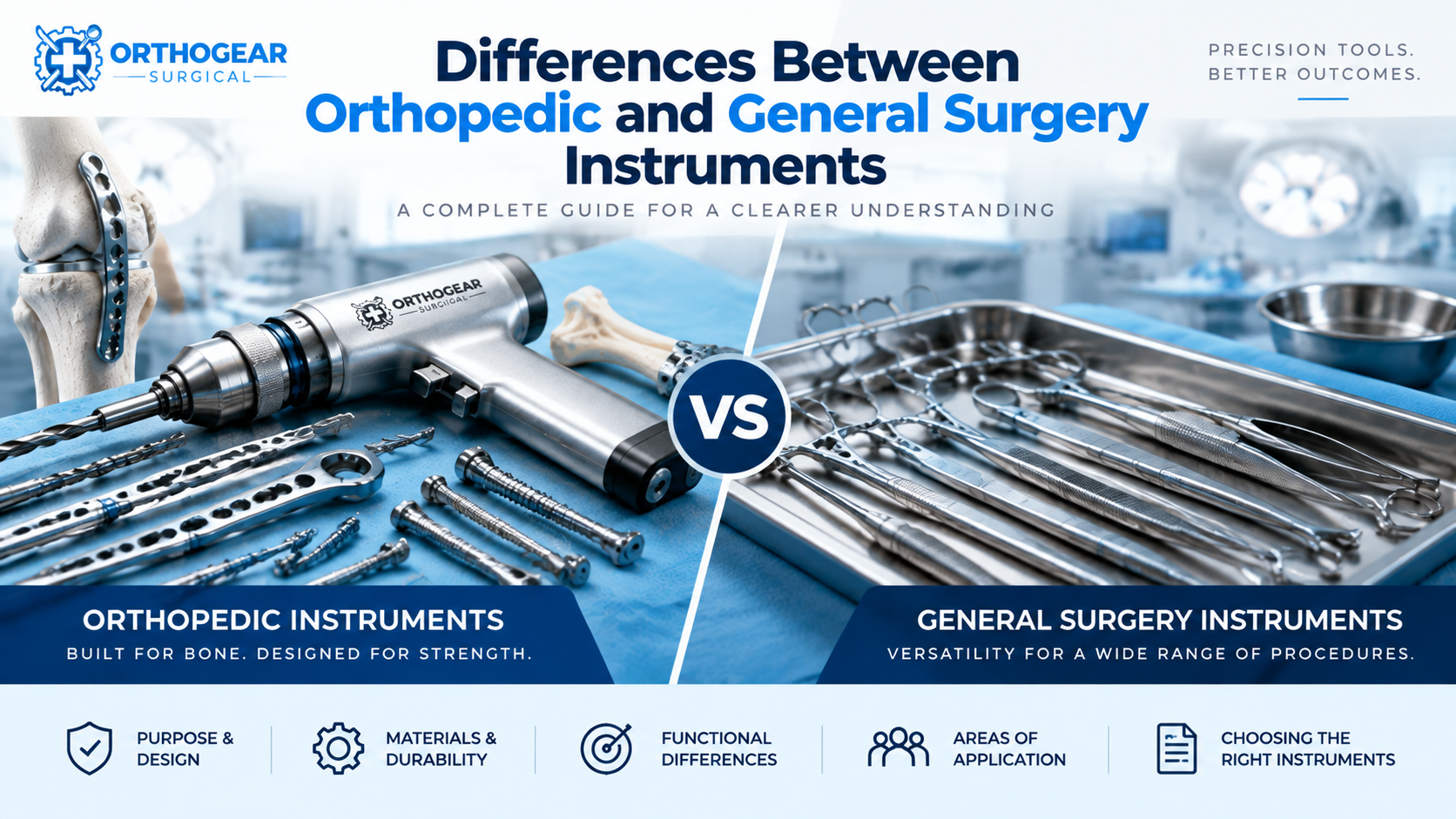
Orthopedic surgical instruments serve a similar role as general surgery instruments, with some tools being shared between the two specialties. However, orthopedic instruments are typically more robust than their general surgery counterparts in order to withstand the additional mechanical stresses of working on bones. As such, orthopedic surgical instruments such as chisels, rongeurs, drills, and forceps are typically heavier and have more reinforced joints.
When ordering a set of orthopedic instruments, buyers should be aware that general surgery instruments are typically not interchangeable with orthopedic instruments, even if the two sets share some common tools. The mechanical tolerances and material choice for orthopedic surgery instruments are significantly greater than those for general surgery instruments.
Stainless Steel Grades for Orthopedic Instruments
Like general surgery instruments, orthopedic surgical instruments are typically made from surgical-grade stainless steel. However, there are differences within the orthopedic surgery specialty itself – while SS420 is typically used for most cutting and gripping orthopedic instruments, such as chisels, rongeurs, drills, and forceps, other types of orthopedic instruments such as screws and plates may use a different steel grade.
Titanium alloys are also sometimes used for orthopedic implants due to their unique combination of strength and biocompatibility, but are usually more expensive than stainless steel alternatives.
Buying Tips for Orthopedic Surgical Instruments
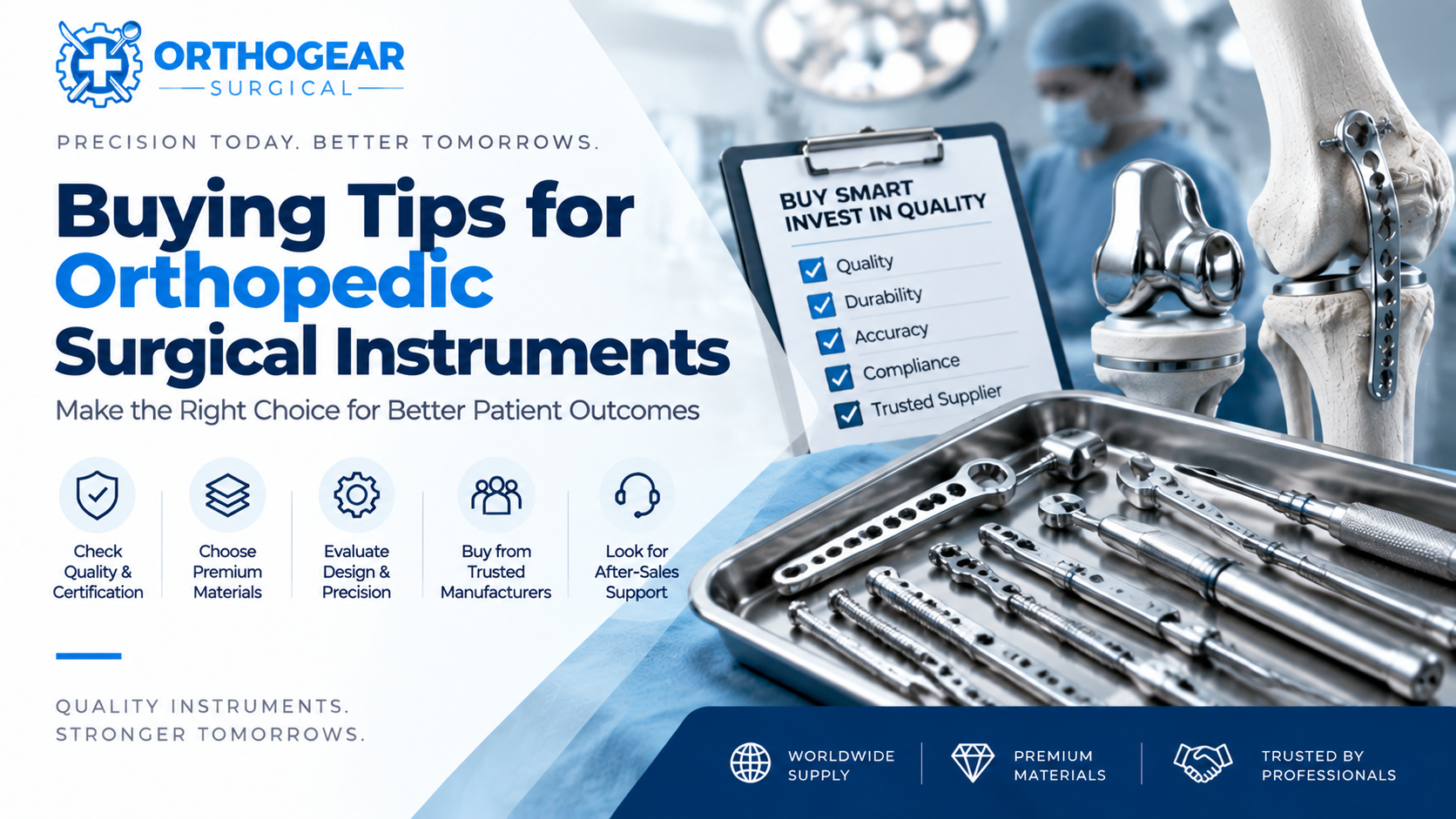
Verify ISO 13485 certification. Any reputable orthopedic instrument manufacturer should be able to provide documentation of ISO 13485 certification for their manufacturing facilities.
Request samples prior to a bulk order. Orthopedic surgical instruments undergo extreme mechanical stress and must be crafted to very tight manufacturing tolerances, so it is advisable to test the quality control of a manufacturer by requesting a sample of a needed instrument before placing a bulk order.
Ask about heat treatment, not just the steel grade. Two instruments made from the same steel grade can have significantly different performance characteristics depending on the quality of the manufacturing process.
Consider weight and ergonomics. Orthopedic instruments that are used multiple times per procedure, such as mallets, rongeurs, and bone clamps, should be comfortable to handle and not cause excessive strain on the surgeon.
Ask about product consistency. Fixation screws and plates are standard components of most fracture repair procedures, so it is important to ensure that the size, threading, and other dimensions of these implants are consistent within a single set.
Consider bulk and OEM options. Hospitals and surgical centers that wish to equip multiple facilities or build an orthopedic surgical instrument catalog should inquire about bulk and OEM options with potential manufacturers.
How to Assemble a Complete Orthopedic Instrument Set
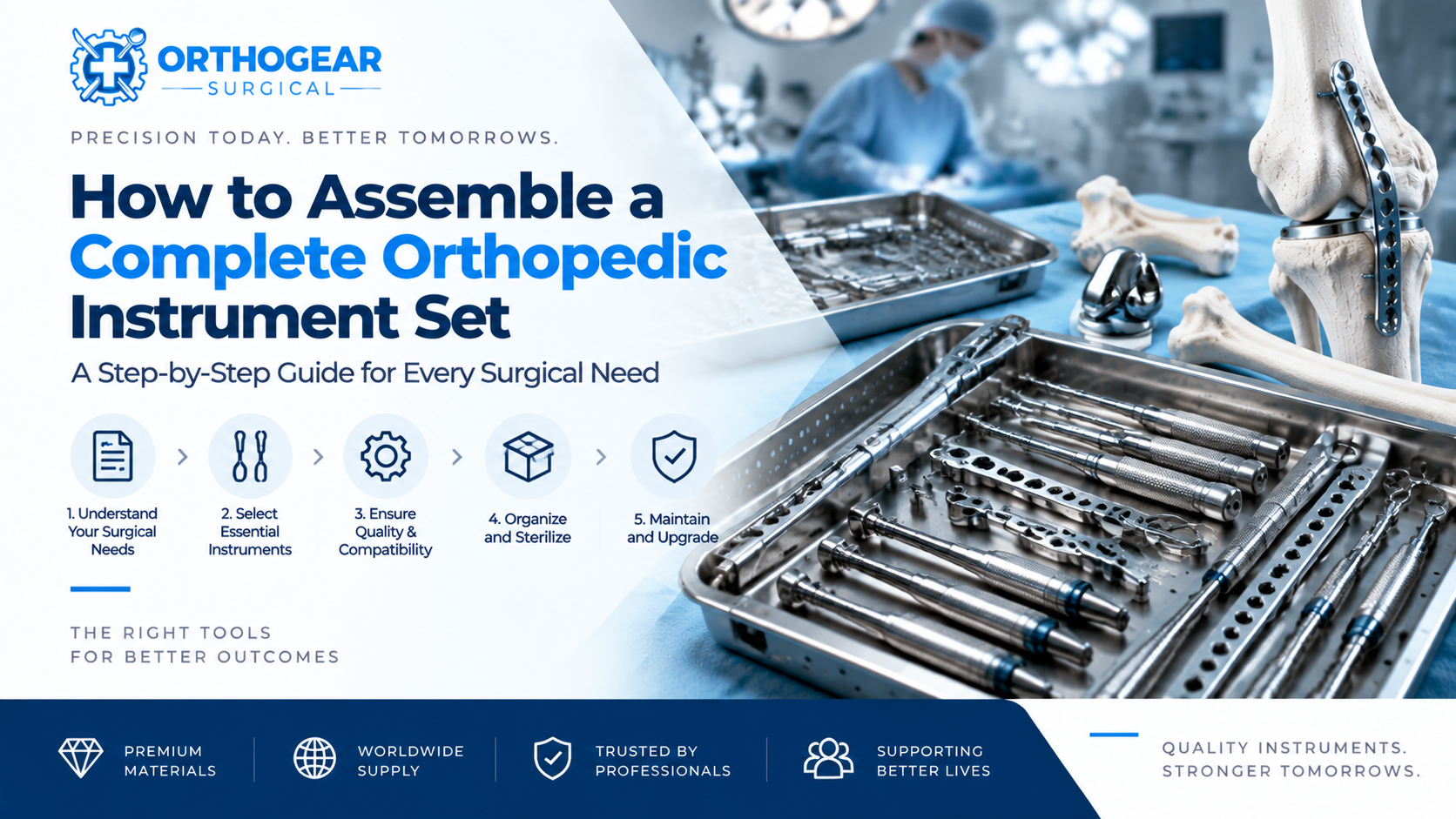
Any complete orthopedic instrument set should ideally have a variety of different tools to support the most common types of orthopedic procedures, namely fracture repair and reconstruction. A basic orthopedic instrument set would typically include the following instruments:
- Orthopedic bone drills
- Orthopedic bone chisels and osteotomes
- Orthopedic rongeurs (both side- and end-cutting)
- Orthopedic screws and plates
- Orthopedic reamers
- Bone clamps and holding forceps
- Orthopedic retractors
- Mallets and bone hammers
- Kirschner wires and pin sets
- Orthopedic curettes
Having a complete set of orthopedic surgical instruments from the same manufacturer ensures a good balance of quality and value. Having a set also allows the buyer to reorder individual tools as needed without having to purchase an entire set again.
Frequently Asked Questions
What is the most commonly used orthopedic instrument?
Bone drills and orthopedic screws are among the most commonly used orthopedic instruments, as most orthopedic procedures involve fixing broken bones with screws and plates.
What stainless steel grade is best for orthopedic instruments?
SS420 is commonly used for a wide variety of orthopedic instruments that require good edge retention, while SS316 and SS316L are used for long-term implants due to their superior corrosion resistance.
Are orthopedic instruments more expensive than general surgery instruments?
Due to the additional mechanical stresses orthopedic instruments typically have to endure, they are usually slightly more expensive than general surgery instruments of a similar type.
Can general surgery instruments be substituted for orthopedic-specific tools?
It is generally ill-advised to try and substitute orthopedic instruments for general surgery instruments, and vice versa, even if the two sets share common tools.
What should I check before placing a bulk order for orthopedic instruments?
It is important to verify a manufacturer’s ISO 13485 certification, request a sample of the instrument to test its qualities, and confirm the steel grade of the instruments before placing a bulk order.
Do orthopedic screws and plates need to match a specific manufacturer’s sizing system?
Fixation plates and screws usually follow a particular sizing and threading standard depending on the manufacturer, so it is important to confirm compatibility if additional instruments or implants will be sourced from other manufacturers.
Ready to source orthopedic surgical instruments in bulk? Request a wholesale quote or contact us to discuss your requirements.