

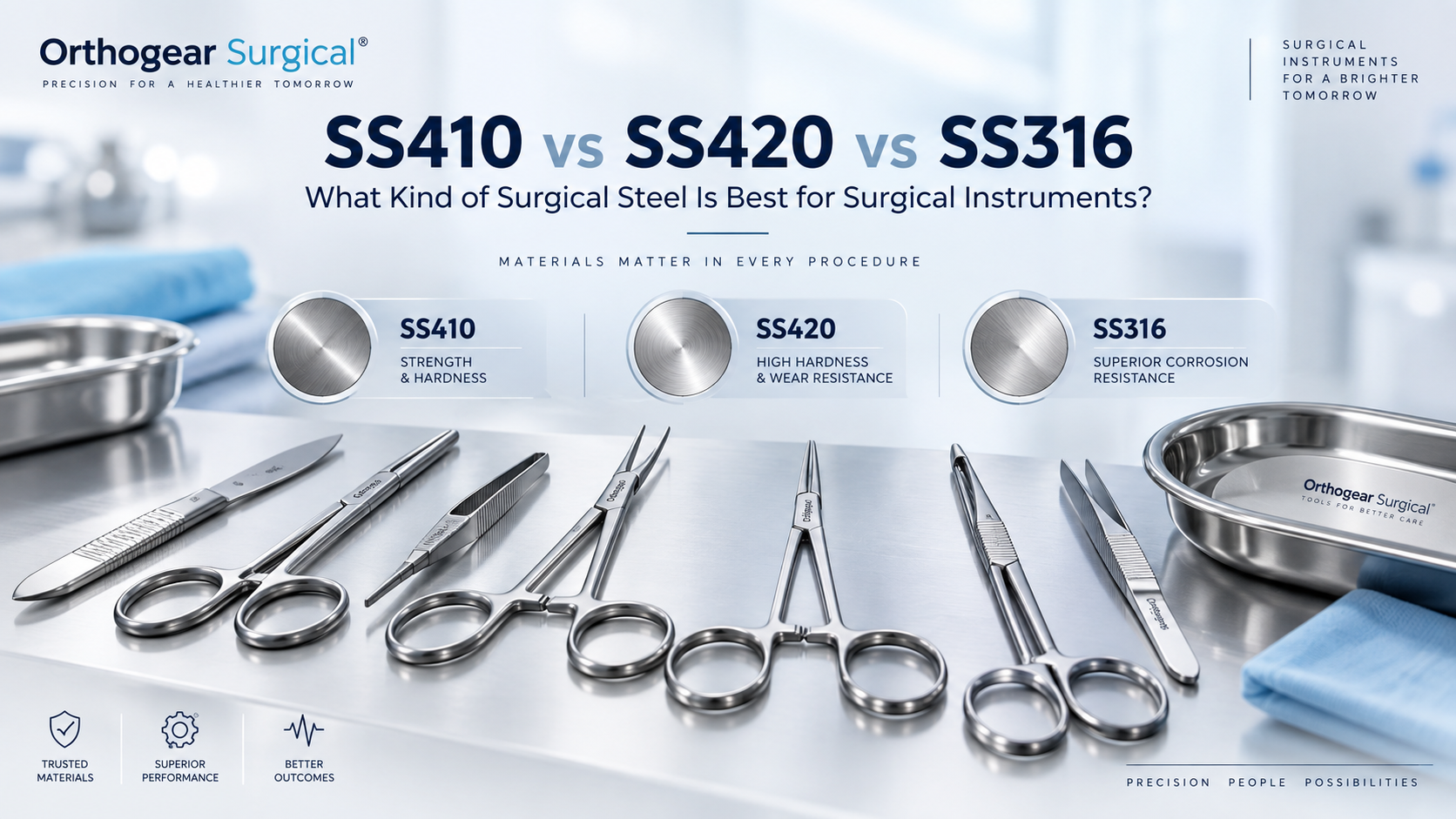
Comparing SS410 vs SS420 vs SS316 Stainless Steel . A Full Surgical Instrument Steel Comparison
Introduction
If you’ve walked into an operating room, dentist office, or a hospital sterilization chamber, you’ve likely seen the label “surgical stainless steel” on a variety of different medical instruments. However, not all stainless steel is equal: different grades have better corrosion resistance, edge retention, and overall strength, making some far more suitable than others for a given clinical application. This surgical instrument steel comparison exists precisely because that difference is so easy to overlook.
Most buyers see the phrase “surgical steel” on a spec sheet and assume every instrument carrying that label performs the same way. In reality, the underlying alloy can vary significantly from one manufacturer to the next, and choosing the right one plays a real role in performance, longevity, and cost-effectiveness. Getting it wrong can mean replacing instruments far sooner than expected.
For the buyers and distributors of surgical instruments — including bulk dental and surgical instruments ordered by the hundreds or thousands of units at a time — understanding the primary differences between SS410, SS420, and SS316 is essential in making well-informed purchasing decisions. A clear steel comparison at the sourcing stage can save a clinic or distributor from costly replacements down the line.
In this comprehensive guide, we’ll explore the differences between these three alloys, the instruments they are most commonly used in, and what buyers should know before making a bulk purchase. By the end, you’ll know exactly which grade of steel belongs in which category of tool.
Surgical Steel Instrument Buying Guide: What You Need to Know
SS410, SS420 and SS316 stainless steel, each with its own unique properties, are the most common grades of surgical steel encountered across the dental and medical fields.
Each has been developed and tested to exhibit a desirable blend of qualities to serve particular applications, typically around cutting, gripping, or prolonged exposure to the elements. The different grades of stainless steel used in surgical instruments are generally classified by their hardness, corrosion resistance, and ability to hold an edge.
Before comparing grades directly, it’s worth examining some of the key clinical factors that influence the selection process: repeated, high-temperature sterilization, mechanical stress during use, exposure to the elements, and the expectations for long-term performance and durability.
Due to these considerations, surgical instrument manufacturing typically falls to a smaller subset of the overall stainless steel alloys — primarily those with known desirable mechanical and chemical properties, namely SS410, SS420, and SS316.
As a side note, the phrase “surgical steel” is not an official or standardized term: different manufacturers and suppliers may apply it to a variety of different alloys or metals depending on their intended use, which is why it’s so critically important for any buyer to obtain concrete information about the specific kind of steel a given instrument or manufacturing company utilizes. We’ll discuss this further below.
What Is SS410 Stainless Steel?
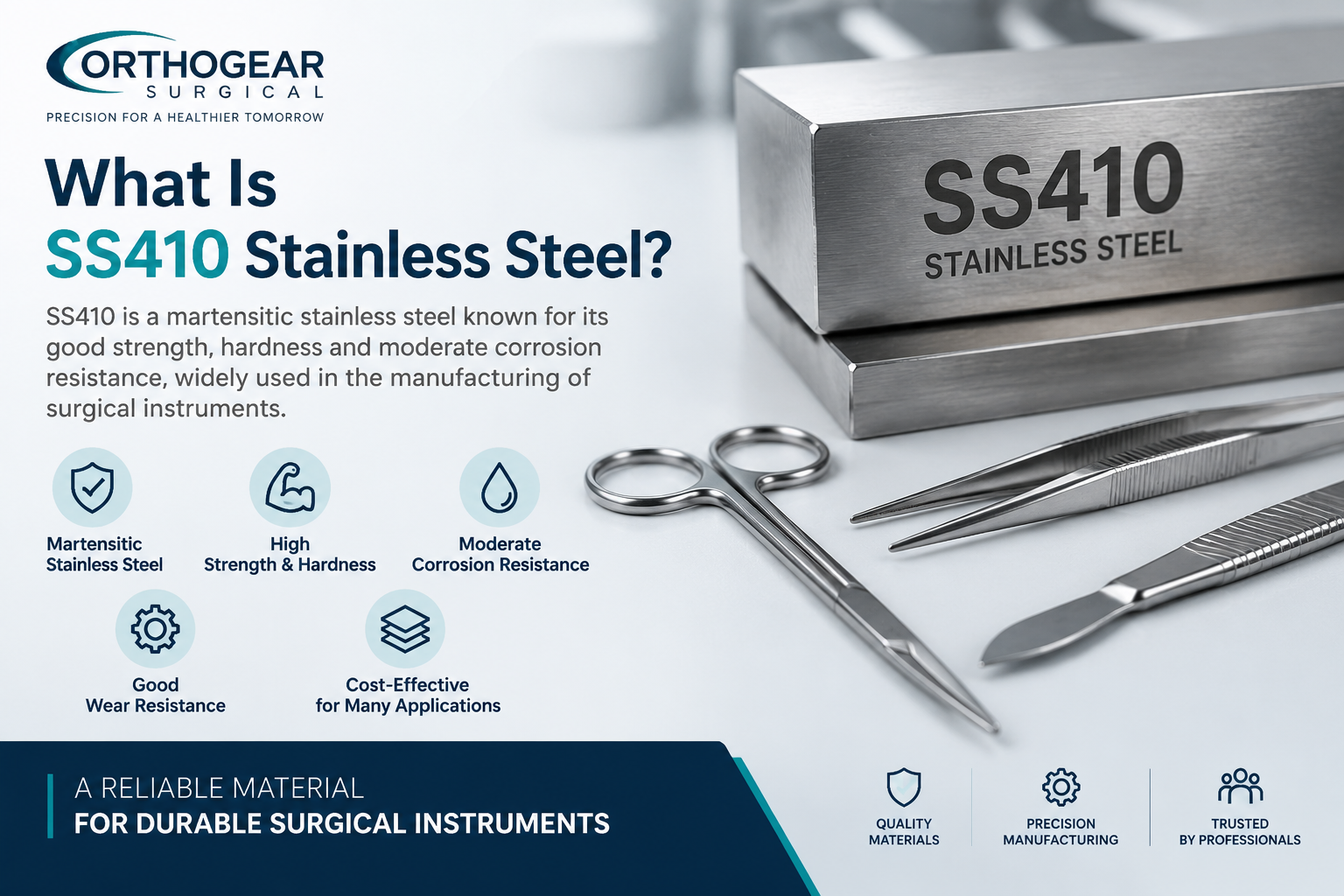
SS410 stainless steel belongs to the martensitic class of stainless steels. These steels are known for their strength and ability to be hardened for use in applications that require high levels of mechanical wear resistance.
It has moderate chromium content that offers some protection against corrosion, but not as much as other stainless steels like SS316.
Key characteristics of SS410 stainless steel include:
- Good hardness and wear resistance
- Excellent edge holding properties
- Susceptibility to staining and corrosion with improper care
- Relatively economical
- Lower corrosion resistance than other stainless steels
In the field of medicine, SS410 stainless steel is often used to produce surgical scissors, curettes, and other cutting implements.
It is also used in the production of some blades and generally other instruments that require a very hard metal to maintain a sharp edge. While instruments made from SS410 generally perform very well, they require more careful sterilization and storage than other surgical steels to avoid surface staining and corrosion.
Practically speaking, this means that they should always be thoroughly dried after cleaning and before being placed in a sterilization unit.
SS410 stainless steel has proven to be a very dependable and hard-wearing choice of surgical steel for cutting-edge instruments. Its main disadvantage — reduced corrosion resistance — is generally only an issue if the instruments are not properly cared for.
What Is SS420 Stainless Steel?
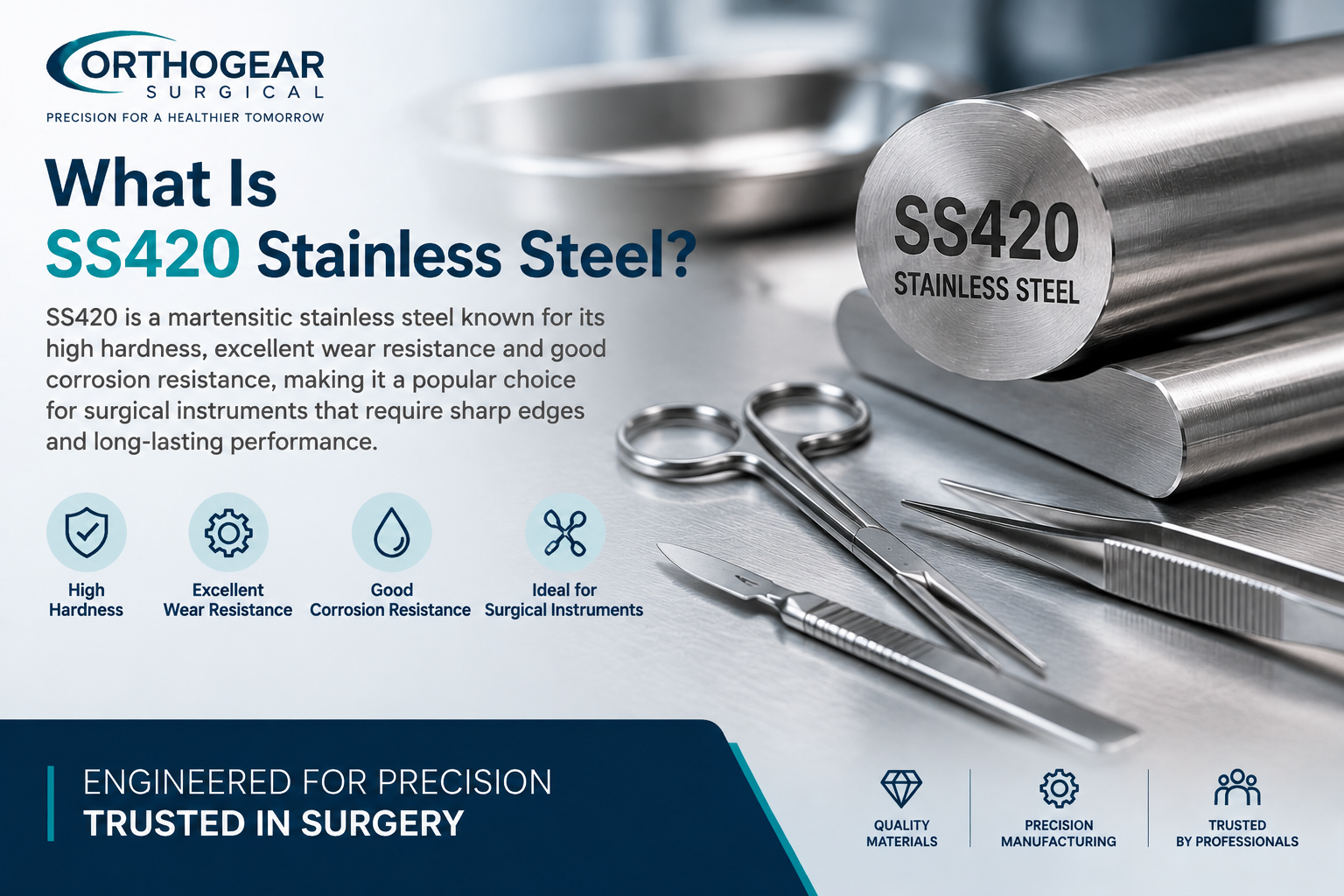
SS420 stainless steel, like SS410, is also a martensitic steel.
However, the composition of SS420 stainless steel differs slightly from that of SS410 stainless steel in that it has a higher carbon content.
This allows for greater hardening and has been found to provide excellent resistance to mechanical wear and tear without having to sacrifice too much in terms of corrosion resistance. Compared to other steels, however, it does not have great resistance to chemical corrosion, and as such should not be exposed to high concentrations of sterilizing chemicals for prolonged periods of time.
Some of the notable characteristics of this grade of stainless steel include:
- Exceptional mechanical properties
- Resistance to wear and tear
- Susceptibility to surface rust with improper care
- Relatively economical
- Moderate resistance to corrosion
In the medical sphere, SS420 stainless steel is used to manufacture a variety of different surgical instruments, including extraction forceps, elevators, rongeurs, needles, needle holders, and other more general surgical implements.
Like SS410, SS420 stainless steel is very hard and capable of being heat-treated to desirable hardness levels. However, due to the increased carbon content, instruments made from this steel can be expected to perform even better under mechanical stress. SS420 stainless steel is considered to be one of the most common steels used in a wide variety of surgical and dental instruments.
While the mechanical and chemical properties of SS420 stainless steel make it well-suited for the manufacture of general-purpose surgical instruments, the same properties also cause problems for the potential buyer.
As mentioned above, SS420 stainless steel can be a bit more vulnerable to surface rust than other grades of surgical steel. This is usually only an issue if the instruments are not properly cared for and stored in a damp environment. Additionally, lower-quality manufacturers have been known to advertise substandard SS420 steel as surgical steel, taking advantage of the fact that many buyers and suppliers are not familiar with the relevant terminology and properties.
For these reasons, it is important for the buyer to inquire about and, if possible, examine a sample of the steel being used in the production of any given instrument.
What Is SS316 Stainless Steel?
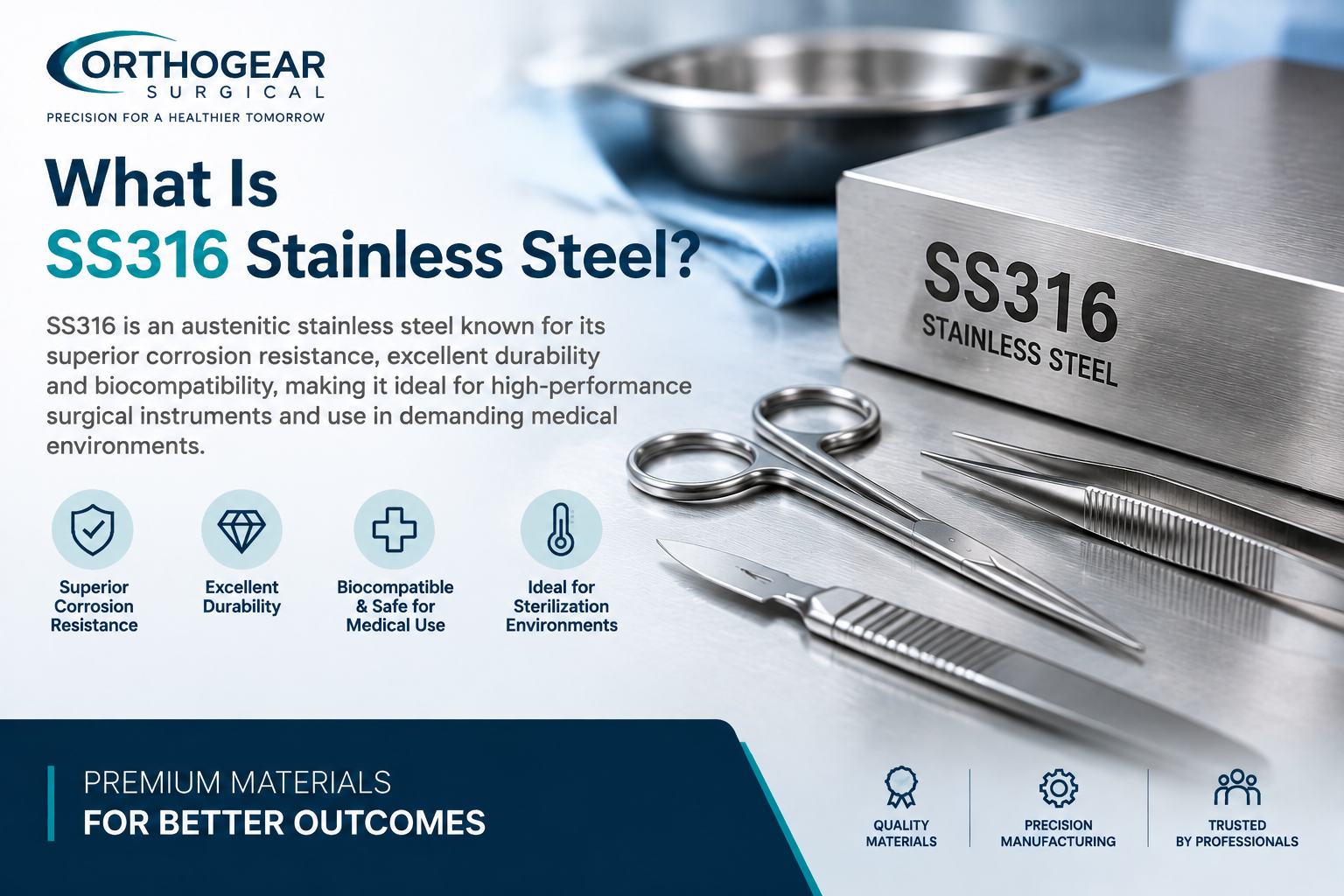
Unlike SS410 and SS420, which are martensitic stainless steels, SS316 stainless steel belongs to the austenitic class of stainless steel.
These types of steel are not as hard as martensitic steels, but are much more resistant to corrosion, which makes them a good choice for surgical applications where mechanical stress is not an issue — or for applications where exposure to the elements must be minimized.
As with all stainless steels, SS316 has a significant amount of chromium in its composition that gives it its characteristic resistance to corrosion and staining.
Additionally, this particular grade of stainless steel also contains molybdenum — a metal that provides additional resistance to pitting and crevice corrosion that can occur when the steel is exposed to chlorides, which are commonly found in saline solutions and other bodily fluids.
The mechanical and chemical properties of this steel make it well-suited for a variety of surgical applications, most of which center around corrosion resistance. SS316 stainless steel, and its related low carbon variant — SS316L stainless steel — are frequently used in the manufacture of general or specialized surgical instruments and components that require exceptional corrosion resistance.
While SS316 stainless steel generally has better corrosion resistance than other grades of stainless steel, it cannot compete with them in terms of hardness and as such is generally not used to make cutting instruments or surgical blades. It is, however, frequently used in the manufacture of various orthopedic implants.
SS316 stainless steel is generally more expensive than other grades of stainless steels, which is a result of the additional alloying elements (chromium and molybdenum) that provide its excellent corrosion resistance.
Finally, another notable difference between this stainless steel and others is that it is not magnetic — unlike most other grades of stainless steel.
Comparing SS410 vs SS420 vs SS316 Stainless Steel
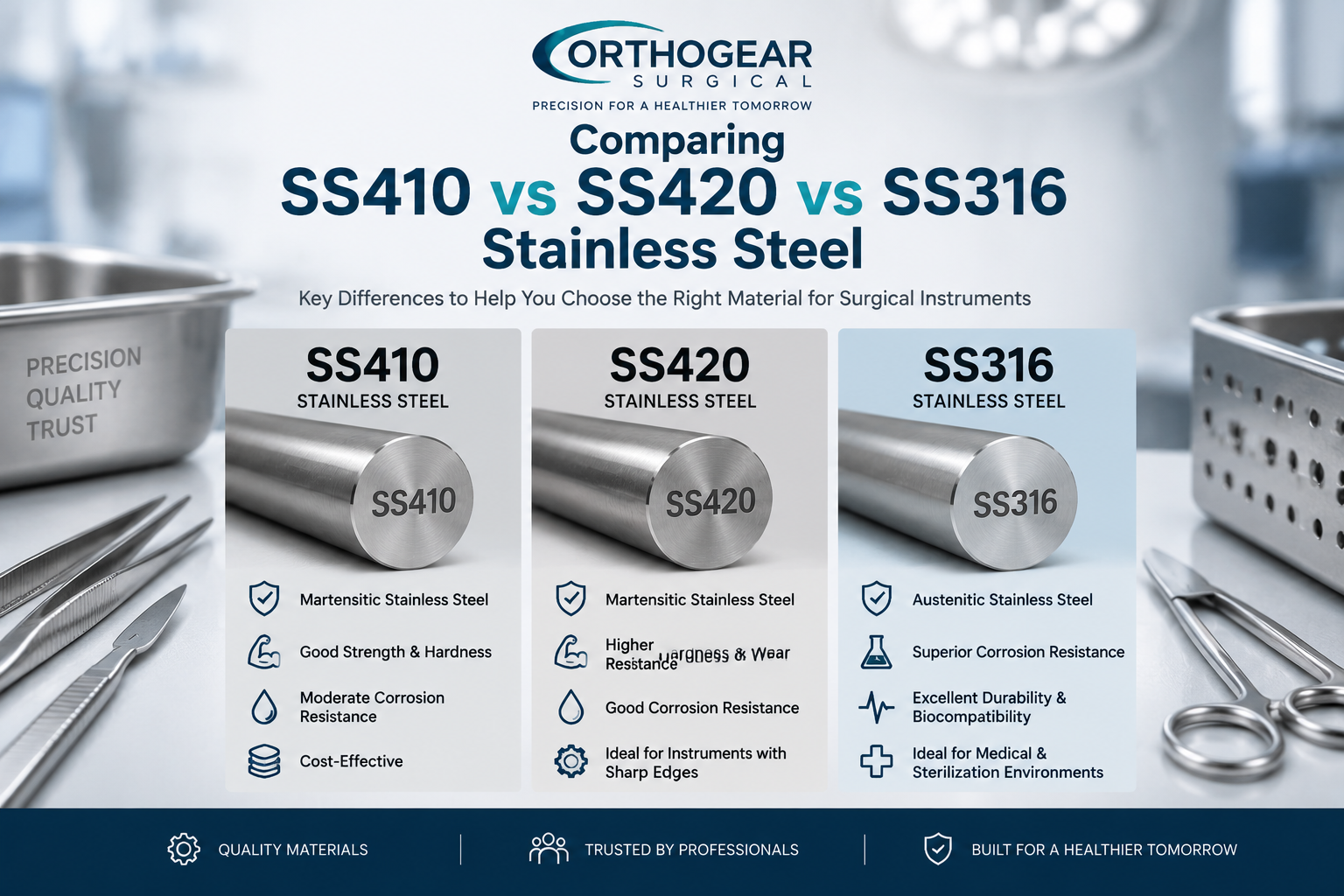
In summary, here are some of the main differences between the three most common stainless steel grades that can be found in surgical and medical manufacturing:
Martensitic stainless steels: SS410, SS420
Austenitic stainless steel: SS316
Hardness: SS410, SS420 > SS316 (not significantly hardenable).
Corrosion resistance: SS316 > Stainless steels > SS410 (moderate).
Edge holding properties: SS410, SS420 > Stainless steels.
Ideal applications:
- SS410 and SS420: cutting-edge instruments (surgical scissors, curettes, blades, etc.)
- SS410: instruments that need to be very hard and resistant to bending/twisting (e.g. elevators, rongeurs)
- SS316: instruments that require maximum resistance to corrosion (after repeated sterilizations, exposure to the elements, etc.)
- General-purpose surgical instruments: SS420
Relative cost: SS410, SS420 < Stainless steels
Magnetic: Yes for martensitic steels and conventional stainless steel; no for austenitic stainless steel.
Based on this comparison, it seems fairly clear which of the stainless steel grades is better for what application. Now, let’s see which one might be better for your specific application.
What to Consider When Evaluating a Bulk Surgical Instrument Order
As previously discussed, the overall mechanical and chemical properties of a given surgical steel determine what kinds of instruments can be made from it most effectively. When choosing between the primary grades of surgical stainless steel, the most important consideration is always the intended function of the instruments, namely whether they are primarily cutting, gripping, or exposed to the elements.
However, it should also be noted that many complete sets of surgical instruments actually incorporate multiple different grades of steel, with each instrument in the set serving a particular function. For example, a complete set of general surgery instruments might contain forceps, elevators, rongeurs, and a variety of other tools, while a complete set of extraction instruments might contain a variety of different forceps and rongeurs, as well as elevators, blades, and curettes — each of which might be made from a different grade of steel, depending on its intended use.
A reputable surgical and dental instrument manufacturing company will always be able to advise the buyer on the specific applications of the different instruments, as well as explain the rationale behind the choice of materials in a given instrument. A supplier should always be prepared to provide a detailed response to the question “What steel is used in this particular instrument?” rather than simply giving a vague and generalized response.
As you can see, the choice of steel is actually not as cut-and-dry as the buyer’s first instinct might suggest. When choosing surgical instruments for a particular application, it is important to make the choice based on the material properties of the steel, rather than on any other factors. Additionally, it is generally important to choose surgical steel that is appropriate for the specific application rather than attempting to use one type of surgical steel for a variety of different applications.
Why Some Suppliers Are Vague About the Steel Grade
When trying to obtain specific information regarding the composition of surgical steel from a supplier, there are some situations in which the supplier may not be willing or able to provide the necessary information. While a vague response such as “this is high-quality surgical steel” may seem like an appropriate response to a buyer’s inquiry, it is much more likely that the supplier is not fully aware of the specifics of the steel composition.
One of the most common reasons for this lack of specificity is the fact that some manufacturers may not keep proper records of the source or composition of the steel that they use in their manufacturing process. This can happen when a manufacturer buys raw steel from a variety of different suppliers, especially if they do not have quality control processes in place to ensure that the steel they receive meets their standards. This is one of the reasons the ISO 13485 quality management standard exists — it requires manufacturers to demonstrate consistent, documented control over their production and materials. In some cases, manufacturers may even deliberately dilute the alloys or use lower-quality grades of steel to reduce costs and increase profit margins. In such situations, a buyer’s best course of action is to ask a series of carefully worded questions to determine the actual grade of steel that a manufacturer is using.
One thing that the honest and upstanding manufacturers should be able to tell you about their products is exactly what grade of steel is used in the manufacture of each different instrument that they sell. A quality dental and surgical instrument supplier, OrthoGear Surgical, for example, will always be able to provide you with detailed specifications upon request.
Heat Treatment and Its Impact on the Final Properties of Surgical Steel
As mentioned above, the mechanical and chemical properties of a given steel grade determine what kinds of surgical instruments can be made with it most effectively. However, there is one other factor that has an equally important impact on the characteristics of the finished product, and that is the process of heat treatment.
Heat treatment is a crucial part of the manufacturing process for most surgical stainless steels, as it allows the metal to be hardened and tempered to bring out its desirable properties.
However, not all manufacturers will subject the steel to the same degree of heat treatment, which means that the same grade of steel can have different properties depending on the manufacturer. When choosing a manufacturer, it is therefore important to consider not only the grade of steel that is used in a given instrument, but also the extent to which the steel has been heat-treated.
The Impact of Choice of Surgical Steel on Instrument Longevity
As previously mentioned, the choice of surgical steel has a direct impact on the kind of instruments that can be made with it. However, the choice of surgical steel also has an indirect impact on the overall value and lifetime cost of the instruments, particularly when the bulk of the instruments are supplied by the same manufacturer. In other words, the type of steel that is used in the manufacture of a given instrument will directly impact how well the instrument will hold up under normal clinical conditions and how often it will need to be replaced.
This is particularly true when comparing surgical steel grades that have different levels of corrosion resistance, such as SS410, SS420, and SS316. Due to the differences in these grades in this regard, choosing the correct grade for a given application becomes an economic choice, rather than simply a choice based on materials properties.
When buying a complete set of instruments, or a bulk order from a supplier, it is well-worth the effort to compare the relative lifetime costs of different grades of surgical steel. This will allow the buyer to make the most cost-effective choice when purchasing a large amount of instruments and will minimize the overall expense of purchasing and maintaining surgical instruments while still ensuring quality and longevity.
Steel Grade Differences and Their Implications for Dental Instrument Buyers and Distributors
While comparing the mechanical and chemical properties of the three most common grades of surgical steel can be useful in determining what kinds of instruments are best made with what grades of steel, it is equally useful to also examine the implications of these differences. The different grades of steel will impact not only what kinds of instruments are made with them, but also the cost of purchasing those instruments.
Since the different steel grades are suited for different applications, the cost of purchasing instruments made from the different grades does not necessarily reflect the relative performance of the different grades. This is particularly true when compared across different manufacturers. As a result, when buying a bulk quantity of instruments from a single manufacturer, there is a great risk of making a choice based on perceived cost-effectiveness rather than materials properties.
This is not to say that the choice of surgical steel should not be based on cost-effectiveness — rather the point is that cost-effectiveness must be weighed against the relative performance of the different grades of surgical steel.
The implications of the differences in the surgical steel grades are particularly relevant when considering the choice of surgical steel for general-purpose instruments.
The fact that SS420 stainless steel is stronger and more durable than SS410 stainless steel means that it can be used for a wider variety of applications. Additionally, SS420 stainless steel is generally more resistant to corrosion than SS410 stainless steel, which makes it better-suited for a variety of surgical applications. As a result, SS420 stainless steel generally provides the best value when choosing general-purpose surgical instruments.
The implications of the differences in the surgical steel grades in the manufacture of cutting-edge instruments are a bit different. Since SS410 stainless steel and SS420 stainless steel are very similar in terms of their mechanical properties, they can both be used to manufacture cutting-edge surgical instruments, including curettes, elevators, rongeurs, forceps, scissors, and other similar instruments. Since SS420 stainless steel generally has better material properties, it produces slightly better results, but there is not much to differentiate the two grades of steel in this respect.
In short, when comparing the implications of the differences between SS410, SS420, and SS316 stainless steel, it is important to consider both the relative material properties of the different grades of surgical steel and the relative cost of purchasing instruments made from the different grades. This is especially true when purchasing a bulk quantity of instruments from a single supplier.
Frequently Asked Questions About Dental Instrument Grade Steel
Which stainless steel grade is best for surgical instruments?
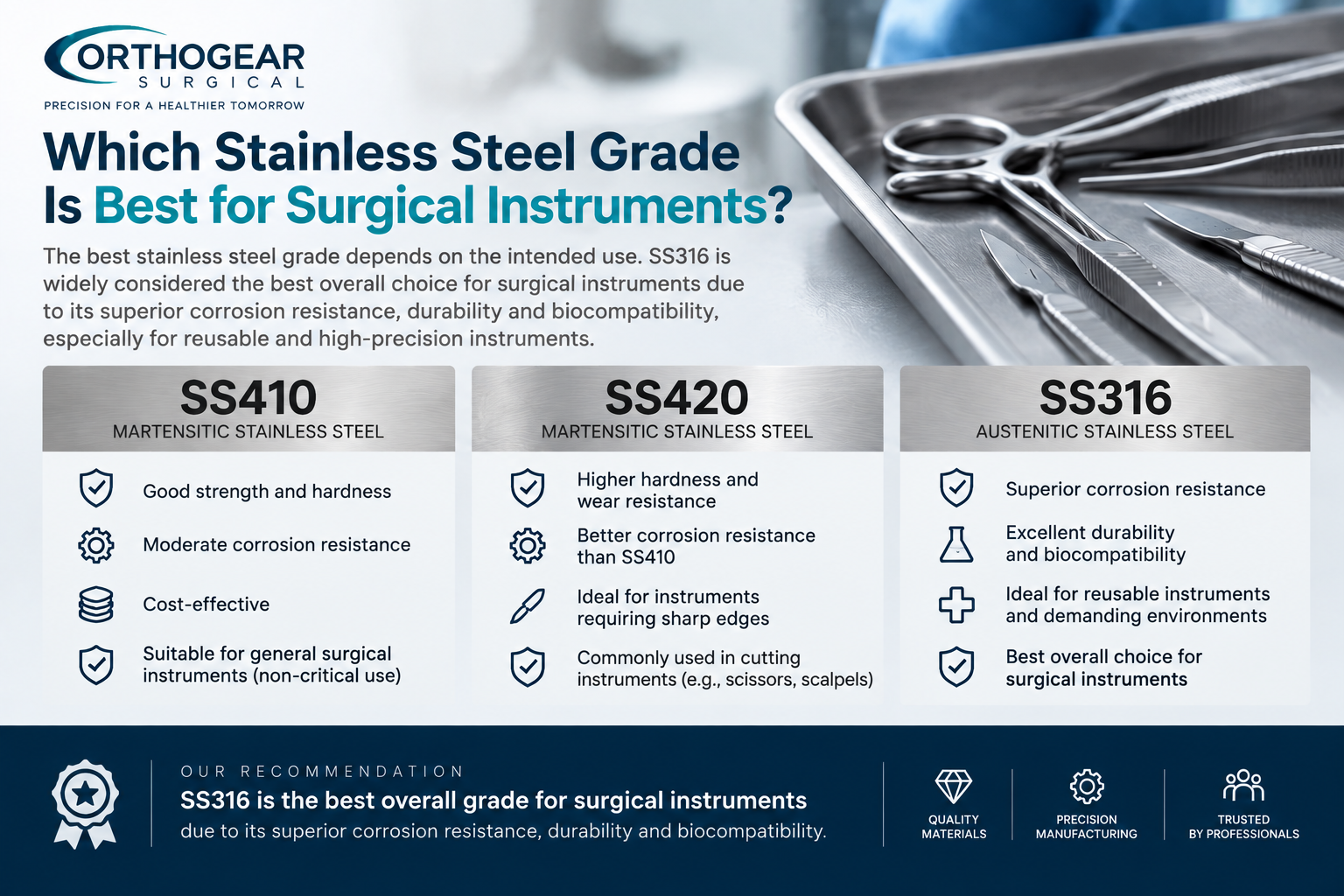
There is not a single answer to the question of what grade of stainless steel is best for surgical instruments, as the best grade of steel for surgical instruments will depend on the specific requirements of the instruments. SS410 and SS420 stainless steel are generally best for cutting-edge instruments, while SS316 stainless steel is generally best for instruments that are exposed to the elements.
Is SS420 stronger than SS410 steel?
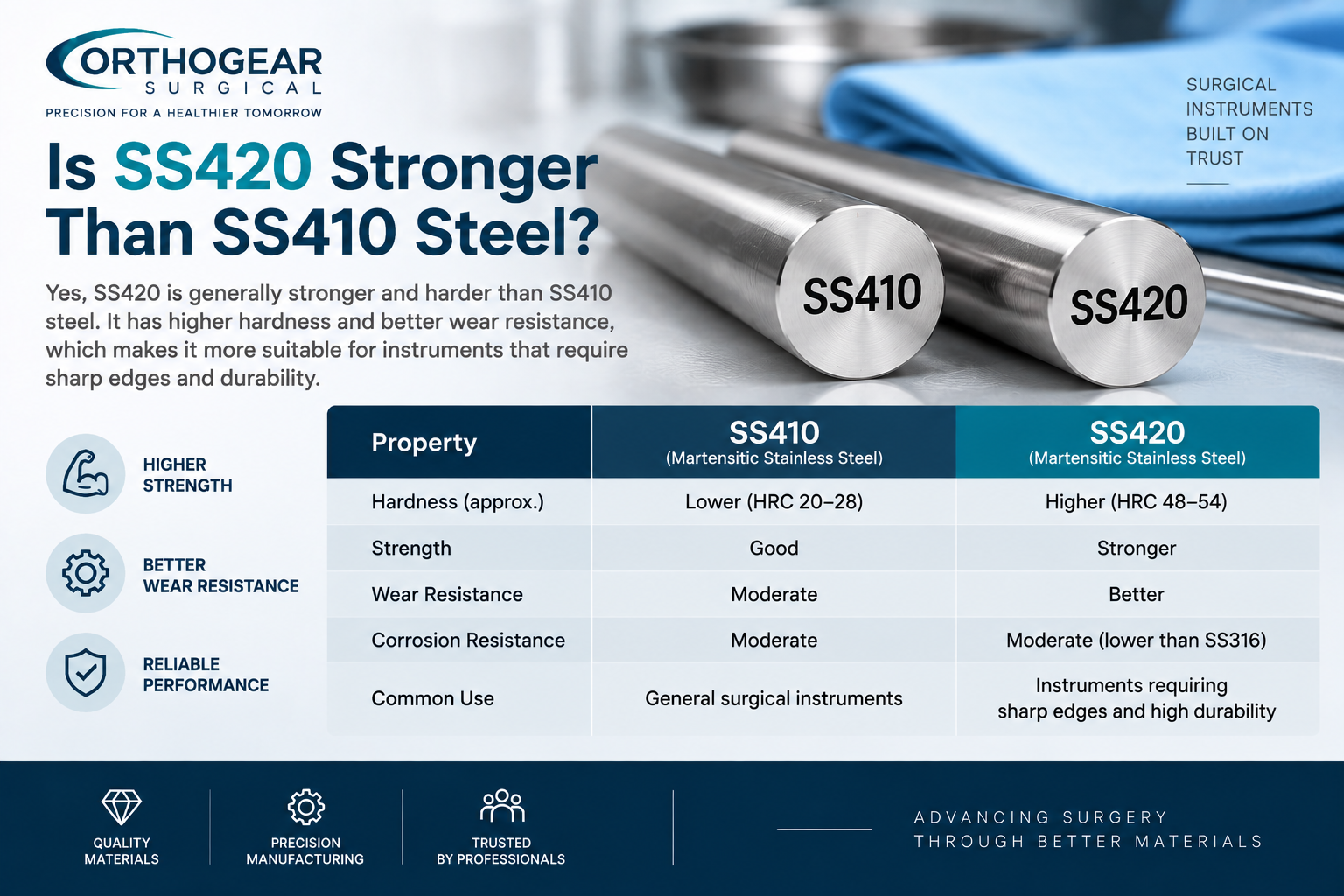
SS420 generally has better material properties than SS410 steel when it comes to mechanical wear and tear, which makes it ideal for the manufacture of forceps, elevators, rongeurs, and other similar instruments. This means that SS420 stainless steel is generally stronger and more durable than SS410 stainless steel.
Is SS316 stainless steel used in surgical instruments?
While SS410 and SS420 stainless steel are generally used in surgical instruments that require hardness and edge retention, such as surgical scissors and curettes, SS316 stainless steel is generally used in surgical instruments or components that require maximum resistance to corrosion such as a surgical blade or elevator. Due to its relatively low hardness, it is generally not used to manufacture cutting-edge surgical instruments or surgical blades.
Can SS410 and SS420 rust?
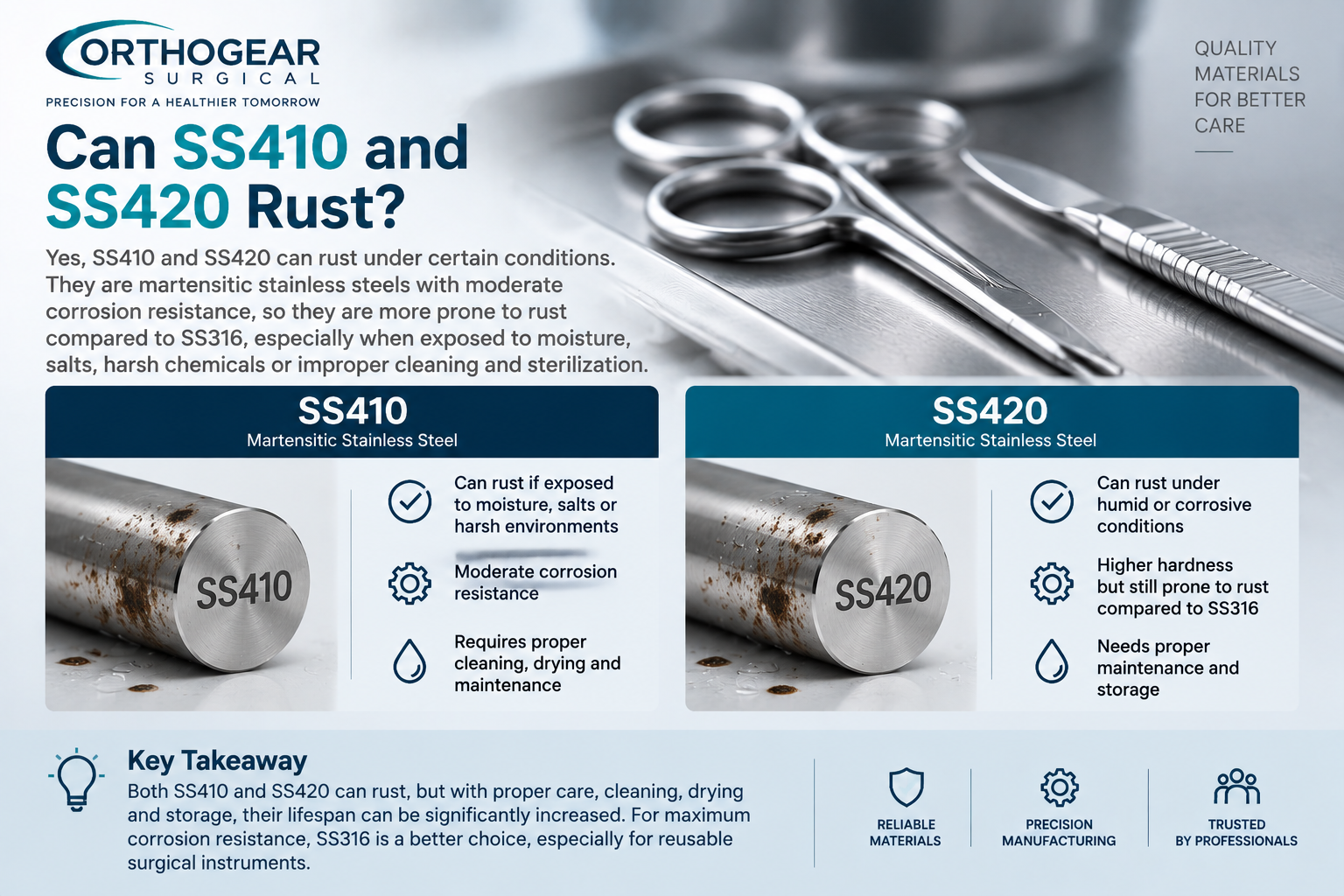
While SS410 and SS420 stainless steel are generally resistant to corrosion, they are more susceptible to rust and corrosion than other grades of stainless steel, especially if they are not properly cared for. This means that they should be cared for and stored properly in order to avoid surface staining, rust, or other damage.
Can a buyer verify the steel grade a manufacturer is using?
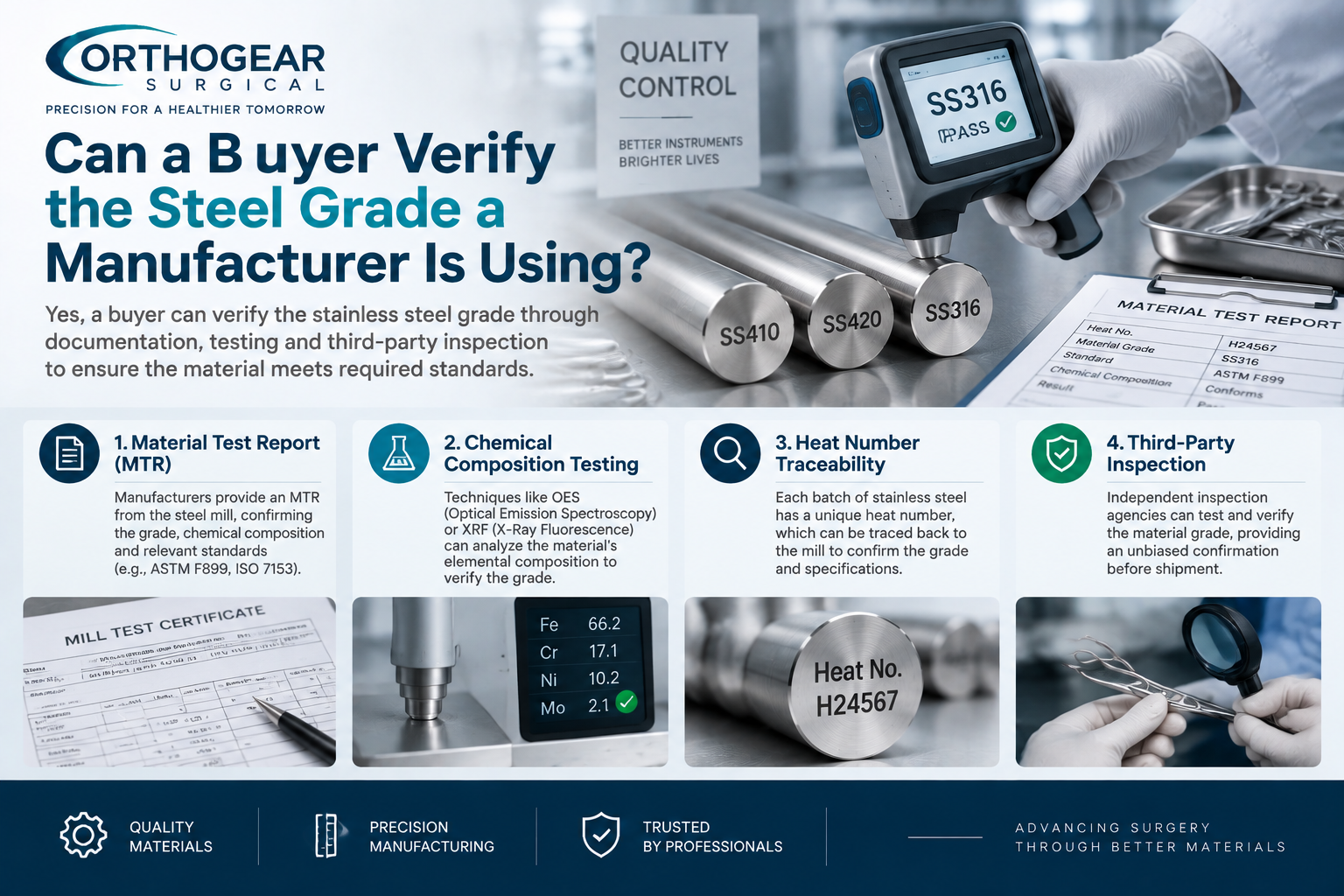
Yes — a buyer can always request that a sample of the steel be provided and can examine it to determine what grade of steel is being used. A reliable surgical instrument manufacturer will be able to provide such a sample upon request.
Do all instruments in a single surgical kit need to use the same steel grade?
No — while it is common practice to use a single grade of steel when manufacturing a single surgical instrument, it is not uncommon for manufacturers to produce complete kits or sets of instruments that use different grades of steel for different instruments depending on their specific application and requirements.
Conclusion
When choosing between SS410, SS420, and SS316 stainless steel — or any other grade of stainless steel — it is important to always weigh the material properties of the different grades against their intended applications. SS410 and SS420 stainless steel are generally best for cutting-edge instruments, while SS316 stainless steel is generally best for instruments that are exposed to the elements.
While the mechanical and chemical properties of the different grades of stainless steel determine the kinds of instruments that are best made from them, it is similarly important to consider the overall cost-effectiveness of the different grades of steel when making a choice.
When purchasing a bulk quantity of instruments or a complete set of surgical instruments, it is always important to weigh the relative lifetime costs of the different grades of steel. This will allow the buyer to make the most cost-effective choice when purchasing a large quantity of instruments and will minimize the overall expense of purchasing and maintaining surgical instruments while still ensuring quality and longevity.
Ready to source instruments with confirmed steel grades and full material transparency? Request a sample or get a bulk quote today.