

Why the Right Extraction Instruments Matter
Introduction
The journey to a successful tooth extraction starts long before the chair is settled in the reception area — it starts with the contents of the tray. From the simplest of extractions to the most challenging of impacted molar surgeries, the quality and precision of the dental extraction instruments being used determine many features of both the procedure itself and the patient experience. A dull elevator, a poorly balanced pair of forceps, a ronguer that can’t hold its edge — each factor contributes to a longer, more painful, and more stressful ordeal for everyone involved.
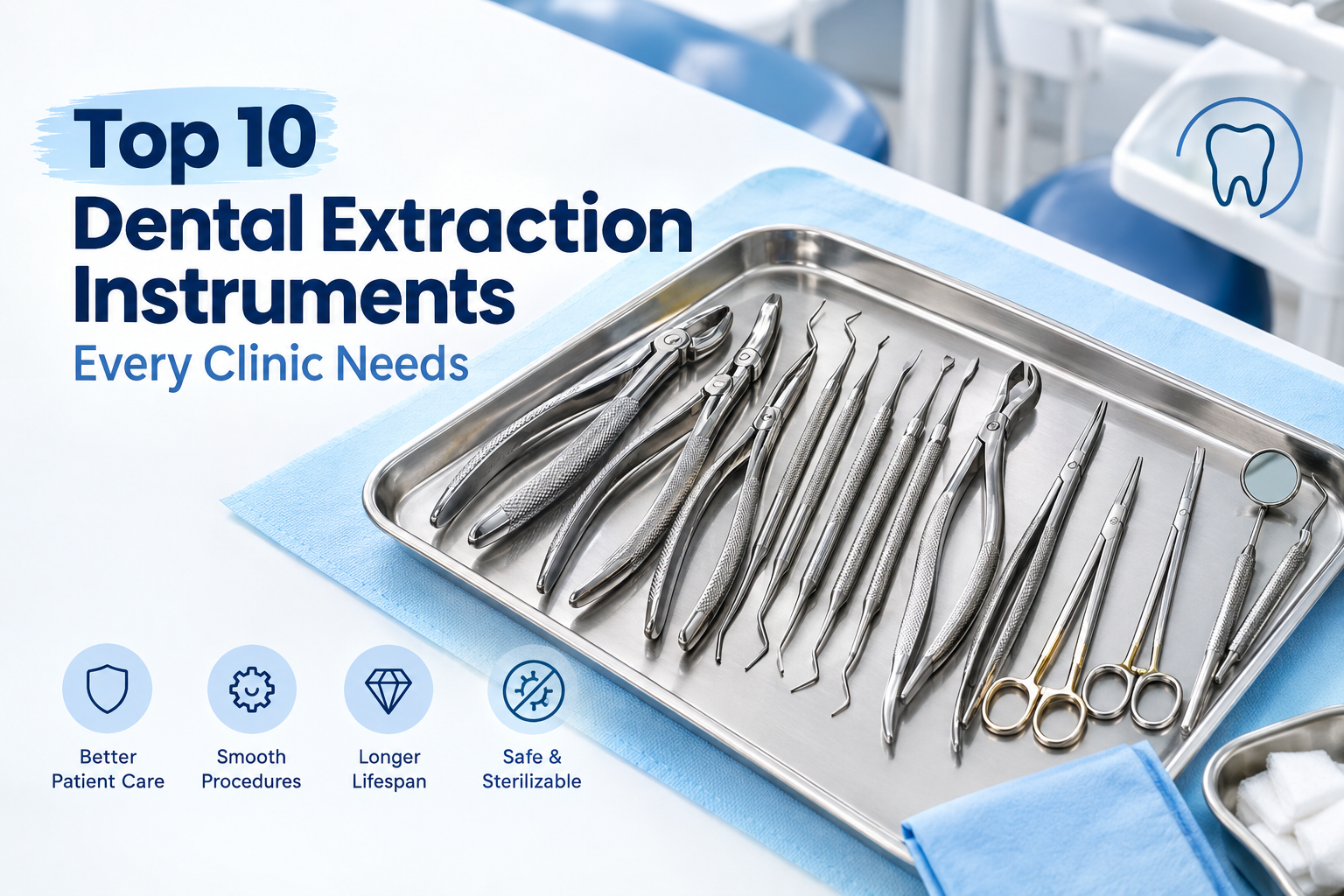
For dental clinics, hospitals, and distributors sourcing equipment in volume, understanding what matters most about each instrument and how to quickly distinguish between a professional tool and a low-cost import are critical areas of expertise. This guide details the top 10 dental extraction instruments to round out any clinic’s inventory, along with their clinical applications, to help buyers make informed selections when building (or buying into) a complete extraction tray.
Whether you’re a solo dentist setting up a new practice, a hospital purchasing supplies for their oral surgery department, or a distributor building out an entire line of surgical instruments from scratch, this list will help you create or update your inventory with confidence.
Why the Right Extraction Instruments Matter
Dental extractions, even the simplest, always involve a degree of manipulation of bone, tissue, and the periodontal ligament. The instruments a dentist uses directly impact several key areas:
Patient comfort and recovery time. Sharp, well-designed instruments reduce total chair time and reduce the likelihood of secondary tissue damage, allowing the patient to return to their daily routine with less recovery time and fewer after-effects like root fracture or damage to adjacent teeth.
Procedural simplicity and flexibility. A complete set of instruments in an organized extraction tray allow a dentist to move smoothly from step to step — from loosening the tooth to gripping it and removing it — without stopping to look for a missing tool or compensate for an inadequately balanced pair of forceps.
Instrument cost and longevity over time. A clinic that purchases surgical-grade stainless steel instruments and keeps them properly maintained will spend less long-term on an extraction set because the proper forceps, elevators, and rongeurs can withstand weeks or even months of regular use between sharpening or replacement. Meanwhile, a set of low-cost, non-certified instruments might need to be replaced every few weeks when the tooling wears out.
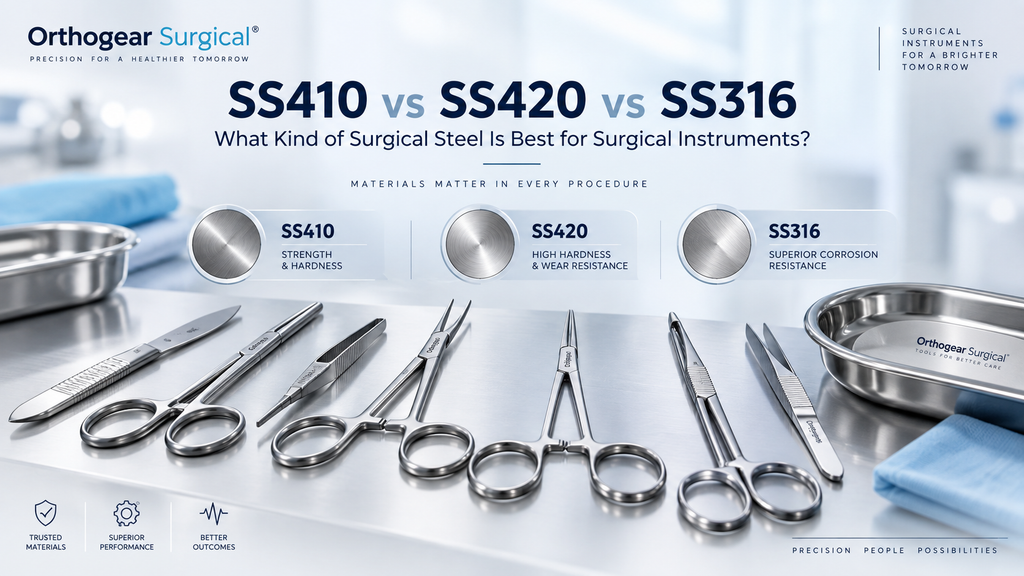
Compliance and sterilization capabilities. Medical-grade stainless steel (commonly SS410, SS420, or SS316) allows instruments to be sterilized repeatedly without pitting, staining, or corroding — a critical requirement for any clinical setting.
With these factors in mind, here are the 10 instruments that should be included in any dental extraction kit.
1. Extraction Forceps (Upper & Lower Sets)
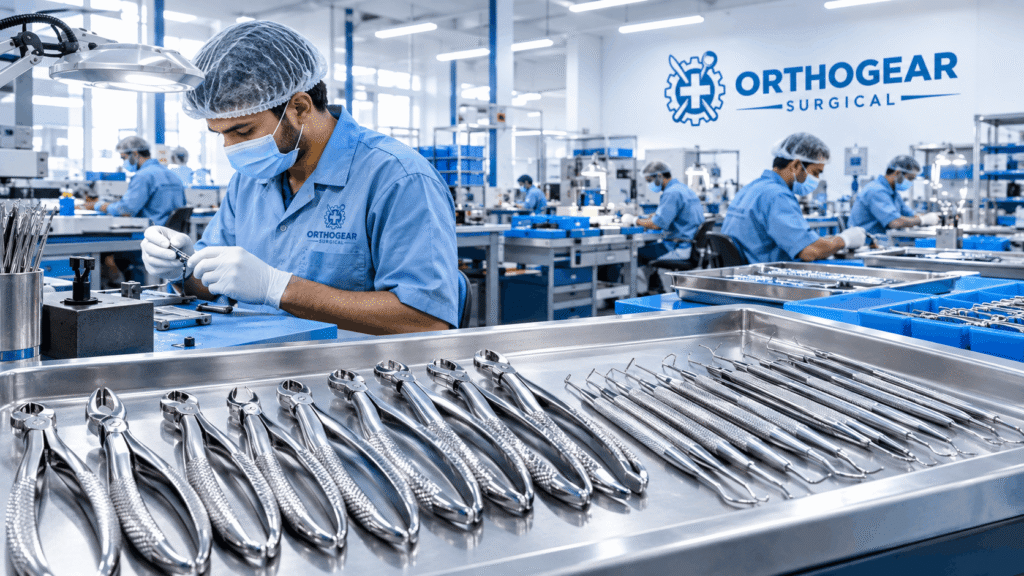
Extraction forceps are perhaps the single most iconic instrument of oral surgery, used to grip the loosened tooth and remove it from the socket. As with all dental instruments, forceps are highly specialized — each type is used for a particular type of extraction or a particular set of teeth. As such, a complete set of extraction forceps will typically include:
- Upper universal forceps (for anterior teeth and premolars)
- Upper molar forceps (left and right, often with a beak to grip the bifurcation of the roots)
- Upper root forceps (for removing fractured roots)
- Lower universal forceps (for anterior teeth and premolars)
- Lower molar forceps (with a cowhorn or beak design to grip between the roots)
- Lower root forceps (for lower root remnants)
A well-designed pair of forceps should have properly aligned beaks that come to a flush tip, a comfortable grip on the handle that prevents hand fatigue during prolonged use, and (in some styles) a spring action for controlled, firm grip without overexertion. Cheap forceps with misaligned beaks can cause unnecessary damage to the tooth’s enamel or soft tissue.
Distributors sourcing in bulk should be aware that most inexpensive imports use mixed tooling — that is, lower-cost imports will often pair left and right forceps from different production runs to make a set, resulting in misalignment and poor grip. If possible, look for a manufacturer that pairs forceps as matched sets (left/right forceps created on the same tooling) to reduce this risk.
2. Dental Elevators (Straight, Cryer, & Apical)
Before a pair of extraction forceps can be used to grip and remove the tooth, it must be loosened with an elevator — a flat instrument that lifts the tooth out of the socket by separating the periodontal ligament, often luxating (completely loosening) the tooth to facilitate easier removal. The three most common types of dental elevators are:
Straight elevators — used to begin the luxation process on most teeth by inserting the blade between the tooth and the alveolar bone before using rotational or wedging movements to separate the root from its socket.
Cryer elevators (left and right) — a type of angled elevator with a pointed blade, used on multi-rooted posterior teeth to help lift a remaining root fragment out of the tooth bed.
Apical (root tip) elevators — a narrow elevator used to gently extract small root fragments that remain in the tooth bed after the main root has been removed.
Elevators are among the most stress-inducing instruments in the dental tray because of the forces applied to them — as the dentist leverages the elevator to lift the tooth, the instrument must push against the hard surfaces of the alveolar bone. Blade hardness and the integrity of the weld between the blade and the shank (the long part of the elevator) are two of the most important quality indicators.
3. Root Tip Picks
Even in the best of hands, root fractures during extraction are a routine part of the process — which is why root tip picks (or root elevators or apexo elevators) are an essential instrument for any extraction set. Root tip picks are a type of fine, angled elevator used to gently tease out root fragments from the socket, using much less force than a standard elevator.
Root tip picks typically come in angled and straight styles, and precision is critical — the tip must be small enough to engage a small root fragment without damaging the alveolar bone or root tip, but strong enough to avoid bending or dulling during the procedure. Clinics that frequently extract impacted teeth or deal with brittle roots should plan to have multiple root tip picks in different sizes rather than a single universal pick.
4. Periosteal Elevators
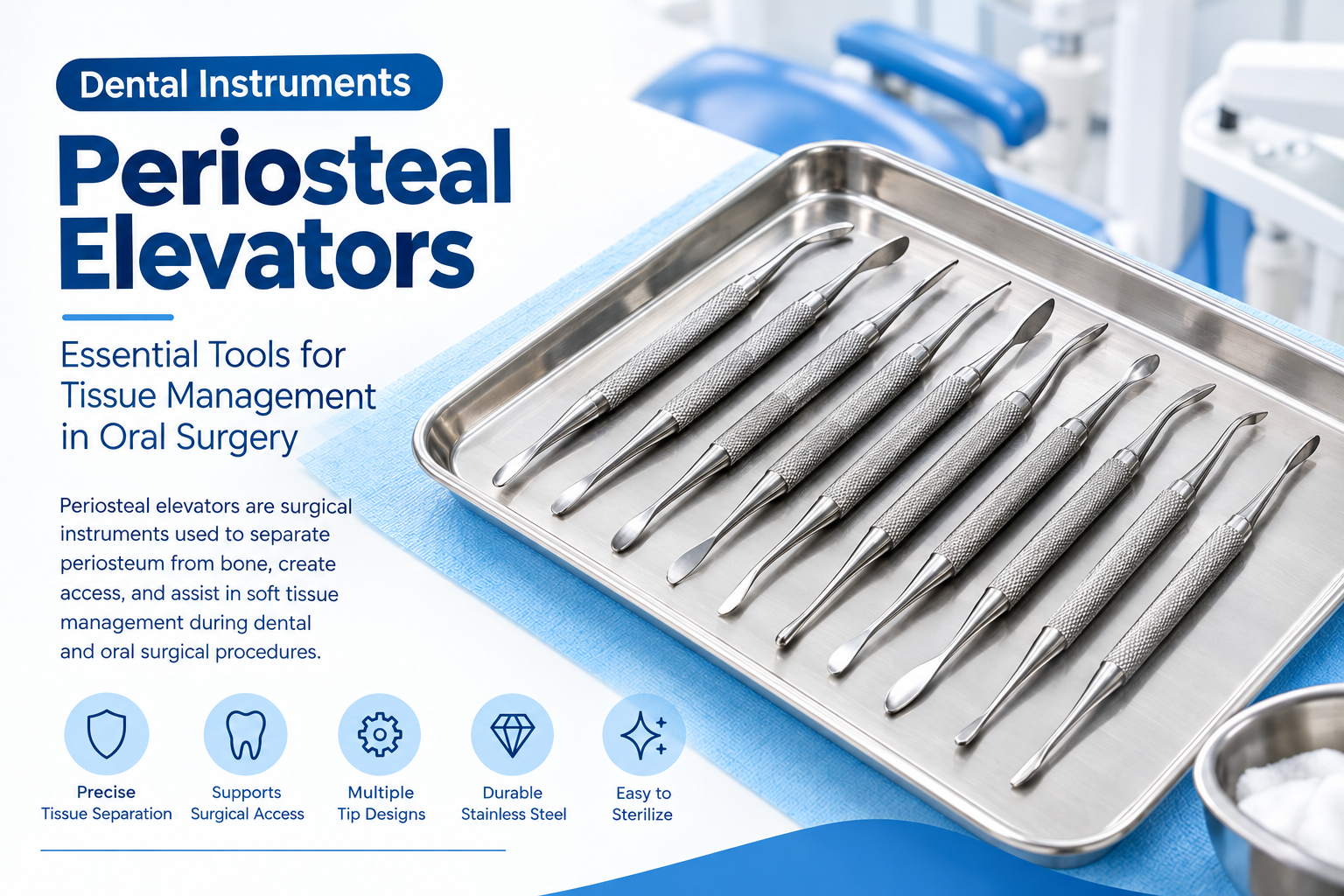
Before any kind of elevator can be used to lift a tooth out of the socket, the gum tissue around the tooth needs to be gently reflected away from the alveolar bone to expose the extraction site — a task for the periosteal elevator, a flat, spatula-shaped instrument that gently lifts the periosteum (the connective tissue layer over the alveolar bone) away from the bone. This allows safe, non-invasive access to the tooth for extraction or other surgery. A quality periosteal elevator will have a smooth edge on one end and a more pointed end on the other, for greater precision.
Periosteal elevators are one of the most versatile instruments in the surgical tray, useful for a variety of tasks ranging from reflecting the gum tissue for a simple extraction to more complex bone contouring work for a dental implant.
5. Bone Rongeurs
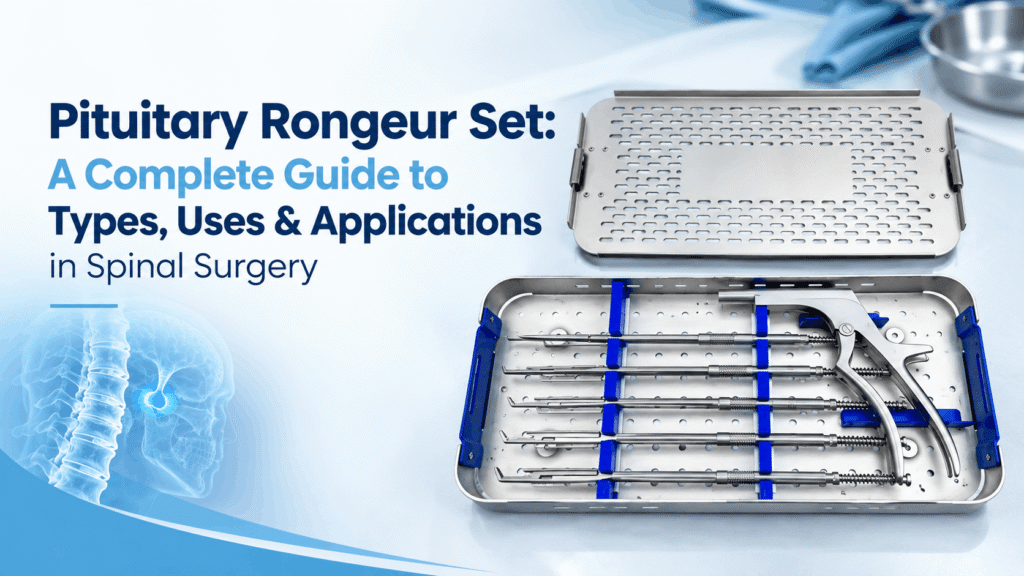
When an extraction involves the removal of a sharp bony edge or the need to cut back the alveolar bone to shape the ridge for a future restoration, a bone rongeur — a plier-like instrument with fine, cupped jaws — is used to nibble out small sections of bone with minimal trauma to the surrounding tissue.
Rongeurs are typically side-cutting or end-cutting, and a complete extraction set should include one of each. Because rongeurs work by hinging along the shank and using a sharp edge to cut the bone, the two most important quality indicators are smooth action on the hinge and a durable cutting edge that will hold up to dozens of sterilization cycles.
6. Surgical Curettes
Once the tooth has been fully extracted, the socket may well need to be scraped clean of granulation tissue or small root fragments before it can begin to heal properly — a task for a surgical curette, a spoon-shaped instrument that uses a sharp, curved edge to gently remove tissue. Curettes come in a variety of sizes to access different areas of the mouth and can be used on the anterior teeth or the deepest roots of the molar, and they are often paired with a professional dental scaler for pre-extraction debridement. A high-quality curette should maintain a sharp edge that cleanly removes tissue without the need for excessive pressure, reducing trauma to the socket and speeding up the healing process.
7. Needle Holders
Needle holders are used to grip the suture needle during the suturing process — particularly important for surgical extractions or other procedures that require stitches to close the incision and promote healing. While not an extraction instrument per se, a properly made needle holder can drastically reduce the risk of accidental needle sticks during the procedure. The most important quality indicator for a needle holder is the tungsten carbide insert (on higher-end styles) or the quality of the serration in the jaws — either one can help keep the suture needle from slipping out of the holder’s grip.
8. Suture Scissors
When paired with a needle holder, suture scissors are used to cut the suture material after the knots have been tied, allowing the procedure to close properly. While it might seem a minor consideration, a dull or poorly made pair of suture scissors can fray the suture rather than cutting it cleanly, compromising the integrity of the knot and potentially causing the suture to slip out prematurely. Most clinics will carry both straight and slightly curved pairs of suture scissors, with the curved style offering better access to the deep posterior of the mouth.
9. Mouth Mirrors and Explorers (Pre-Extraction Exam Set)
Before any extraction instrument is used on a tooth, a basic examination is performed using a mouth mirror and explorer to check the teeth adjacent to the extraction site, assess the patient’s gum condition, and verify the anatomy of the affected tooth. While not an “extraction” instrument in the traditional sense, no extraction set should be complete without a quality pair of mouth mirrors and explorers, as they’re used throughout the procedure to examine the affected area.
Mouth mirrors should have a distortion-free, anti-corrosion finish, and explorers should maintain a fine tip after repeated sterilization cycles to reduce the risk of unnecessary trauma.
10. Extraction Forceps (Pedo Set)
Clinics that regularly see children or deal with extractions on primary (baby) teeth need a separate set of smaller forceps designed specifically for the smaller, more delicate roots of the pediatric teeth. Using a standard set of adult forceps on a child’s tooth can cause unnecessary root fracture, damage to the delicate alveolar bone, and root tip damage on the permanent tooth that’s forming beneath the extracted root.
A dedicated pediatric set of extraction forceps is one of the most overlooked items in a general dental clinic, but it’s often a critical necessity for those who see pediatric patients in addition to adults.
Material Quality: What Grade of Stainless Steel Makes a Difference
Most “stainless steel” medical instruments actually use a variety of metals, and the grade of metal used can have a significant impact on the performance of each instrument. The three most common grades of stainless steel used in dental and surgical instrument manufacturing are:
SS410 — A martensitic stainless steel commonly used in cutting instruments like scissors and curettes. This grade has excellent hardness and wear resistance, and retains a sharp working edge after repeated use.
SS420 — Another martensitic grade, often used in general-purpose forceps, elevators, and rongeurs. SS420 is harder than other grades, making it more resistant to wear, but it can be prone to rust if not properly treated.
SS316 — An austenitic stainless steel with exceptional corrosion resistance — ideal for instruments that are exposed to higher levels of moisture or more demanding sterilization cycles.
Instruments made from properly certified, medical-grade stainless steel will generally hold their edge longer, resist corrosion during sterilization, and reduce the overall cost of ownership for a clinic, despite a potentially higher initial purchase price.
How to Choose a Reliable Dental Extraction Instruments Supplier
For new practices and bulk distributors, choosing a reputable manufacturer is as important as choosing the instruments themselves. When selecting a dental extraction instruments supplier, keep the following best practices in mind:
Look for ISO 13485 certification. This international standard sets quality control guidelines for medical device manufacturers, so a supplier with this certification has demonstrated a commitment to consistency across their product lines. You can read more about the standard itself on the official ISO 13485 page.
Ask about material specifications. Not every dental instrument supplier can confirm the grade of stainless steel being used (or the type of metal altogether), so ask for details on the materials before making a bulk purchase.
Consider OEM and private label options. Distributors and clinic networks looking to build a brand-specific line of instruments should work with a manufacturer that offers OEM manufacturing and private label packaging for greater brand presence.
Seek out bulk order and direct factory pricing. Cutting out the middlemen by ordering directly from the factory can reduce costs while maintaining quality control — particularly important for large-volume orders.
Evaluate the sample policy and quality guarantees. Before committing to a larger order, ask the supplier about their policies for returning, restocking, or replacing low-quality instruments if they arrive with manufacturing defects.
Research worldwide shipping and export experience. Distributors and multi-clinic networks should work with a supplier that has experience with the import regulations and documentation requirements for their specific region (whether that’s the USA, UK, Canada, Germany, Australia, the UAE, Saudi Arabia, or elsewhere).
Building a Complete Extraction Tray: A Quick Reference
For a complete, well-rounded extraction set, a clinic should plan to include:
- Upper and lower universal extraction forceps
- Upper and lower molar extraction forceps
- Root forceps (upper and lower)
- Straight elevators
- Cryer elevators (left and right)
- Apical/root tip elevators
- Root tip picks (angled and straight)
- Periosteal elevator
- Bone rongeurs (side-cutting and end-cutting)
- Surgical curette
- Needle holder
- Suture scissors
- Mouth mirror and explorer
- Pediatric forceps set (for clinics treating children)
By sourcing a complete set of dental extraction instruments from a single manufacturer, a clinic gains benefits like greater consistency between forceps sets, the ability to maintain a complete set when individual instruments become damaged or worn out, and greater volume discounts from the manufacturing supplier.
Instrument Care & Sterilization: Protecting Your Investment
Even the highest-quality extraction set will see its investment shrink rapidly if it’s not properly cared for between uses — but a few simple steps can dramatically extend the working life of a clinic’s instruments. Here are a few practical instrument care and sterilization tips:
Pre-clean instruments before autoclaving to prevent staining or pitting. Blood and tissue left on the instruments before sterilization can bake onto the surface during the autoclave process, staining or pitting hardened surfaces like the hinge on a pair of forceps.
Dry instruments before storage to prevent water spots and early corrosion. Especially on lower-quality instruments, storing wet tools can cause staining and corrosion on delicate surfaces like the hinge.
Don’t overcrowd instruments in sterilization containers. Stacking multiple instruments on top of one another can cause delicate tips (like a root tip pick) to knock against one another, causing microscopic tip damage that reduces the life of the instrument.
Get in the habit of regularly inspecting instruments. A routine check of the condition of forceps alignment, elevator tips, and rongeur hinges can help catch early signs of wear before it becomes a problem during a procedure.
Dentists that develop a regular instrument care and sterilization routine will find that a properly maintained set of extraction instruments can easily outlast a poorly maintained set from a cheaper manufacturer.
A Sourcing Checklist for International and Bulk Buyers
When evaluating a potential supplier for international or bulk orders of dental extraction instruments, a few simple questions can help buyers identify red flags or stand out from the competition. Consider the following questions when evaluating a potential supplier:
Have they provided written confirmation of the stainless steel grade being used for each category of instruments?
Are they ISO 13485-certified?
Do they offer physical samples or do they only offer catalog images?
Do they offer OEM and private label options?
Do they offer competitive pricing for bulk orders?
What is their minimum order quantity? Does it align with your initial purchase?
What is their expected production lead time? Does it align with your inventory needs?
Do they have experience shipping to your country or region? Do they have experience with importing dental instruments?
Do they offer favorable terms for bulk buyers or is everything sold on a per-piece basis?
Using this sourcing checklist before finalizing the first order can help bulk buyers and international distributors avoid potentially expensive mistakes by ensuring they understand what to expect from the supplier.
FAQs
What is the most important instrument in a dental extraction kit? The most important instruments are always extraction forceps and elevators, since they’re necessary for nearly every type of extraction — from the most simple to the most complex.
What stainless steel grade is best for dental extraction instruments? SS420 is most commonly used for forceps, elevators, and rongeurs due to its excellent hardenability and wear resistance. SS410 and SS316 are also used, depending on the application.
What are the best dental extraction instrument suppliers for international buyers? The best instrument suppliers for international buyers will have experience with the import requirements and documentation for the buyer’s country, in addition to offering competitive pricing and favorable payment terms for bulk orders.
What are the key differences between a pediatric and an adult set of extraction forceps? Pediatric forceps are generally smaller and have a smaller grip to accommodate the smaller roots of the primary (baby) teeth without causing unnecessary root fracture or damage to the supporting alveolar bone.
What additional instruments are needed for surgical extraction? In addition to standard extraction instruments, surgical extractions will always require a needle holder and suture scissors to close the surgical site with stitches. Periosteal elevators may also be used to reflect the gum tissue back from the surgical site.
How often should dental extraction instruments be sharpened or replaced? Dental instruments that are used frequently in a high-volume practice may need to be sharpened or replaced after several months of regular use, while instruments used less frequently can often be used for years at a time without needing significant maintenance.
Ready to source a complete extraction set? Get in touch for a bulk quote or browse the full instrument range.