


1. Introduction to Hu-Friedy Dental Instruments
Every successful dental practice depends on more than a skilled dentist and a well-trained team — it depends heavily on the quality of the instruments used every single day. Whether it’s a scaling procedure, a diagnostic check-up, a restorative filling, or a complex surgical extraction, the instrument in the dentist’s hand plays a direct role in the outcome of the treatment. Poor-quality instruments can slow down procedures, cause discomfort to patients, and even compromise accuracy. This is why instrument selection is one of the most important, yet often overlooked, decisions a dental professional makes.
Among the manufacturers competing in the global dental instruments market, Hu-Friedy has built a name that is instantly recognized by dentists, periodontists, oral surgeons, and dental hygienists around the world. Known for combining precision manufacturing with comfort-focused design, Hu-Friedy instruments are often considered a benchmark for quality in the industry.
What exactly makes Hu-Friedy instruments stand out? Are they the right option for every dental practice, or are there situations where other manufacturers might be a smarter, more cost-effective choice? In this guide, we’ll walk through everything a dental professional needs to know — from the brand’s history and reputation, to the most popular instrument categories, to practical advice on choosing instruments that fit both your clinical needs and your budget. By the end, you’ll have a clear framework for evaluating whether Hu-Friedy instruments — or a suitable alternative — are the right fit for your practice.”This is exactly why finding the best Hu-Friedy dental instruments for dentists starts with understanding what the brand truly offers.”
2. What Is Hu-Friedy Known For?
Hu-Friedy has spent decades building a reputation rooted in three core pillars: precision engineering, ergonomic design, and consistency of quality. These pillars have helped the brand become a trusted name not only among individual practitioners but also among dental schools, hospitals, and large multi-location clinics that need to standardize their instrument inventory across many operatories.
A Legacy Built on Craftsmanship
Since its founding in the early twentieth century, Hu-Friedy has focused on manufacturing instruments that are hand-finished and rigorously tested before they reach the market. This attention to detail is part of why many dentists describe Hu-Friedy instruments as feeling noticeably different in the hand compared to lower-cost alternatives — better balanced, smoother in action, and more comfortable to hold during long procedures.
Ergonomics as a Design Philosophy
One of the most talked-about aspects of Hu-Friedy’s product line is its ergonomic handle design. Long clinical days involving repetitive hand movements can lead to strain injuries over time, a common occupational hazard for dental professionals. Hu-Friedy has invested heavily in handle shapes, grip textures, and weight distribution that reduce hand fatigue, allowing practitioners to work comfortably through back-to-back appointments.
A Comprehensive Product Range
Hu-Friedy doesn’t specialize in just one category of instruments. Their catalog spans diagnostic tools, periodontal instruments, restorative tools, surgical instruments, endodontic tools, orthodontic pliers, and instrument management systems such as sterilization cassettes. This breadth allows dental practices to source most of their instrument needs from a single trusted supplier rather than juggling multiple vendors.
Focus on Infection Control
Beyond the instruments themselves, Hu-Friedy has also placed emphasis on instrument management systems (IMS) — cassette-based systems designed to streamline sterilization workflows, reduce instrument handling, and support compliance with infection control protocols. This reflects an understanding that instrument quality isn’t just about the tool itself, but about how it fits into the broader clinical workflow.
3. Popular Types of Hu-Friedy Dental Instruments
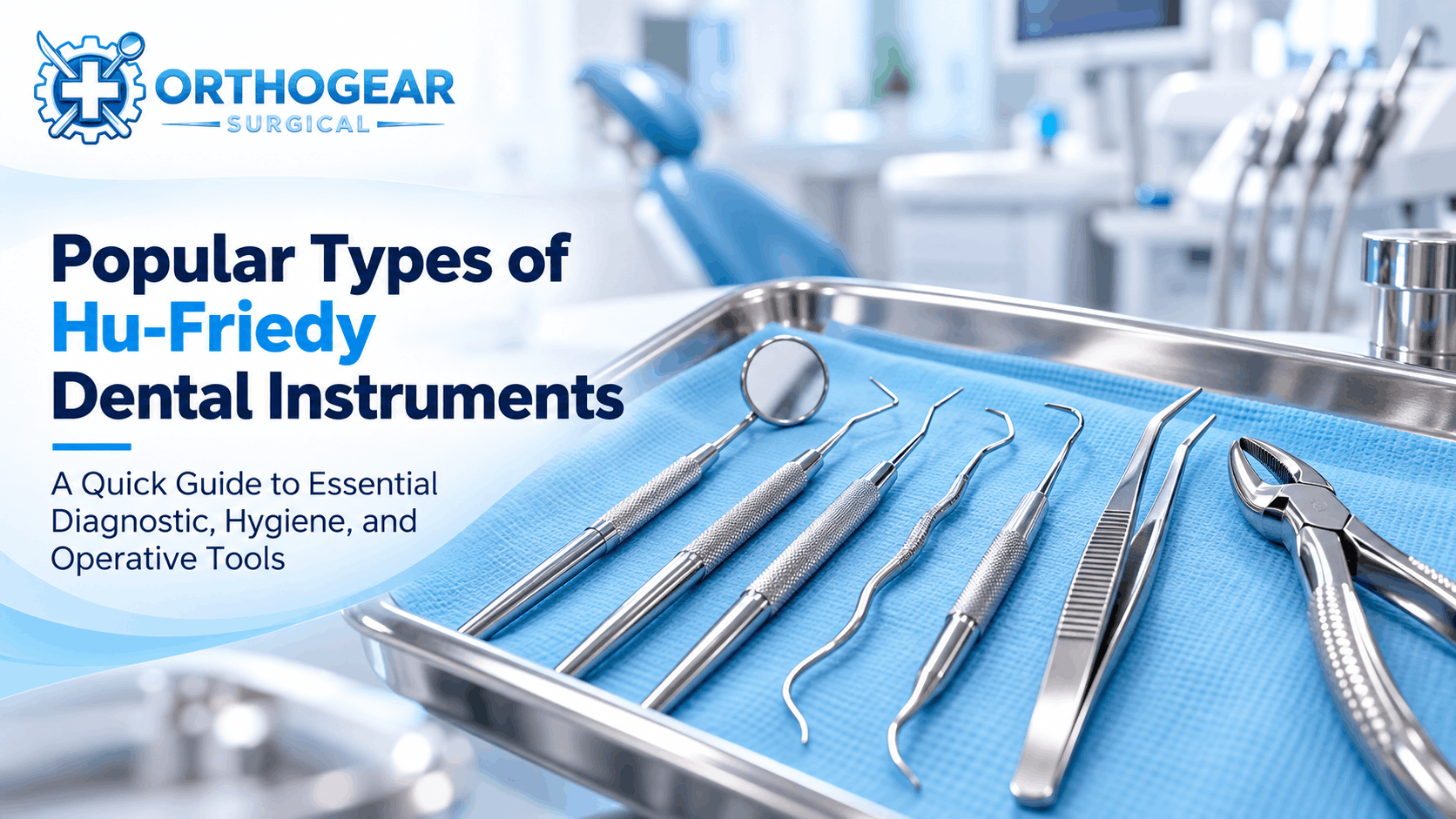
Hu-Friedy’s catalog is extensive, but a handful of categories stand out as the most widely used across general dentistry, periodontics, and oral surgery.
Dental Scalers and Curettes
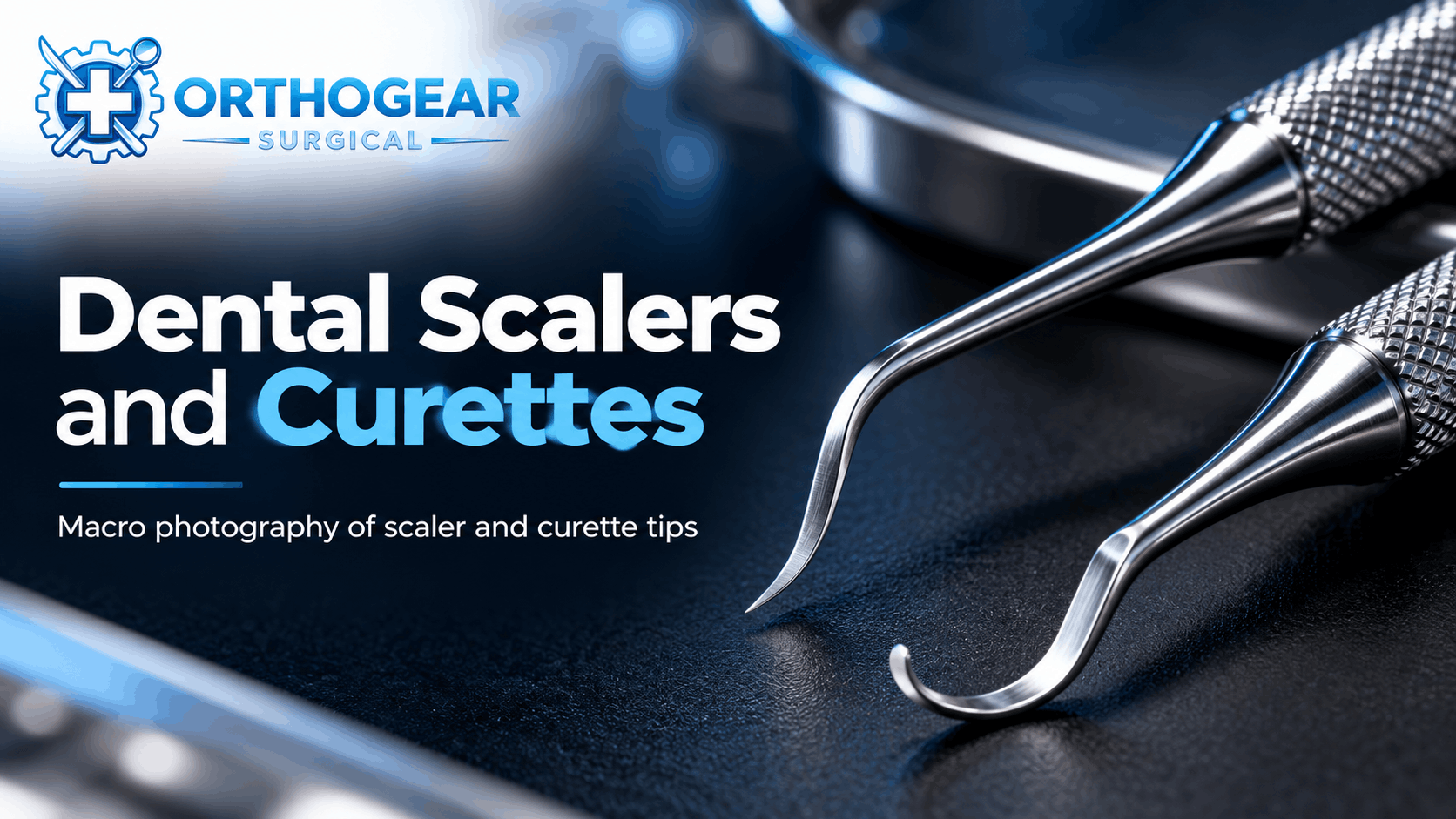
Scalers and curettes form the backbone of periodontal therapy. These instruments are used to remove plaque, tartar, and calculus deposits from the tooth surface and below the gumline, helping prevent and manage gum disease.
Scalers typically feature a pointed tip and are best suited for removing supragingival calculus — deposits that form above the gumline. Hu-Friedy’s scalers are designed with sharp edges that allow for precise removal without unnecessarily traumatizing the surrounding soft tissue.
Curettes, on the other hand, have a rounded toe and are designed for subgingival work — cleaning below the gumline where visibility is limited and precision matters even more. Universal curettes can be used across multiple tooth surfaces, while area-specific curettes (such as Gracey curettes) are designed for particular teeth and surfaces, allowing for more targeted and efficient periodontal therapy.
For a hygienist or periodontist performing scaling and root planing procedures multiple times a day, the quality of these instruments directly impacts both efficiency and patient comfort. A well-balanced, sharp curette reduces the number of strokes needed to remove calculus, shortening procedure time and minimizing patient discomfort.
Dental Explorers
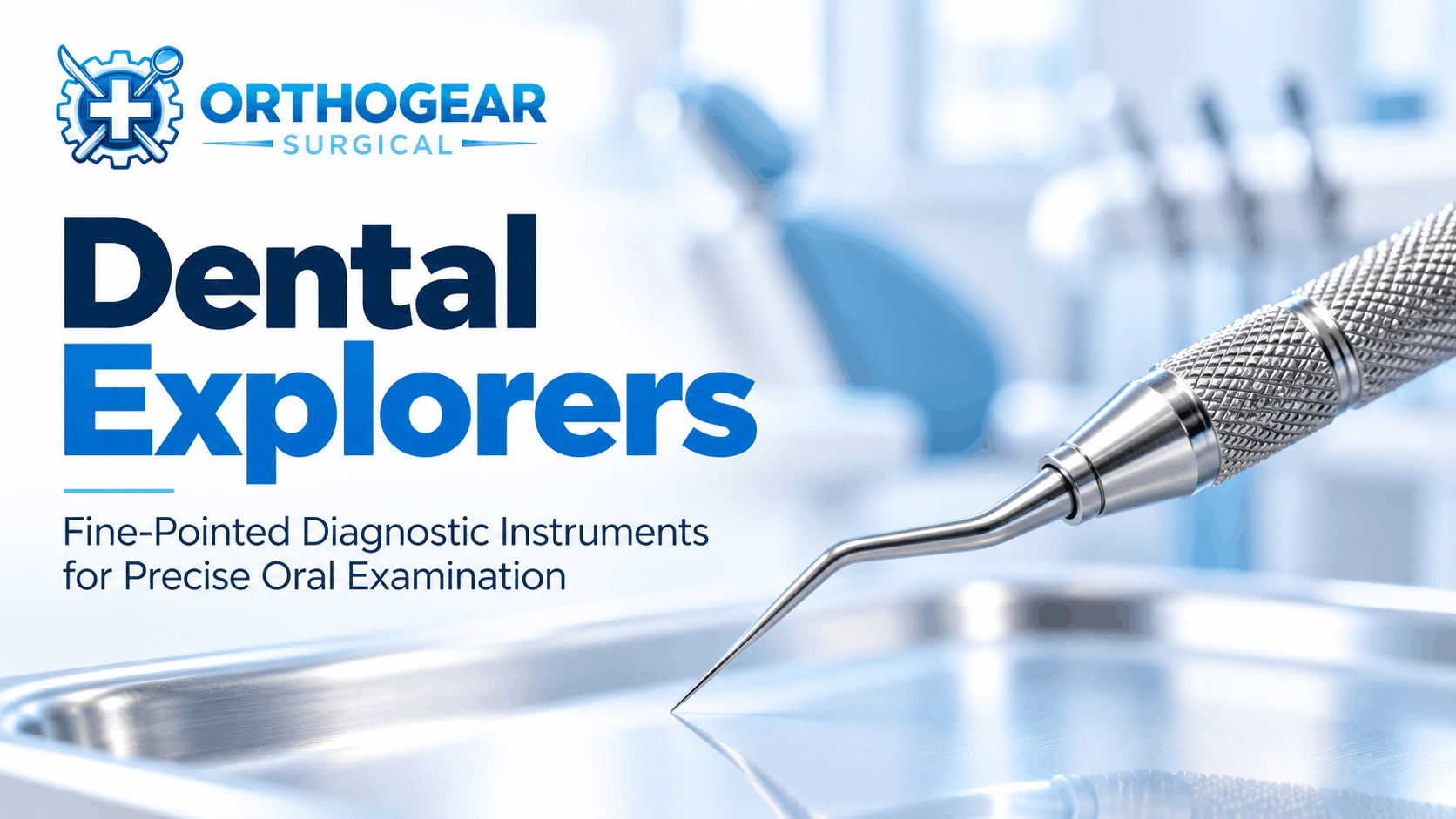
Explorers, sometimes referred to as probes, are diagnostic instruments used to detect early signs of dental disease. A dentist uses an explorer to feel for irregularities on the tooth surface — such as soft spots that may indicate decay, rough margins around old restorations, or calculus deposits that aren’t visible to the naked eye.
Hu-Friedy explorers are known for their fine, sharp tips that provide excellent tactile feedback, allowing dentists to detect subtle surface changes with confidence. This is particularly important in early cavity detection, where catching decay before it becomes visible on an X-ray can mean the difference between a simple filling and a more invasive procedure down the line.
Periodontal probes, a specialized type of explorer, are marked with millimeter increments and are used to measure the depth of the gum pocket around each tooth — a critical measurement in diagnosing and monitoring periodontal disease.
Dental Forceps
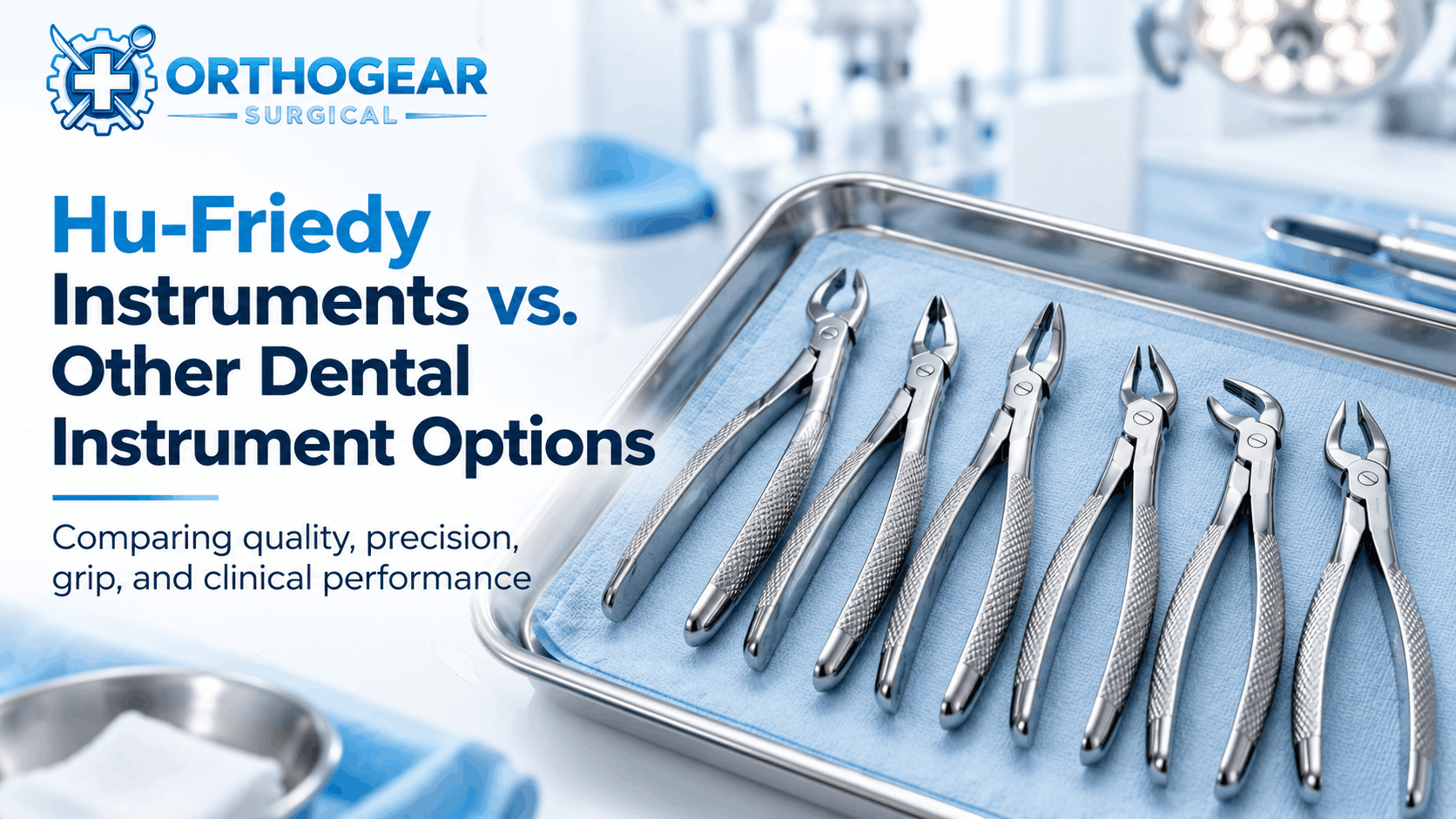
Forceps are among the most recognizable dental instruments, primarily associated with tooth extractions. Each forceps design is tailored to a specific tooth type and location in the mouth, accounting for differences in root shape, number of roots, and jaw anatomy.
For example, forceps designed for extracting molars look quite different from those used for lower incisors, because the anatomical challenges of each extraction are unique. Hu-Friedy’s forceps line includes a wide range of designs to accommodate these anatomical differences, giving oral surgeons and general dentists the right tool for nearly any extraction scenario.
Beyond extractions, certain forceps are also used in orthodontics (for bracket placement and removal) and in general restorative work (for handling small components during procedures). The consistent grip strength and precise jaw alignment of quality forceps reduce the risk of slippage, which is especially important during procedures involving direct contact with hard tissue.
Dental Mirrors
Though simple in design, the dental mirror remains one of the most frequently used instruments in any dental setting. Mirrors allow the dentist or hygienist to view areas of the mouth that would otherwise be impossible to see directly — the back surfaces of molars, the underside of the tongue, or areas obstructed by the cheek.
Beyond visualization, mirrors are also used to retract the cheek or tongue, reflect light onto darker areas of the oral cavity, and even transilluminate teeth to help detect cracks or decay. Hu-Friedy mirrors are typically available with different reflective coatings — some designed to reduce glare, others optimized for true-color reflection, which can be particularly useful during shade matching for restorative work.
Dental Instrument Cassettes
As dental practices place increasing emphasis on infection control and workflow efficiency, instrument cassettes have become a standard part of modern sterilization protocols. Rather than handling loose instruments individually through cleaning, packaging, sterilization, and storage, cassettes allow an entire set of instruments to move through the sterilization cycle together.
This approach reduces the risk of instrument damage from loose handling, minimizes the chances of cross-contamination, speeds up turnover time between patients, and makes it easier to track instrument sets for specific procedures. Hu-Friedy’s cassette systems are designed to be compatible with a wide range of sterilization equipment, making them a practical addition for clinics looking to modernize their sterilization workflow.
4. How to Choose the Right Dental Instruments
With so many options available — not just within Hu-Friedy’s own catalog but across the broader market — choosing the right instruments can feel overwhelming. Here are the key factors dental professionals should evaluate before making a purchasing decision.
Material Quality — The foundation of any good dental instrument is the material it’s made from. High-grade stainless steel is the industry standard because it offers a strong balance of durability, corrosion resistance, and the ability to hold a sharp edge over repeated use and sterilization cycles. Lower-quality steel may be more affordable upfront, but it often dulls faster, corrodes more easily, and needs to be replaced more frequently — ultimately costing more over time.
Ergonomic Design — Given how many hours dental professionals spend holding instruments each day, ergonomics should never be an afterthought. Handle diameter, weight distribution, and grip texture all affect how comfortable an instrument feels during extended use. Poorly balanced or overly heavy instruments can contribute to hand and wrist strain, a common issue among hygienists and dentists performing repetitive procedures throughout the day.
Purpose-Specific Design — Not all instruments are interchangeable, even within the same broad category. A curette designed for anterior teeth won’t perform as well on posterior molars, and forceps meant for single-rooted teeth won’t provide adequate grip on a multi-rooted molar. Investing in purpose-specific instruments typically leads to better clinical outcomes and reduced procedure time.
Sterilization Compatibility — Instruments need to withstand repeated exposure to autoclave sterilization without degrading in quality. Check whether an instrument is rated for steam sterilization and whether the manufacturer specifies any limitations on frequency or method.
Cost vs. Long-Term Value — While upfront price is always a consideration, it shouldn’t be the only factor. An instrument that costs more initially but lasts longer and holds its edge better may offer better long-term value than a cheaper alternative that needs frequent replacement.
Manufacturer Support and Warranty — Reliable manufacturers often back their products with servicing or warranty programs, adding a layer of protection to your investment.
5. Hu-Friedy Instruments vs. Other Dental Instrument Options
Hu-Friedy is undoubtedly one of the most well-known names in dental instrumentation. But being the most recognized brand doesn’t automatically make it the best choice for every practice — it’s worth understanding how it compares to other options in the market.
Premium Pricing — Hu-Friedy instruments are generally positioned at the premium end of the market, reflecting their manufacturing standards, brand reputation, and ergonomic research. For established practices focused on long-term instrument investment, this premium is often justified by durability and performance. For newer practices, high-volume clinics, or those on tighter budgets, however, the price gap can be a real consideration — especially when comparable quality is available elsewhere.
Regional Manufacturing Alternatives — Pakistan, and specifically the city of Sialkot, has built a global reputation as a major hub for surgical and dental instrument manufacturing. Many manufacturers based in this region produce instruments that meet international certifications such as ISO and CE, at a fraction of the cost of premium Western brands.
Making the Right Comparison — When comparing Hu-Friedy to other manufacturers, compare like for like: material specifications, certifications, warranty terms, and real clinician feedback, rather than relying on brand name alone. A hybrid approach often works well — premium instruments for high-precision procedures, and reliable, cost-effective instruments for routine, high-turnover use.
Clinical Performance Considerations — Performance can also vary by practitioner preference. Many dentists find certain instrument designs simply suit their hand and technique better, regardless of brand — which is why sampling instruments from multiple manufacturers before a full inventory switch is a common and sensible practice.
6. What to Look for in a Dental Instrument Manufacturer
Whether you choose Hu-Friedy, a regional manufacturer, or a mix of both, evaluating the manufacturer itself is just as important as evaluating the instruments.
- Certifications and Quality Standards — Look for ISO 9001 and CE marking, which confirm structured quality control processes.
- Manufacturing Process Transparency — Reputable manufacturers are open about materials, testing, and production facilities.
- Customization Capabilities — The ability to request custom handles, tip angles, or instrument combinations adds valuable flexibility.
- Order Flexibility and Supply Consistency — A dependable manufacturer fulfills both small and bulk orders reliably.
- Reputation and Clinician Feedback — Real-world reviews and testimonials from practicing dentists offer more practical insight than marketing claims.
7. Orthogear Surgical: Dental Instrument Manufacturing and Supply
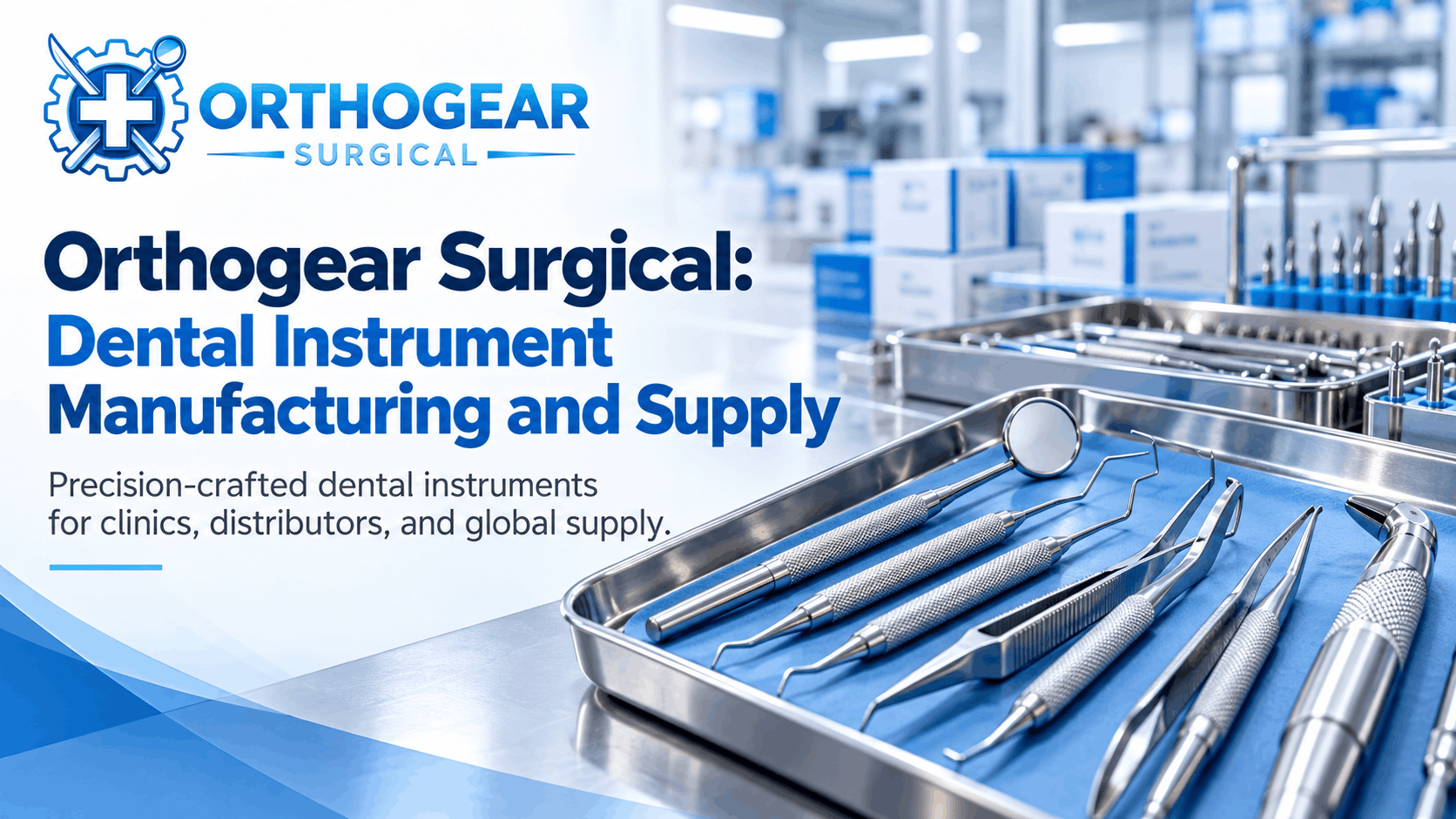
For dentists looking for a reliable alternative to premium international brands, Orthogear Surgical is a strong option worth considering. Based in Pakistan’s well-established surgical instrument manufacturing hub, Orthogear Surgical specializes in the production and supply of high-quality dental and surgical instruments designed to meet the real-world needs of modern dental practices.
Precision Manufacturing at Competitive Pricing
Orthogear Surgical focuses on precision-engineered instruments produced under strict quality control, aiming to match the performance of top brands at a more accessible price point — making it a practical choice for practices looking to build or expand their instrument inventory without premium international pricing.
Serving a Range of Clients
From individual dental clinics to hospitals and distributors, Orthogear Surgical is equipped to handle varying order sizes, offering a convenient single-source option for practices looking to simplify procurement.
Client-Specific Solutions
Recognizing that different practices have different needs, Orthogear Surgical offers customized instrument solutions rather than a one-size-fits-all catalog.
A Practical Choice for Value-Conscious Practices
For dental professionals who want to maintain high clinical standards while managing costs effectively, Orthogear Surgical offers a compelling middle ground — quality manufacturing at pricing that works for practices of all sizes.
You can explore their full instrument range on the Orthogear Surgical website, or follow their latest products and updates on Instagram, Facebook, and YouTube.
8. Conclusion
Choosing the best Hu-Friedy dental instruments for dentists — or deciding whether to look beyond the Hu-Friedy brand altogether — ultimately comes down to understanding your practice’s specific needs, procedure volume, and budget. Hu-Friedy has earned its strong reputation through decades of precision manufacturing, thoughtful ergonomic design, and a comprehensive product range covering nearly every aspect of dental care.
At the same time, Hu-Friedy isn’t the only path to high-quality instrumentation. Manufacturers like Orthogear Surgical offer a compelling alternative for practices seeking reliable, precision-engineered instruments without the premium price tag — making quality dental care more accessible without compromising on performance.
Ultimately, the best approach is a thoughtful, needs-based evaluation: material quality, ergonomic design, certifications, and manufacturer reliability, rather than relying on brand name alone. Whether you choose Hu-Friedy, a trusted alternative like Orthogear Surgical, or a combination of both, the goal remains the same — equipping your practice with instruments that support accurate diagnoses, efficient procedures, and the best possible outcomes for your patients.
For more updates, product launches, and behind-the-scenes content, connect with Orthogear Surgical on Facebook, Instagram, and YouTube.