
How to Choose a Dental Instrument Manufacturer in Sialkot, Pakistan
How to Choose a Dental Instrument Manufacturer in Sialkot, Pakistan
Picking a dental instrument manufacturer Sialkot buyers can rely on is one of the biggest sourcing decisions a distributor, dental supply company or clinic group will make. The instruments you buy end up in a dentist’s hand, and they carry your name with them. A forceps that flexes under pressure, a scaler that goes dull after a few sterilization cycles, or a mirror handle that starts to corrode will cost you more than a refund. It can cost you a customer.
If you’re looking at Pakistan for supply, you’ve almost certainly come across Sialkot. This city in Punjab has been making surgical and dental instruments for well over a century, and its products reach buyers across Europe, North America, the Middle East, Asia and Africa. But a famous city doesn’t guarantee a good supplier. The quality gap between a true dental instrument manufacturer Sialkot has to offer and a small trading outfit can be huge.
This guide is written for international buyers. It walks through how the Sialkot industry works, what separates a real manufacturer from a middleman, which questions to ask, how to judge quality, and which mistakes to avoid. By the end, you’ll have a practical checklist you can use on any supplier, including OrthoGear Surgical.
Why Choose a Dental Instrument Manufacturer Sialkot Is Known For
Sialkot’s reputation didn’t appear overnight. The instrument trade here grew out of skilled metalworking and, over generations, turned into a full industry with its own toolmakers, forgers, polishers, finishers and exporters. Buyers who search for a dental instrument manufacturer Sialkot has to offer will find factories, workshops and export houses sitting close to each other.
That concentration is the real advantage. When forging, machining, heat treatment, polishing, passivation, packing and export paperwork all happen within one region, production moves faster and costs stay competitive.
There’s a skills advantage too. Many instrument makers in Sialkot come from families that have worked in this trade for decades. Hand finishing, joint fitting, serration cutting and box-lock assembly are learned through years of practice. They still matter, because plenty of dental hand instruments can’t be made well by machines alone.
For a buyer, the practical benefits look like this:
- Competitive pricing compared with many Western and East Asian sources
- A wide product range, from basic examination tools to specialist surgical instruments
- Flexibility for custom designs, private labels and mixed-product orders
- Solid export experience and familiarity with international shipping
The flip side is that the industry is big and open, so quality varies a lot from one supplier to the next. That’s exactly why knowing how to choose matters.
Manufacturer, Trader or Export House: Know Who You’re Dealing With
Before you compare prices, find out what kind of company you’re actually talking to. Three types of businesses usually present themselves to buyers.
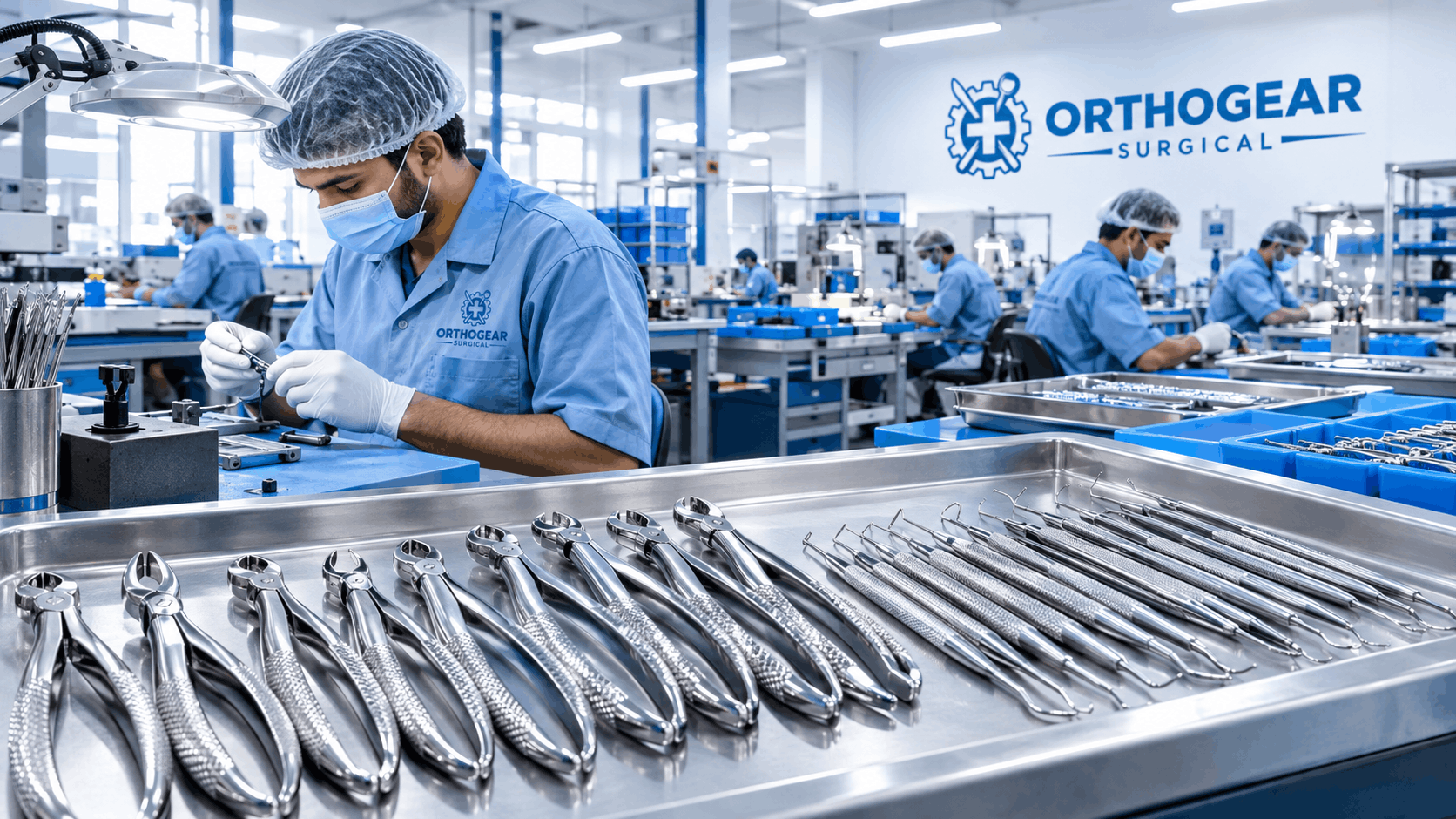
True manufacturers run the production facility. They forge, machine, assemble, finish and inspect instruments themselves, or they control every stage closely. They can talk about materials and tolerances with authority, and they can fix problems at the source.
Trading companies buy finished instruments from several factories and resell them. Some do honest, useful work as sourcing agents. The risk is limited control over quality. If something goes wrong, they have to chase the factory for answers.
Export houses sit somewhere in the middle. They may run a small production unit and outsource the rest. That can work well, as long as they manage their vendors carefully and are open about it.
None of these models is automatically bad. The trouble starts when a supplier presents itself as something it isn’t. Ask direct questions:
- Do you own your production facility? Can I see photos or a live video walkthrough?
- Which steps do you do in-house, and which are outsourced?
- Who inspects the instruments before shipment?
- Can a third-party inspector visit on my behalf?
A genuine dental instrument manufacturer Sialkot buyers can trust will answer these openly. Vague replies, refusals to show the facility, or an inability to explain the production stages are warning signs.
Know the Product Range Before You Compare Suppliers
Sialkot covers almost the entire hand-instrument spectrum, so be clear about what you need before you start asking for quotes. The main groups are:
- Examination instruments: mouth mirrors, explorers, periodontal probes, dental tweezers and examination sets
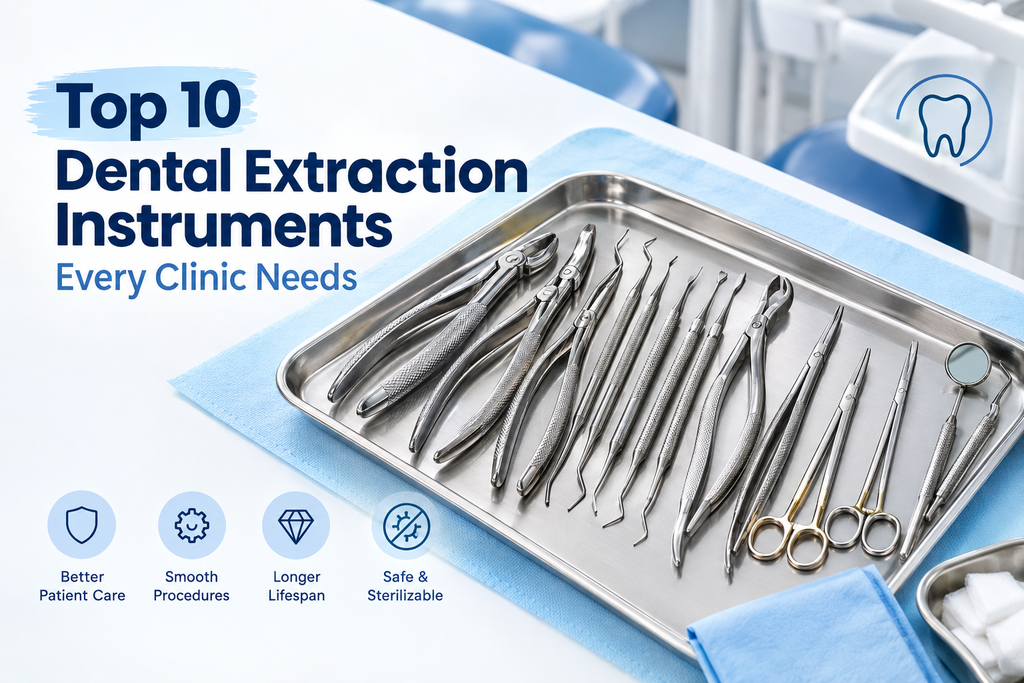
- Extraction instruments: extraction forceps for upper and lower teeth, root tip forceps and dental elevators
- Surgical instruments: scalpel handles, periosteal elevators, bone curettes, surgical scissors, needle holders, retractors and tissue forceps
- Periodontal instruments: scalers, Gracey curettes, universal curettes and probes
- Restorative instruments: composite placement instruments, excavators, spatulas, burnishers, carvers and pluggers
- Orthodontic instruments: pliers, wire cutters and ligature tools
- Endodontic instruments: pluggers, spreaders and root canal explorers
Not every factory is equally strong in every category. Some are known for extraction forceps and surgical tools, others for periodontal or orthodontic work. Ask which categories make up most of their production, and request samples from those first. If you plan to distribute a full range, look for a supplier that can deliver several categories consistently, rather than one that claims to make everything but delivers uneven quality.
Materials: Why Stainless Steel Grade Matters
Material is the foundation of instrument quality. Most dental hand instruments are made from stainless steel, but “stainless steel” covers many grades that behave very differently.
Martensitic steels, such as the 420 family, are commonly used where hardness and edge retention matter, for example in scalers, curettes, elevators and cutting instruments. Austenitic grades, such as 304 and 316, resist corrosion well and are often used for parts that don’t need a hard cutting edge. The right choice depends on what the instrument has to do.
Any dental instrument manufacturer Sialkot buyers work with should be able to tell you:
- Which steel grade is used for each instrument type
- Where the raw material comes from, and whether mill certificates are available
- How the steel is heat treated to reach the right hardness
- Whether finished instruments are passivated to support corrosion resistance
Don’t accept a vague answer like “best quality steel.” Ask for the actual grade and, if possible, the material certificate for your batch. If a supplier can’t tell you what steel they use, that’s a reason to walk away.
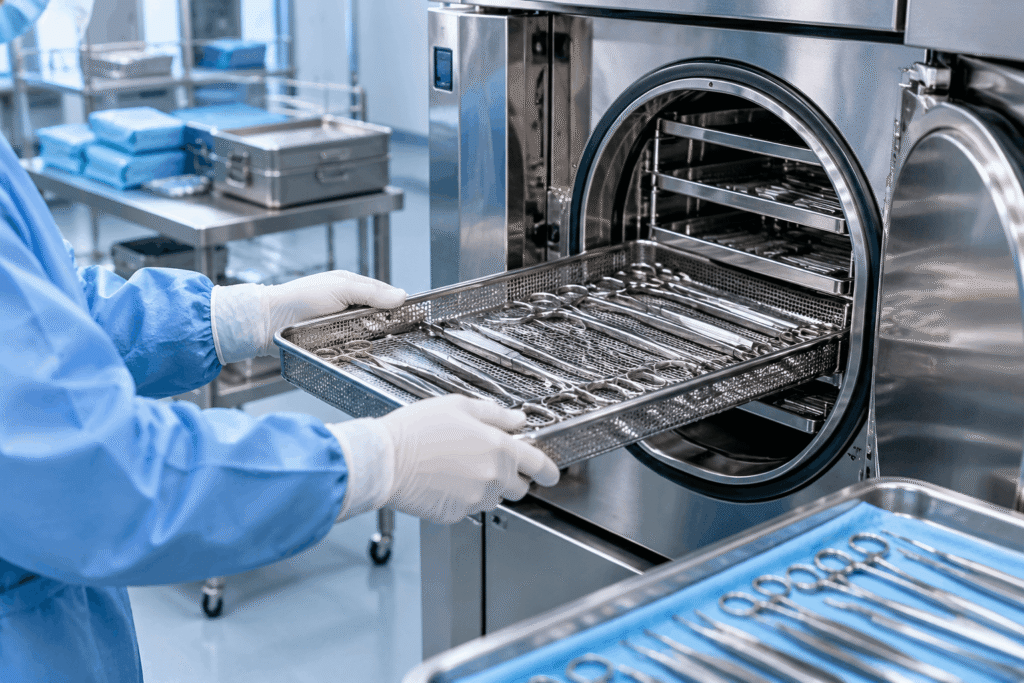
When you get samples, check how they feel in the hand. They should be balanced, not oddly light or brittle. Look over the surface for pitting, discoloration or rough patches, and check that tips and working ends are symmetrical. If your customers sterilize instruments repeatedly, run a few autoclave cycles on a sample. Repeated cycles reveal weaknesses quickly.
How Dental Instruments Are Made: What Good Production Looks Like
Every factory has its own workflow, but a typical stainless steel dental instrument goes through these stages:
- Raw material selection. Bar, sheet or blanks are chosen to suit the instrument.
- Blanking and forging. Many forceps and elevators start as forged blanks. Forging shapes the metal and can improve its strength.
- Shaping. Trimming, milling and grinding bring the instrument close to its final form, including working ends, jaws and serrations.
- Assembly. Jointed instruments like forceps, pliers and scissors are fitted so they open and close smoothly without play.
- Heat treatment. Controlled hardening and tempering give the steel its hardness and toughness.
- Polishing and finishing. Surfaces are finished to a satin, matte or mirror look, depending on the product.
- Passivation. A chemical treatment removes free iron from the surface and supports the steel’s natural corrosion resistance.
- Inspection and packing. Instruments are checked, cleaned and packed to the buyer’s requirements.
Ask a supplier to describe these stages in their own facility. If a step is outsourced, such as heat treatment or plating, ask how they keep that vendor’s quality under control.
Quality Control: The Question That Separates Good Suppliers from Risky Ones
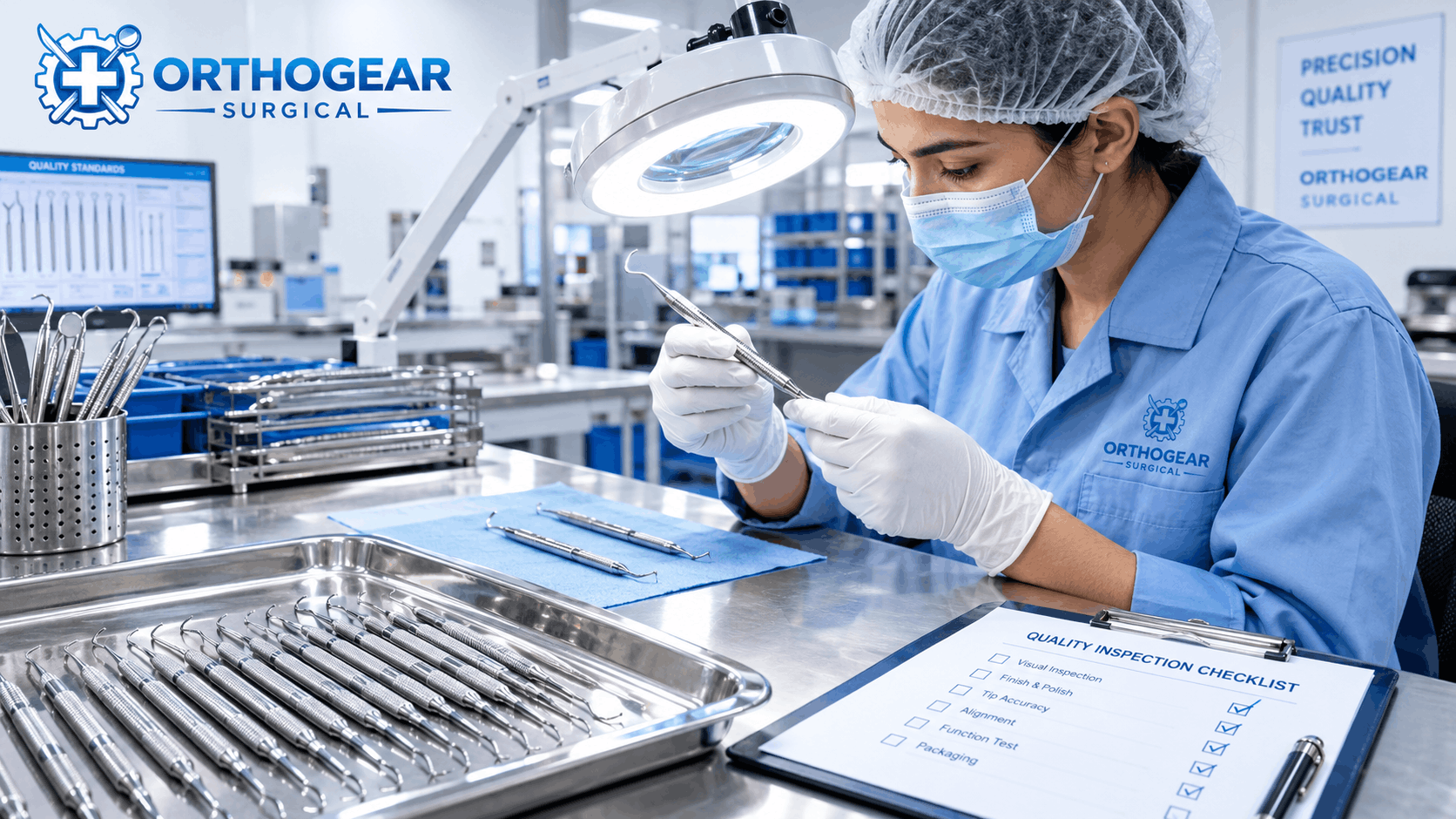
If you only ask one question when evaluating a supplier, make it this: what does your quality control process look like?
Quality control shouldn’t be a single glance at the end. In a well-run factory, checks happen at several points:
- Incoming material inspection: confirming steel grade and dimensions before production starts
- In-process inspection: checking shape, alignment and dimensions along the way
- Hardness testing: confirming heat treatment hit the intended hardness
- Functional testing: opening and closing forceps, testing joints, making sure jaws meet properly
- Surface inspection: looking for scratches, burrs, pits and polishing flaws
- Final inspection: checking each order against the agreed specification and quantity
Ask whether inspection records are kept and whether you can get a report with your shipment. Many international buyers also book a third-party pre-shipment inspection, and a confident supplier will welcome it.
Also ask how defects are handled. Even good factories occasionally ship a faulty piece. What matters is the response. A reliable dental instrument manufacturer Sialkot buyers choose will treat quality control as a process, not a last-minute check, and will have a clear policy for replacements or credit notes. It’s also worth asking about their acceptable quality level (AQL), since AQL sampling makes it much easier to agree on what counts as an acceptable batch.
Certifications and Regulatory Compliance
Dental instruments are regulated devices in most markets, so compliance isn’t optional. Requirements differ by country and by product classification, so always confirm the rules for your market, ideally with a regulatory consultant.
Ask every dental instrument manufacturer Sialkot offers to explain its certifications clearly. Here are the common reference points:
- Quality management system: Many buyers look for a recognized system such as ISO 13485. Ask who issued the certificate and whether its scope covers the products you want. Verify it instead of relying on a scanned copy.
- European Union: Devices fall under the Medical Device Regulation. Depending on the instrument, CE marking and technical documentation may be required. Ask how responsibilities are divided between manufacturer, authorized representative and importer.
- United States: The FDA regulates devices, and registration, listing and classification depend on the product. Many simple dental hand instruments fall into lower-risk categories, but confirm each product’s status.
- Other markets: The Middle East, Asia, Africa and Latin America each have their own registration and import rules. Some require a local agent or distributor.
Two cautions. Be wary of suppliers who list certifications but can’t explain them. And remember that a certificate belongs to a specific company and scope. A trading company can’t always use the certification of a factory it buys from.
OEM Dental Instruments in Pakistan: Private Label and Custom Orders
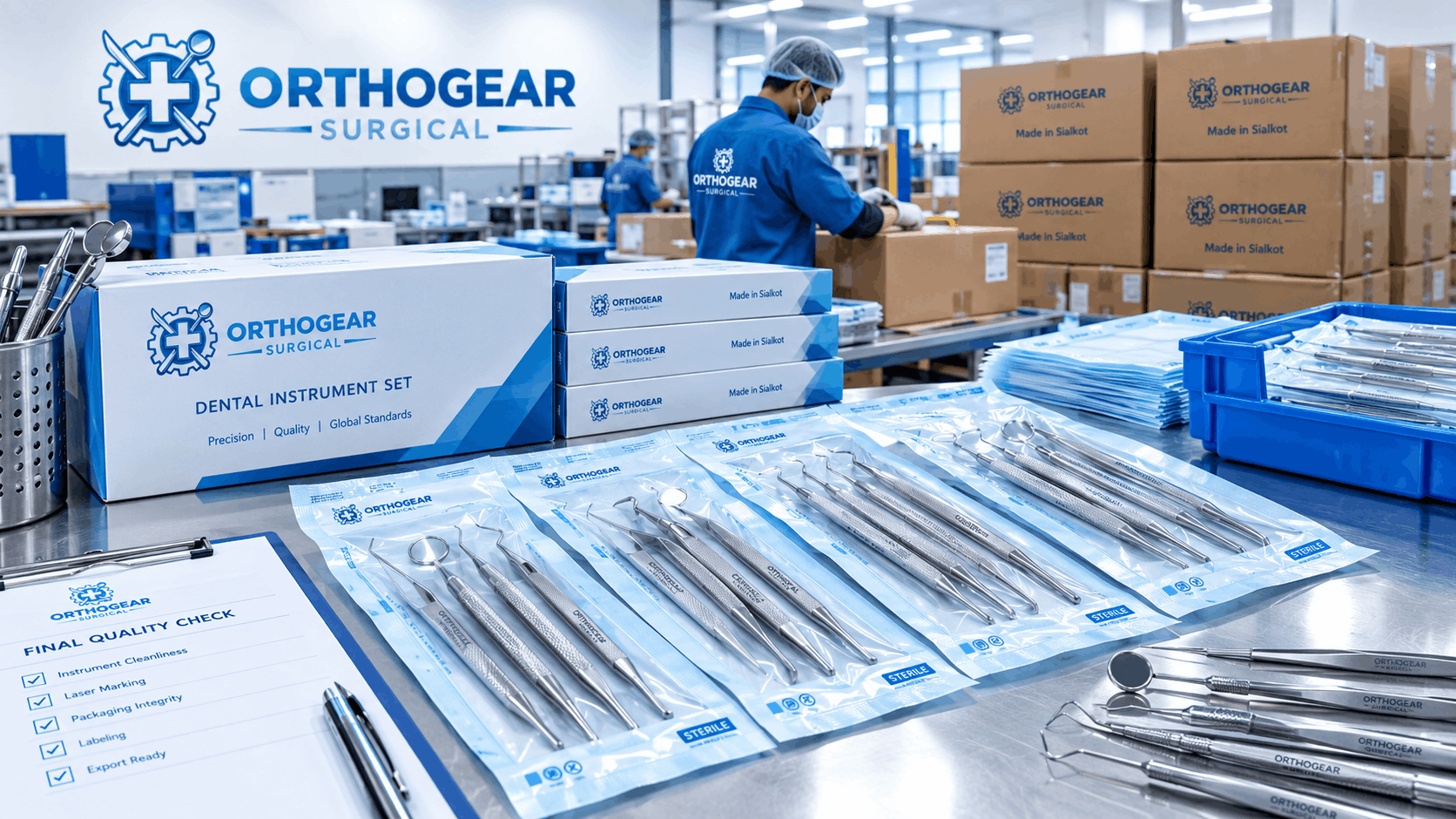
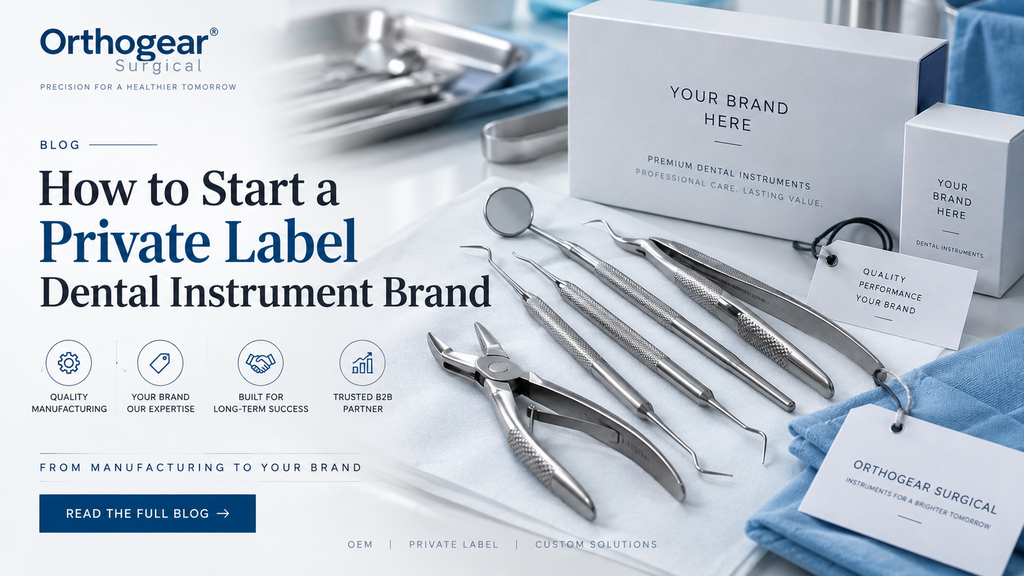
Many international buyers don’t want to sell anonymous instruments. They want their own brand, their own packaging and their own catalogue. That’s where OEM manufacturing comes in, and Sialkot has an edge here because custom production is a normal part of daily business.
A dental instrument manufacturer Sialkot buyers choose for private label work should be open about MOQs and design confidentiality. Typical OEM services include:
- Laser marking or etching of your brand name, logo or catalogue code
- Custom packaging, including pouches, boxes, sleeves and outer cartons
- Custom instrument sets built for your market
- Modified designs, such as different handle lengths, tip shapes or serration patterns
- Your own catalogue numbering, so products match your inventory and website
When you evaluate OEM capability, ask:
- What’s the minimum order quantity for private label products?
- Can you produce from my drawing, sample or specification?
- Will you sign a non-disclosure agreement?
- Who pays for tooling, marking plates or custom packaging setup?
- Can you show examples of previous private label work?
Intellectual property deserves attention. If you develop a custom design, agree in writing that it won’t be sold to other buyers. Also settle labeling requirements, like manufacturer details, lot numbers and regulatory marks, before production starts, not after.
MOQ, Pricing and Lead Time: What to Expect
Three commercial questions decide whether a supplier fits your business.
Minimum order quantity (MOQ). MOQs vary by supplier and product. Some accept mixed orders, which suits buyers who are testing the market. Others want volume per item, especially for private label or custom designs. If you’re buying in bulk, look at how a bulk surgical instruments supplier structures MOQs, pricing and quotation timelines.
Pricing. Price matters, but it shouldn’t be the only factor. Compare quotations like for like. Each quote should state the steel grade, finish, packaging, marking and inspection level. A very low price often means lower-grade material, thinner sections, rougher finishing or skipped quality checks. Also confirm which shipping terms the price includes, such as EXW, FOB or CIF.
Lead time. Ask for timelines on stock items, new production runs and custom OEM orders. A good supplier gives you a schedule and tells you honestly if something slips. For repeat business, discuss whether they can hold buffer stock of your fast-moving items.
Always Start with Samples
However good the website or catalogue looks, don’t place a big first order without seeing samples. A sample order is the cheapest insurance you can buy.
- Order a representative selection. Include the categories you plan to buy in volume, not just the easiest ones to make.
- Inspect them by hand. Check balance, finish, joint movement, jaw alignment and cutting edges.
- Test them in use. Ask a dentist or technician for feedback on ergonomics and performance.
- Test durability. Run sterilization cycles and look for staining, rust spots or loose joints.
- Compare against a benchmark. If you already buy from someone else, put the samples side by side.
- Check the packaging. Great instruments in poor packaging can still arrive damaged.
Watch how the supplier handles the sample stage, too. Do they reply promptly, follow your specifications and explain any deviations honestly? A serious dental instrument manufacturer Sialkot buyers can work with will support sample orders without pressure. Ask about sample policy up front. Some suppliers charge only for shipping, others charge a fee that’s credited against your first order. Either is fine as long as it’s clear.
Working with a Dental Instrument Exporter: Shipping, Documents and Logistics
Making good instruments is only half the story. A dental instrument manufacturer Sialkot buyers trust should also be a capable exporter, one that handles paperwork and logistics professionally and helps you avoid customs headaches.
Typical export documents include:
- Commercial invoice
- Packing list
- Certificate of origin
- Bill of lading or air waybill
- Any product-specific certificates your market requires
Shipping methods. Small and urgent orders usually go by air courier or air freight. Larger orders may travel by air cargo or sea freight, depending on volume, cost and time.
Incoterms. Make sure price terms are crystal clear. With EXW, you take responsibility from the factory door. With FOB, the seller loads the goods onto the vessel or aircraft. With CIF, the seller pays freight and insurance to your port. Misunderstandings here can get expensive.
Packing. Ask how instruments are protected in transit. Individual pouches or sleeves, sturdy inner boxes and strong outer cartons help prevent scratches and bending.
Tracking and communication. A professional exporter shares shipping updates without being asked. Finally, ask about their export history: which countries they ship to regularly, and whether they can provide references from existing customers.
Communication, Payment Terms and Trust
Good business relationships with overseas suppliers depend on clear communication, and you’ll see the signs from your very first inquiry.
Good signs include quick, clear replies, specific answers rather than generic sales talk, a willingness to send photos, videos or documents, full quotations with specifications, and honesty about capacity and limits. Warning signs include evasive replies, pressure to pay fast, prices that keep changing, and reluctance to share company details.
Payment terms. A common arrangement is advance payment for samples and a deposit on production orders, with the balance paid before shipment or against shipping documents. Bank transfer is standard. Be careful with any request to pay into a personal account instead of a registered company account, and check that the beneficiary name matches the business you’re dealing with.
Contracts. For repeat or large orders, put specifications, quality standards, inspection rights, delivery dates, payment schedule, remedies for defects and confidentiality in writing.
Company verification. Ask for business registration details, address and contact information, and confirm them independently. Video calls, references, a factory visit or a third-party audit all add confidence.
Red Flags to Watch For
Even experienced buyers get caught by suppliers who looked good on paper. Take these warning signs seriously:
- Prices far below everyone else’s. Cheap steel, poor finishing and skipped inspections are the usual reasons.
- No clear information about materials. If they can’t name the steel grade, they may not control it.
- Hesitation to show the factory. A real factory usually welcomes visitors, in person or by video.
- Stock images copied from other companies. Ask for photos of your own samples and production.
- Certificates that can’t be checked. Always verify the issuer and scope.
- Pressure to place a large first order. Trustworthy suppliers know buyers want to test first.
- Poor communication before the sale. If they’re slow and unclear now, it won’t improve after payment.
- Reluctance to put terms in writing.
If you see more than one of these, stop and investigate before you commit.
Checklist to Choose a Dental Instrument Manufacturer Sialkot Buyers Trust
Use this list when comparing suppliers.
Company profile
- Is it a manufacturer, trader or export house?
- How long has it been in business, and who are its main customers?
- Can it show the facility by photo or video, and allow an audit?
Materials and production
- Which steel grades are used for each product type?
- Are material certificates available?
- Which steps are done in-house?
- Is passivation performed?
Quality
- What inspection steps exist, and are records kept?
- Is there hardness and function testing?
- What happens with defective products?
- Will it allow third-party inspection?
Compliance
- Which certifications does it hold, and can they be verified?
- Can it help with the documents your market needs?
Commercial terms
- What are the MOQ, pricing, lead time and payment terms?
- Are shipping terms and packing details clear?
OEM and private label
- Can it handle custom marking, packaging and designs?
- Will it sign a confidentiality agreement?
Communication
- Are responses clear and honest?
- Is there a named contact person for your account?
A supplier that scores well across all of these is far more likely to become a stable, long-term partner.
Questions to Ask Before Placing Your First Order
Copy these into your first inquiry email:
- Are you a manufacturer or a trading company?
- Where is your factory, and can I see it?
- What steel grades do you use for the instruments I need?
- What quality checks do you perform, and can you share reports?
- What certifications do you hold, and what do they cover?
- What’s your minimum order quantity for private label products?
- What’s your usual lead time for new and repeat orders?
- How are instruments packed for export?
- Which countries do you regularly ship to?
- What happens if a defect is found after delivery?
The quality of the answers, not just their content, tells you a lot about the supplier.
Frequently Asked Questions
Is Sialkot a good place to source dental instruments?
Yes. The city has a long history of instrument making, a large supplier base, competitive prices and deep export experience. The key is to evaluate each dental instrument manufacturer Sialkot offers, rather than relying on the city’s name alone.
How can I tell if a supplier is a real manufacturer?
Ask for photos of the factory or a live video tour, ask which steps are done in-house, and try to arrange a visit or audit. A real manufacturer can talk about materials, tolerances and production details with confidence.
Do I need to order samples first?
Yes. Samples let you check material, finish, function and packaging before committing, and they show you how the supplier communicates.
What certifications should a dental instrument manufacturer have?
It depends on your market and products. Many buyers look for ISO 13485, plus support with market documents such as CE marking for the EU or FDA requirements for the US. Always verify certificates and understand their scope.
Can I get my own brand on the instruments?
Most Sialkot suppliers offer private label services, including laser marking, custom packaging and custom sets. Ask about MOQs, setup costs and design confidentiality.
What affects the price of dental instruments?
Steel type, instrument complexity, finish, order quantity, packaging, marking, inspection level and shipping terms. Always compare quotes with full specifications.
How long do production and delivery take?
It depends on the product, order size and whether it’s in stock or made to order. Ask for a written schedule and include shipping time in your planning.
How can I reduce the risk of a bad shipment?
Start with samples, agree details in writing, use an inspection process, consider a third-party check before shipping, and choose payment terms that protect both sides.
Final Thoughts on Choosing a Dental Instrument Manufacturer Sialkot Offers
Choosing a dental instrument manufacturer Sialkot offers is about more than finding the lowest price. The right supplier gives you consistent quality, clear communication and reliable delivery, and can grow with you, whether you want to add products, launch a private label or enter a new market.
Know who you’re dealing with. Look closely at materials, production and quality control. Verify certifications and understand your own market’s rules. Test samples properly, review export experience, and put important details in writing. Follow these steps and you’ll lower your risk and improve your chances of a lasting partnership.
If you’re looking for a dental instrument manufacturer Sialkot buyers can trust for stainless steel dental instruments, wholesale, OEM and private label orders, contact OrthoGear Surgical to request a catalogue, discuss your requirements or arrange samples.
Connect with OrthoGear Surgical
- 🌐 Website: orthogearsurgical.com
- ▶️ YouTube: @orthogear_surgical
- 📘 Facebook: OrthoGear Surgical
- 📸 Instagram: @orthogear_surgical