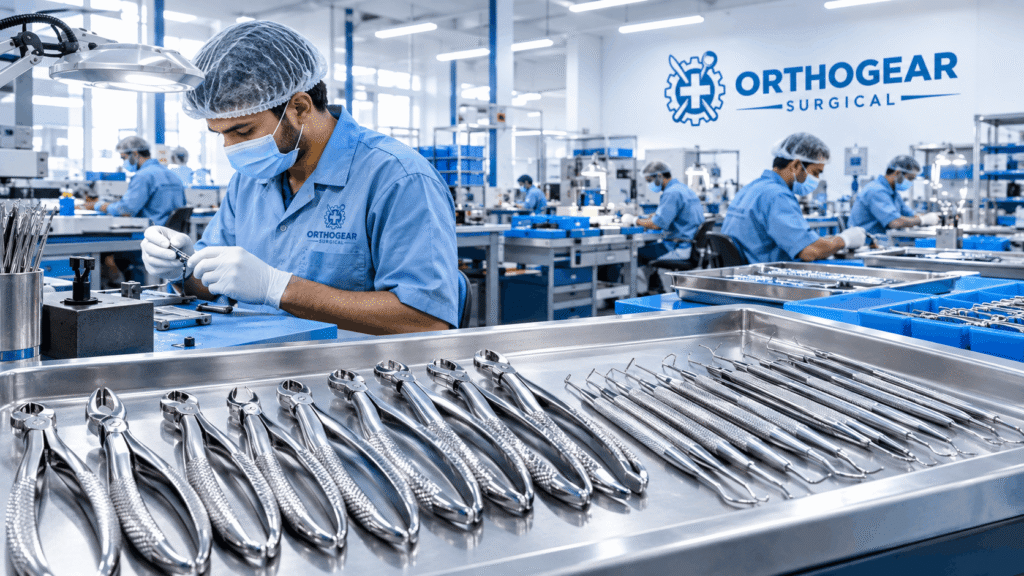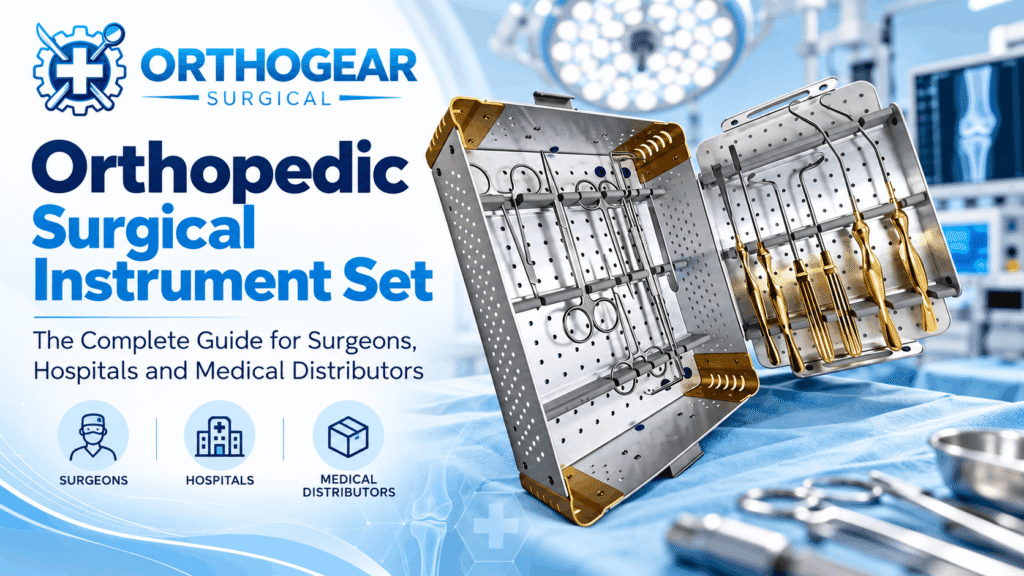


Essential surgical instruments are the backbone of every successful operation — and walking into any operating theatre proves it instantly. Before you even notice the surgeon or the patient on the table, your eyes land on the instrument tray. Rows of gleaming steel, each piece shaped for one job and one job only. To an outsider, it looks like organized chaos. To anyone who has spent time scrubbed in — or worked in surgical stores, sterilization, or hospital procurement — that tray tells a story of precision built up over more than a century of surgical practice.
I’ve spent enough time around operating theatres and surgical instrument suppliers to know that no two trays are ever quite the same, but certain essential surgical instruments show up in nearly every one of them. These are the workhorses — the tools that make cutting, holding, clamping, and stitching possible in the first place. This guide walks through the ten instruments you’ll find in almost any OT, what they’re actually used for, and why getting the right one matters more than people outside medicine often realize.
If you’re a nursing student memorizing instrument names for the first time, a surgical tech building your first kit, or a clinic owner sourcing equipment, this article is written for you.
Why Essential Surgical Instruments Deserve More Attention
Here’s something rarely mentioned in textbooks: a skilled surgeon can be slowed down — or even compromised — by a poorly chosen instrument. A scalpel with the wrong blade size, forceps with worn-out teeth, or a needle holder that doesn’t lock properly can turn a routine procedure into a frustrating one.
Surgical instruments aren’t just “tools.” Each one is engineered for a specific tissue type, a specific grip, and a specific outcome. A pair of scissors meant for cutting sutures should never be used on delicate tissue, and forceps meant for grasping skin shouldn’t be handling bowel. This specificity is exactly why every operating theatre needs a well-thought-out, complete set of essential surgical instruments — not just “whatever’s available.”
With that context in mind, let’s go through the ten instruments that form the backbone of any surgical kit.
1. Scalpel — The Instrument Surgery Begins With
No surgical procedure starts without a clean incision, and that’s where the scalpel comes in.
A scalpel consists of a handle (usually reusable, made of stainless steel) and a disposable, replaceable blade. Blade numbers matter more than people assume — a size 10 blade is the general-purpose workhorse for skin incisions, a size 11 is pointed and ideal for stab incisions or puncturing, and a size 15 is smaller and more precise, often preferred in plastic surgery or pediatric procedures.
Common uses:
- Making the initial skin incision
- Dissecting tissue layers
- Precision cutting in delicate areas like the face or hands
One thing I’ve noticed working with surgical staff: the blade size a surgeon prefers often says a lot about their specialty. Orthopedic surgeons tend to favor larger, sturdier blades, while ophthalmic and plastic surgeons work with micro-blades that demand a completely different level of control. This makes the scalpel one of the most essential surgical instruments in any OT kit.
2. Surgical Scissors — Not One Tool, But a Family of Tools
If you think “scissors” means one type of instrument, spend an hour in a surgical store and you’ll quickly learn otherwise. Surgical scissors come in several distinct types, each built for a different job.
Mayo scissors are heavier, with a blunt tip, and are used for cutting tougher tissue like fascia, or for cutting sutures.
Metzenbaum scissors are lighter and more delicate, designed for cutting and dissecting fine or delicate tissue — think blood vessels or connective tissue near vital structures.
Suture scissors are strictly for cutting stitches post-procedure and shouldn’t touch tissue at all.
A mistake I’ve seen repeated in smaller clinics is using Mayo scissors for fine tissue work simply because Metzenbaum scissors weren’t stocked. It works, technically — but it’s harder on the tissue and harder on the surgeon’s hands over a long procedure. Scissors are a perfect example of why essential surgical instruments need to be chosen by function, not convenience.
3. Forceps — The Surgeon’s Extra Fingers
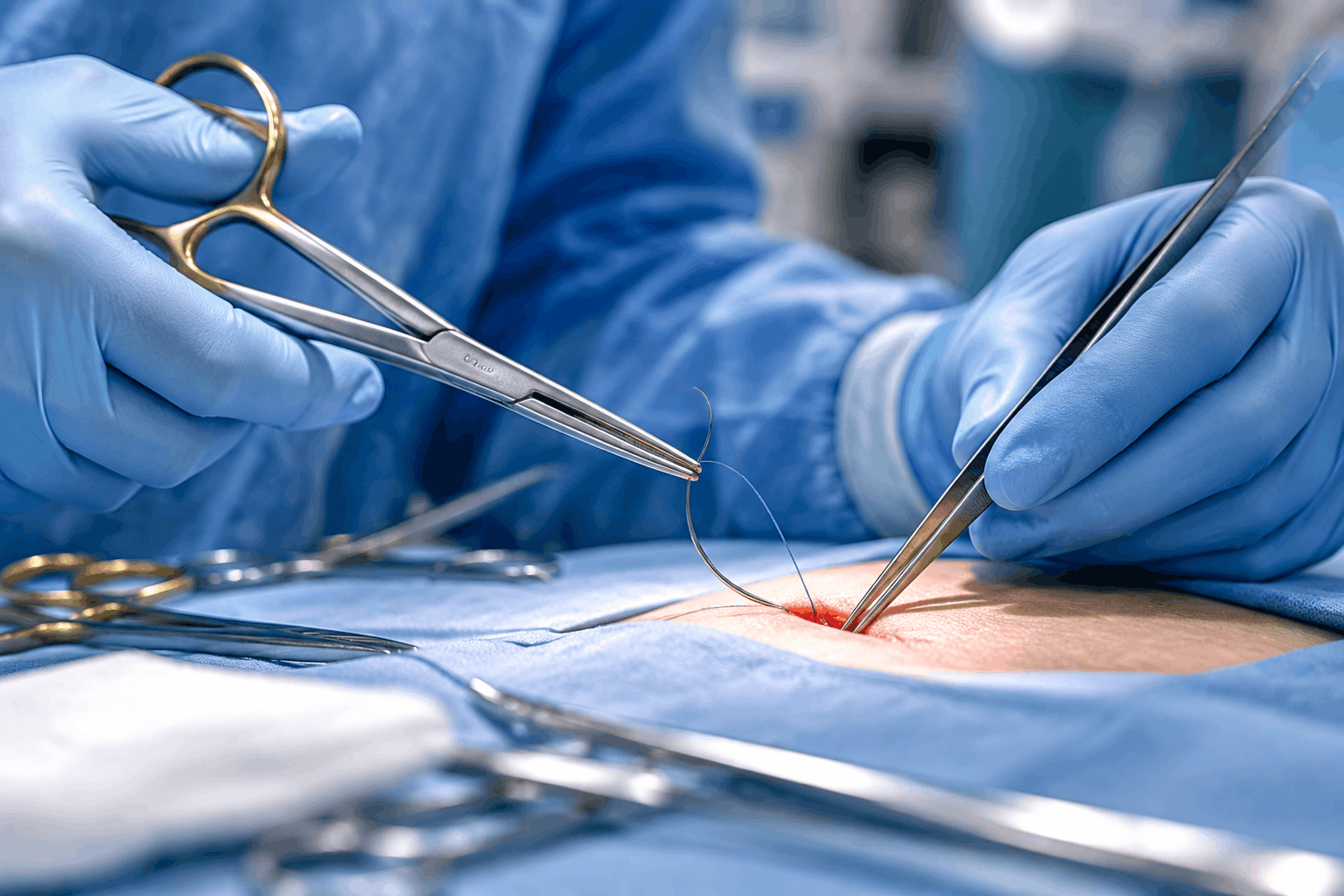
Forceps are essentially an extension of the surgeon’s hand, used to grasp, hold, or manipulate tissue, gauze, or other instruments during a procedure.
There are two broad categories worth knowing:
Toothed (tissue) forceps have small teeth at the tip, giving a firmer grip on tougher tissue like skin — useful when precision matters more than gentleness.
Non-toothed (dressing) forceps have smooth tips and are gentler, typically used for handling delicate tissue, dressings, or packing material.
Beyond these basics, specialized versions like Allis forceps (used to grasp and hold tissue without crushing it excessively) and Babcock forceps (designed for handling delicate structures like bowel or fallopian tubes) round out a well-stocked tray.
If there’s one instrument type where quality really shows, it’s forceps. Cheap forceps lose their grip alignment quickly, and a surgeon can feel that mismatch within seconds of picking one up. This is exactly why forceps rank among the most essential surgical instruments a surgeon relies on daily.
4. Hemostatic Forceps (Artery Forceps) — Controlling Bleeding in Real Time
Bleeding control is one of the most fundamental parts of any surgery, and hemostatic forceps — commonly called artery forceps or simply “hemostats” — are the primary tool for the job.
These clamp down on blood vessels to stop bleeding, either temporarily during the procedure or as a step before the vessel is tied off or cauterized.
Kelly forceps are the standard size, used for general vessel clamping.
Mosquito forceps are smaller and more delicate, reserved for fine, superficial vessels — often seen in pediatric surgery or procedures involving small blood vessels near the skin surface.
A functioning ratchet lock is non-negotiable here. If a hemostat’s ratchet has worn down and doesn’t hold tension properly, it can quietly release mid-procedure — which is exactly the kind of small equipment failure that turns into a real complication. Among all essential surgical instruments, hemostats are often the first to show wear, so regular inspection matters.
5. Needle Holders — Where Precision Meets Repetition
Suturing is one of the most repetitive tasks in surgery, and the needle holder is what makes it manageable. Its job is simple in theory: grip the curved suture needle firmly and guide it through tissue with control.
What separates a good needle holder from a mediocre one is the jaw design. Tungsten-carbide-tipped needle holders are considered the gold standard because they grip the needle without letting it rotate or slip — something that becomes noticeable during longer procedures involving dozens of sutures.
Needle holders also come in different sizes depending on the needle size and tissue type — a needle holder suited for skin closure isn’t the ideal choice for finer vascular or ophthalmic suturing.
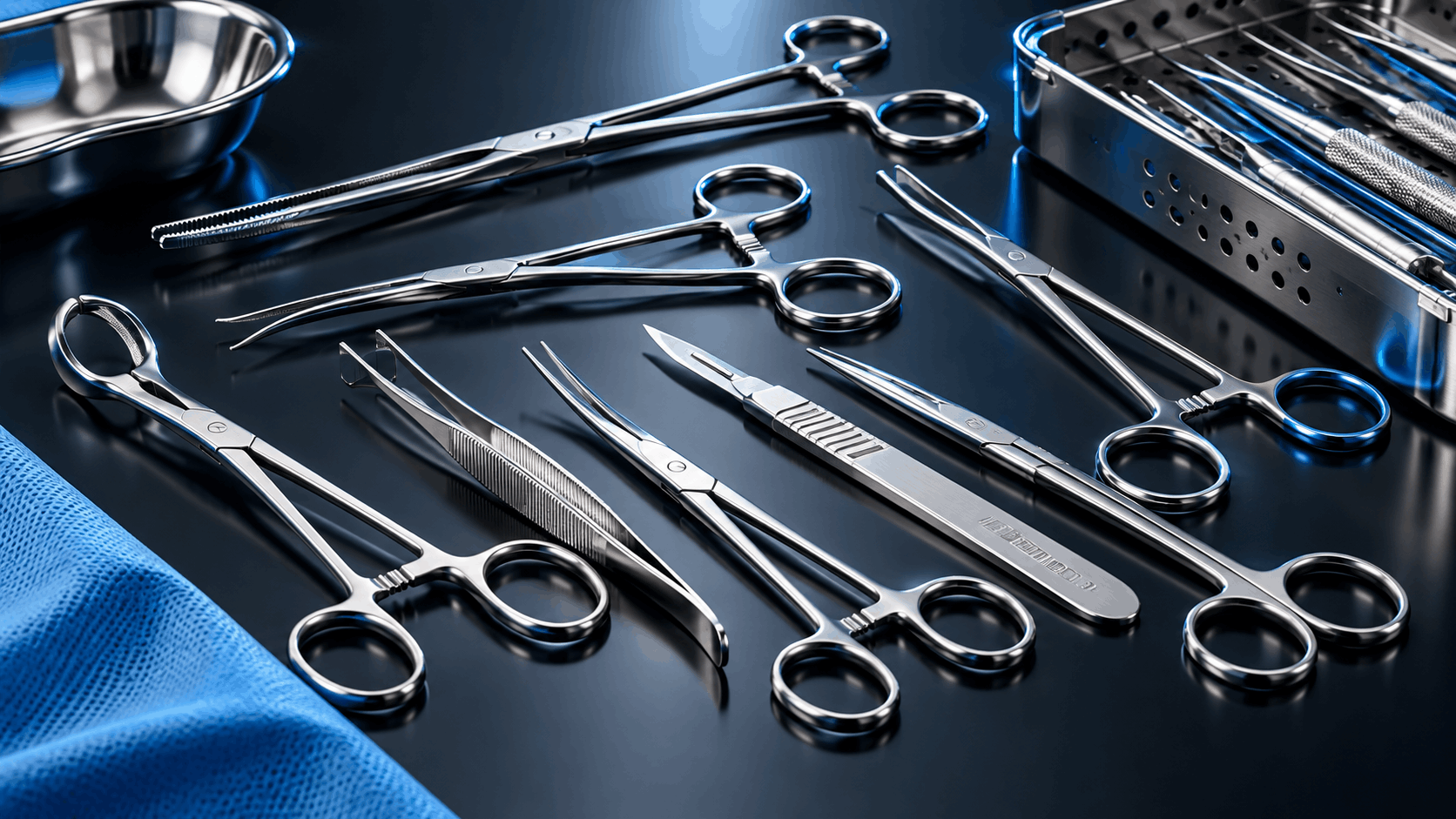
6. Retractors — The Unsung Heroes of Visibility
You can have the sharpest scalpel and the steadiest hands, but none of it matters if the surgeon can’t actually see the surgical field. That’s the entire purpose of retractors: holding back skin, muscle, or organs to keep the area exposed and accessible.
Retractors fall into two broad categories:
Handheld retractors — like the Army-Navy retractor or the Deaver retractor — require an assistant to hold them in position throughout the procedure.
Self-retaining retractors — like the Balfour retractor — lock into place on their own, freeing up hands for other tasks and often used in longer abdominal procedures.
I’d argue retractors don’t get the credit they deserve. A poorly chosen or poorly positioned retractor can extend a surgery’s duration simply because the surgeon keeps having to reposition or ask for adjustments — small delays that add up in a busy OT schedule. Retractors may not look dramatic, but they belong firmly on any list of essential surgical instruments.
7. Surgical Clamps — More Than Just Bleeding Control
While hemostatic forceps handle blood vessels specifically, surgical clamps have a broader role — occluding or holding tissue, organs, or structures like the bowel or bile duct during a procedure.
Bowel clamps, for instance, are designed to hold the intestine securely without crushing or damaging it — essential during gastrointestinal surgery where tissue integrity directly affects healing.
Towel clamps (towel clips) serve a completely different, almost administrative purpose — securing surgical drapes to the patient’s skin to maintain a sterile field. It’s not glamorous, but a shifted drape mid-surgery is a sterility risk nobody wants to deal with.
8. Suction Tips and Tubes — Keeping the Field Clear
Surgery isn’t a clean, dry process — blood, fluid, and irrigation solution build up constantly, and a clear field is essential for both visibility and safety. That’s where suction tips come in.
The Yankauer suction tip is the most recognizable — a rigid, curved tip commonly used in general and abdominal surgery to clear blood and fluid quickly.
Finer suction tips exist for more delicate procedures, like neurosurgery, where a wide-bore suction device could damage sensitive tissue.
It’s a simple tool, but ask any surgical assistant, and they’ll tell you a malfunctioning suction line is one of the most disruptive equipment failures mid-procedure.
9. Surgical Drapes and Towel Clips — Maintaining the Sterile Barrier
Sterility isn’t just about washing hands and sterilizing instruments — it extends to how the patient and the surgical field are physically isolated from contamination. Surgical drapes create that barrier, and towel clips (mentioned briefly above) keep everything secured in place.
While drapes themselves aren’t a “cutting” or “holding” instrument in the traditional sense, no discussion of essential surgical instruments is complete without them. A breach in the sterile field — even a small one — can be the difference between a clean recovery and a post-operative infection.
10. Surgical Speculums and Dilators — Access Without Excess
For procedures involving body cavities or narrow openings, visibility and access are half the battle. Speculums hold cavity walls apart (commonly known in gynecological procedures, though variants exist for other specialties), while dilators gradually widen a passage or opening to allow instrument access.
These aren’t used in every single surgery, but for the procedures that need them, there’s simply no substitute. A poorly sized dilator, used carelessly, can cause tissue trauma that a properly sized one would avoid entirely.
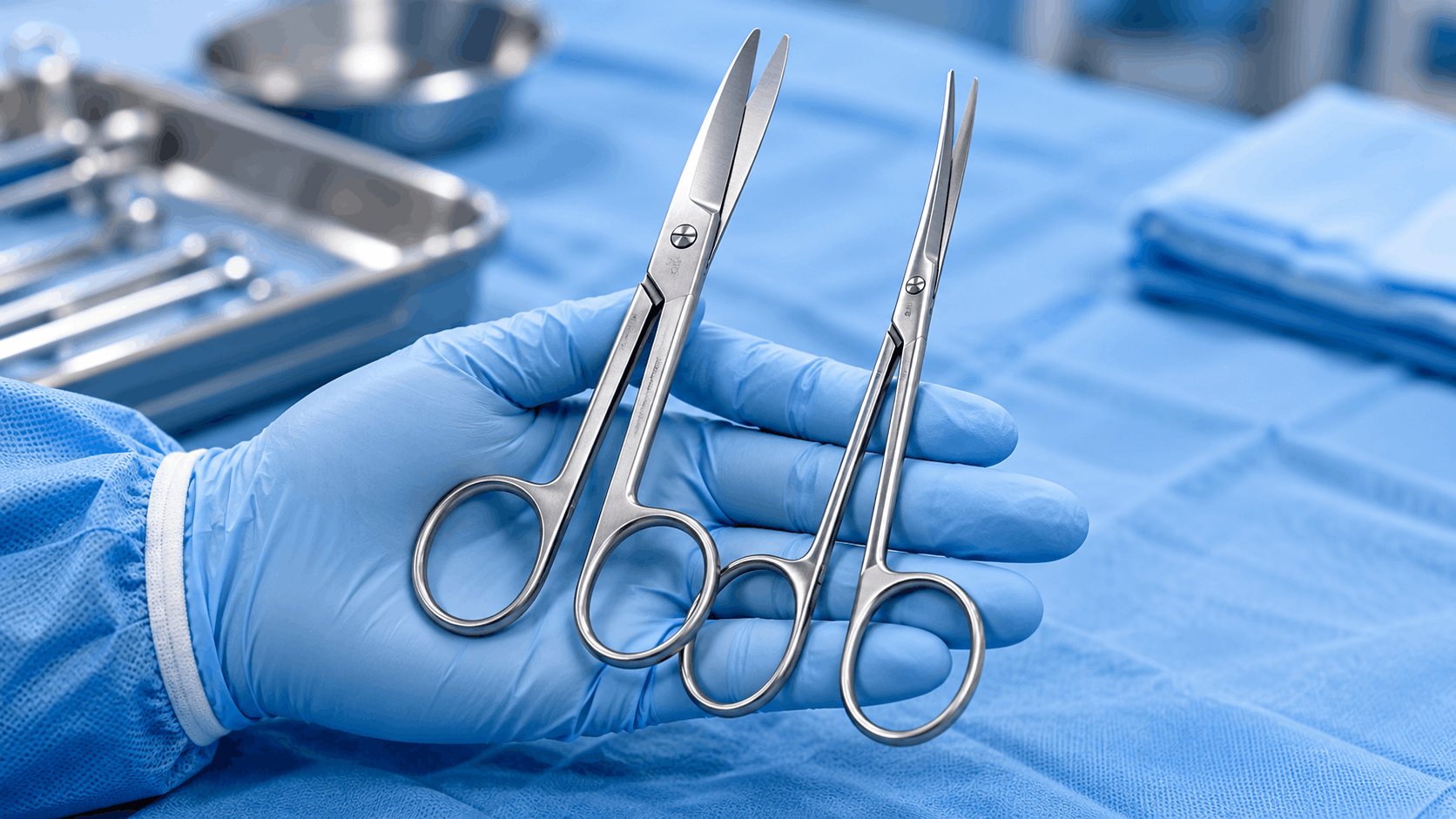
Why Instrument Quality Isn’t Optional in the OT
Picking essential surgical instruments isn’t just about stocking a tray — it’s about making sure every single tool does exactly what it’s meant to do, safely and consistently.
Quality shows up in ways that aren’t always obvious until something goes wrong. A needle holder with worn jaws can let a suture slip mid-closure, which quietly sets the stage for poor wound healing or infection. A hemostat with a tired ratchet can release at the worst possible moment, turning a controlled procedure into a race against bleeding. These aren’t hypothetical risks — they’re the kind of small failures that experienced surgical staff learn to watch for.
Matching Instruments to the Surgeon’s Hand
No two surgeons work exactly the same way, and instrument choice reflects that. Some prefer heavier, more robust tools because the extra weight gives them a sense of control and confidence. Others lean toward lighter instruments, especially for long procedures, simply because hand fatigue becomes a real factor after hours in the OT.
These preferences aren’t arbitrary — they’re built from years of hands-on practice. A well-stocked surgical department learns to accommodate this rather than forcing every surgeon into a one-size-fits-all kit of essential surgical instruments.
[Image Prompt 4 — Sterilization Process | Alt Text: Essential Surgical Instruments]
“Surgical instruments being placed into an autoclave sterilizer tray in a hospital sterilization room, stainless steel surfaces, clean and organized, realistic medical facility lighting.”
Compatibility: When Pieces Don’t Fit, Everyone Feels It
Instruments need to work together, not just independently. A scalpel handle has to hold its blade securely. A needle holder has to grip the needle without slipping or bending it. When alignment is even slightly off, it adds extra steps, increases risk, and slows the entire procedure down.
This is one of those details that’s easy to overlook when buying instruments individually rather than as a coordinated set — and it’s exactly where quality manufacturing makes a visible difference.
The Maintenance Routine That Protects Every Procedure
Even the best-made instruments won’t last if they aren’t cleaned, sterilized, and stored properly. Blood and tissue that dry onto a surface become far harder to remove later, which is why immediate rinsing after use matters as much as the sterilization cycle itself.
Autoclaving keeps instruments safe for reuse, but it also puts stress on metal and joints over time. That’s why routine inspection — checking for rust, dull edges, or loose hinges — needs to be a built-in part of the sterilization process, not something that only happens after a problem shows up. An instrument that fails inspection shouldn’t get “one more use.” In surgery, small equipment failures rarely stay small — and this is doubly true for essential surgical instruments used in high-frequency procedures.
Sourcing Essential Surgical Instruments You Can Actually Trust
For clinic owners and procurement teams, this all comes back to one decision: where you buy your instruments from. Choosing the cheapest option upfront often costs more down the line — through faster replacement cycles, mid-procedure delays, or in worst cases, compromised outcomes.
Investing in durable, surgical-grade essential surgical instruments from a supplier that understands OT needs — like OrthoGear Surgical — means fewer surprises during sterilization, better performance under repeated use, and instruments your surgical staff can genuinely rely on. For students, techs, and nurses, understanding why each instrument is built the way it is doesn’t just build confidence — it becomes part of learning the language of surgery itself.
[Image Prompt 5 — Quality/Branding Shot | Alt Text: Essential Surgical Instruments]
“Premium stainless steel surgical instrument set displayed on a dark background with subtle reflections, product photography style, sharp and polished, suitable for a medical equipment brand showcase.”
Conclusion: Small Tools, Serious Responsibility
Surgical instruments rarely get the spotlight — the surgeon does, the outcome does, the patient’s recovery does. But behind every successful procedure is a tray of carefully chosen, well-maintained essential surgical instruments doing exactly what they were designed to do.
Mastering these essential surgical instruments isn’t just about names and functions — it’s about building the foundation every safe surgery depends on. From the scalpel to the needle holder, each of these essential surgical instruments plays a role that can’t be substituted.
Whether you’re stocking a new operating theatre, training as a surgical technologist, or simply trying to understand what happens behind those OT doors, knowing these ten essential surgical instruments — and respecting what each one is actually built for — is a solid foundation. Good surgery isn’t just skilled hands. It’s skilled hands working with the right tools.
Frequently Asked Questions
1. What are the most essential surgical instruments used in general surgery?
The scalpel and various types of forceps are used in nearly every procedure, making them among the most essential surgical instruments on any tray.
2. What’s the difference between Mayo and Metzenbaum scissors?
Mayo scissors are heavier and used for tougher tissue or cutting sutures, while Metzenbaum scissors are lighter and finer, designed for delicate tissue dissection.
3. Why are needle holders different from regular forceps?
Needle holders have a locking ratchet and textured jaws specifically designed to grip a curved suturing needle firmly without letting it slip or rotate during stitching.
4. How often should essential surgical instruments be replaced?
There’s no fixed timeline — it depends on usage frequency and material quality — but instruments should be replaced as soon as they show rust, dull edges, misalignment, or a weakened ratchet lock.
5. Are all surgical instruments reusable?
No. Items like scalpel blades and some specialized clamps are single-use and disposable, while most forceps, scissors, and retractors are reusable after proper cleaning and sterilization.
Follow OrthoGear Surgical
- 🎥 YouTube: @orthogear_surgical
- 📸 Instagram: @orthogear_surgical
- 📘 Facebook: OrthoGear Surgical