

Introduction
An Orthopedic Surgical Instrument Set contains precision tools that must be reliable, durable, and suitable for validated sterilization processes. Every successful procedure—whether spinal fusion, joint reconstruction, trauma fixation, or general bone surgery—depends on the appropriate instruments and their condition.
A well-designed Orthopedic Surgical Instrument Set is more than a collection of tools. It is an organized system intended to support surgical efficiency, instrument handling, patient safety, and long-term cost management for hospitals, clinics, and surgical centers.
This comprehensive guide covers everything you need to know about Orthopedic Surgical Instrument Sets, from their components and materials to sterilization requirements, purchasing considerations, manufacturing origins, and maintenance practices.
Whether you are a surgeon evaluating equipment, a hospital procurement officer, or a medical distributor sourcing products, this guide will help you understand the key factors involved in selecting an appropriate set.
Explore the Orthopedic Surgical Instrument Sets and product catalogs from Orthogear Surgical to learn more about available orthopedic instruments and purchasing options.
What Is an Orthopedic Surgical Instrument Set?
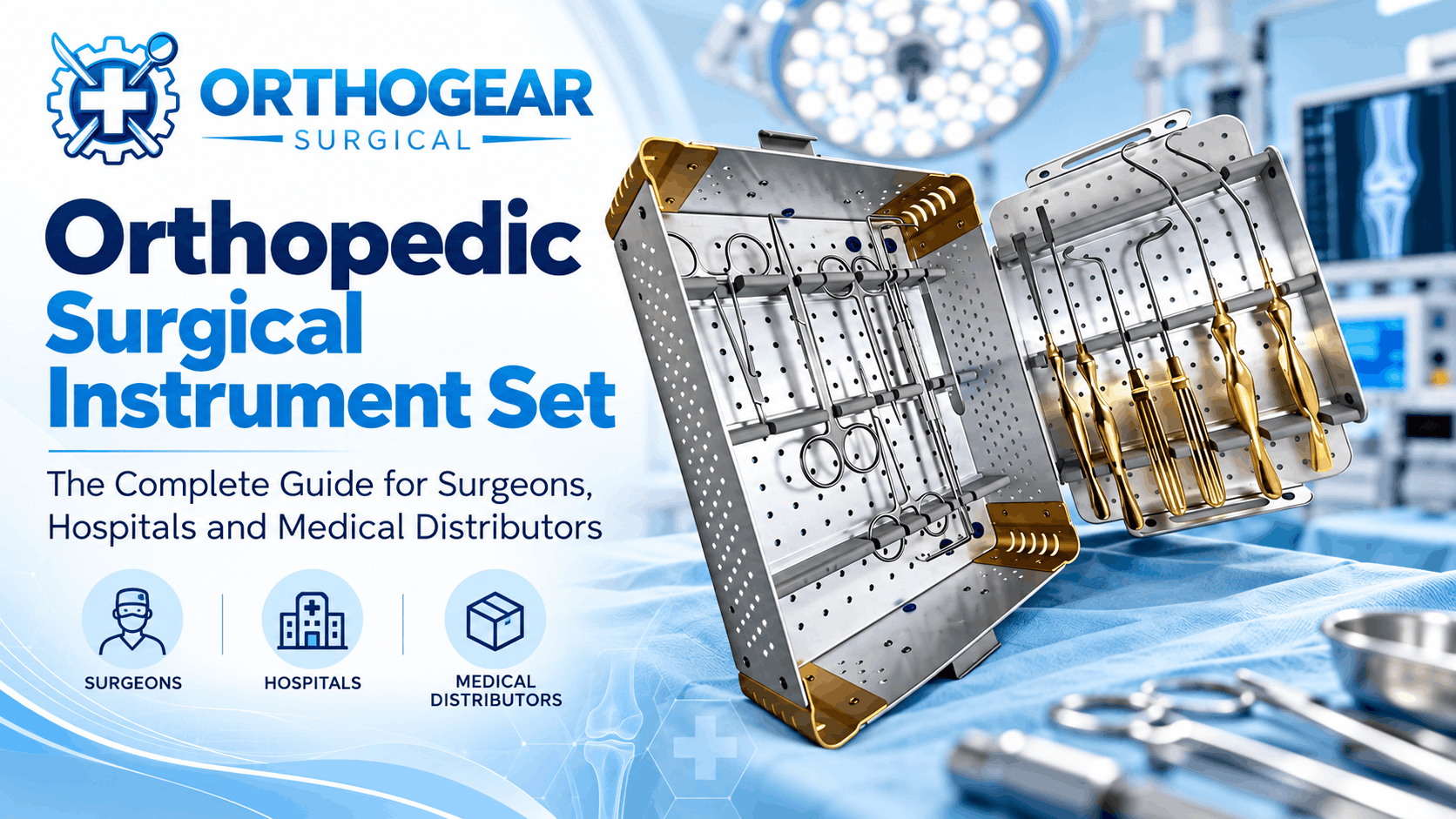
An Orthopedic Surgical Instrument Set is a collection of specialized instruments designed for procedures involving bones, joints, ligaments, and other parts of the musculoskeletal system. These sets are commonly organized in instrument trays to support storage, transportation, preparation, and sterilization.
Unlike general surgical kits, orthopedic sets may include instruments designed to withstand the mechanical demands of bone manipulation, including cutting, gripping, retracting, drilling, and shaping.
Depending on the intended application, instruments may be manufactured from medical-grade stainless steel or other suitable materials. Their design typically considers strength, ergonomics, corrosion resistance, and repeated reprocessing.
The exact contents vary according to the surgical procedure, the surgeon’s requirements, and the implant system being used.
Hospitals and distributors looking for product options can explore the Orthogear Surgical instrument catalog , which includes orthopedic instruments, instrument sets, and related products.
Why Instrument Quality Matters in Orthopedic Surgery
Orthopedic procedures can place considerable mechanical stress on instruments. Cutting bone, gripping bone fragments, and manipulating implants require tools appropriate for the specific task.
Poorly manufactured, damaged, or incorrectly selected instruments can contribute to several problems:
- Instrument failure: A damaged or unsuitable instrument may fail during a procedure, potentially causing delays.
- Reduced precision: Worn cutting edges or poorly aligned gripping surfaces can affect instrument performance.
- Increased replacement costs: Instruments that wear prematurely may require more frequent replacement.
- Corrosion and material deterioration: Inadequate materials or improper reprocessing can affect instrument integrity.
- Infection-control concerns: Inadequate cleaning, inspection, or sterilization can compromise patient safety.
For these reasons, hospitals and surgical centers should evaluate material specifications, manufacturing quality, instrument design, and documented reprocessing compatibility before purchasing.
The country of manufacture alone does not guarantee quality. Buyers should review the manufacturer’s quality documentation, product specifications, and applicable regulatory requirements.
Components of a Complete Orthopedic Surgical Instrument Set
An Orthopedic Surgical Instrument Set typically includes a combination of the following instrument categories, depending on its intended surgical application.
1. Rongeurs
Rongeurs are used to remove or trim bone and, depending on the design, certain tissues. Common varieties include Kerrison rongeurs, Leksell rongeurs, and double-action rongeurs.
They are used in selected orthopedic and spinal procedures where controlled removal of bone is required.
Explore the Rongeurs and orthopedic instrument catalog for related instrument options.
2. Elevators
Elevators are used to separate tissue from bone or assist with manipulating anatomical structures.
Freer elevators and Cobb elevators are examples used in different surgical applications. The appropriate design depends on the procedure and the tissue or bone being handled.
3. Retractors
Retractors hold tissue away from the surgical site to improve visibility and access.
Both handheld and self-retaining retractors may be included in orthopedic sets. Their size, shape, and working depth depend on the intended procedure.
4. Gripping Instruments
Gripping instruments hold bone fragments, tissue, or other structures during surgical procedures.
Bone-holding forceps and reduction clamps are commonly used in orthopedic trauma and fracture management. The selected instrument must provide suitable grip and control without compromising the intended surgical technique.
5. Curettes
Curettes have shaped working ends used for scraping or removing selected tissue or bone material.
Different curette designs are used in orthopedic, spinal, and other surgical applications. Their shape and dimensions depend on the specific procedure.
6. Osteotomes and Chisels
Osteotomes and bone chisels are designed for cutting or shaping bone. They may be used with a compatible surgical mallet where the procedure requires it.
The working-edge design, dimensions, and material properties are important considerations when selecting these instruments.
7. Drill Guides and Awls
Drill guides help direct drilling in accordance with the intended surgical technique. Awls may be used to create an initial opening in bone.
These instruments are particularly relevant in selected fixation procedures involving screws and orthopedic implants.
8. Wrenches and Screwdrivers
Specialized wrenches and screwdrivers are used with compatible orthopedic implants and fixation systems.
Their dimensions and interfaces must match the relevant implant manufacturer’s specifications. Compatibility should always be confirmed before purchasing or using these instruments.
The exact composition of a set depends on its intended application. Spine surgery sets, trauma sets, joint reconstruction sets, and arthroscopy sets each have distinct instrument combinations.
For a broader overview of available products, visit Orthogear Surgical’s orthopedic and surgical instrument catalog .
Materials Used in Orthopedic Surgical Instruments
Material selection affects an instrument’s strength, hardness, corrosion resistance, weight, and suitability for its intended use.
German Stainless Steel (AISI 420/440)
Certain stainless steel grades, including AISI 420 and some AISI 440 grades, are used in surgical instrument manufacturing.
Their properties vary according to the precise alloy composition and heat treatment. Some grades are suitable for applications requiring hardness and edge retention, while others may be selected for different combinations of corrosion resistance and mechanical performance.
Buyers should request the specific material grade and supporting documentation rather than relying on the general description “German stainless steel.”
Titanium
Titanium and its alloys are valued for their relatively low weight and corrosion resistance.
They may be used in selected instruments and orthopedic implants where their mechanical and material properties are appropriate. The suitability of titanium depends on the particular product and its intended use.
Titanium Nitride (TiN) Coated Instruments
Some surgical instruments feature a gold-colored titanium nitride coating.
Depending on the instrument design and coating specification, TiN may provide a harder surface and help reduce glare. The coating may also serve as a visual identification feature.
However, a gold-colored finish does not automatically establish that an instrument is made from titanium or that it has superior performance. Buyers should verify the material and coating specifications with the manufacturer.
Japanese Surgical Steel
Japanese manufacturers produce surgical instruments using different grades of stainless steel and other materials.
As with instruments from other manufacturing regions, performance depends on the precise alloy, manufacturing process, heat treatment, finishing, and quality control.
When evaluating instruments, request the relevant material specifications and assess them against the intended application.
Top Orthopedic Instrument Manufacturing Hubs Around the World
Understanding where orthopedic instruments are manufactured can help buyers evaluate suppliers, production capabilities, pricing, and logistics.
Several regions have established surgical instrument manufacturing industries, each with different manufacturers and product capabilities.
Germany
Germany has a long history of surgical instrument manufacturing. Tuttlingen is particularly well known for its concentration of medical technology and instrument manufacturers.
German manufacturers produce a broad range of surgical and orthopedic instruments. Buyers may consider their product specifications, manufacturing controls, quality documentation, and after-sales support when evaluating suppliers.
Prices vary by manufacturer, product type, material, and customization requirements.
Pakistan (Sialkot Region)
Sialkot, Pakistan, is an established center for surgical instrument manufacturing and exports.
Manufacturers in the region produce a range of surgical, orthopedic, dental, and other medical instruments for international markets. Product offerings may include individual instruments, complete sets, and customized manufacturing services.
For hospitals, wholesalers, and medical distributors, relevant purchasing considerations include material traceability, quality management systems, product specifications, regulatory documentation, and delivery arrangements.
Orthogear Surgical is based in Sialkot and offers orthopedic instruments, orthopedic surgical sets, implants, and OEM manufacturing services.
Buyers interested in sourcing products directly from the region can review the Orthogear Surgical product catalog or submit a bulk order inquiry .
Japan
Japan has an established precision manufacturing industry, including manufacturers of surgical instruments.
Japanese instruments are available in a range of designs and material specifications. Buyers should evaluate the particular instrument, its intended use, and the manufacturer’s documented quality requirements rather than assuming all products from a country share identical characteristics.
United States
The United States has domestic surgical instrument manufacturers as well as companies that source products internationally.
Some suppliers specialize in custom instruments, procedure-specific sets, or products designed for particular clinical applications.
For American buyers, factors such as local service, warranty arrangements, regulatory requirements, and supply-chain considerations may influence purchasing decisions.
Choosing a Manufacturing Origin
When selecting an orthopedic instrument supplier, buyers should consider:
- Material grade and traceability
- Manufacturing quality controls
- Applicable certifications and regulatory compliance
- Instrument design and specifications
- Product inspection and documentation
- Pricing and minimum order quantities
- Warranty and after-sales support
- Shipping and delivery arrangements
Country of origin is one consideration, but it should not replace product-level evaluation.
A manufacturer in Sialkot, Germany, Japan, or the United States should be assessed according to the specific instruments supplied and the evidence supporting their quality and compliance.
To learn more about the company and its manufacturing capabilities, visit About Orthogear Surgical .
The Importance of Sterilization Tray Design
The tray that holds an Orthopedic Surgical Instrument Set is more than a storage container. Its design can affect instrument organization, cleaning access, handling, and compatibility with the facility’s sterilization process.
Key Features of a Quality Sterilization Tray
Perforated Construction: Perforations can help cleaning agents and sterilizing agents reach instrument surfaces when the tray is designed and validated for the intended process.
Silicone Finger Mats and Instrument Holders: These components help keep instruments organized and reduce movement during handling. They must be compatible with the intended cleaning and sterilization processes.
Corner and Edge Protectors: Suitable protective components may help reduce impact damage to the tray and instruments.
Labeled Compartments: Labels, diagrams, or designated instrument positions can make it easier for staff to check set completeness and return instruments to their correct locations.
Stackable and Space-Efficient Design: Trays designed for appropriate stacking can help organize storage and processing areas.
Why This Matters for Compliance
Tray design must be compatible with the validated cleaning, packaging, and sterilization process used by the healthcare facility.
Standards and guidance relevant to sterilization include ISO 17665 for moist heat sterilization and applicable healthcare reprocessing requirements.
A perforated tray alone does not guarantee sterility. The complete process—including cleaning, loading, packaging, sterilizer settings, and cycle validation—must be appropriate for the instruments and tray.
Hospitals should follow the instrument manufacturer’s instructions for use (IFU) and the requirements of their sterile processing department.
How Surgical Instrument Trays Improve Operating Room Efficiency
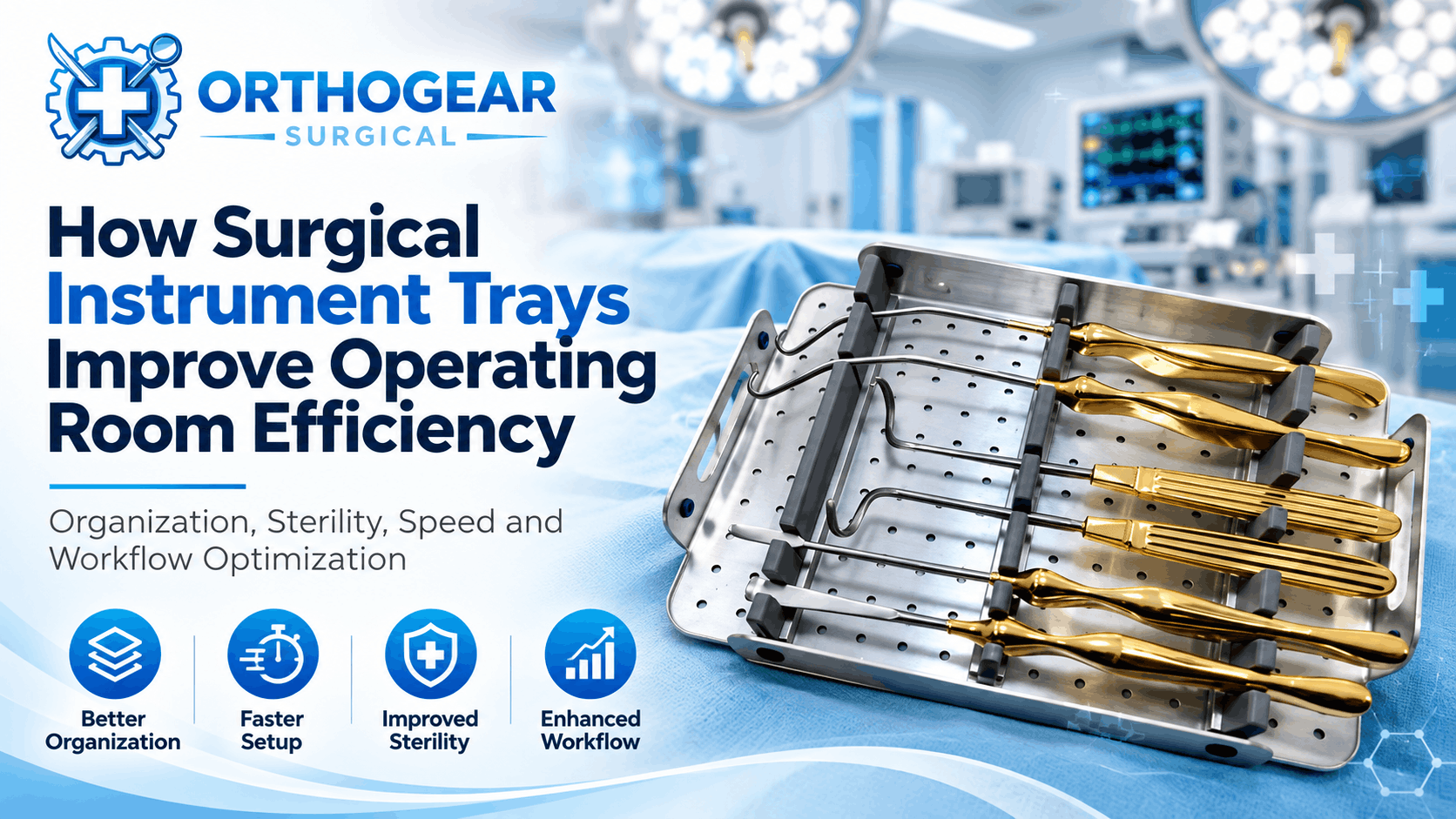
Beyond sterilization, a well-organized instrument tray can support operating room workflow and improve instrument accountability.
Reduced Turnover Time
A clearly organized tray can help scrub nurses and surgical technicians identify and prepare instruments more efficiently.
Standardized layouts may reduce the time spent searching for individual tools during preparation. The actual time saved depends on the procedure, team familiarity, and facility workflow.
Minimized Risk of Missing Instruments
A consistent tray layout makes it easier to identify missing instruments during set inspection.
Instrument counts and verification procedures remain essential. Tray organization should complement, not replace, the facility’s established surgical count protocols.
Improved Instrument Accountability and Tracking
Labels, count sheets, and tracking systems can help staff identify instruments and document set contents.
Some facilities use barcodes, tracking software, or other identification systems to support inventory control and instrument traceability.
Sterile Processing Department (SPD) Workflow
A standardized tray layout can help sterile processing personnel inspect, assemble, and check instrument sets.
Clear instrument identification and appropriate manufacturer instructions can support consistent reassembly and help staff identify damaged or missing components.
Enhanced Surgeon and Staff Confidence
Complete, well-maintained, and correctly prepared instruments help the surgical team focus on the procedure.
Instrument selection, inspection, and preparation should follow the facility’s established protocols and the manufacturer’s instructions.
CE and ISO Certification: What to Look For
When purchasing surgical instruments, buyers should verify the applicable regulatory requirements and quality documentation before placing an order.
CE Marking
The CE mark indicates that a product conforms to applicable European Union requirements when those requirements apply.
The relevant conformity assessment depends on the device classification and applicable legislation. Buyers should check the manufacturer’s declaration of conformity and other required documentation.CE marking helps indicate that a product meets applicable EU requirements. Learn more in the European Commission’s official CE marking guide: https://single-market-economy.ec.europa.eu/single-market/ce-marking_en
ISO 13485
ISO 13485 is a quality management system standard for medical devices.
A manufacturer’s ISO 13485 certificate should be checked for its scope, validity, issuing certification body, and relevance to the products being purchased.
An ISO certificate does not by itself certify every individual instrument or establish that a product is approved in every country.
FDA Requirements
For products marketed in the United States, the applicable FDA requirements depend on the device and its regulatory classification.
FDA establishment registration and device listing do not, by themselves, mean that the FDA has approved or cleared a product.
Buyers should verify the applicable authorization or exemption status for the specific device.
Documentation to Request
Before purchasing, ask the supplier for relevant documents, such as:
- Product specifications and material information
- Applicable conformity documentation
- Quality management system certificates
- Instructions for use and reprocessing
- Product identification and traceability information
- Inspection records, where applicable
For product inquiries and documentation requests, contact Orthogear Surgical .
Types of Orthopedic Surgical Instrument Sets
Different orthopedic procedures require different instrument combinations. Understanding these differences helps buyers select an appropriate configuration.
Spine Surgery Instrument Sets
Spine sets may contain specialized rongeurs, curettes, retractors, and other instruments used in procedures such as discectomy, laminectomy, and spinal fusion.
Instrument design depends on the surgical approach and intended procedure.
Explore spinal and orthopedic instrument options .
Trauma Instrument Sets
Trauma sets are used in procedures involving fracture reduction and fixation.
Depending on the configuration, they may include bone-holding forceps, reduction clamps, drill guides, screwdrivers, and instruments compatible with particular plating systems.
Joint Reconstruction Sets
Joint reconstruction instruments are designed for procedures such as hip and knee arthroplasty.
Depending on the system, the instruments may include retractors, alignment guides, reamers, and other procedure-specific tools.
Compatibility with the intended implant system is essential.
Arthroscopy Sets
Arthroscopy sets contain instruments used in minimally invasive joint procedures.
These may include specialized graspers, probes, scissors, and other instruments designed for the relevant arthroscopic technique.
General Orthopedic Sets
General orthopedic sets contain instruments for a range of common orthopedic procedures.
They may be suitable for facilities that perform different types of orthopedic surgery, provided the selected configuration meets the needs of the procedures being performed.
How to Choose the Right Orthopedic Instrument Set: A Buying Guide
For available set configurations, review the Orthopedic Instrument Sets catalog
Improved Instrument Performance
Appropriately designed and maintained instruments can support precise handling, cutting, gripping, and manipulation during surgery.
Clinical outcomes depend on many factors, including surgical technique, patient characteristics, and the overall quality of care. Instrument quality is one part of this broader picture.
Efficient Procedure Preparation
Organized Orthopedic Instrument Sets can help staff locate and prepare instruments more efficiently.
The benefits depend on the set design, staff familiarity, and facility procedures.
Long-Term Cost Management
Durable instruments that are correctly cleaned, inspected, maintained, and reprocessed may remain serviceable for many years.
Actual service life varies according to the material, instrument design, use, and maintenance.
Infection Prevention
Appropriate instrument design, effective cleaning, validated sterilization, and correct handling all contribute to infection prevention.
No individual instrument or tray feature can replace a properly validated reprocessing system.
Staff Confidence
Reliable, complete, and correctly maintained instruments help surgical teams prepare for procedures and work according to established protocols.
Maintenance and Care Guidelines
Proper maintenance can help extend the service life of Orthopedic Instrument Sets and support consistent instrument performance.
Always follow the manufacturer’s instructions for use, cleaning, disinfection, sterilization, inspection, and storage.
Pre-Cleaning Before Sterilization
Remove visible blood, tissue, and other debris as soon as practical after use, following the manufacturer’s instructions.
Preventing soil from drying on instruments can make subsequent cleaning more effective.
Proper Rinsing
Rinse instruments according to the manufacturer’s validated cleaning instructions.
Water quality requirements depend on the instrument, cleaning process, and facility protocol. Use the specified water quality to help minimize residues and corrosion.
Inspection Routine
Inspect instruments at the intervals specified by the manufacturer and facility policy.
Check for corrosion, pitting, cracks, loose components, damaged tips, and other signs of wear.
Any instrument that is damaged or does not function correctly should be removed from service and assessed by qualified personnel.
Lubrication
Instruments with hinges or moving parts may require a compatible instrument-grade lubricant.
Use only products and procedures approved by the instrument manufacturer. General-purpose oils should not be substituted.
Proper Drying
Ensure instruments are dried according to the manufacturer’s instructions before storage.
Residual moisture and unsuitable storage conditions can contribute to corrosion or other damage.
Tray and Silicone Mat Maintenance
Inspect silicone finger mats, holders, and protective components for wear, cracking, or deterioration.
Replace components when required by the manufacturer’s instructions or when damage affects their intended function.
Storage Conditions
Store instruments in a clean, dry environment according to the manufacturer’s recommendations and the facility’s procedures.
Protect instruments from damage, contamination, and unsuitable environmental conditions.
Common Mistakes When Buying Surgical Instruments
Prioritizing Price Over Quality
Choosing instruments solely on the basis of the lowest price may result in higher long-term costs if the products require frequent replacement or do not meet the facility’s requirements.
Skipping Certification Verification
Failing to verify applicable regulatory documentation can create compliance and procurement problems.
Buyers should check certificates and product documentation relevant to the specific instruments and destination market.
Ignoring Tray Compatibility
A tray that is incompatible with the facility’s sterilization process may create reprocessing difficulties.
Confirm compatibility before ordering.
Overlooking After-Sales Support
Limited access to replacement instruments, repairs, or technical assistance can affect inventory planning and service continuity.
Discuss warranty and support arrangements before placing an order.
Not Requesting Samples or Trials
Where practical, request samples or arrange an evaluation before purchasing in bulk.
Qualified staff can assess dimensions, ergonomics, finish, and suitability for the intended application.
Cost Factors in Orthopedic Instrument Sets
Several factors influence the price of an Orthopedic Surgical Instrument Set.
- Material grade: Material composition, processing, and finishing affect production costs.
- Set completeness: Larger sets and more complex configurations generally require more instruments.
- Regulatory requirements: Documentation, conformity assessment, and quality controls may contribute to overall costs.
- Manufacturing origin: Labor, materials, production methods, and supply-chain arrangements vary between manufacturers.
- Customization: Special designs, sizes, branding, and customized trays can affect pricing.
- Order quantity: The quantity ordered may influence unit pricing and production planning.
- Packaging and shipping: Export packaging, freight, insurance, and destination requirements can affect the final cost.
Hospitals and distributors should request itemized quotations that specify the instrument list, materials, quantities, documentation, packaging, and delivery terms.
For wholesale pricing, customization, and large-volume purchasing, visit the Orthogear Surgical Bulk Order page .
Environmental and Sustainability Considerations in Surgical Instrument Manufacturing
Healthcare facilities are increasingly considering environmental impacts when purchasing medical products.
Sustainability assessments should account for the entire product lifecycle, including manufacturing, packaging, cleaning, sterilization, maintenance, and end-of-life disposal.
Reusable Instruments vs. Single-Use Alternatives
Reusable instruments may reduce waste when they are appropriately designed, maintained, and reprocessed.
However, the overall environmental impact depends on factors such as instrument lifespan, sterilization requirements, water and energy consumption, and the alternatives being compared.
Facilities should follow the manufacturer’s instructions and their infection-prevention policies when deciding whether an instrument is reusable.
Manufacturing Process Sustainability
Manufacturing practices such as reducing material waste, improving water efficiency, and managing production by-products can contribute to more responsible resource use.
Buyers interested in sustainability can ask suppliers about their documented environmental practices and relevant certifications.
Sterilization Energy Considerations
Sterilization consumes energy and other resources.
Efficient loading, appropriate cycle selection, equipment maintenance, and validated processes can help healthcare facilities manage resource use without compromising sterilization effectiveness.
Cycle times should never be shortened outside the validated process merely to reduce energy consumption.
Packaging Waste Reduction
Packaging must protect instruments during storage and transport while meeting applicable requirements.
Facilities can ask suppliers about packaging materials and opportunities to reduce unnecessary packaging without compromising product protection.
End-of-Life Instrument Recycling
Some metal instrument components may be recyclable at the end of their service life.
Before recycling or disposal, facilities must follow applicable decontamination, waste-management, and occupational safety procedures.
Frequently Asked Questions
How many sterilization cycles can a quality instrument withstand?
There is no single number that applies to every surgical instrument. Service life depends on the material, design, use, cleaning, sterilization process, and maintenance.
Follow the manufacturer’s instructions and inspect instruments regularly for damage or deterioration.
What’s the difference between surgical-grade steel and standard stainless steel?
“Surgical-grade steel” is a broad commercial description rather than one specific alloy.
Different stainless steel grades have different properties. The appropriate material depends on the instrument’s intended use, required hardness, corrosion resistance, and manufacturing process.
Request the exact grade and relevant material documentation from the supplier.
Are gold-handled instruments better than silver-colored instruments?
Not necessarily. A gold-colored finish may indicate a titanium nitride coating, but the appearance alone does not confirm the coating or the instrument’s material.
The coating may provide specific surface properties or visual identification benefits. Buyers should check the manufacturer’s specifications.
How often should sterilization trays be replaced?
Replacement frequency depends on the tray material, usage, condition, and manufacturer’s recommendations.
Inspect trays, silicone mats, holders, and protective components regularly. Replace any components that are damaged or no longer perform as intended.
What certifications should I verify before purchasing instruments internationally?
Verify the regulatory requirements for the destination market and the specific product.
Depending on the market and device, relevant documentation may include CE conformity documentation, a manufacturer’s quality management system certificate, and applicable FDA registration, listing, clearance, or approval information.
These requirements are not interchangeable. Confirm the specific regulatory status rather than relying on a general claim of certification.
Is it better to buy an instrument set or buy instruments one by one?
A complete set may simplify procurement and provide an organized configuration. Individual purchasing may be more suitable for replacements, customization, or specialized requirements.
The decision should reflect the facility’s procedure requirements, inventory, budget, and supplier terms.
Are instruments made in Sialkot, Pakistan, comparable to German instruments?
Manufacturers in both regions produce a variety of surgical instruments. Quality varies by manufacturer, product, material, and production controls.
Buyers should compare exact specifications, material documentation, quality controls, regulatory compliance, and product performance rather than relying on country of origin alone.
To explore orthopedic products from Sialkot, visit the Orthogear Surgical product catalog .
Can hospitals and medical distributors order customized orthopedic instrument sets?
Customization depends on the manufacturer’s capabilities and the specific requirements.
Before ordering, provide the intended procedure, required instrument list, material preferences, tray requirements, quantities, and applicable regulatory documentation.
You can discuss customized sets and wholesale requirements through the Orthogear Surgical Bulk Order page .
The Orthopedic Surgical Instrument Set includes a selection of instruments intended to support orthopedic surgical procedures. Always check the instrument list to confirm that the set meets your specific requirements.
When choosing an Orthopedic Surgical Instrument Set, consider the material, manufacturing quality, instrument finish, and the intended clinical application.
An Orthopedic Surgical Instrument Set with a sterilization tray can help keep instruments organized during handling, storage, and preparation for sterilization.
Before purchasing an Orthopedic Surgical Instrument Set, review the product specifications, included instruments, and applicable documentation.
Healthcare facilities ordering an Orthopedic Surgical Instrument Set in bulk should confirm the required quantity, configuration, packaging, and delivery details with the supplier.
The right Orthopedic Surgical Instrument Set depends on the procedures being performed and the instruments required by the surgical team.