

Introduction
Every surgeon who has been in a spinal or neurosurgical operating room knows that precise tools are not a luxury. They are a must. One of the important tools in this group is the Pituitary Rongeur Set, a special group of surgical tools made to hold, cut and take out tissue with great accuracy in tight body areas.
If you are a hospital buyer, a seller of tools or a medical person looking for the right equipment for spinal surgeries knowing about the structure, purpose and different types of pituitary rongeurs is very important. This full guide explains everything you need to know about the Pituitary Rongeur Set. From the way it is made and what types there are to how it’s used in real surgeries how to clean it and what to think about when buying it. You can browse our full range of surgical instruments at Orthogear Surgical.
Table of Contents
- What Is a Pituitary Rongeur Set?
- A Brief History
- Ergonomics and Surgeon Comfort
- Anatomy of a Pituitary Rongeur
- Types of Pituitary Rongeurs
- Clinical Applications
… (etc.)
What Is a Pituitary Rongeur Set?
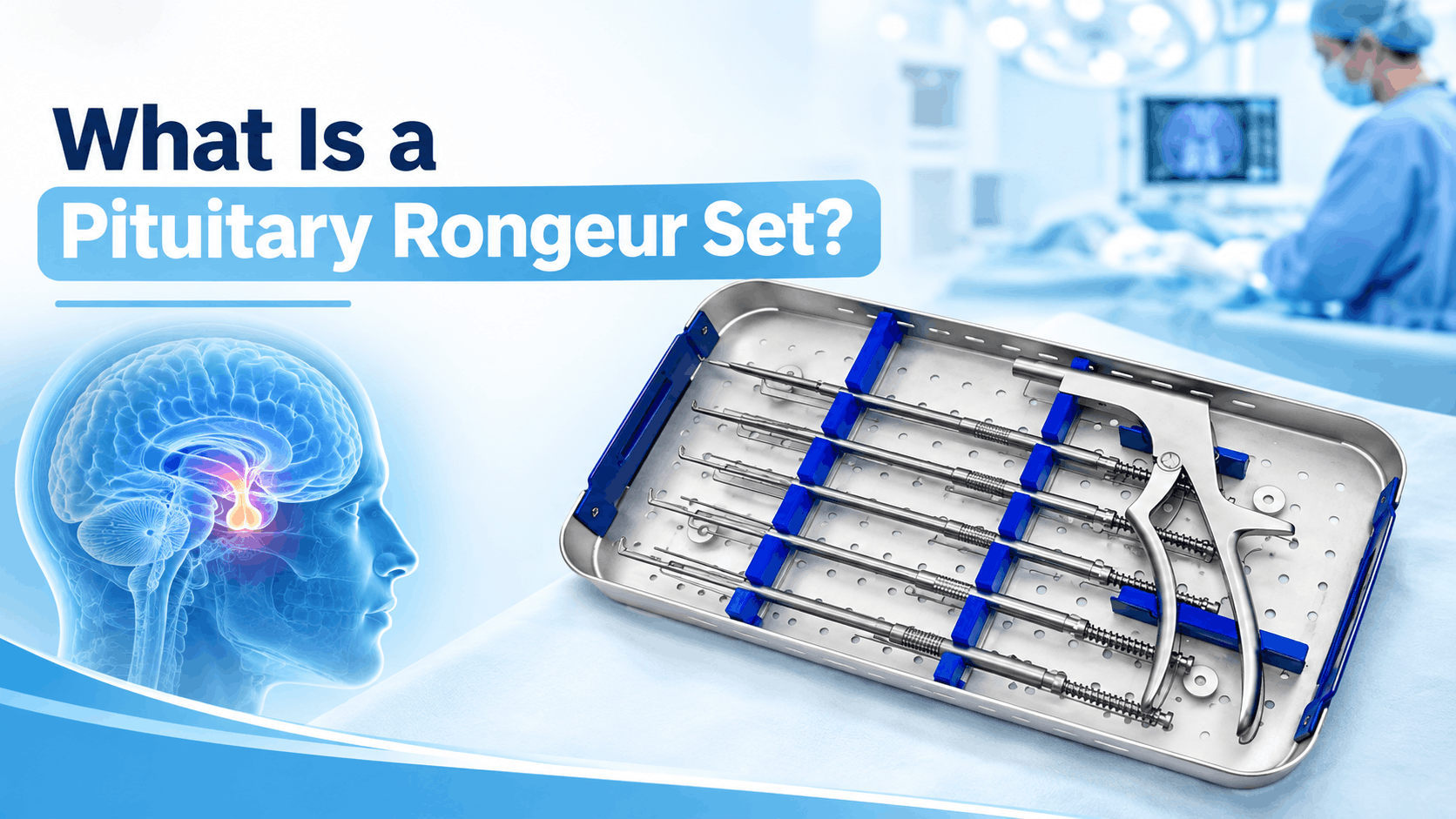
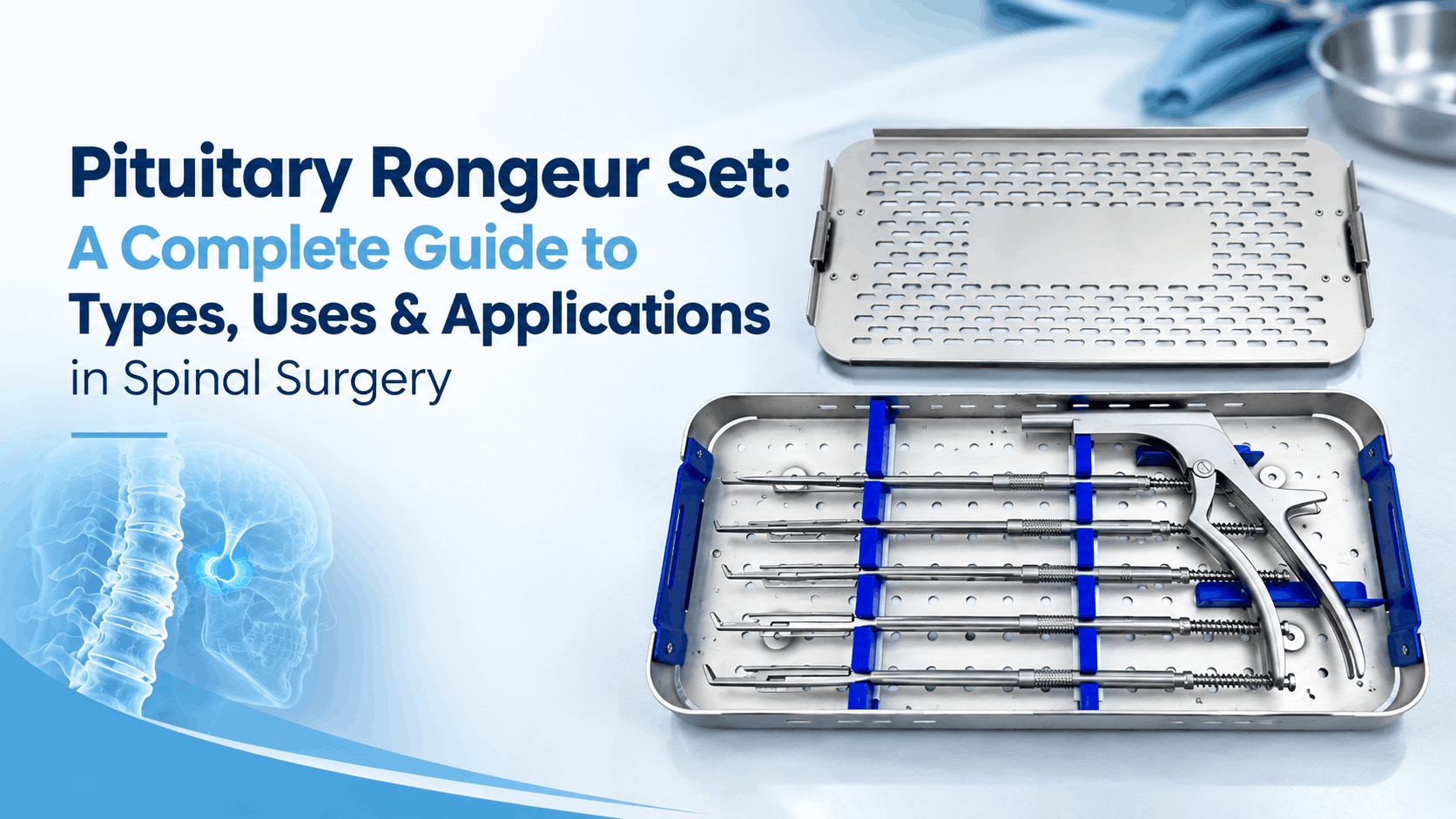
A Pituitary Rongeur Set is a group of rongeurs usually from 4 to 6 tools, each with a different tip angle, jaw shape and shaft length. These tools are made to get into narrow places in the body. Especially the spinal canal and between the bones of the spine. Where normal forceps or rongeurs can’t work well.
The name “pituitary” comes from the use of these tools in surgeries on the pituitary gland. The long thin shaft and the cup-shaped jaws helped doctors take out bits of tissue through small nose or head openings. Over time the design was. Improved for more general use in brain and spine surgeries especially when removing parts of the spine.
A normal set has:
Straight tip rongeurs for direct access
Rongeurs that curve up (angled)
Rongeurs that curve down (down-angled)
Rongeurs that curve left and right
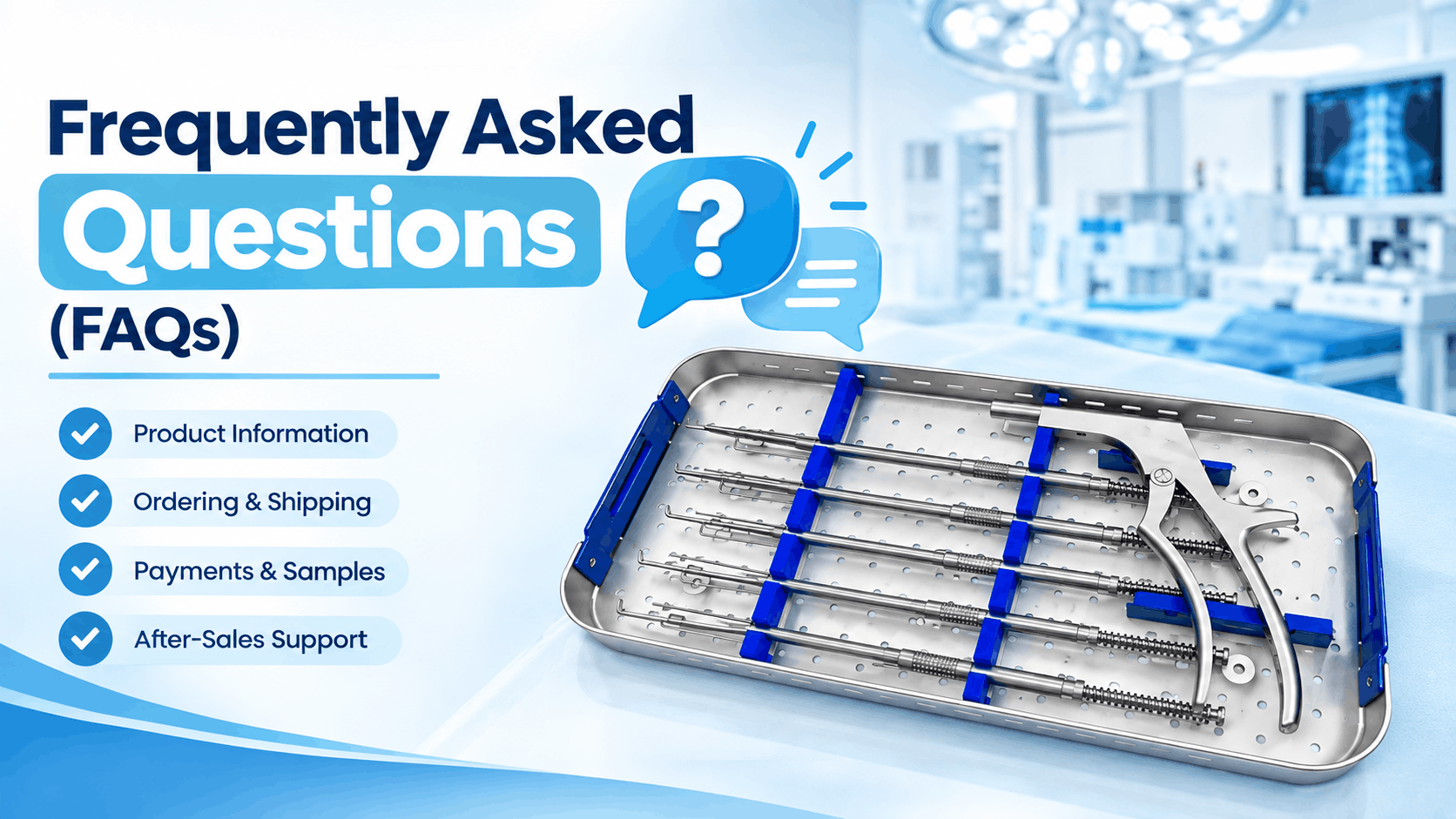
A tray or case with silicone parts to. Organize each tool safely
A Brief History of the Pituitary Rongeur
The way the pituitary rongeur is made goes back to early 1900s brain surgery. At that time doctors needed a way to take out bits of tissue through the nose during a surgery called transsphenoidal pituitary surgery. This kind of surgery gets to the gland through the nose instead of opening the skull. The long thin handle and the soft cup-shaped jaws were made for this kind of work.
As spine surgery became its area of study in the mid to late 1900s doctors saw that the same ideas that made the tool good for pituitary access also made it good for getting into the space between the bones of the spine during a surgery called discectomy. The tool was changed. The size of the jaws was adjusted the handles were made longer and different angles were added. To meet the needs of operations.
Today the name ” rongeur” stays as a way to remember where it came from even though most of these tools are used in spine operations, not pituitary ones. This history is important because it explains why the way the tool is made focuses on being precise and causing damage to other tissues instead of just being strong. A tradition from when it was used in delicate deep brain surgery.
Ergonomics and Surgeon Comfort
Spine surgeries those that take out a lot of tissue can take many or even hundreds of small bites from the tool during one operation. This repeated squeezing action can cause a lot of stress on the surgeons hand and arm. That is why the way the tool is made is important for the comfort of the person using it not for convenience.
Good pituitary rongeur sets help with this in ways:
A spring that helps the jaws open after each bite means the surgeon only has to push on the closing part, not the opening.
Handles that are shaped to fit the hand spread the pressure more evenly than flat handles.
A balance in the weight of the tool along the shaft helps the wrist not get tired during operations especially with longer handles used for deep spine work.
Each tool in the set has the amount of force needed to close the jaws. This helps the surgeon remember how each one feels and keeps their sense of touch when they switch tools during surgery.
Hospitals looking at sets should let surgeons try the tools before buying in bulk because the way a handle feels can be very different for each person depending on their hand size and how they hold the tool.
Anatomy of a Pituitary Rongeur
To understand why this tool is so special it helps to look at the parts it is made of:
- Tip (Jaws)
The end of the tool has two jaws that curve around. When the handle is squeezed the jaws close to hold and cut tissue then open again when the handle is let go to drop the tissue. The size of the tip usually ranges from 2mm to 5mm wide depending on what kind of surgery’s needed.
- Shaft
The part that goes into the body is long and thin. Between 18cm and 24cm. So the surgeon can reach deep areas without blocking the view. The shaft could be straight or curved depending on the angle of the tool.
- Handle
Most pituitary rongeurs have a handle that uses a spring to help the jaws open again after each time they are squeezed. This helps the surgeon not get tired during surgery.
- Locking System (Optional)
Some tools have a way to keep the jaws closed when not cutting, which gives control when taking out tissue.
Types of Pituitary Rongeurs in a Standard Set
A good pituitary rongeur set usually has tip angles so the surgeon has options during the operation. Here’s what is usually in a set:
- Straight Pituitary Rongeur
Used to get into tissue ahead. This is usually the tool used to start cutting into the space between bones before using angled ones for deeper or sideways work.
- Up-Angled Rongeur (15°–45°)
Designed to get to tissue that’s above the path of the tool. Often used when taking out tissue from the part of the space between bones.
- Down-Angled Rongeur (15°–45°)
The opposite of the angled one used to get to tissue that is below the path of the tool like in the space between bones or the spine.
- Left Lateral Angled Rongeur
Helps get to tissue on the side of the area without moving the whole tool.
- Right Lateral Angled Rongeur
Same as the one but on the right side giving full coverage when used with the other types.
Some larger sets might also have:
rongeurs for less invasive spine operations
Long handles for deep spine work in bigger patients
Tools that work with less effort to close the jaws
You can view our complete range of rongeur types on the Orthogear Surgical instrument catalog.
Clinical Applications of the Pituitary Rongeur Set
- Lumbar Discectomy
The common use. Doctors use rongeurs to take out bulging or bad tissue that is pressing on the nerves in the lower back helping with pain and other problems.
- Laminectomy and Laminotomy
During surgery to open up the spine for pressure these tools help take out pieces of bone and tissue to make more space.
- Cervical and Thoracic Spine Surgery
more careful tips are used in the neck area, where the space is much smaller than in the lower back.
- Pituitary and Skull Base Neurosurgery
The tool is still used in surgeries through the nose to take out tumors in the gland.
- Minimally Invasive Spine Surgery (MISS)
Small rongeurs are needed in these operations, where the surgeon works through an opening.
Why Surgeons Prefer a Complete Set Over Single Pieces
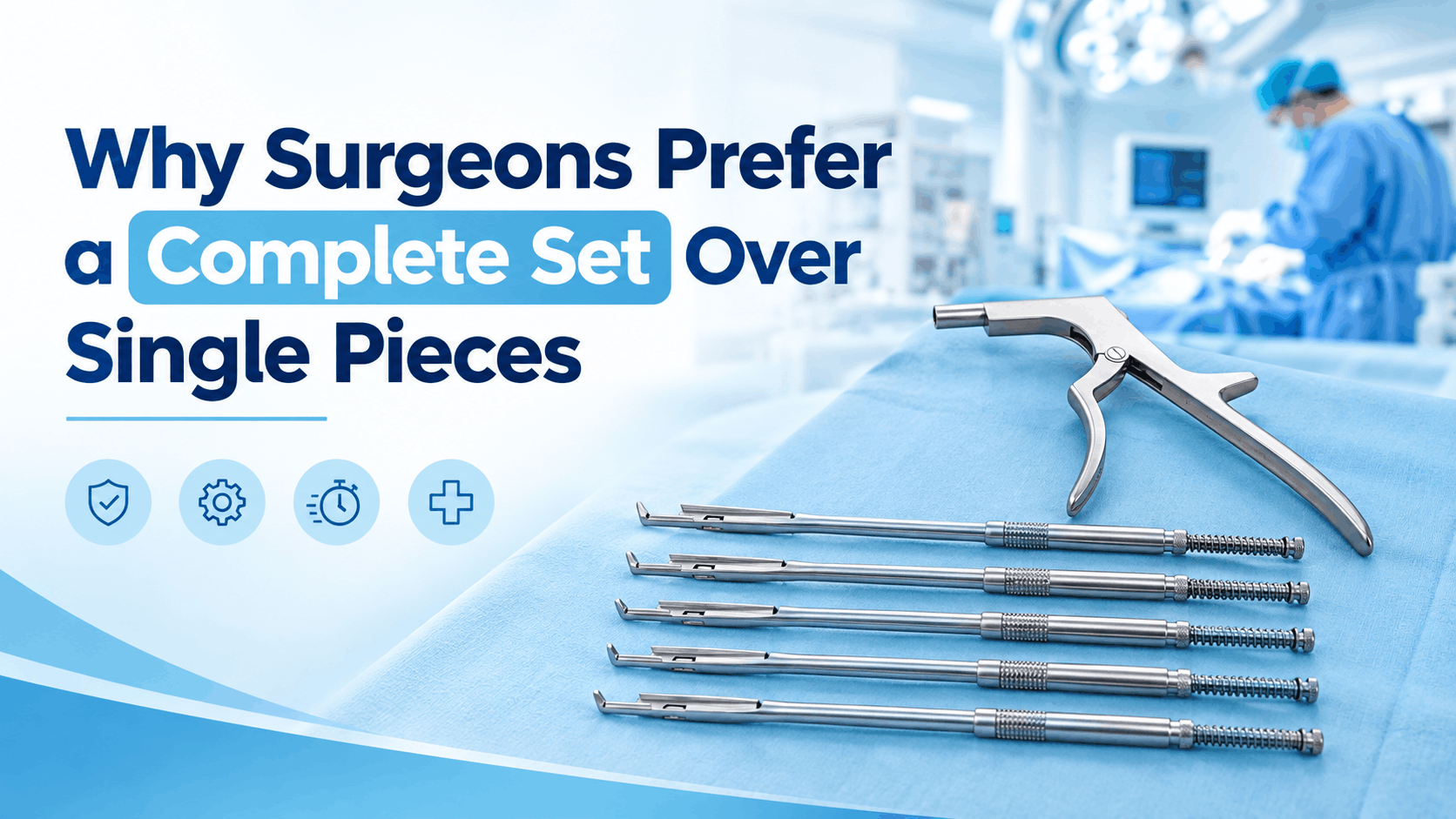
Buying a full pituitary rongeur set of individual tools has many benefits for the hospital and the doctors:
Complete tools. Surgeons can change angles quickly without stopping the clean work to get more tools.
Standard cleaning. A special tray makes sure all the tools are cleaned, checked and sterilized together lowering the chance of missing a tool.
Better price. Buying a group is usually cheaper than buying each tool one by one.
Tracking. Hospitals can track one code for the whole set instead of many single tools.
Faster setup. Tools organized by type help save time between operations.
Material and Build Quality
quality pituitary rongeur sets are made from a type of steel from Germany like AISI 420 or 440 which is chosen for:
Not getting rusty. Important for many times of cleaning in the machine.
Keeping sharp. The jaws stay sharp for uses.
Staying strong. It can handle the stress of cutting times.
Good makers, those in Sialkot, Pakistan make these tools by hand and meet strict quality standards. Learn more about our manufacturing standards at Orthogear Surgical.
Sterilization Tray: An Essential Companion
The box that comes with a pituitary rongeur set is more than a place to keep the tools. It is an important part of the surgery.
Good tray features:
Holes to let steam or gas through during cleaning
Silicone parts to hold each tool in place keeping the tips safe during transport and cleaning
A lid that locks to keep everything
Tags on the corners to make it easy to see what is inside
Can be stacked to save space in the storage area
Using a good tray makes the tools last longer and helps avoid mixing up tools between operations.
How to Choose the Right Pituitary Rongeur Set
When you pick a set for your place think about these things:
- Number of Pieces
Standard sets have, between 4 and 6 tools. Bigger hospitals doing complex surgeries may need 8 to 10.
- Tip Angles
Make sure the set has up-angled down-angled and both left and right ones for full use.
- Shaft Length
Choose the length based on the kind of surgery you do.
Match shaft length to your patient population and procedure type. Longer shafts for deep lumbar access, shorter for cervical work.
- Material Certification
Verify ISO 13485 CE marking and material traceability documentation from the manufacturer.
- Reusable vs. Single-Use
While most pituitary rongeurs are stainless steel instruments some facilities opt for single-use disposable variants to eliminate reprocessing costs and reduce infection risk.
- Manufacturer Reputation
Choose suppliers with a proven track record in surgical instrument manufacturing with direct factory sourcing rather than third-party resellers to ensure consistent quality and after-sales support. Visit Orthogear Surgical to see our certified product range.
Maintenance and Care Guidelines
Proper maintenance directly impacts the longevity and performance of a pituitary rongeur set:
Pre-clean after use to prevent blood and tissue debris from drying on the jaws.
Use cleaning solutions to break down organic material before ultrasonic cleaning.
Inspect jaw alignment after every cleaning cycle. Misaligned jaws compromise cutting precision.
Lubricate hinge points with instrument-grade lubricant to maintain spring action.
Autoclave at manufacturer-recommended temperature and cycle time ( 134°C for 3–5 minutes in a pre-vacuum autoclave).
Store in the designated tray. Never loose in a drawer. To prevent tip damage.
Following these steps ensures the instrument set maintains its precision cutting ability across hundreds of sterilization cycles.
Inventory and Sterile Processing Best Practices for Hospitals
Beyond the instrument itself how a hospitals central sterile processing department (CSPD) manages a pituitary rongeur set has an impact on OR efficiency and patient safety. Facilities running high case volumes should consider the following practices:
Dedicated tray tracking. Assigning each sterilization tray a unique identifier (barcode or RFID tag) allows CSPD staff to track sterilization cycle counts flag trays approaching recommended retirement thresholds and quickly trace an instruments usage history if a post-operative infection investigation is ever required.
Par-level planning. Spine programs performing daily cases should maintain at least two to three complete sterile sets in rotation to prevent case delays caused by a single set being mid-cycle in reprocessing.
Visual inspection checklists. Standardizing a -sterilization visual inspection checklist (jaw alignment, spring tension, tip sharpness handle integrity) helps CSPD technicians catch instrument degradation before it affects a live case rather than discovering it intraoperatively.
Staff training on tray loading. Silicone finger-mount trays are designed for an instrument orientation; improper loading can bend tips during autoclave cycles or prevent adequate steam penetration compromising sterility assurance.
Vendor-provided reference cards. Many manufacturers supply laminated tray-configuration reference cards showing the placement of each rongeur; keeping these attached to or near the tray reduces reassembly errors after each cleaning cycle.
Hospitals that formalize these practices typically see case delays related to instrument availability and extend the practical service life of their surgical instrument inventory.
Common Mistakes to Avoid When Using Pituitary Rongeurs
Over-forcing the jaws on calcified tissue, which can damage the cutting edge
Using the wrong tip angle forcing unnecessary shaft repositioning that increases tissue trauma risk
Neglecting tip inspection before a case missing early signs of misalignment or dulling
Improper storage allowing tips to collide with other instruments and lose precision
Skipping lubrication leading to stiff spring mechanisms and surgeon hand fatigue
Pituitary Rongeur Set vs. Kerrison Rongeur: What’s the Difference?
Surgeons and procurement teams often compare rongeurs with Kerrison rongeurs, another staple in spinal surgery. While both are used for tissue and bone removal they serve purposes:
Feature Pituitary Rongeur Kerrison Rongeur
Primary Use Soft tissue (disc material) removal Bone and ligament removal
Jaw Design Cupped, double-action jaws Single up-biting punch jaw
Shaft Shape Straight or angled Consistently curved with footplate
Common Procedure Discectomy Laminectomy, foraminotomy
Most spinal surgery trays include both instrument types as they are complementary rather than interchangeable. The pituitary rongeur handles soft disc material while the Kerrison manages bony decompression. Browse both instrument types at Orthogear Surgical.
The Role of Sialkot, Pakistan in Global Surgical Instrument Manufacturing
Sialkot has earned recognition as one of the worlds leading manufacturing centers for surgical and dental instruments supplying hospitals and distributors across North America, Europe and the Middle East. Manufacturers in this region combine hand-forging craftsmanship with modern CNC precision machining to produce instruments. Including pituitary rongeur sets. That meet stringent international quality standards while remaining cost-competitive for global buyers.
For hospitals, distributors and group purchasing organizations sourcing surgical instrument sets working directly with Sialkot-based manufacturers often provides better pricing, custom branding options (private labeling) and shorter lead times compared to sourcing through multiple intermediaries. Orthogear Surgical is one such Sialkot-based manufacturer offering direct factory sourcing.
Reusable vs. Single-Use Pituitary Rongeurs: A Closer Look
While the vast majority of pituitary rongeur sets in circulation today are stainless steel instruments, some facilities. Particularly ambulatory surgery centers with limited sterile processing capacity. Are increasingly evaluating single-use sterile-packaged alternatives. Each approach carries tradeoffs worth understanding before making a procurement decision.
Reusable instruments offer a long-term cost per procedure once the initial capital investment is amortized across hundreds of sterilization cycles along with the ability to select premium steel grades and precise hand-finished jaw geometry that many surgeons feel offers superior tactile feedback. The tradeoff is the operational burden of cleaning, inspection and sterilization along with the capital outlay required upfront.
Single-use instruments eliminate reprocessing labor and the associated infection-control risk of cleaned instruments and they guarantee a factory-sharp jaw on every single case. However per-procedure cost is typically higher over time. Some surgeons report that molded or stamped single-use jaws lack the precise bite feel of a forged reusable instrument.
Most high-volume spine programs continue to rely on forged sets as their primary workhorse instruments reserving single-use variants for specific situations such as isolation cases or facilities without on-site sterile processing infrastructure.
Custom and Private Label Pituitary Rongeur Sets
Many distributors and hospital groups now prefer label or custom-branded pituitary rongeur sets allowing them to:
Apply their own company logo via laser etching
Customize tray configuration and piece count
Select preferred handle finish (satin, mirror or matte)
Bundle rongeurs with instruments (curettes, elevators, probes) in a single case
This level of customization is particularly valuable for surgical instrument distributors building their own product catalog for hospital tenders and international export markets. Orthogear Surgical offers private label and custom branding services for distributors worldwide.
Step-by-Step: How Pituitary Rongeurs Are Used During Surgery
Understanding the surgical workflow helps explain why instrument selection matters so much. While exact technique varies by surgeon and procedure a typical lumbar discectomy sequence using a pituitary rongeur set looks like this:
Exposure and Access. After the surgeon creates a working corridor to the disc space ( through a tubular retractor in MISS) the annulus fibrosus is incised to expose the underlying disc material.
Initial Tissue Removal with Straight Rongeur. The straight-tip pituitary rongeur is inserted first to remove the bulk of disc material directly in the surgeons line of sight.
Angled Instrument Exchange. As the surgeon works deeper or needs to access tissue inferior or lateral to the initial corridor angled rongeurs are exchanged in sequence. Up-angled down-angled, then left and right lateral. Without repositioning the retractor.
Nerve Root Decompression Check. Between each pass the surgeon visually and manually confirms that the nerve root is adequately decompressed and free of compressive material.
Hemostasis and Closure. Once adequate decompression is confirmed bleeding is. The surgical site is irrigated and closed in layers.
This exchange-based workflow is why a complete set. Rather than a handful of mismatched individual instruments. Is considered standard of care in most spine programs. Every angle exchange during a case adds time under anesthesia; having the right tip immediately available on the tray shortens that window.
Piece-Count Configurations Explained
Not all “Pituitary Rongeur Sets” on the market are identical. Configuration typically scales with the breadth of procedures a facility performs. Here’s how the common configurations break down:
Set Size Typical Pieces Included Best Suited For
4-piece basic set Straight up-angled down-angled 1 lateral Small clinics, single-procedure focus
5-piece standard set Straight, up-angled down-angled left lateral right lateral General spinal surgery departments
6–8 piece extended set Standard 5 pieces + micro-tip and long-shaft variants hospitals, trauma centers
10+ piece mega set Full angle range + cervical-specific micro instruments High-volume neurosurgery/spine institutes
Procurement teams should map their facilitys actual case mix against this table rather than defaulting to the largest available set. Over-purchasing ties up sterile processing capacity and capital that could be allocated elsewhere while under-purchasing forces surgeons to improvise mid-case.
Regulatory and Compliance Considerations
Because pituitary rongeurs are classified as reusable surgical instruments that directly contact internal tissue they fall under stricter regulatory oversight than many general-purpose OR tools. Buyers. Hospital procurement departments and international distributors. Should confirm the following before purchase:
CE Marking (EU). Confirms conformity with the EU Medical Device Regulation (MDR) for instruments sold into European markets.
FDA 510(k) Clearance (US). Required for Class I reusable surgical rongeurs sold in the United States; verify the manufacturer or importer holds current clearance.
ISO 13485 Certification. The recognized quality management standard specific to medical device manufacturing; this should apply to the manufacturing facility itself not just the finished product.
Material Traceability Documentation. Reputable manufacturers can provide a certificate confirming the stainless steel grade and batch used which is often required for hospital tender submissions.
Country of Origin Labeling. Increasingly requested by group purchasing organizations (GPOs), for supply chain transparency.
Distributors who get products from factories including those located in the Sialkot area of Pakistan should ask for these papers directly from the factory instead of just trusting what a middleman says.
Pricing Factors: What Makes the Price of a Pituitary Rongeur Set Change
Buyers often wonder why the price is different between sellers for something that looks the same like a 5-piece set. The main reasons for the price differences are:
Steel Grade. AISI 440 stainless steel is usually expensive than 420 grade because it holds an edge better and is more resistant to rust.
Manufacturing Method. Instruments that are fully made by forging cost more to make than ones that are cast or stamped. They last much longer.
Finishing Process. Finishes like hand-polished, satin or mirror take time to do than a simple flat finish.
Tray Quality. Trays that have holes and are covered with silicone cost more than a flat case.
Certification Overhead. Manufacturers who have ISO 13485 CE and FDA papers usually have higher prices to cover the costs of staying in compliance.
Order Volume. When hospitals or distributors order a lot of sets like 50 or more they usually get a lower price per set than if they buy just one.
Customization. Adding things like your label, a logo or a special tray setup costs a little more but helps your brand.
Hospitals and companies that are looking at prices should always make sure they are comparing the same things, not just the final price. A cheaper set with lower quality steel that is stamped instead of forged might cost more in the long run because it needs to be replaced sooner. Get a custom quote from Orthogear Surgical.
Exporting and International Buying Tips
For hospitals and companies that buy pituitary rongeur sets from other countries. A common activity given that Pakistan is a big exporter of surgical tools. There are some things to keep in mind:
Minimum Order Quantities (MOQs) change a lot between factories; smaller clinics might need to go through a seller instead of buying straight from the factory.
Time to get the order. For custom or branded orders it usually takes 3 to 6 weeks depending on how big the order’s what finishing is needed.
Shipping and taxes. The cost of shipping and the taxes you have to pay in the country you are sending to can be different so you need to include that in your cost when comparing options.
Testing Samples. Getting a sample to test in your place for cleaning and checking before buying a big amount is something most experienced buying teams do.
After Sales Help. Check if the factory offers help with repairs, sharpening or replacing the tools because that affects how much it costs in the run
Frequently Asked Questions (FAQs)
Q1. What is a pituitary rongeur used for?
A rongeur is mostly used to hold and take out soft tissue, like material from a slipped disc during back surgeries like removing a disc, as well as some brain surgery that involves the pituitary gland.
Q2. How many parts are in a pituitary rongeur set?
Standard sets usually have 4 to 6 parts with tip angles. Straight, up, down and left or right. Though longer sets with 8 to 10 parts are available for special surgeries.
Q3. What material are rongeurs made from?
Most good quality pituitary rongeurs are made from German-grade stainless steel (AISI 420 or 440) which is chosen because it doesn’t rust is strong and can stay sharp through many times of cleaning.
Q4. Can pituitary rongeurs be used again after cleaning?
Yes the kind of steel used in surgical rongeurs is made to be used again and again and can handle hundreds of times in a machine that cleans with steam if it is taken care of and stored in the right case.
Q5. What is the difference between a pituitary rongeur and a Kerrison rongeur?
A pituitary rongeur is made for taking out tissue like a disc while a Kerrison rongeur is made for taking out bone and ligaments during surgeries like taking off part of the spine.
Q6. How do I clean a pituitary rongeur set?
Pituitary rongeur sets should be cleaned first treated with a cleaner, cleaned with sound waves given oil at the moving parts and then put in a machine that uses steam to clean them at the temperature the maker says, usually 134°C for 3 to 5 minutes in a machine that takes the air out first.
Q7. Why buy a set instead of just one rongeur?
A full set makes sure you have all the angles you need for any part of the body makes cleaning and keeping track of them easier and is usually cheaper than buying each one by itself over time.
Q8. Are there sets that can be made to look like a companys product?
Yes many makers. The ones in Sialkot, Pakistan. Offer the chance to add your own brand, a logo and change the tray setup for companies that want their own branded tools.
Q9. How long do pituitary rongeur sets usually last?
With the care and cleaning a rongeur set made from forged stainless steel can work for 5 to 10 years or hundreds of times in the machine but you should check how sharp the jaws are and take the tools out of use when they don’t cut well anymore.
Q10. What papers should I check before buying?
Buyers should check for ISO 13485 manufacturing papers CE mark for the EU and FDA 510(k) approval for the US and also make sure the maker gives papers that show where the material came from.
Q11. Can I put my companys logo on a pituitary rongeur set?
Yes most makers offer the chance to put a logo on with a laser change how the tray is set up and choose finishes (satin, mirror or flat) for companies that want their own branded tools.
Q12. What is the normal price for a pituitary rongeur set?
The price can change depending on the metal how it is made and the cost of the papers but standard 5-piece sets can range from ones made with a stamp to better ones that are forged and have the papers at the top of the market. Buyers should ask for a list of the details to compare the same things.
The Pituitary Rongeur Set is still one of the important tools used in modern back and brain surgeries. From removing discs in the back to surgeries on the base of the brain its special jaw shape helps doctors work in tight spots with control and confidence that regular tools can’t offer.
For hospitals, surgery centers and sellers buying a quality complete pituitary rongeur set. With the right cleaning steps and, from a maker that is approved. Helps make better results during surgery makes the room where surgery happens work better and helps save money over time.
No matter if you’re buying your set or changing your tools knowing about the different types, how they are used and what makes them good will help you make a smart sure choice when you buy. Explore our complete surgical instrument catalog at Orthogear Surgical.
Follow Orthogear Surgical
Want to see these instruments in action, get updates on new surgical instrument sets, or stay connected with Orthogear Surgical? Visit our website at orthogearsurgical.com, or follow us on:
YouTube: https://youtube.com/@orthogear_surgical?si=Z9xQLVQUMzEBl4VL
Facebook: https://www.facebook.com/profile.php?id=61569213083562