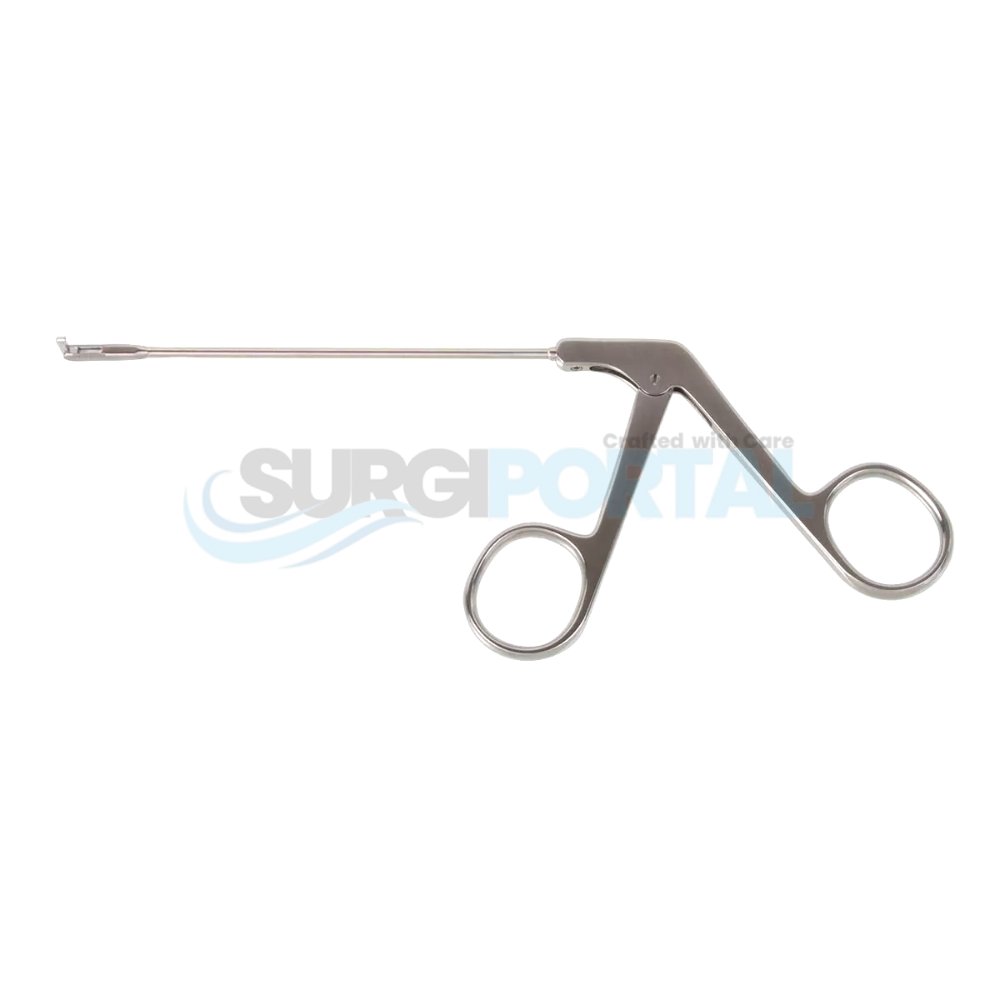
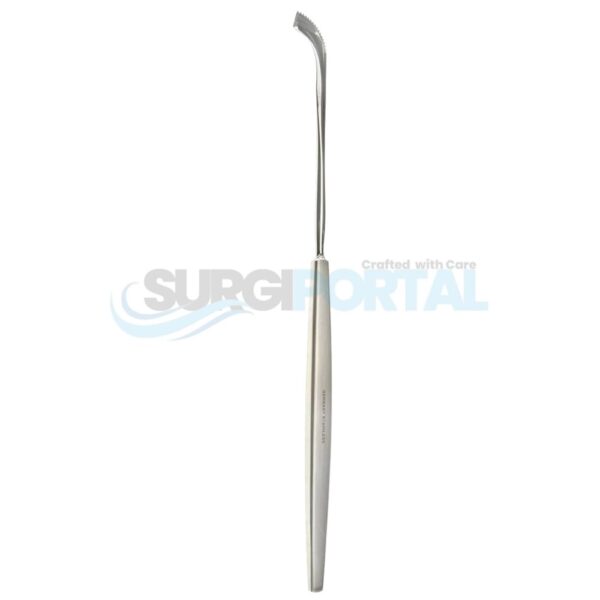
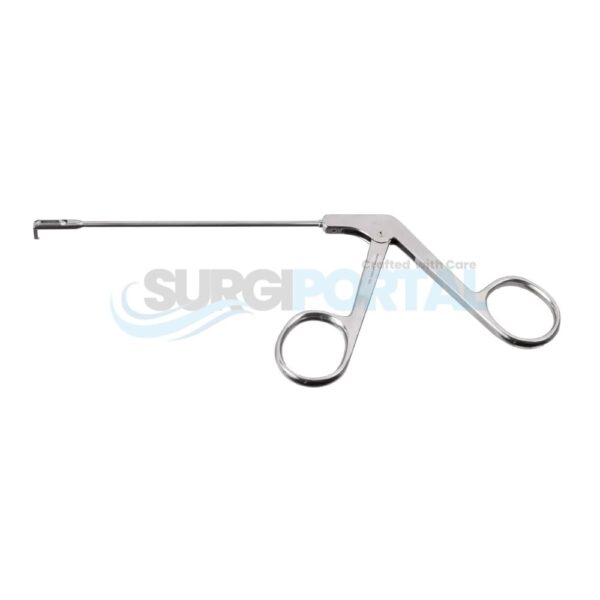
The Ostrum Antrum Punch Left Pediatric is a specialized ENT surgical instrument designed for qualified otolaryngology professionals performing appropriate pediatric procedures. It is intended to facilitate controlled tissue engagement, punching, and removal where precise manipulation and a left-sided approach are required.
Featuring a left-sided working configuration, this antrum punch allows the surgical team to approach targeted anatomical areas from the appropriate direction. The pediatric configuration provides a compact working profile suited to the smaller anatomical structures encountered during pediatric ENT procedures.
The punch mechanism is designed for controlled manual tissue manipulation. With appropriate surgical technique, the working end can engage targeted tissue and assist with controlled removal while maintaining access and visibility within the operative field. The left-oriented design provides an alternative approach to right-sided instruments, helping surgical teams select the appropriate instrument orientation for the procedure.
Its compact pediatric design makes the Ostrum Antrum Punch Left Pediatric suitable for appropriate ENT and otolaryngology applications involving smaller anatomical areas. The instrument is designed for professional surgical environments where precise instrument handling and controlled tissue manipulation are required.
As a reusable surgical instrument, it should be inspected before and after each use to ensure proper cleanliness, surface condition, alignment, and mechanical function. Cleaning, disinfection, sterilization, and maintenance should be performed according to the manufacturer’s instructions for use (IFU) and the healthcare facility’s validated reprocessing protocol.
The Ostrum Antrum Punch Left Pediatric is a practical choice for ENT surgical teams requiring a dedicated pediatric antrum punch with a left-sided working orientation for controlled tissue manipulation.
Key Features
- Ostrum antrum punch design
- Pediatric configuration
- Left-sided working orientation
- Designed for controlled tissue punching
- Suitable for controlled tissue removal
- Compact profile for pediatric anatomy
- Supports precise manual manipulation
- Designed for appropriate pediatric ENT procedures
- Useful in confined anatomical areas
- Reusable surgical instrument
- Durable construction for professional use
- Suitable for validated cleaning and reprocessing
Product Specifications
| Specification |
Details |
| Product Name |
Ostrum Antrum Punch Left Pediatric |
| Instrument Type |
Pediatric ENT Antrum Punch |
| Design |
Ostrum |
| Configuration |
Pediatric |
| Working Orientation |
Left |
| Function |
Tissue Punching and Removal |
| Operation |
Manual |
| Application |
Pediatric ENT & Otolaryngology |
| Profile |
Pediatric / Compact |
| Primary Function |
Controlled Tissue Manipulation |
| Reusable |
Yes |
| Intended Users |
Qualified Healthcare Professionals |
| Sterilization |
Follow Manufacturer’s IFU and Validated Facility Protocol |
FAQs
What is the Ostrum Antrum Punch Left Pediatric used for?
It is designed for controlled tissue punching and removal during appropriate pediatric ENT and otolaryngology procedures.
What does “Left” mean in this instrument?
“Left” refers to the orientation of the working end, allowing the instrument to approach the target area from a left-sided direction when appropriate.
Is this antrum punch designed for pediatric use?
Yes. It features a pediatric configuration intended for procedures involving smaller anatomical structures.
What is the benefit of a left-sided antrum punch?
The left-sided working orientation provides an appropriate approach angle for procedures where left-oriented access is required.
Is the Ostrum Antrum Punch reusable?
Yes. It is designed as a reusable surgical instrument when properly cleaned, maintained, and reprocessed according to applicable instructions.
Who should use this instrument?
It should be used by qualified ENT surgeons and trained healthcare professionals familiar with appropriate surgical techniques.
How should the instrument be sterilized?
Cleaning, disinfection, sterilization, and maintenance should follow the manufacturer’s IFU and the healthcare facility’s validated reprocessing protocol.