

-40%
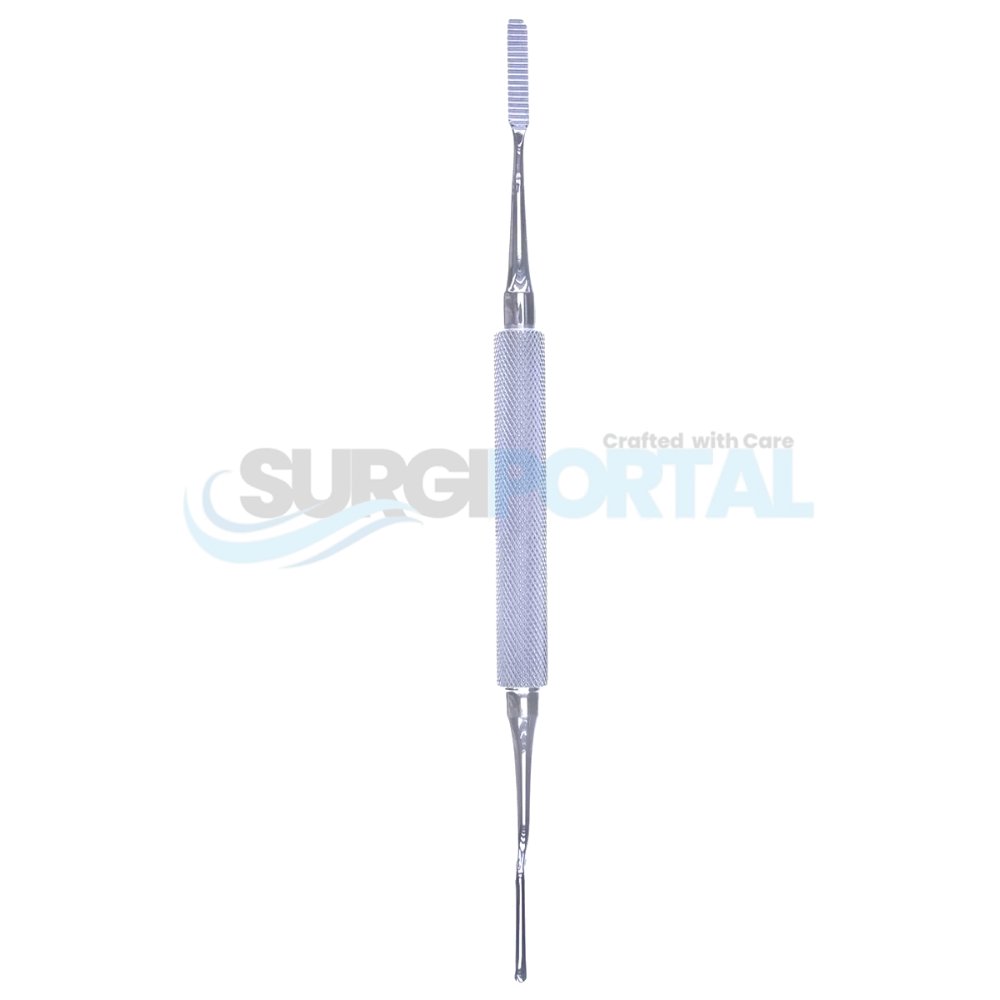
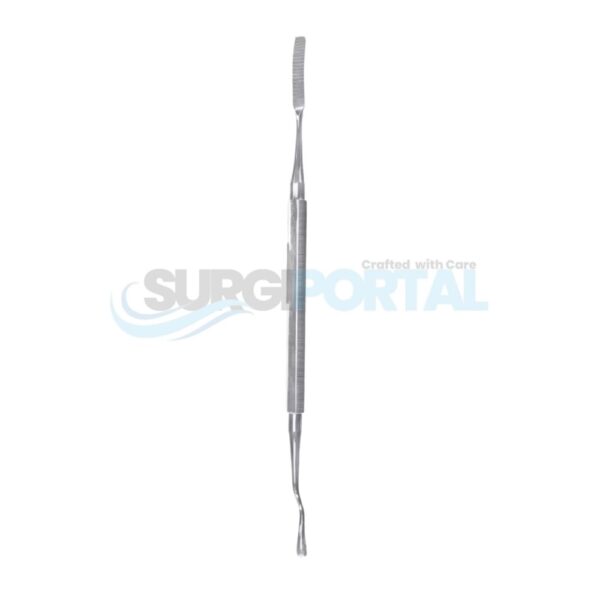
The 8½″ Polokoff Rasp features 3mm and 4mm working ends for controlled bone surface filing, smoothing, and contour refinement. Its elongated design provides practical reach and manual control during appropriate surgical procedures.
$100.00 Original price was: $100.00.$60.00Current price is: $60.00.
Payment Methods:

The 8½” Polokoff Rasp 3mm & 4mm is a specialized surgical bone rasp designed for controlled filing, smoothing, shaping, and refinement of bone surfaces. With two working dimensions measuring 3mm and 4mm, this instrument provides useful versatility for procedures where different working profiles may be required during bone preparation.
Its 8½-inch overall length provides additional reach while maintaining practical manual control. The elongated design can be useful when working in areas where a longer instrument profile is preferred. The 3mm and 4mm working ends provide different contact dimensions, allowing the appropriate end to be selected according to the surgical site and desired level of surface refinement.
The Polokoff designation identifies the instrument style, while the supplied 3mm and 4mm measurements specify the working-end dimensions. These dimensions can support controlled filing in areas requiring more localized contact or slightly broader surface engagement. The instrument is intended for gradual manual bone refinement rather than aggressive bone removal.
Bone rasps are commonly used in orthopedic, reconstructive, trauma, and other surgical procedures where bone surfaces require smoothing or contour adjustment. Depending on the procedure and surgical technique, a rasp may be used to refine irregular bone surfaces, shape contours, or prepare bone for subsequent surgical steps. Exact applications depend on the anatomical site and clinician’s established technique.
The two working sizes make this Polokoff rasp a practical addition to a surgical instrument set. The 3mm end provides a narrower working profile for more localized filing, while the 4mm end offers a slightly broader working surface. Having both dimensions available on the same instrument can reduce the need to exchange instruments when transitioning between different areas of bone preparation.
The instrument is typically manufactured from surgical-grade stainless steel, providing a rigid and durable construction suitable for professional surgical environments. Its rigid structure helps transfer controlled manual force to the working surface while maintaining tactile feedback. The 8½-inch length also provides useful reach without making the instrument excessively difficult to manipulate.
Proper instrument care is important for maintaining the working surfaces. After use, the rasp should be cleaned according to validated instrument-processing procedures and inspected for retained biological material, wear, or damage. If supplied as a reusable surgical instrument, it should be sterilized according to the manufacturer’s validated instructions and the healthcare facility’s applicable protocols.
The 8½″ Polokoff Rasp combines an extended 8½-inch profile with 3mm and 4mm working dimensions. Its practical design makes it suitable for controlled bone filing, smoothing, shaping, and contour refinement in appropriate surgical applications.
| Specification | Details |
|---|---|
| Product Name | 8½″ Polokoff Rasp |
| Instrument Type | Bone Rasp |
| Overall Length | 8½ inches |
| Instrument Style | Polokoff |
| Working End 1 | 3mm |
| Working End 2 | 4mm |
| Primary Function | Bone filing, smoothing, shaping, and contour refinement |
| Operation | Manual |
| Typical Applications | Orthopedic, trauma, reconstructive, and surgical bone preparation |
| Material | Typically surgical-grade stainless steel |
| Reusable | Yes, when supplied as a reusable instrument |
| Sterilization | According to validated manufacturer instructions and facility protocol |
It is designed for controlled filing, smoothing, shaping, and refinement of bone surfaces during appropriate surgical procedures.
This model has 3mm and 4mm working dimensions.
The 3mm end provides a narrower working profile, while the 4mm end provides a slightly broader contact area for bone surface refinement.
Two working dimensions provide flexibility during a procedure and allow the user to select the end that best matches the working area and surgical requirement.
Bone rasps are commonly used in appropriate orthopedic, trauma, and reconstructive procedures for controlled bone surface preparation and contour refinement.
It is typically manufactured from surgical-grade stainless steel, although exact material specifications may vary by manufacturer.
If supplied as a reusable instrument, it can be cleaned, inspected, sterilized, and reused according to validated manufacturer instructions and facility protocols.
It should be cleaned and sterilized according to the manufacturer’s validated processing instructions and the healthcare facility’s established sterilization protocol. Specific cycle parameters should not be assumed without manufacturer guidance.
No account yet?
Create an Account