

-27%
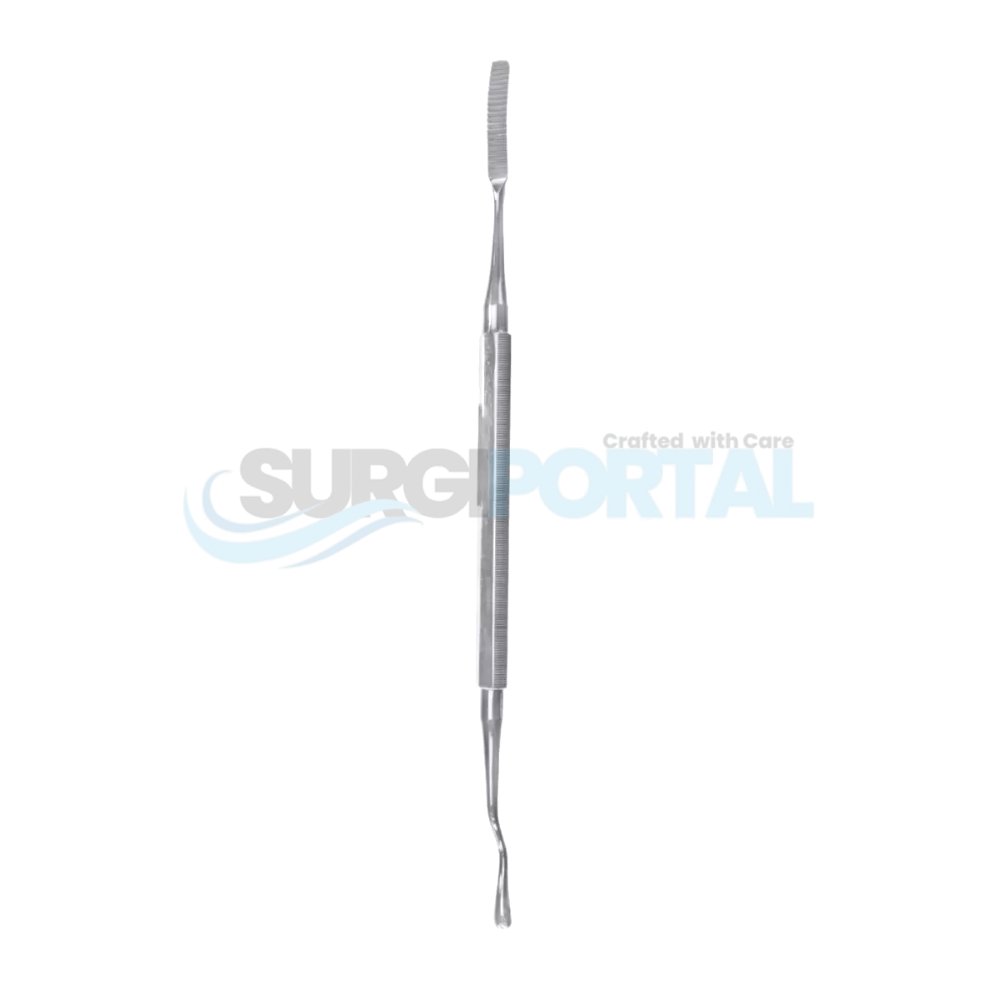
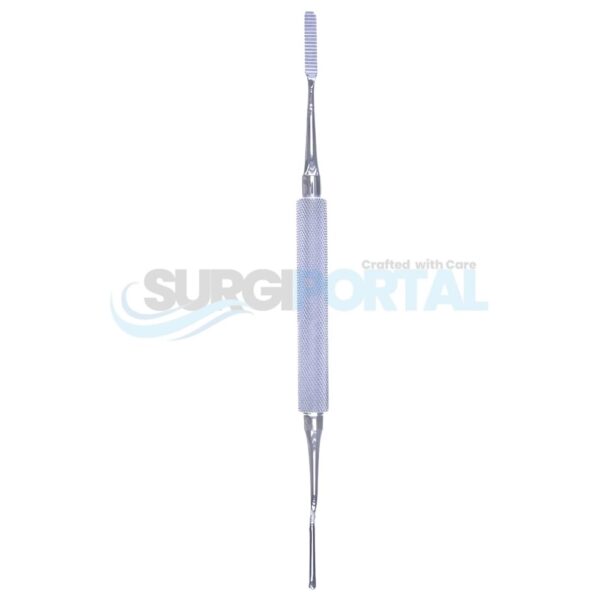
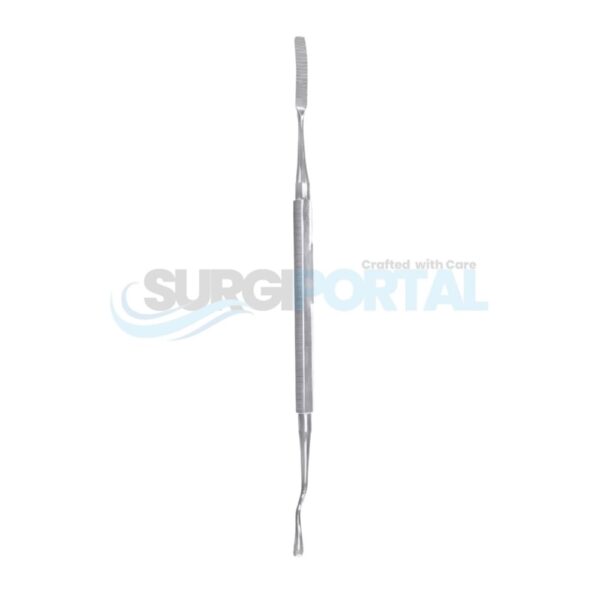
The 7″ Bone File Double-Ended features 5mm working ends with a 10 designation for controlled bone filing and surface refinement. Its double-ended design provides convenient handling and consistent working dimensions during bone preparation.
$110.00 Original price was: $110.00.$80.00Current price is: $80.00.
Payment Methods:

The 7” Bone File Double Ended (10 × 5mm Ends) is a practical surgical instrument designed for controlled filing, smoothing, shaping, and refinement of bone surfaces. Featuring two 5mm working ends, this double-ended bone file provides a consistent working dimension while allowing either end to be selected during a surgical procedure.
With an overall length of 7 inches, the instrument offers a useful balance between working reach and manual control. Its length allows the user to maintain a comfortable grip while applying controlled pressure to the bone surface. The 5mm working ends are suitable for localized bone filing and gradual surface refinement where controlled contact is required.
The product is identified by the supplied “10 × 5mm” designation. The 5mm measurement identifies the working-end size, while the “10” should be retained as part of the product specification unless a manufacturer-specific catalog confirms its exact technical meaning. This approach avoids assigning an unsupported interpretation to the designation.
The double-ended configuration provides two identical 5mm working ends in one instrument. This can be convenient during procedures requiring repeated bone filing, as the user can utilize either end without immediately reaching for a separate instrument. The matching ends also provide consistency when the same working profile is required throughout a procedure.
Bone files are used in appropriate orthopedic, trauma, reconstructive, and other surgical applications for controlled smoothing and shaping of bone. Depending on the surgical technique and anatomical site, the instrument may help refine irregular bone surfaces, adjust contours, or prepare bone for subsequent surgical steps. Its intended function is controlled manual filing rather than aggressive bone removal.
The instrument is typically manufactured from surgical-grade stainless steel, providing a rigid and durable construction suitable for professional surgical environments. The rigid structure supports controlled transmission of manual force while maintaining tactile feedback. The 7-inch profile provides useful access while remaining manageable during routine surgical handling.
The working surfaces should be inspected before and after use for wear, deformation, or damage. Proper cleaning is important because filing surfaces can retain biological material if not thoroughly processed. If supplied as a reusable instrument, the bone file should be cleaned, disinfected, sterilized, and maintained according to the manufacturer’s validated instructions and the healthcare facility’s established instrument-processing protocols.
The 7″ Bone File Double-Ended combines a convenient 7-inch length with two matching 5mm working ends. Its double-ended configuration and supplied 10 × 5mm designation make it a useful addition to surgical instrument sets requiring controlled bone filing, smoothing, shaping, and contour refinement.
| Specification | Details |
|---|---|
| Product Name | 7″ Bone File Double-Ended |
| Instrument Type | Bone File |
| Overall Length | 7 inches |
| Design | Double-Ended |
| Working End 1 | 5mm |
| Working End 2 | 5mm |
| Product Designation | 10 × 5mm |
| Primary Function | Bone filing, smoothing, shaping, and contour refinement |
| Operation | Manual |
| Typical Applications | Orthopedic, trauma, reconstructive, and surgical bone preparation |
| Material | Typically surgical-grade stainless steel |
| Reusable | Yes, when supplied as a reusable instrument |
| Sterilization | According to validated manufacturer instructions and facility protocol |
It is designed for controlled filing, smoothing, shaping, and refinement of bone surfaces during appropriate surgical procedures.
Both ends feature a 5mm working size.
The 5mm portion identifies the working-end size. The “10” is retained as part of the supplied product designation and should be confirmed against manufacturer documentation for its exact technical meaning.
It provides two matching working ends in one instrument, offering convenience and consistent working dimensions during procedures that require repeated bone filing.
Bone files are commonly used in appropriate orthopedic and reconstructive procedures for controlled smoothing, shaping, and refinement of bone surfaces.
It is typically manufactured from surgical-grade stainless steel, although the exact material specification can vary by manufacturer.
If supplied as a reusable instrument, it can be cleaned, inspected, sterilized, and reused according to validated manufacturer instructions and facility protocols.
It should be cleaned and sterilized according to the manufacturer’s validated processing instructions and the healthcare facility’s established sterilization protocol. Specific cycle parameters should not be assumed without manufacturer guidance.
No account yet?
Create an Account