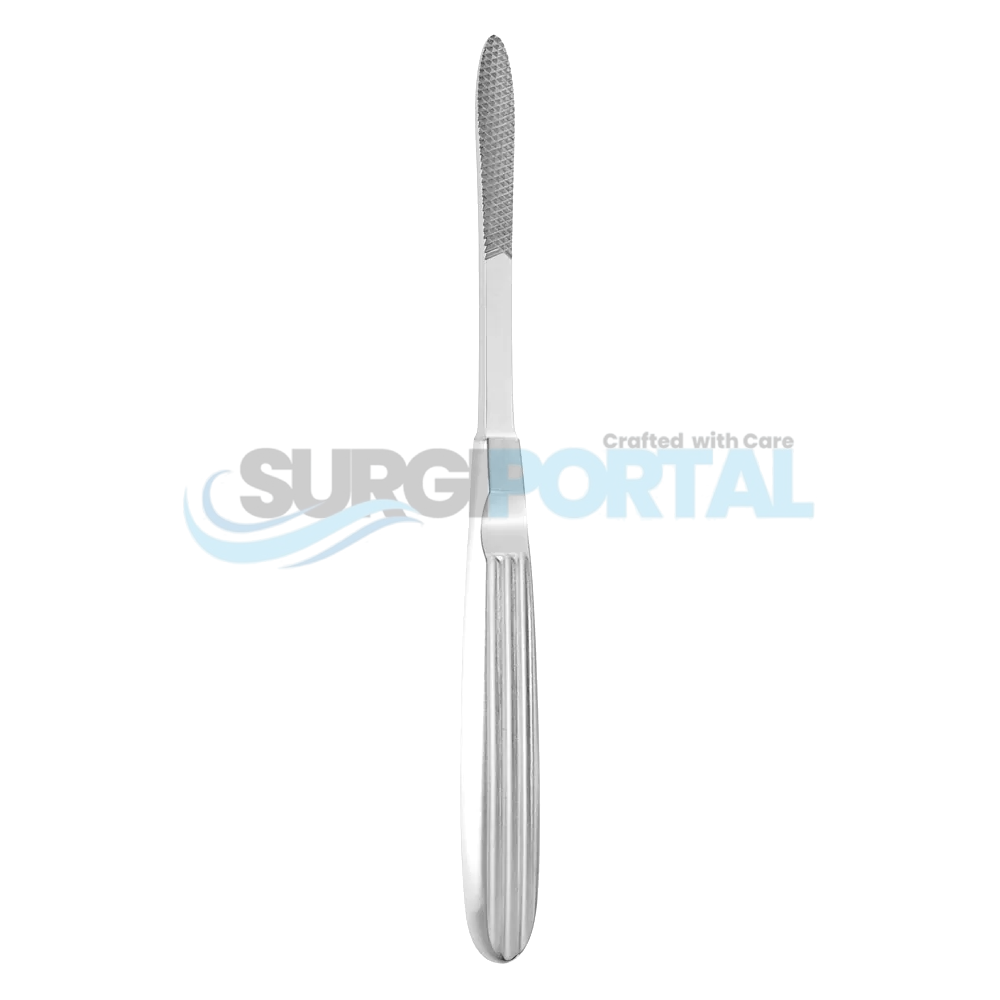
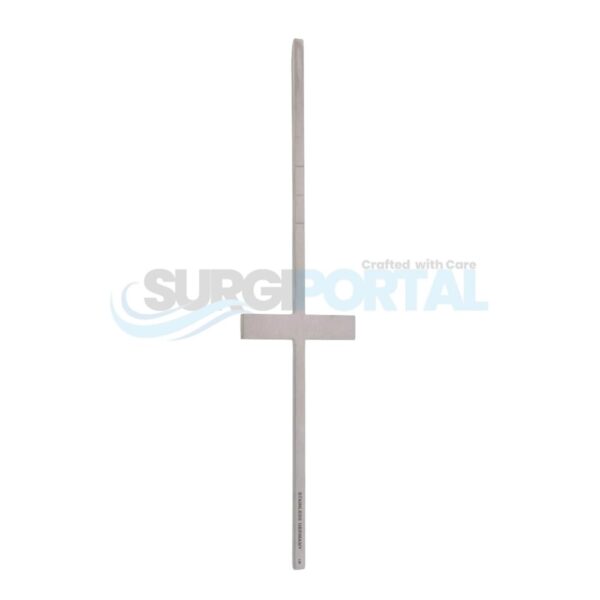
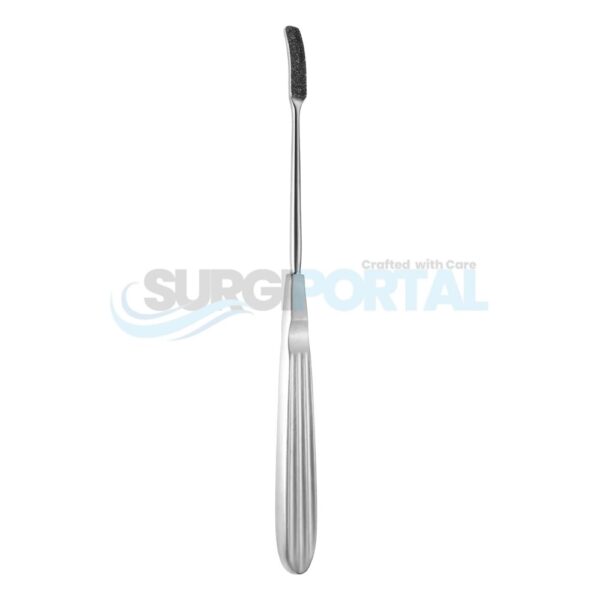
The 7 1/8” Joseph Bay Saw Angled Right is designed for controlled surgical cutting and bone preparation where a specialized angled instrument profile is beneficial. The angled right configuration allows the working end to approach selected anatomical areas from a practical orientation, helping the surgeon maintain visibility and control during appropriate procedures.
With an overall length of 7 1/8 inches, this saw provides a useful balance between reach and hand control. Its length can help the user access surgical areas while maintaining direct manipulation of the instrument. The angled design distinguishes it from straight saw configurations and may be useful where the working area requires an offset approach.
Joseph Bay-style saws are commonly associated with surgical bone cutting and preparation. Depending on the specific surgical technique and blade configuration, the instrument may be used for controlled cutting, trimming, or preparation of bone and other appropriate hard tissue. The exact application should be selected according to the procedure, anatomy, and instrument specifications.
The angled right design provides a directional working profile that can assist with positioning around anatomical contours. This configuration may be particularly useful when a straight approach is less convenient. The design allows the working end to be oriented toward the intended cutting area while the handle remains positioned for controlled manual movement.
The saw is typically manufactured from surgical-grade stainless steel, providing strength, durability, and resistance to corrosion when properly maintained. A rigid construction helps support controlled cutting movements and consistent handling during professional surgical use.
Ergonomic handling is important when using a manual surgical saw. Controlled pressure and deliberate movement can help the operator maintain the intended cutting path while minimizing unnecessary movement. Proper technique, instrument selection, and surgical training are essential for safe and effective use.
Following each procedure, the instrument should be thoroughly cleaned to remove biological material and debris from the blade and other surfaces. Careful cleaning is especially important around the cutting area, where retained material can interfere with inspection and maintenance. The instrument should be inspected regularly for blade wear, damage, corrosion, or other signs that could affect performance.
When supplied as a reusable instrument, sterilization should be performed according to the manufacturer’s validated instructions and the healthcare facility’s established sterilization protocol. Appropriate handling, cleaning, drying, and storage can help maintain the instrument’s condition and extend its useful service life.
The 7 1/8 Inch Joseph Bay Saw Angled Right is a practical addition to surgical and orthopedic instrument collections requiring a manually operated saw with an angled right working configuration. Its specialized geometry, useful overall length, and durable construction support controlled cutting and bone preparation in suitable surgical applications.
Key Features
- 7 1/8-inch overall length
- Joseph Bay saw design
- Angled right configuration
- Designed for controlled surgical cutting
- Suitable for appropriate bone preparation applications
- Provides useful surgical reach
- Angled profile supports specialized positioning
- Designed for direct manual control
- Typically manufactured from surgical-grade stainless steel
- Durable construction for professional use
- Suitable for orthopedic and surgical instrument sets
- Reusable when supplied as a reusable instrument
Product Specifications
| Specification |
Details |
| Product Name |
Joseph Bay Saw Angled Right |
| Overall Length |
7 1/8 inches |
| Instrument Type |
Surgical saw |
| Configuration |
Angled right |
| Primary Function |
Surgical cutting and bone preparation |
| Common Applications |
Orthopedic and surgical procedures |
| Material |
Surgical-grade stainless steel, typically |
| Operation |
Manual |
| Reusable |
Yes, when supplied as reusable |
| Sterilization |
According to manufacturer instructions and facility protocol |
| Intended Use |
Professional medical use |
FAQs
What is the 7 1/8 Inch Joseph Bay Saw used for?
It is designed for controlled surgical cutting and may be used for appropriate bone preparation and trimming procedures.
What does the angled right design mean?
The working configuration is angled toward the right, allowing a specialized approach to selected surgical areas.
What is the overall length of this Joseph Bay Saw?
The overall length is 7 1/8 inches.
Is this saw suitable for orthopedic procedures?
It may be used in appropriate orthopedic procedures involving surgical cutting or bone preparation, depending on the specific technique.
What material is the saw typically made from?
It is typically manufactured from surgical-grade stainless steel for strength, durability, and corrosion resistance.
How should the saw be cleaned?
The saw should be thoroughly cleaned after use to remove biological material and debris, following the manufacturer’s recommended cleaning procedure.
Can this surgical saw be sterilized?
When supplied as a reusable instrument, it should be sterilized according to the manufacturer’s validated instructions and the healthcare facility’s sterilization protocol.
How should the instrument be inspected?
The cutting area, shaft, and overall structure should be inspected regularly for wear, damage, corrosion, or other conditions that may affect safe performance.