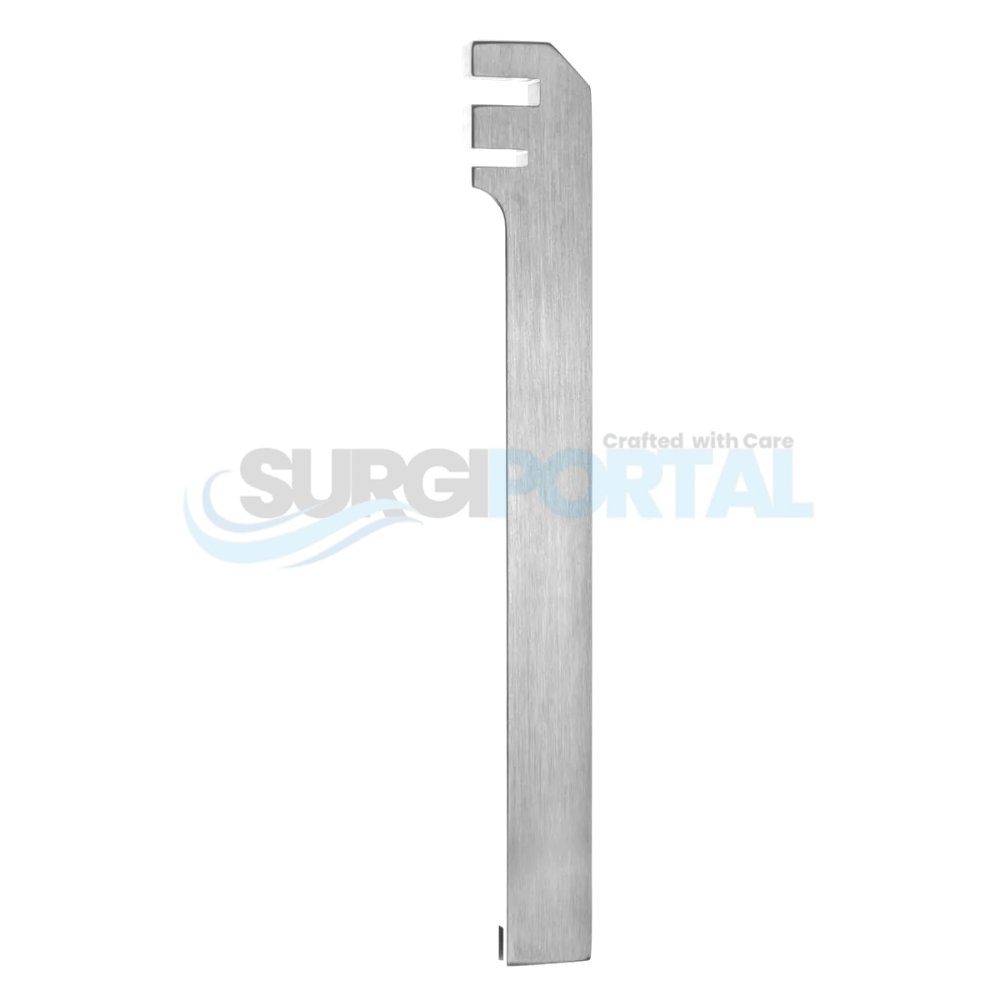
The 5 1/2″ Small Plate Bending Iron for 3.5 2.7mm Plates is a specialized orthopedic instrument designed to assist surgeons with controlled contouring of compatible bone plates during fracture fixation procedures. Proper plate contouring can help adapt a fixation plate to the anatomical surface of the bone, supporting appropriate positioning and contact during orthopedic reconstruction.
With an overall length of 5 1/2 inches, this small plate bending iron provides a compact working configuration suitable for controlled manipulation of compatible orthopedic plates. It is specified for use with 3.5mm and 2.7mm plate systems, making it a useful addition to orthopedic trauma and small-fragment fixation instrument sets.
Plate bending is an important step in selected orthopedic procedures where a straight or precontoured plate may require additional adjustment to correspond with the patient’s individual anatomy. The bending iron allows the surgeon to apply controlled force to the plate while reducing the need for improvised tools that may damage the implant or produce an unintended contour.
The instrument may be used during procedures involving fracture fixation of appropriate anatomical regions where compatible 3.5mm or 2.7mm plates are utilized. The exact application depends on the plate design, anatomical location, fixation system, and manufacturer’s recommendations. The bending iron should only be used with plates specifically compatible with its configuration.
The small profile of this instrument can be beneficial when working with smaller orthopedic plates and in surgical environments where controlled handling is required. Its 5 1/2-inch length provides a practical balance between working access and manual control. During plate preparation, the surgeon can progressively contour the compatible plate while checking its fit against the intended bone surface.
It is important that plate bending be performed according to the implant manufacturer’s instructions. Excessive or repeated bending, bending in an inappropriate location, or using an incompatible instrument can alter the mechanical characteristics of an implant. The surgical team should therefore verify the approved bending technique and limitations for the specific plate system before use.
The 5 1/2″ Small Plate Bending Iron can be incorporated into orthopedic trauma, fracture fixation, and small-fragment instrument sets. It provides a dedicated solution for plate contouring and can help maintain an organized workflow during implant preparation.
Before each procedure, the instrument should be inspected for deformation, surface damage, corrosion, or other abnormalities. If supplied as a reusable surgical instrument, it should be cleaned, disinfected, sterilized, and maintained according to validated manufacturer instructions and healthcare facility protocols.
Material composition, exact jaw or bending profile, and compatibility with specific plate manufacturers should be confirmed from the applicable product documentation. This instrument is intended for use by qualified orthopedic surgeons and trained healthcare professionals familiar with plate fixation techniques.
Key Features
- 5 1/2-inch overall length
- Small plate bending iron configuration
- Designed for compatible orthopedic bone plates
- Suitable for 3.5mm plates
- Suitable for 2.7mm plates
- Supports controlled plate contouring
- Helps adapt plates to anatomical contours
- Useful during fracture fixation procedures
- Compact design for controlled handling
- Suitable for orthopedic trauma instrument sets
- Intended for professional surgical use
- Follow manufacturer-approved bending techniques
Product Specifications
| Specification |
Details |
| Product Name |
5 1/2″ Small Plate Bending Iron |
| Instrument Type |
Orthopedic Plate Bending Instrument |
| Overall Length |
5 1/2 inches |
| Plate Compatibility |
3.5mm and 2.7mm plates |
| Configuration |
Small |
| Primary Application |
Plate contouring and bending |
| Specialty |
Orthopedic / Trauma Surgery |
| Surgical Use |
Fracture fixation and reconstruction |
| Material |
Refer to manufacturer specifications |
| Sterilization |
Follow manufacturer instructions |
| Reusable |
Yes, when supplied as a reusable instrument |
| Intended User |
Qualified healthcare professionals |
FAQs
1. What is a 5 1/2″ Small Plate Bending Iron used for?
It is used to help contour compatible orthopedic bone plates so they can better correspond to the intended anatomical surface during fracture fixation.
2. Which plates is this bending iron designed for?
This model is specified for compatible 3.5mm and 2.7mm plates.
3. What does the 5 1/2-inch measurement indicate?
The 5 1/2-inch measurement refers to the instrument’s overall length.
4. Can this instrument be used with any 3.5mm or 2.7mm plate?
Compatibility should not be assumed solely from plate size. The bending iron should be used only with plate designs approved by the applicable manufacturer.
5. Why is plate bending important in orthopedic surgery?
Controlled contouring can help adapt a compatible plate to the patient’s bone anatomy and support appropriate positioning during fixation.
6. Can the plate be bent repeatedly?
Repeated or excessive bending can affect an implant’s mechanical properties. Bending should therefore follow the specific plate manufacturer’s approved technique and limitations.
7. Is the Plate Bending Iron reusable?
When supplied as a reusable surgical instrument, it should be properly cleaned, inspected, sterilized, and maintained according to the manufacturer’s instructions and facility protocols.