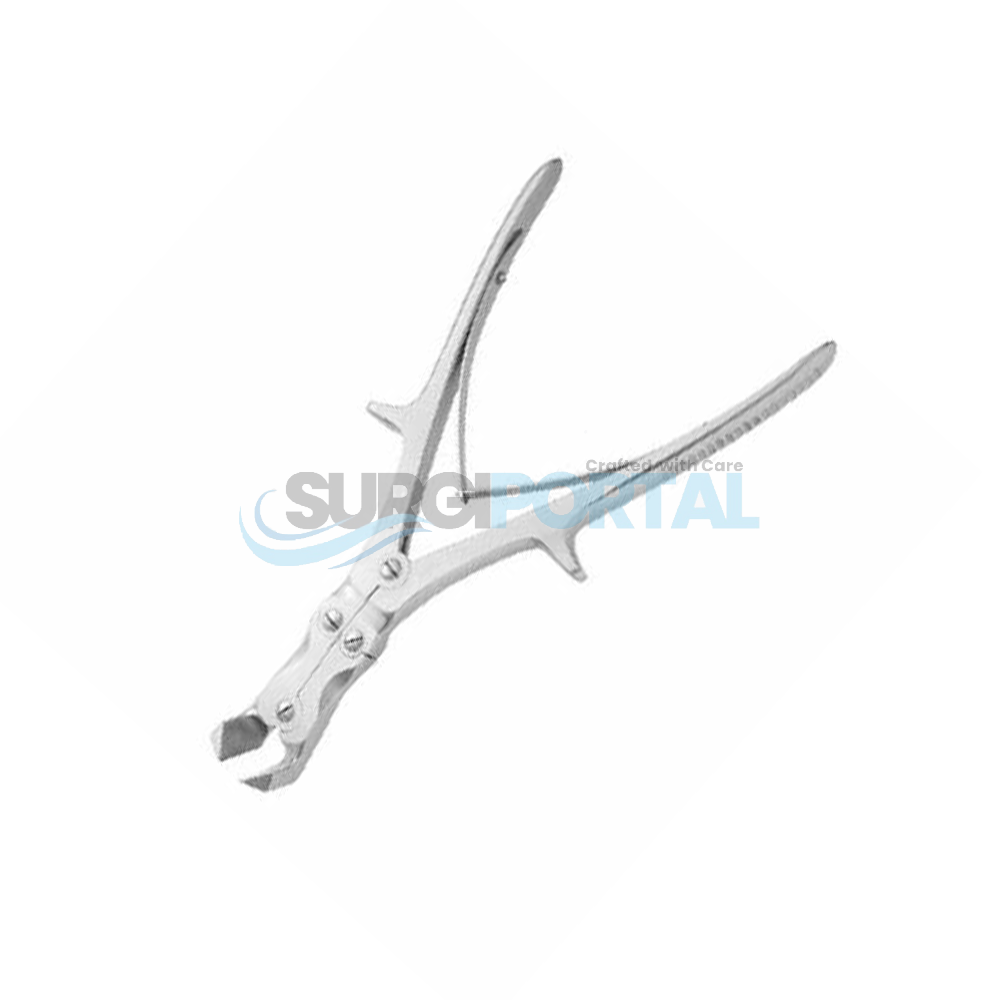
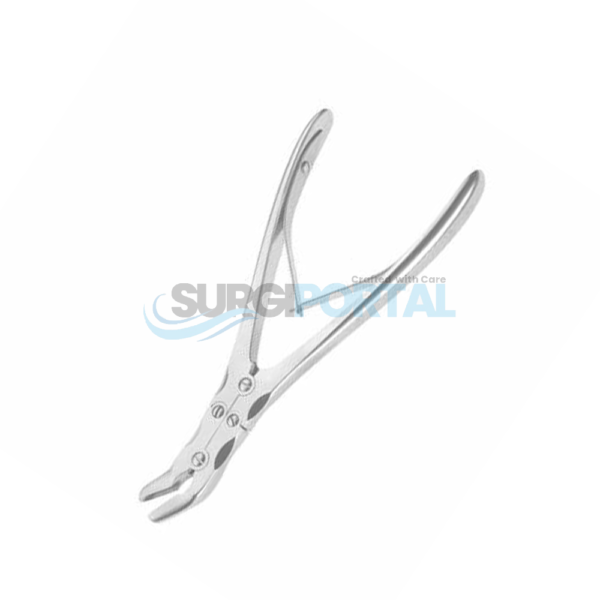
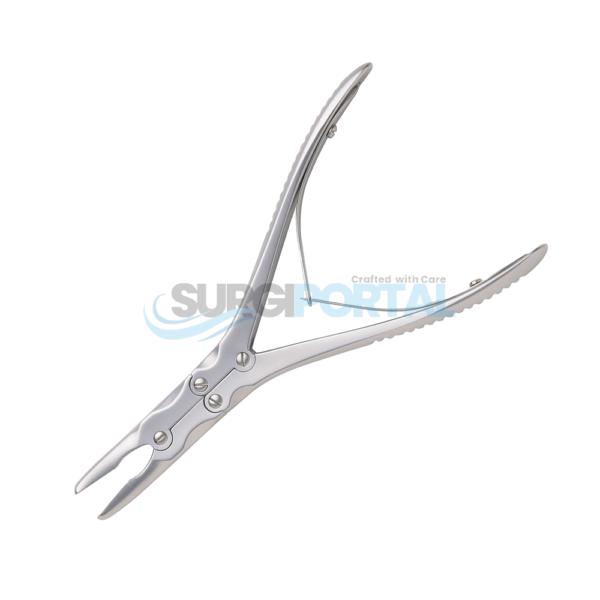
The Horsley Bone Rongeur is a high-quality orthopedic surgical instrument widely used for cutting, biting, and removing bone during surgical procedures. It is an essential tool in orthopedic, spinal, neurosurgical, and reconstructive surgeries where precise bone removal and shaping are required.
Designed with strong, sharp jaws, the Horsley Bone Rongeur allows surgeons to remove small to moderate sections of bone with excellent control. Its cutting mechanism ensures clean and efficient bone removal while minimizing trauma to surrounding tissues. The instrument is especially effective for cortical bone trimming, bone edge smoothing, and surgical site preparation.
Manufactured from premium surgical-grade stainless steel, the instrument offers exceptional durability and resistance to corrosion, rust, and wear. It is built to withstand repeated sterilization cycles without losing sharpness or structural integrity, making it suitable for long-term clinical use in demanding surgical environments.
The ergonomic handle design provides a secure and comfortable grip, enabling surgeons to maintain precise control during bone cutting procedures. Its balanced construction reduces hand fatigue and improves accuracy, particularly during long or complex surgeries.
The Horsley Bone Rongeur is commonly used in orthopedic trauma surgery, spinal decompression, laminectomy, bone grafting, and reconstructive procedures. It is particularly useful for removing bone fragments, smoothing irregular bone surfaces, and preparing areas for implants or reconstruction.
The instrument features a smooth polished finish that minimizes friction and allows for easier cleaning after use. This ensures compliance with strict surgical hygiene and sterilization standards in clinical settings.
Fully autoclavable and reusable, the Horsley Bone Rongeur is designed for repeated use without compromising performance or durability. Its strong jaw construction and precise engineering make it a dependable instrument for orthopedic surgeons.
Key Features
Strong jaws for efficient bone cutting and removal
Manufactured from surgical-grade stainless steel
Ideal for cortical and cancellous bone work
Ergonomic handle for secure grip and control
High resistance to corrosion and repeated sterilization
Sharp cutting edges for precise bone trimming
Balanced design reduces surgeon fatigue
Suitable for orthopedic, spinal, and neurosurgery
Smooth polished finish for easy cleaning
Autoclavable and fully reusable construction
Durable performance for long-term surgical use
Excellent control in bone shaping procedures
Product Specifications
Specification
Details
Product Type
Horsley Bone Rongeur
Application
Bone Cutting & Removal
Material
Surgical Grade Stainless Steel
Finish
Mirror Polished
Instrument Type
Bone Rongeur / Forceps
Jaw Type
Horsley Style Cutting Jaws
Sterilization
Autoclavable
Reusability
Reusable
Specialty
Orthopedic & Neurosurgery
Usage
Professional Surgical Use
Product Contents
1 x Horsley Bone Rongeur
Applications
Orthopedic bone cutting and trimming
Spinal decompression procedures
Laminectomy and neurosurgical procedures
Trauma surgery and fracture management
Bone graft preparation
Reconstructive orthopedic surgery
Removal of bone fragments and spurs
Veterinary orthopedic applications
FAQs
Q1: What is a Horsley Bone Rongeur used for?
It is used for cutting, biting, and removing bone in orthopedic and neurosurgical procedures.
Q2: What makes the Horsley Rongeur different?
It is designed for strong, precise bone removal with excellent control in both orthopedic and spinal surgeries.
Q3: Is it reusable?
Yes, it is fully reusable and designed for repeated sterilization cycles.
Q4: Can it be autoclaved safely?
Yes, it is fully autoclavable and suitable for standard hospital sterilization methods.
Q5: What material is it made from?
It is made from high-quality surgical-grade stainless steel for durability and corrosion resistance.
Q6: In which surgeries is it commonly used?
It is commonly used in orthopedic, spinal, neurosurgical, and reconstructive bone surgeries.