

-20%
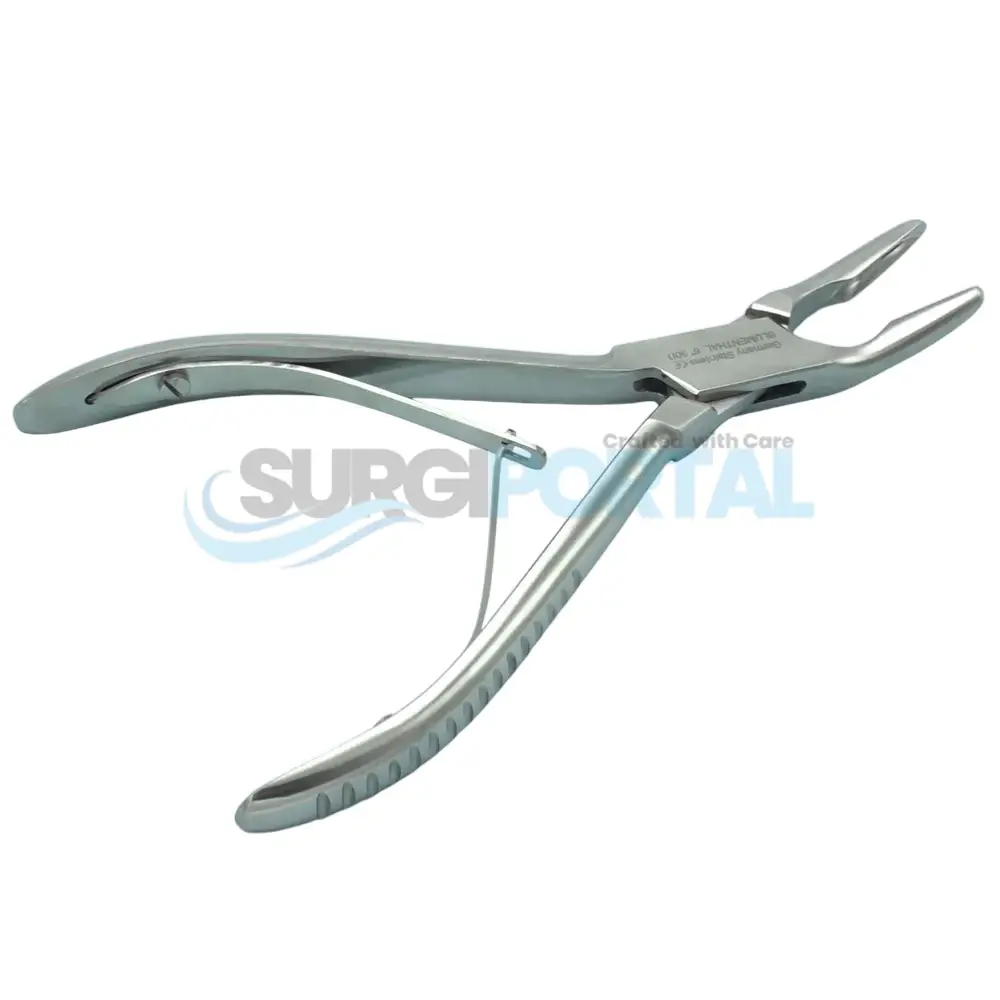
The OR Grade Blumenthal Bone Rongeur 30° 6″ is designed for controlled removal, trimming, and contouring of bone during orthopedic and surgical procedures. Its 30-degree angled working profile provides improved access and maneuverability in confined surgical areas.
$100.00 Original price was: $100.00.$80.00Current price is: $80.00.
Payment Methods:

The OR Grade Blumenthal Bone Rongeur 30° 6″ Surgical Dental Instrument is a precision bone-cutting instrument designed for controlled removal and trimming of bone during orthopedic, dental, and other surgical procedures. The instrument combines a compact 6-inch profile with a 30-degree angled working configuration, allowing the user to approach bone from an angled direction when direct access is limited.
Blumenthal bone rongeurs are commonly selected for procedures requiring controlled nibbling, contouring, and removal of small sections of bone. The rongeur mechanism is designed to engage bone tissue at the working jaws and remove material through a controlled biting action. This makes the instrument useful for surgical bone preparation and reshaping where precision and accessibility are important.
The 30-degree angled design is particularly useful when working around anatomical structures or within areas where a straight rongeur may be difficult to position. The angled profile can provide a more favorable approach to the surgical site while allowing the operator to maintain a controlled grip and working position.
With an overall length of 6 inches, this Blumenthal bone rongeur offers a balance between maneuverability and working reach. Its size makes it suitable for applications where a compact surgical instrument is preferred. Depending on the procedure and surgeon’s technique, it may be used in orthopedic bone trimming, dental bone preparation, oral and maxillofacial procedures, and general surgical applications involving bone.
The instrument is typically manufactured from surgical-grade stainless steel, providing a durable construction suitable for professional surgical environments when supplied as a reusable instrument. Stainless steel construction offers resistance to corrosion and supports routine cleaning, inspection, maintenance, and sterilization when processed according to validated manufacturer instructions.
The jaws are designed for controlled bone nibbling rather than indiscriminate force application. Proper instrument selection and technique are important to minimize unnecessary stress on the instrument and surrounding anatomical structures. The rongeur should be used only for the intended surgical application and with force appropriate to the bone and procedure.
Before each use, the Blumenthal rongeur should be carefully inspected for jaw alignment, cutting-edge condition, smooth opening and closing, joint function, and signs of damage or corrosion. Any instrument showing excessive wear, deformation, or impaired function should be evaluated before being returned to clinical use.
For reusable instruments, thorough cleaning and appropriate sterilization are essential. Processing should follow the manufacturer’s validated instructions and the healthcare facility’s established instrument-reprocessing protocol. Proper lubrication of applicable joints and appropriate storage can also help maintain smooth mechanical operation.
The Blumenthal Bone Rongeur 30° 6″ is a practical choice for orthopedic, dental, oral and maxillofacial, and surgical instrument sets requiring a compact angled rongeur for controlled bone removal and contouring.
| Specification | Details |
|---|---|
| Product Name | Blumenthal Bone Rongeur |
| Instrument Type | Bone Rongeur |
| Design | 30° Angled |
| Length | 6 Inches |
| Working Mechanism | Rongeur / Bone-Biting Jaws |
| Primary Function | Bone Removal, Trimming & Contouring |
| Surgical Specialties | Orthopedic, Dental, Oral & Maxillofacial |
| Applications | Bone Preparation, Bone Trimming, Surgical Contouring |
| Material | Surgical-Grade Stainless Steel* |
| Design Advantage | Angled Access |
| Usage | Professional Surgical Use |
| Reusable | Yes, when supplied as a reusable instrument |
| Sterilization | According to validated manufacturer and facility protocols |
*Material specification should be confirmed against the manufacturer’s product documentation where required.
A Blumenthal bone rongeur is used for controlled removal, trimming, nibbling, and contouring of bone during surgical procedures.
The 30-degree angled design can provide improved access and maneuverability when approaching bone from an angled direction or when working in a confined surgical area.
This model has an overall length of approximately 6 inches.
Yes. Bone rongeurs may be used in selected dental and oral/maxillofacial procedures where controlled bone trimming or removal is required, depending on the surgical technique.
These surgical rongeurs are commonly manufactured from surgical-grade stainless steel for durability and resistance to corrosion when properly maintained.
When supplied as a reusable instrument, it can be cleaned, inspected, and sterilized according to validated manufacturer instructions and applicable facility protocols.
The instrument should be cleaned after use, thoroughly inspected for jaw and joint function, dried appropriately, and sterilized according to validated reprocessing procedures.
Bone rongeurs are commonly used in orthopedic, dental, oral and maxillofacial, neurosurgical, and other surgical procedures involving controlled bone removal or preparation.
No account yet?
Create an Account