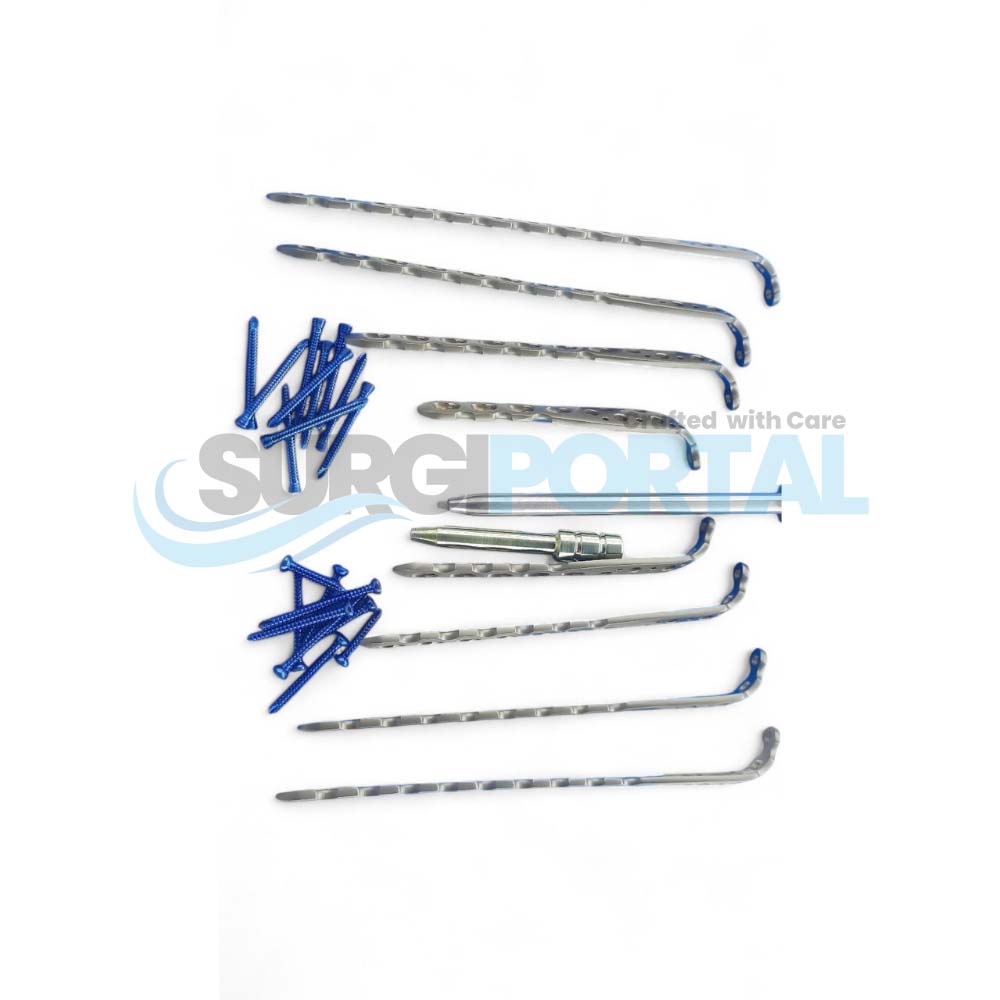
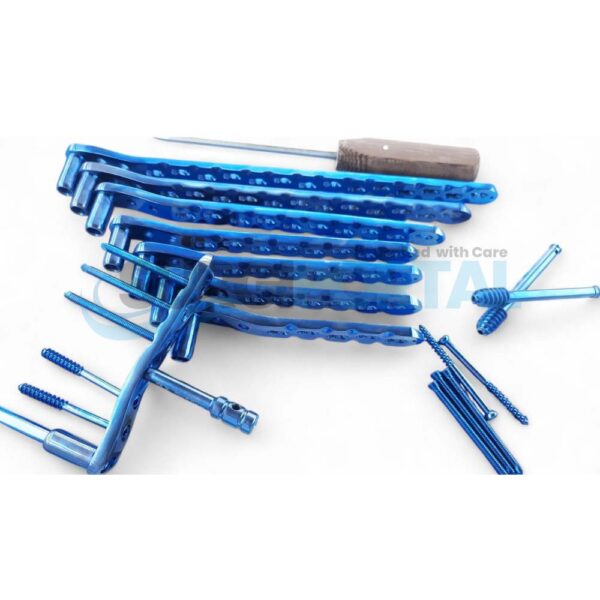
DCS 95° Locked Plates are orthopedic fixation implants designed for stable fixation of proximal femur fractures using a fixed 95-degree dynamic condylar screw (DCS) angle with locking compression support.
$430.00Original price was: $430.00.$411.00Current price is: $411.00.
The DCS 95° Locked Plates are advanced orthopedic implants used for the fixation of complex proximal femur and distal femur fractures. These plates are designed with a fixed 95-degree angle to accommodate the dynamic condylar screw system, ensuring precise anatomical alignment and strong biomechanical stability.
The locking feature enhances the stability of the construct by allowing secure fixation of locking screws within the plate, reducing the risk of loosening and improving overall rigidity. This makes the system highly effective for unstable, comminuted, and osteoporotic fractures.
The 95° angle provides optimal alignment for femoral condyle fixation, ensuring proper load transfer and maintaining fracture reduction during the healing process. It is widely used in trauma surgery for both proximal and distal femoral fracture management.
Manufactured from premium surgical-grade titanium or stainless steel (depending on configuration), the implants offer excellent strength, corrosion resistance, and long-term biocompatibility. Precision engineering ensures accurate screw placement and reliable surgical performance.
This system is commonly used in orthopedic trauma surgery and veterinary orthopedic procedures for large bone fixation, especially in femoral reconstruction cases.
The implant is fully sterilizable and supplied in organized surgical packaging for safe handling and efficient operating room workflow.
Specifications Table
Feature
Details
Product Name
DCS 95° Locked Plates
Application
Proximal & distal femur fracture fixation
Plate Type
Dynamic Condylar Screw (DCS) plate
Angle
95 degrees
Fixation Type
Locking compression system
Material
Titanium / Stainless steel
Usage
Orthopedic & veterinary surgery
Function
Bone stabilization & fracture fixation
Compatibility
DCS screw system
Sterilization
Fully sterilizable
FAQs
Q1: What is a DCS 95° plate used for? It is used for fixation of complex femur fractures using a fixed-angle system.
Q2: What does 95° mean? It refers to the fixed anatomical angle for femoral condyle alignment.
Q3: What is the advantage of locking? Locking increases stability and reduces screw loosening.
Q4: What bones is it commonly used for? It is mainly used for proximal and distal femur fractures.
Q5: Is it used in veterinary surgery? Yes, it is widely used in veterinary orthopedic fracture fixation.