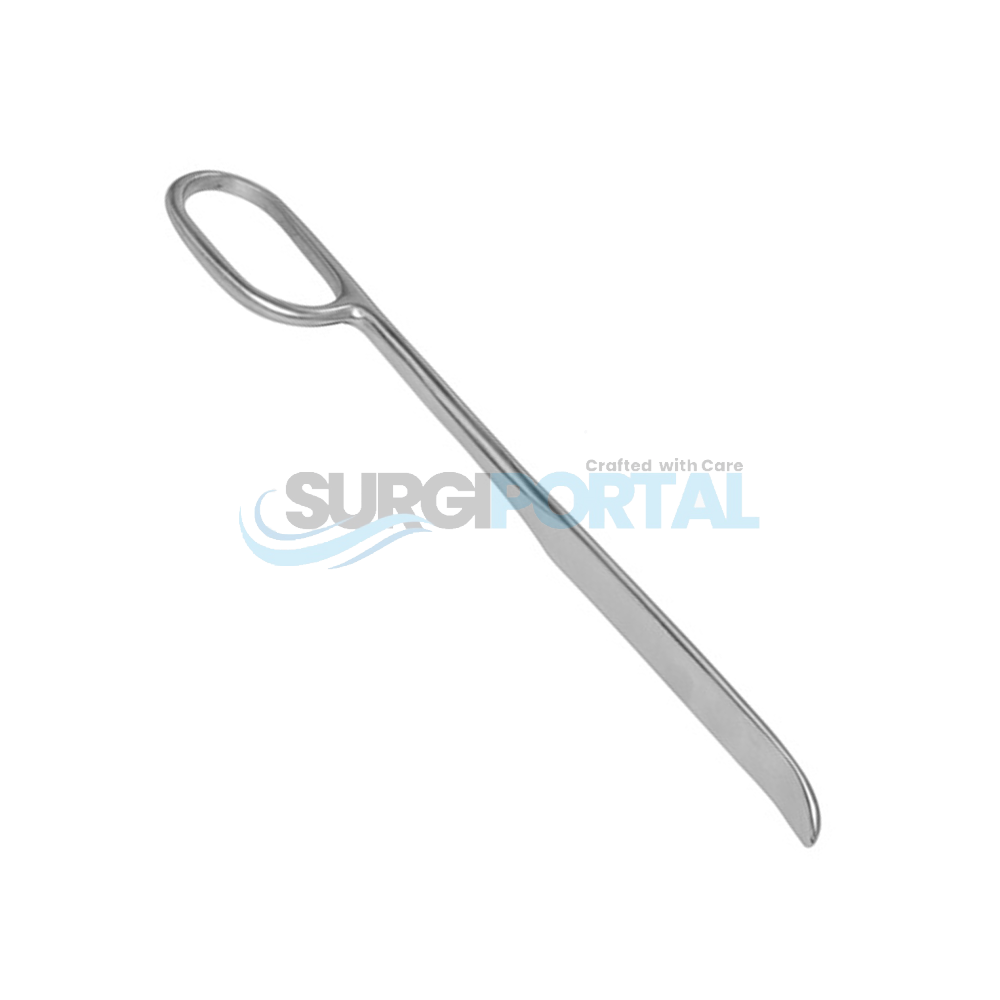
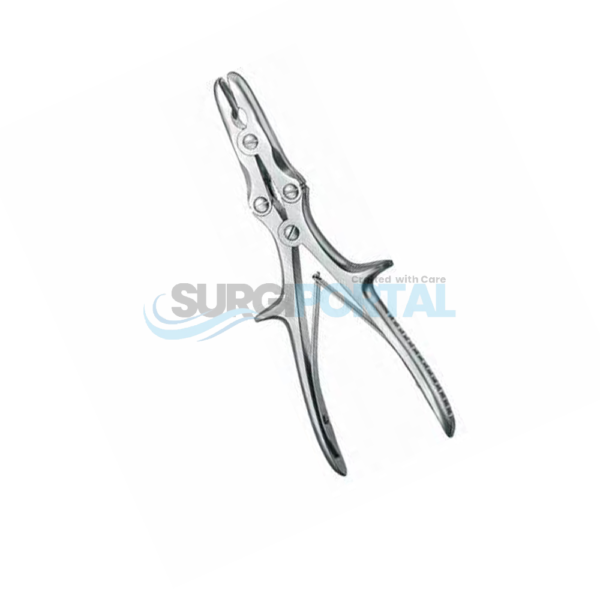
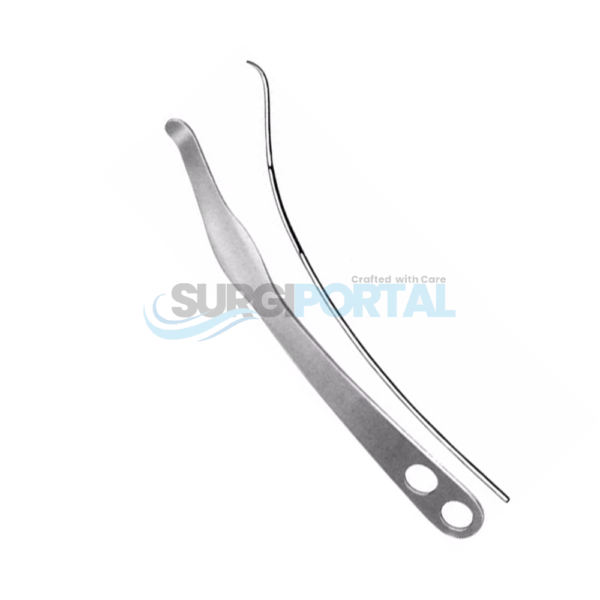
The Lane Bone Lever is a specialized orthopedic surgical instrument used for elevating, retracting, and stabilizing bone during various surgical procedures. It is commonly utilized in orthopedic, trauma, spinal, and reconstructive surgeries where controlled bone manipulation is required for improved surgical access and visibility.
This instrument features a strong, flat, and curved lever design that allows surgeons to lift or hold bone segments securely during operative procedures. The Lane design provides excellent mechanical advantage, enabling controlled force application while minimizing trauma to surrounding tissues.
Manufactured from premium surgical-grade stainless steel, the Lane Bone Lever offers exceptional resistance to corrosion, rust, and wear from repeated sterilization cycles. Its robust construction ensures long-term durability and consistent performance in demanding surgical environments.
The ergonomic handle provides a firm and comfortable grip, allowing surgeons to maintain precise control during bone elevation and retraction. Its balanced design reduces hand fatigue and enhances stability during prolonged surgical procedures.
The Lane Bone Lever is commonly used in orthopedic trauma surgery, fracture management, bone graft procedures, spinal surgeries, and reconstructive operations. It is particularly effective for holding bone fragments in position while fixation devices or implants are applied.
The instrument features a smooth, polished finish that reduces friction and facilitates easy cleaning after use. This ensures compliance with strict surgical hygiene standards and supports efficient sterilization processes.
Fully autoclavable and reusable, the Lane Bone Lever is designed for repeated clinical use without loss of performance or structural integrity. Its strong structure and precise engineering make it a reliable tool in orthopedic surgical sets.
The Lane Bone Lever is an essential orthopedic instrument that provides strength, control, and stability during bone manipulation procedures.
Key Features
Strong lever design for bone elevation and retraction
Manufactured from surgical-grade stainless steel
Provides excellent mechanical advantage
Ideal for orthopedic and trauma procedures
High resistance to corrosion and sterilization wear
Ergonomic handle for secure grip and control
Stable structure for controlled bone manipulation
Smooth polished finish reduces tissue adhesion
Suitable for holding bone fragments during surgery
Autoclavable and fully reusable construction
Durable long-term surgical performance
Essential tool in orthopedic instrument sets
Product Specifications
Specification
Details
Product Type
Lane Bone Lever
Application
Bone Elevation & Retraction
Material
Surgical Grade Stainless Steel
Finish
Mirror Polished
Instrument Type
Bone Lever / Elevator
Design Type
Lane Pattern
Sterilization
Autoclavable
Reusability
Reusable
Specialty
Orthopedic Surgery
Usage
Professional Surgical Use
Product Contents
1 x Lane Bone Lever
Applications
Orthopedic bone lifting and manipulation
Fracture reduction procedures
Trauma surgery and bone stabilization
Spinal surgical procedures
Bone graft and reconstructive surgery
Holding bone fragments during fixation
Surgical exposure enhancement
Veterinary orthopedic procedures
FAQs
Q1: What is a Lane Bone Lever used for?
It is used to lift, retract, and stabilize bone during orthopedic and surgical procedures.
Q2: What is the main advantage of this instrument?
It provides strong mechanical leverage for controlled bone manipulation and improved surgical access.
Q3: Is this instrument reusable?
Yes, it is fully reusable and designed for repeated sterilization cycles.
Q4: Can it be autoclaved safely?
Yes, it is fully autoclavable and suitable for standard hospital sterilization procedures.
Q5: What material is it made from?
It is made from high-quality surgical-grade stainless steel for strength and corrosion resistance.
Q6: In which surgeries is it commonly used?
It is commonly used in orthopedic, trauma, spinal, and reconstructive bone surgeries.