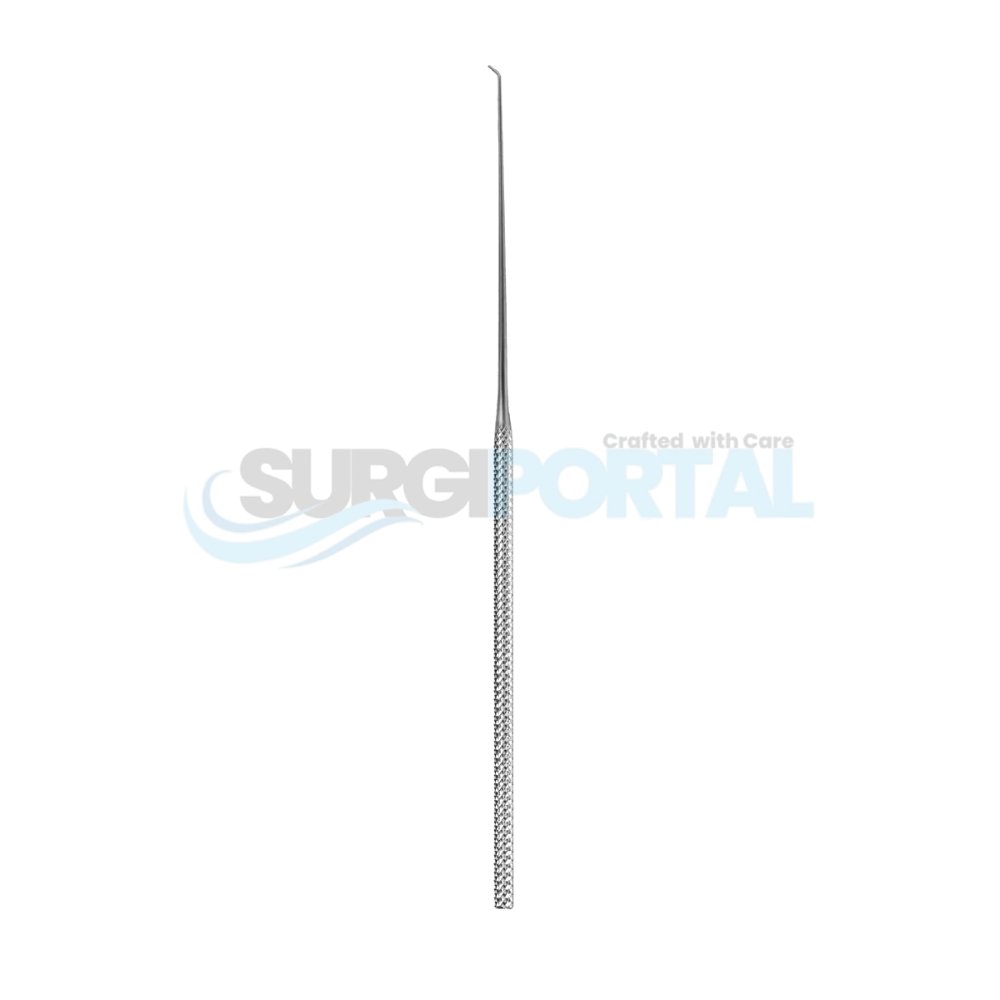
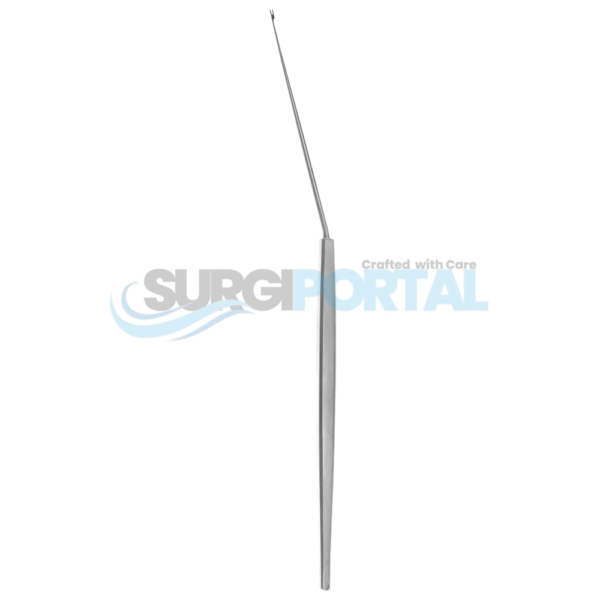
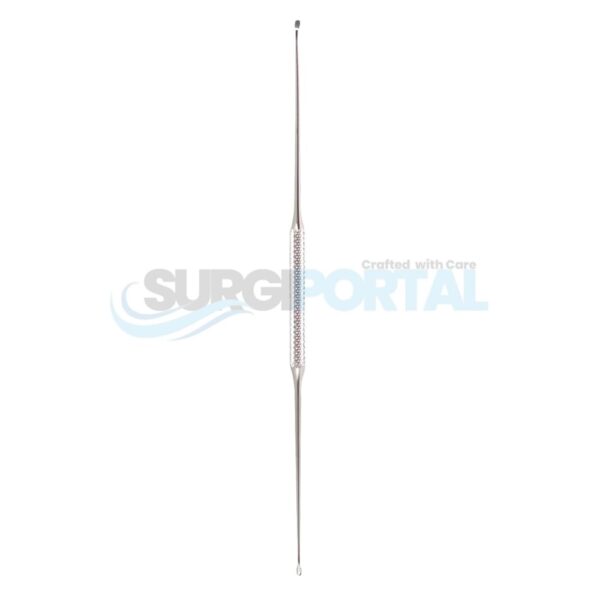
The Forward Searcher, Slightly Blunt Tip, Angled 45°, 6 1/4 Inches is a specialized surgical instrument designed for controlled probing, exploration, and identification of anatomical structures or operative areas. Its angled working tip and extended overall length provide clinicians with improved access to areas where a straight instrument may be less convenient. The slightly blunt tip is designed to provide controlled contact while helping reduce unnecessary sharp-point interaction with surrounding tissue.
The 45° angled configuration is an important feature of this Forward Searcher. By positioning the working tip away from the longitudinal axis of the instrument, the design can provide improved access and visibility in selected surgical fields. This configuration allows the user to approach a target area from a more practical angle while maintaining direct manual control of the instrument.
With an overall length of 6 1/4 inches, the instrument offers a balance between reach and maneuverability. Its size makes it suitable for professional surgical environments where a longer probing instrument is preferred for access, inspection, or controlled exploration. The slender working profile can also help the clinician work within confined operative areas without introducing unnecessary bulk.
The slightly blunt tip is designed for gentle, controlled probing rather than cutting. This makes the instrument useful when the objective is to explore, identify, separate, or assess an area using tactile feedback. As with any surgical probe or searcher, the appropriate application depends on the specific procedure, anatomy, and clinical technique being performed.
The instrument is typically manufactured from surgical-grade stainless steel or another suitable medical-grade material selected for strength, corrosion resistance, and repeated professional handling. A smooth surface and properly finished working end support cleaning and routine instrument maintenance. The exact material grade and finish may vary according to the manufacturer or supplied configuration.
The Forward Searcher is designed for use by trained healthcare professionals who are familiar with the relevant surgical technique. Its angled tip should be handled carefully to maintain the intended geometry and prevent accidental deformation. Before use, the instrument should be inspected for tip damage, bending, surface defects, corrosion, or other conditions that could affect safe operation.
If supplied as a reusable instrument, cleaning and sterilization should be performed according to the manufacturer’s instructions and the healthcare facility’s validated reprocessing protocol. Particular attention should be given to the angled working end during cleaning to ensure that no residue remains around the tip or shaft.
Overall, the Forward Searcher 45° Angled, 6 1/4 Inches combines a slightly blunt working tip, angled access, and practical instrument length for controlled surgical exploration. Its focused design makes it a useful addition to specialized surgical instrument sets where precise probing and access are required.
Key Features
- Forward searcher design for surgical exploration
- Slightly blunt working tip
- 45° angled tip configuration
- 6 1/4-inch overall length
- Designed for controlled probing and exploration
- Provides angled access to selected operative areas
- Suitable for professional surgical environments
- Balanced length for reach and maneuverability
- Typically manufactured from surgical-grade stainless steel
- Smooth surface supports routine cleaning and maintenance
- Designed for trained healthcare professionals
- Reusable when supplied and validated as a reusable instrument
Product Specifications
| Specification |
Details |
| Product Name |
Forward Searcher |
| Instrument Type |
Surgical Searcher / Probe |
| Tip Design |
Slightly Blunt |
| Tip Angle |
45° |
| Overall Length |
6 1/4 Inches |
| Working End |
Angled, Slightly Blunt Tip |
| Application |
Surgical Probing and Exploration |
| Material |
Typically Surgical-Grade Stainless Steel |
| Finish |
Smooth Surgical Instrument Finish |
| Use |
Professional Clinical Applications |
| Reusability |
Depends on Manufacturer Configuration |
| Sterilization |
Follow Validated Manufacturer/Facility Protocol |
| Intended Users |
Trained Healthcare Professionals |
FAQs
1. What is a Forward Searcher used for?
A Forward Searcher is used for controlled probing, exploration, and assessment of selected areas during surgical procedures.
2. What is the benefit of the 45° angled tip?
The 45° angle can provide improved access and allow the working tip to approach an operative area from a more convenient direction.
3. Is the tip sharp?
No. This model has a slightly blunt tip, designed primarily for controlled probing rather than cutting.
4. What is the overall length of this Forward Searcher?
The instrument has an overall length of 6 1/4 inches.
5. What material is the instrument made from?
It is typically manufactured from surgical-grade stainless steel or another suitable medical-grade material. Exact specifications depend on the manufacturer.
6. Can this instrument be sterilized?
If supplied as a reusable instrument, it should be cleaned and sterilized according to the manufacturer’s instructions and the facility’s validated sterilization protocol.
7. Who should use this surgical searcher?
It is intended for trained healthcare professionals using appropriate surgical techniques.
8. What should be checked before use?
Inspect the tip, shaft, angle, surface, and overall condition for bending, damage, corrosion, or other defects before use.