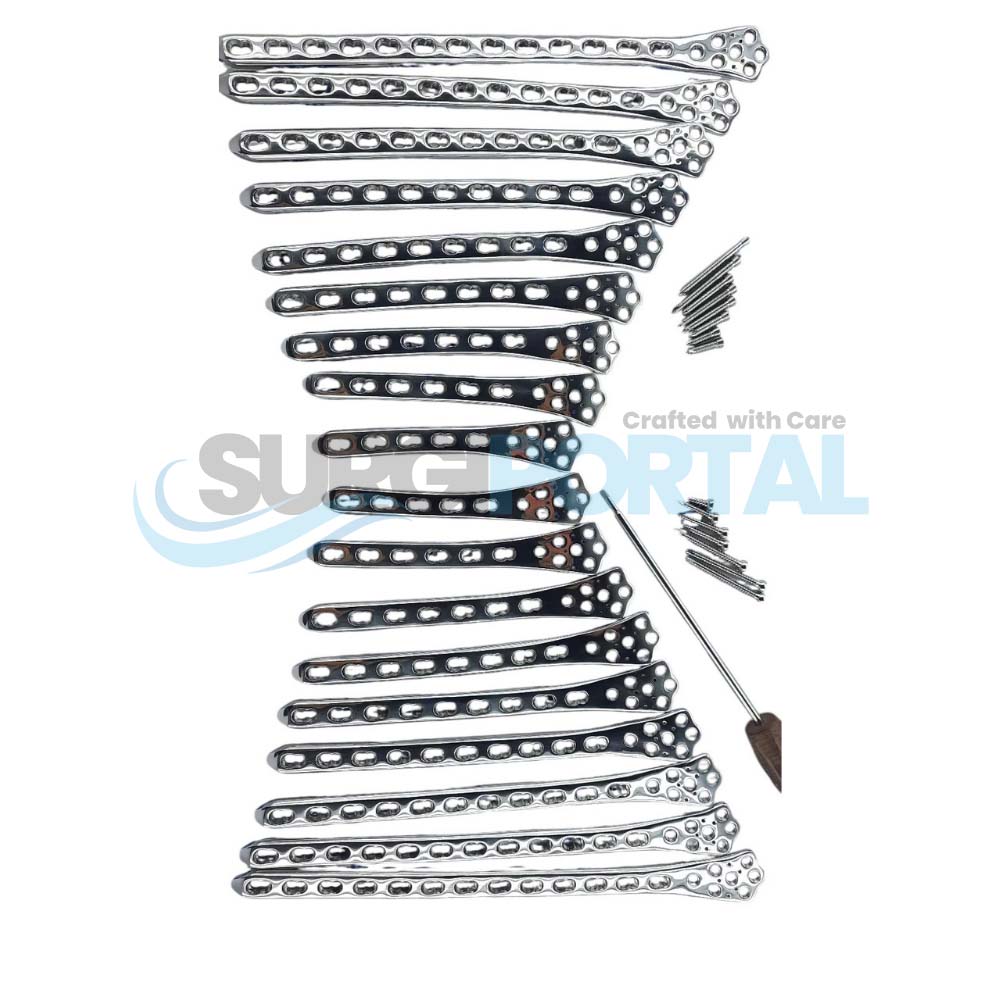
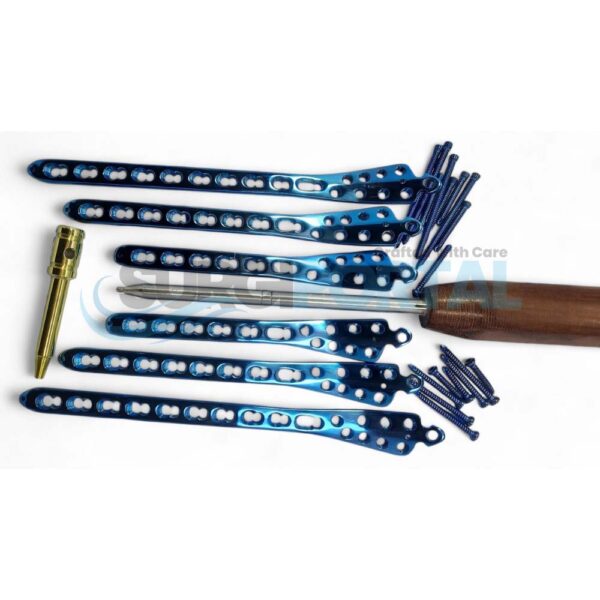
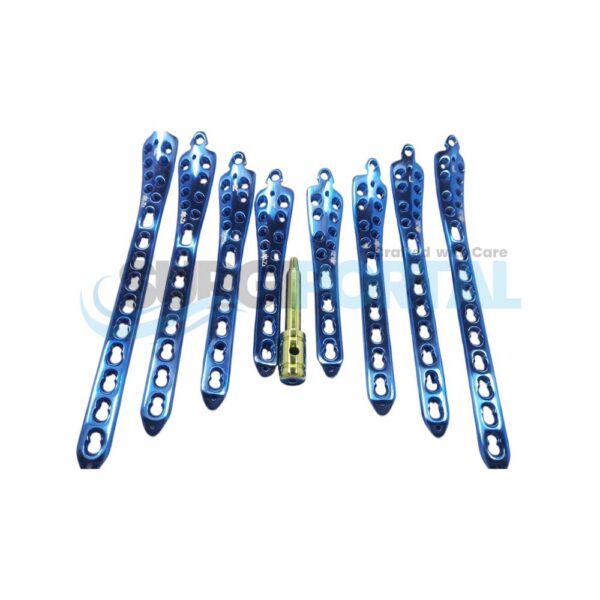
Distal Femur Locking Plate is an anatomically contoured orthopedic implant designed for stable fixation of distal femur fractures using locking compression plate (LCP) technology.
$500.00Original price was: $500.00.$460.00Current price is: $460.00.
The Distal Femur Locking Plate is an advanced orthopedic fixation system used for the treatment of fractures involving the distal femur near the knee joint. It is anatomically pre-contoured to match the natural shape of the femur, ensuring precise fit, stable fixation, and optimal restoration of lower limb alignment.
The locking compression plate (LCP) system allows locking screws to securely engage within the plate, forming a fixed-angle construct that significantly enhances stability. This is especially important in complex fractures, comminuted injuries, and osteoporotic bone where conventional fixation may not provide sufficient strength.
The distal femur is a high-load bearing region, and this plate is designed to withstand strong biomechanical forces while maintaining fracture reduction during the healing process. The design supports accurate alignment of the knee joint and helps restore normal limb function.
Manufactured from premium surgical-grade titanium or stainless steel (depending on configuration), the implant offers excellent strength, corrosion resistance, and long-term biocompatibility. Precision-engineered screw holes ensure accurate placement and reliable surgical performance.
This implant is widely used in orthopedic trauma surgery and veterinary orthopedic procedures for distal femur fracture management in both small and large animals.
The system is fully sterilizable and supplied in professional surgical packaging for safe handling and efficient operating room workflow.
Specifications Table
Feature
Details
Product Name
Distal Femur Locking Plate
Application
Distal femur (knee) fracture fixation
Plate Type
Anatomical locking compression plate
Screw Type
Locking screws
Material
Titanium / Stainless steel
Usage
Orthopedic & veterinary surgery
Function
Bone stabilization & fracture fixation
Design
Pre-contoured anatomical plate
Sterilization
Fully sterilizable
FAQs
Q1: What is this plate used for? It is used for fixation of distal femur fractures near the knee joint.
Q2: Why is locking important? Locking provides fixed-angle stability and reduces screw loosening.
Q3: What bones does it treat? It is used for femur fractures, especially near the distal end.
Q4: What material is used? It is made from titanium or stainless steel.
Q5: Is it used in veterinary surgery? Yes, it is commonly used in veterinary orthopedic procedures.