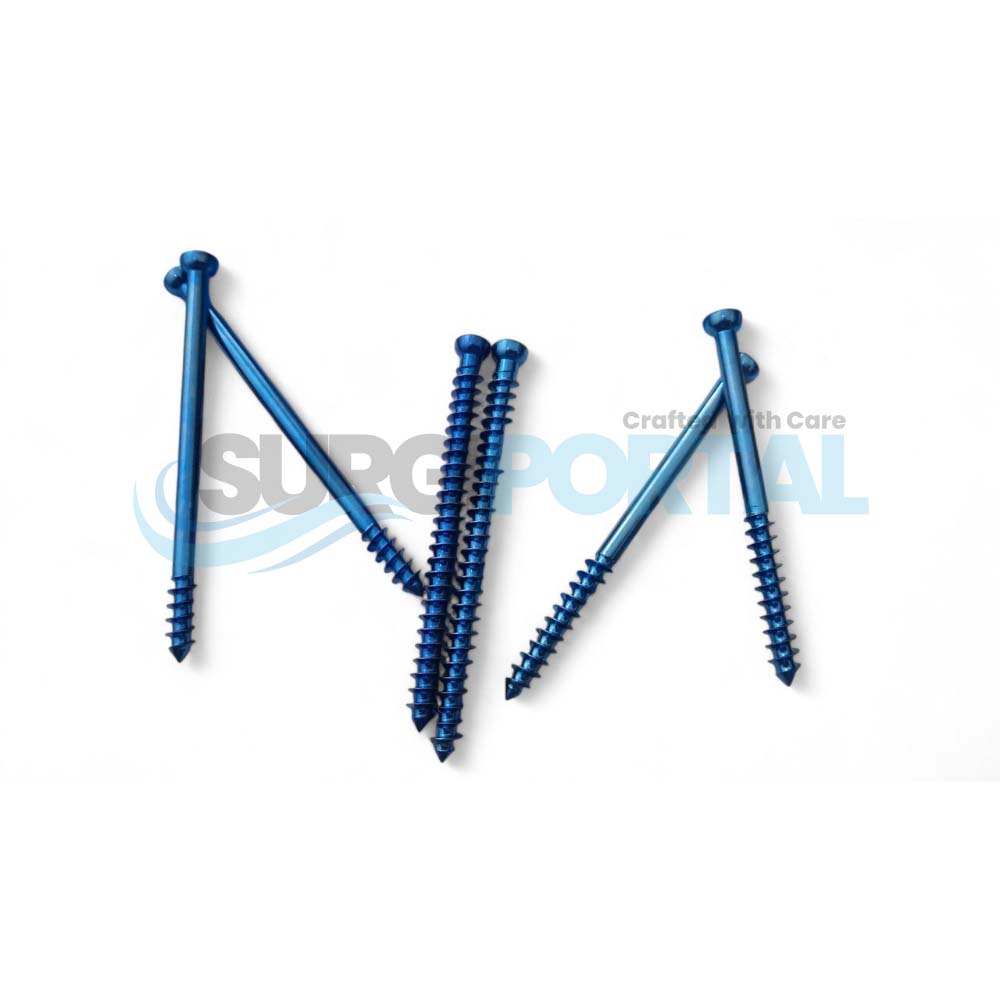
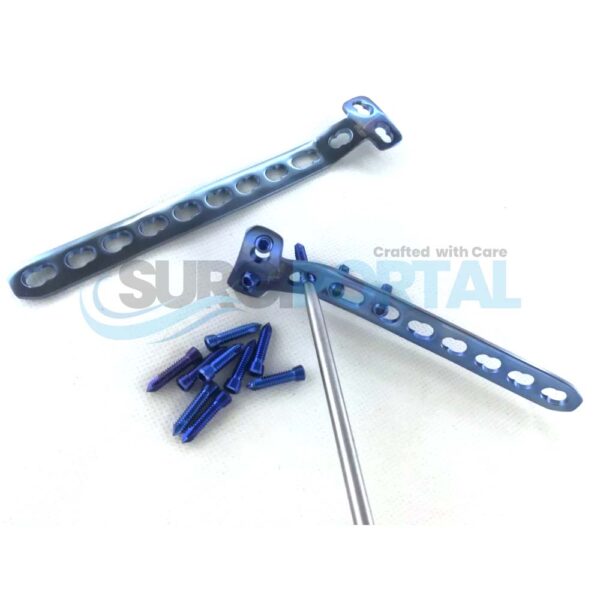
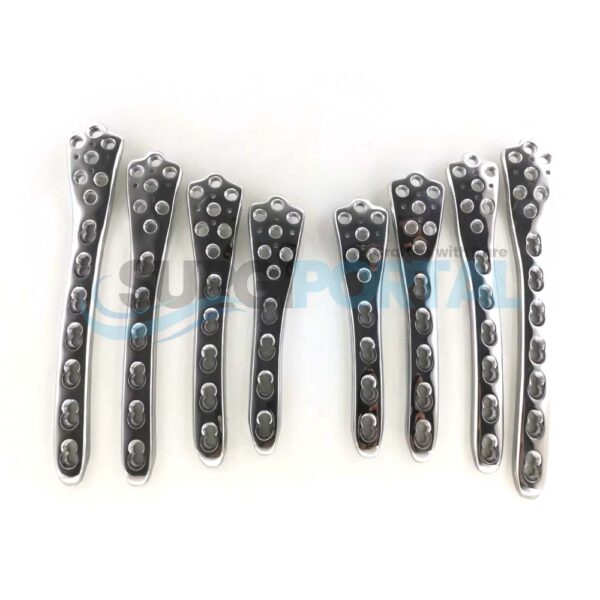
The 6.5mm Cancellous Screws are high-strength orthopedic implants used for fixation of fractures involving cancellous bone. These screws are widely used in trauma and reconstructive orthopedic procedures where strong compression and stable fixation are required in large bone segments.
Designed with deep threads optimized for spongy bone, these screws provide excellent grip and stability in metaphyseal and epiphyseal regions. They are commonly used in both partial-thread and full-thread configurations depending on surgical requirements, allowing either interfragmentary compression or neutral fixation.
When used as partially threaded screws, they enable controlled compression between bone fragments, promoting proper alignment and faster bone healing. Fully threaded variants are used where compression is not required but strong fixation is necessary.
Manufactured from premium surgical-grade stainless steel or titanium (depending on configuration), the screws offer excellent mechanical strength, durability, and corrosion resistance. Precision-engineered threads ensure secure bone purchase and reliable performance under load.
These screws are widely used in orthopedic trauma surgery for fixation of femur, tibia, humerus, and periarticular fractures, as well as in veterinary orthopedic procedures for large animal fracture management.
The system is fully sterilizable and supplied in professional surgical packaging for safe handling and efficient operating room workflow.
Specifications Table
| Feature |
Details |
| Product Name |
6.5mm Cancellous Screws |
| Application |
Cancellous bone fracture fixation |
| Screw Size |
6.5 mm |
| Thread Type |
Partial / Full thread (variant dependent) |
| Material |
Stainless Steel / Titanium |
| Usage |
Orthopedic & veterinary surgery |
| Function |
Bone compression & fixation |
| Design |
Deep-thread cancellous screw |
| Sterilization |
Fully sterilizable |
FAQs
Q1: What are cancellous screws used for?
They are used for fixation of spongy bone fractures.
Q2: What is the advantage of cancellous thread design?
It provides strong grip in soft, spongy bone.
Q3: What is the difference between partial and full thread?
Partial thread allows compression; full thread provides uniform fixation.
Q4: What bones are commonly treated?
Femur, tibia, humerus, and other large cancellous bone regions.
Q5: What material is used?
They are made from surgical-grade stainless steel or titanium.