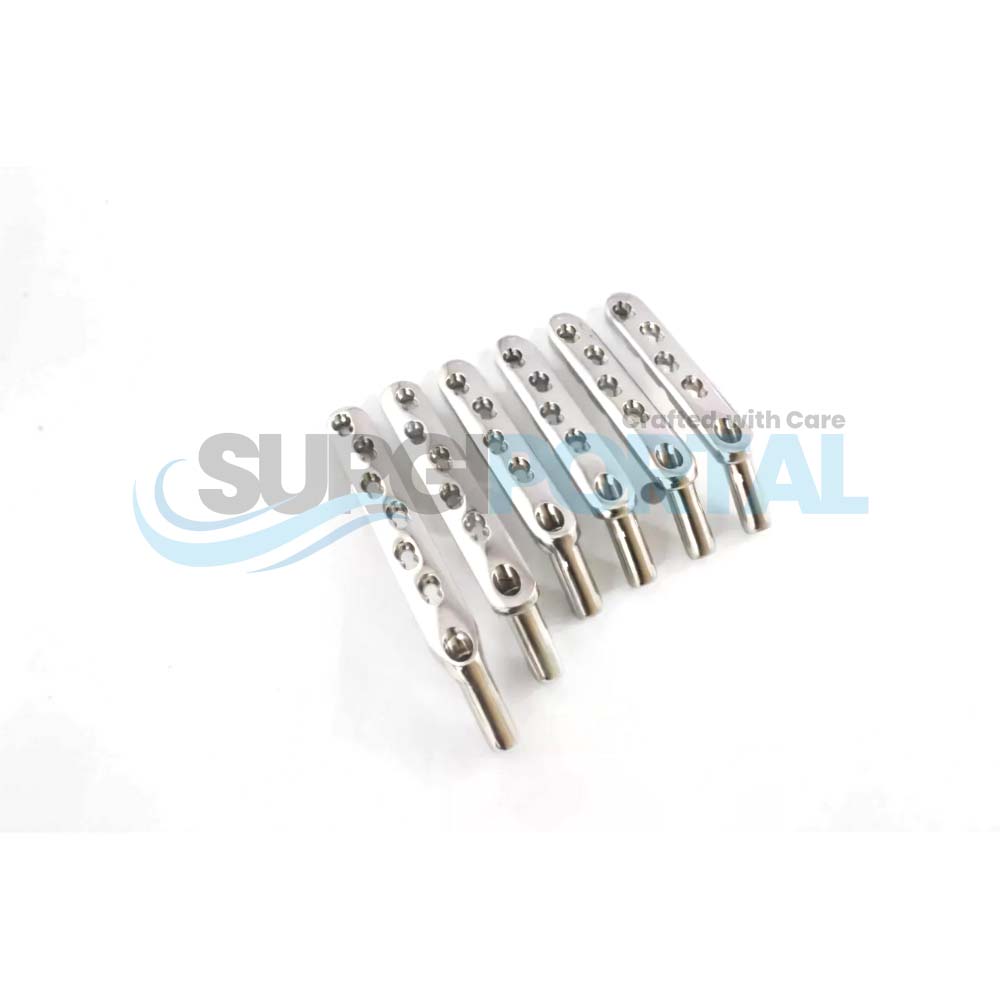
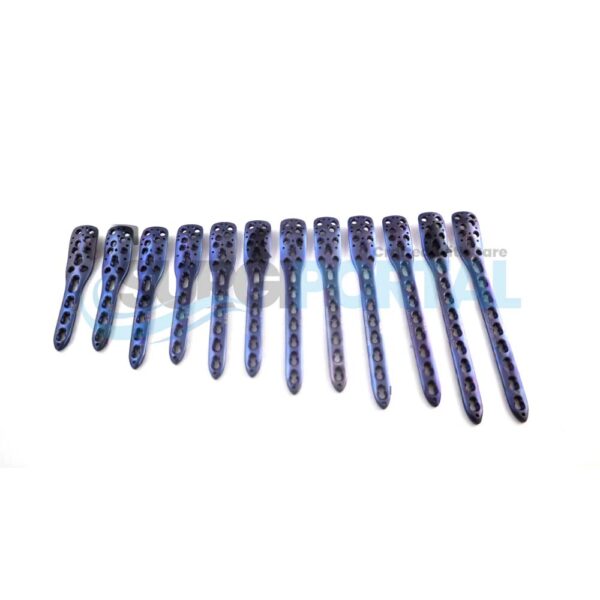
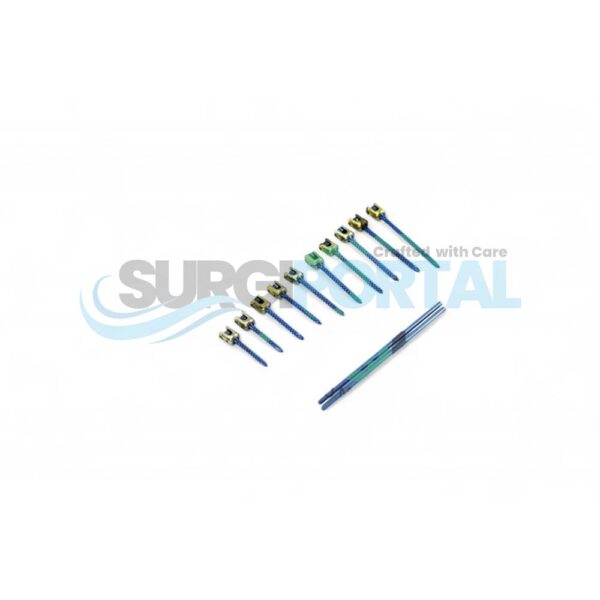
4.5mm Locking Compression Plate Narrow PIP Plates are high-strength orthopedic fixation plates designed for stable fracture fixation and compression in long bone and periarticular orthopedic surgical procedures.
$230.00Original price was: $230.00.$200.00Current price is: $200.00.
The 4.5mm Locking Compression Plate Narrow PIP Plates are advanced orthopedic implants engineered for rigid fixation and controlled compression in fracture management. These plates are widely used in trauma, reconstructive, and veterinary orthopedic surgeries for stabilization of long bones and periarticular fracture patterns.
Designed with a narrow profile, these plates reduce soft tissue irritation while maintaining high mechanical strength for load-bearing applications. The locking compression design allows the use of both locking and cortical screws, providing flexibility in surgical fixation techniques and improved stability in complex fractures.
Manufactured from premium surgical-grade titanium or stainless steel (depending on configuration), the plates offer excellent biocompatibility, corrosion resistance, and long-term durability. Precision-engineered screw holes ensure accurate alignment and secure fixation during implantation.
The 4.5mm system is commonly used in femur, tibia, humerus, and other major orthopedic fracture repairs. Its compression capability helps achieve anatomical reduction while maintaining strong stabilization for optimal bone healing.
The implant is fully sterilizable and supplied in organized orthopedic systems for efficient surgical workflow and safe clinical handling.
Specifications Table
Feature
Details
Product Name
4.5mm Locking Compression Plate Narrow PIP Plates
Application
Orthopedic fracture fixation
Plate Type
Locking compression narrow plate
Screw Size
4.5 mm system
Material
Surgical titanium / Stainless steel
Usage
Orthopedic & veterinary surgery
Function
Bone stabilization & compression fixation
Design
Narrow low-profile plate
Compatibility
Locking & cortical screws
Sterilization
Fully sterilizable
FAQs
Q1: What is this LCP plate used for? It is used for fracture fixation and stabilization of long bones.
Q2: What does locking compression mean? It allows both locking and compression fixation for stronger stability.
Q3: Is this suitable for veterinary surgery? Yes, it is widely used in veterinary orthopedic procedures.
Q4: What materials is it made from? It is made from surgical-grade titanium or stainless steel depending on the model.
Q5: Which bones is it commonly used for? It is commonly used for femur, tibia, and humerus fixation.