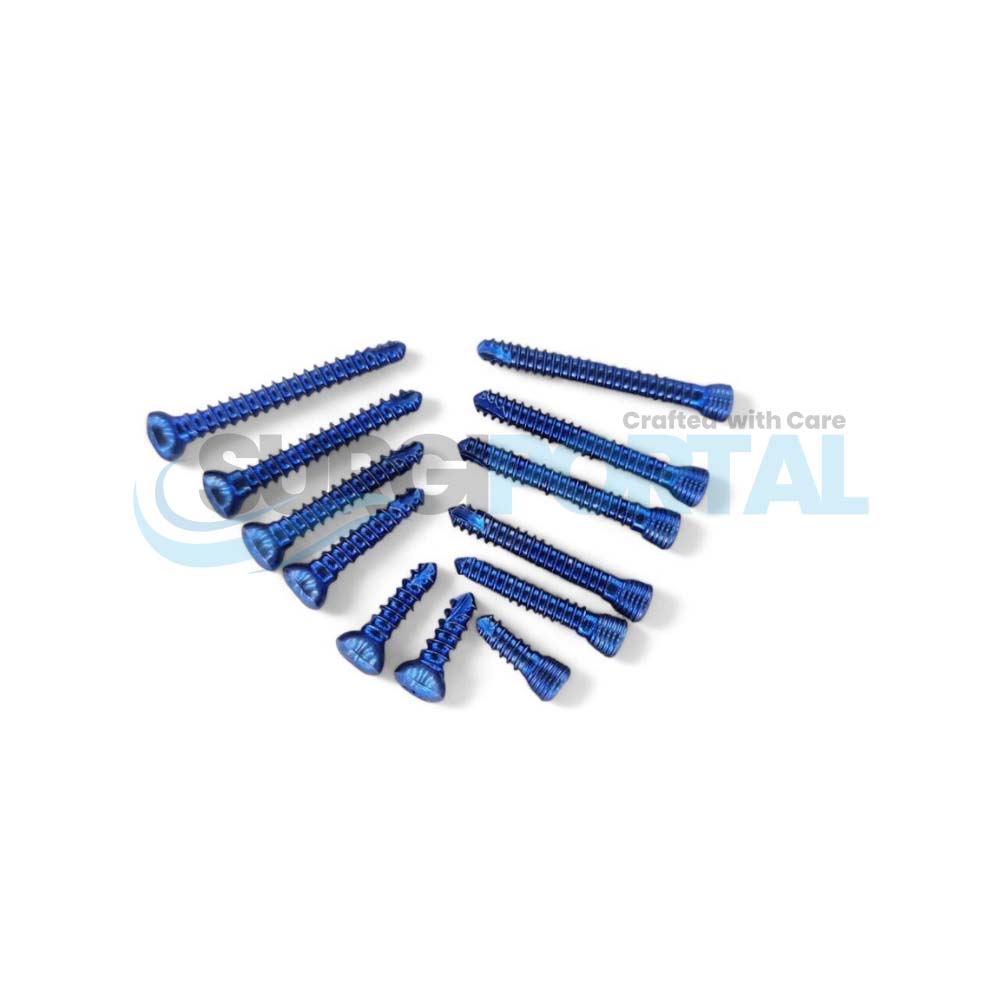
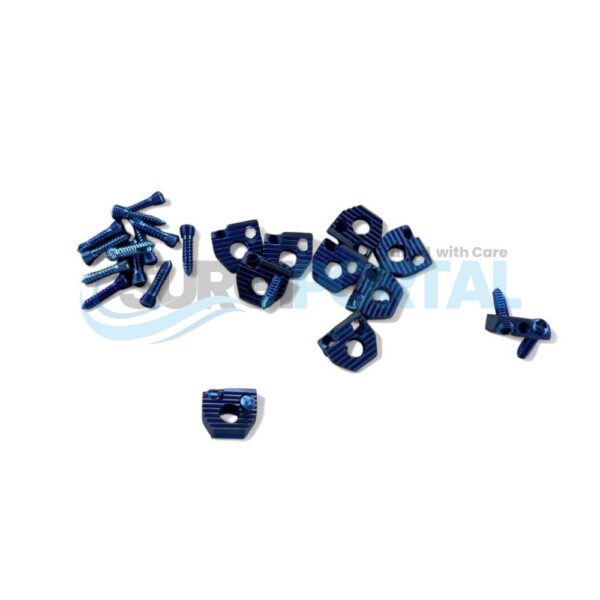
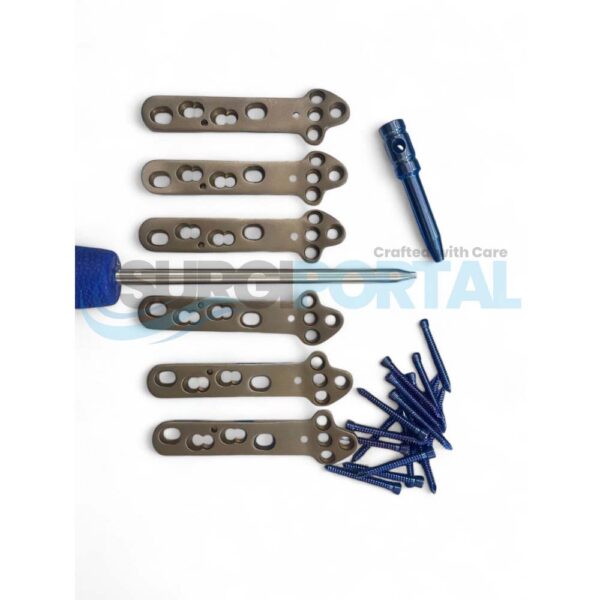
The 2.7mm Locking and Cortical Screws are precision orthopedic implants used in small fragment fracture fixation and reconstructive surgery. These screws are designed for use with 2.7mm plate systems and provide flexibility for both locking and cortical fixation depending on surgical requirements.
The locking screws engage securely into threaded plate holes, forming a fixed-angle construct that enhances stability and reduces the risk of screw loosening. This makes them ideal for osteoporotic bone and complex fracture patterns where rigid fixation is required.
The cortical screws are designed for compression plating techniques, allowing interfragmentary compression when used with dynamic compression plates (DCP). This helps improve fracture healing by maintaining strong bone contact at the fracture site.
Manufactured from premium surgical-grade titanium or stainless steel (depending on configuration), the screws offer excellent biocompatibility, corrosion resistance, and long-term durability. Precision threading ensures smooth insertion and reliable fixation strength.
These screws are widely used in orthopedic trauma surgery, hand and foot surgery, small bone fracture fixation, and veterinary orthopedic procedures in small animals.
The system is fully sterilizable and supplied in organized surgical packaging for safe handling and efficient surgical workflow.
Specifications Table
| Feature |
Details |
| Product Name |
2.7mm Locking and Cortical Screws |
| Application |
Small bone fracture fixation |
| Screw Size |
2.7 mm |
| Screw Types |
Locking & Cortical |
| Material |
Titanium / Stainless steel |
| Usage |
Orthopedic & veterinary surgery |
| Function |
Compression & fixed-angle fixation |
| Compatibility |
2.7mm plate systems |
| Design |
Dual-purpose screw system |
| Sterilization |
Fully sterilizable |
FAQs
Q1: What are 2.7mm screws used for?
They are used for fixation of small bone fractures in hand, foot, and similar areas.
Q2: What is the difference between locking and cortical screws?
Locking screws provide fixed-angle stability, while cortical screws provide compression.
Q3: What bones are they commonly used for?
They are used in radius, ulna, metacarpals, and metatarsals.
Q4: What materials are used?
They are made from surgical-grade titanium or stainless steel.
Q5: Are they used in veterinary surgery?
Yes, they are widely used in small animal orthopedic procedures.