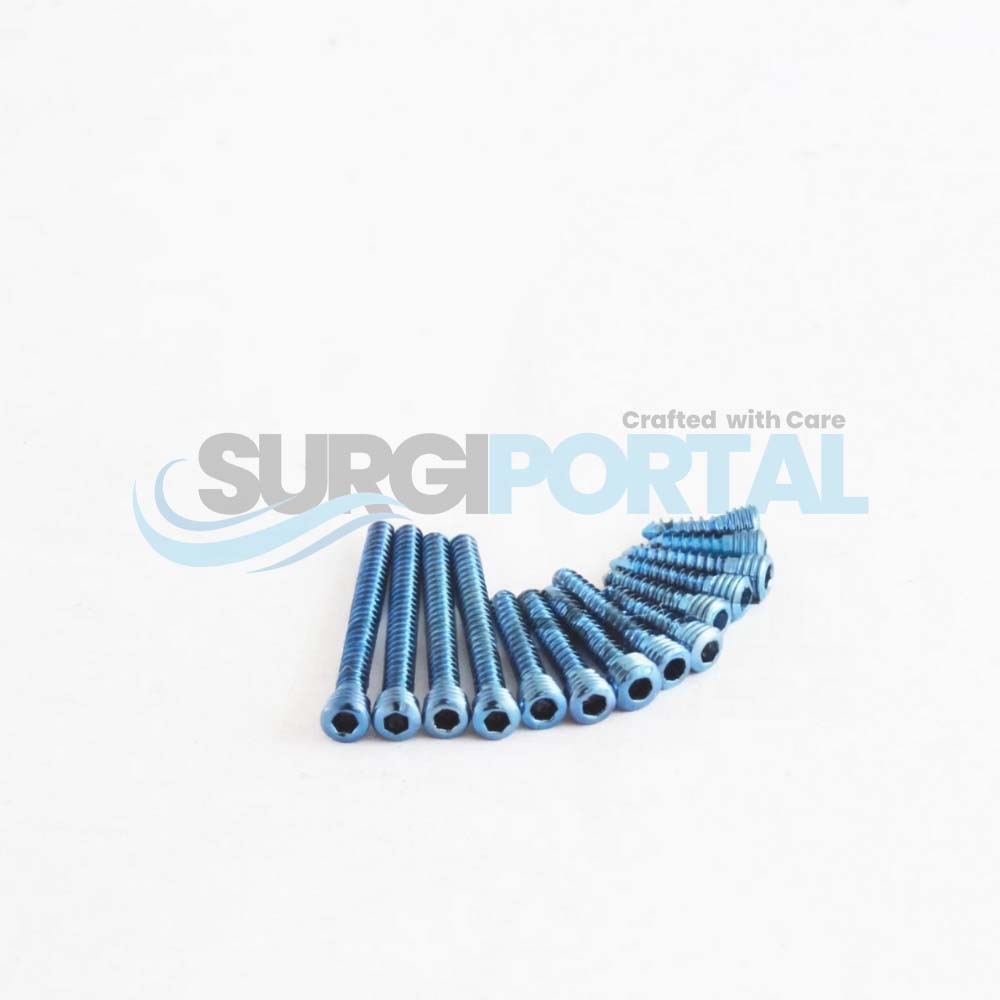
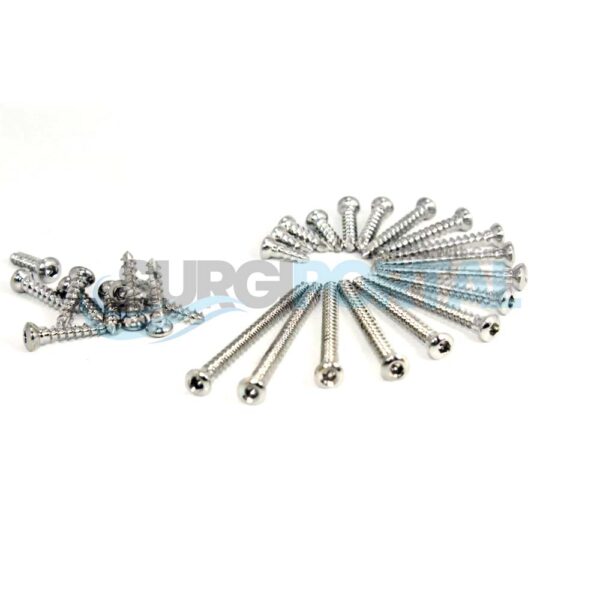
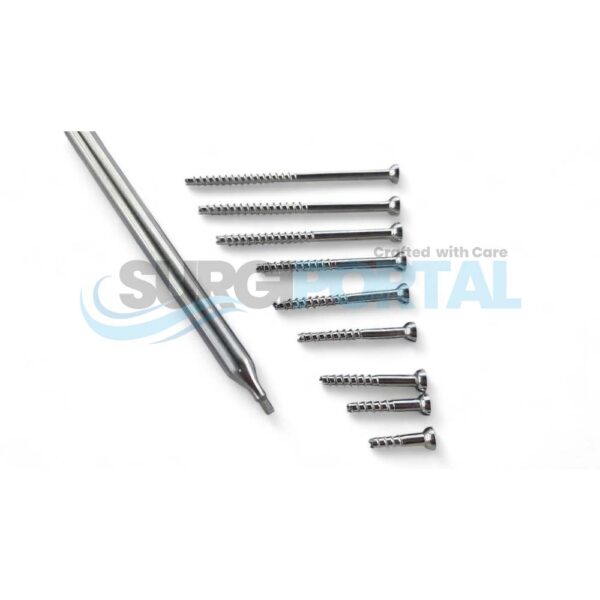
3.5mm LCP Locking Screws are high-strength orthopedic implants designed for secure fixed-angle stabilization in locking compression plate (LCP) systems used in trauma, reconstructive, and veterinary orthopedic surgery.
$300.00Original price was: $300.00.$280.00Current price is: $280.00.
The 3.5mm LCP Locking Screws are precision-engineered orthopedic fixation implants designed for use with locking compression plate systems to provide rigid, stable bone fixation. These screws lock directly into the plate, creating a fixed-angle construct that enhances stability and reduces the risk of loosening in complex fracture cases.
Widely used in orthopedic trauma surgery, reconstructive procedures, and veterinary orthopedic applications, these screws are ideal for stabilizing fractures in medium-sized bones. The locking mechanism ensures that the plate and screw function as a single stable unit, improving mechanical strength and supporting proper bone healing.
Manufactured from premium surgical-grade stainless steel or titanium (depending on configuration), the screws offer excellent biocompatibility, corrosion resistance, and long-term durability. Precision-cut threads ensure smooth insertion and reliable fixation in cortical bone.
The 3.5mm size is commonly used in femur, tibia, humerus, and other long bone fracture fixations. These screws are fully compatible with standard LCP plate systems and are suitable for both human and veterinary surgical use.
The screws are fully sterilizable and supplied in organized implant packaging or sterilization systems for safe handling and efficient surgical workflow.
Specifications Table
Feature
Details
Product Name
3.5mm LCP Locking Screws
Application
Orthopedic fracture fixation
Screw Size
3.5 mm
Screw Type
Locking compression plate screw
Material
Surgical stainless steel / Titanium
Usage
Orthopedic & veterinary surgery
Function
Bone stabilization & angular fixation
Compatibility
LCP plate systems
Design
Precision locking orthopedic implant
Sterilization
Fully sterilizable
FAQs
Q1: What are 3.5mm LCP locking screws used for? They are used for fracture fixation with locking compression plate systems.
Q2: What is the advantage of locking screws? They provide fixed-angle stability and prevent loosening.
Q3: Are these suitable for veterinary surgery? Yes, they are widely used in veterinary orthopedic procedures.
Q4: What materials are they made from? They are made from surgical stainless steel or titanium depending on the model.
Q5: Can they be sterilized? Yes, they are fully sterilizable for surgical use.