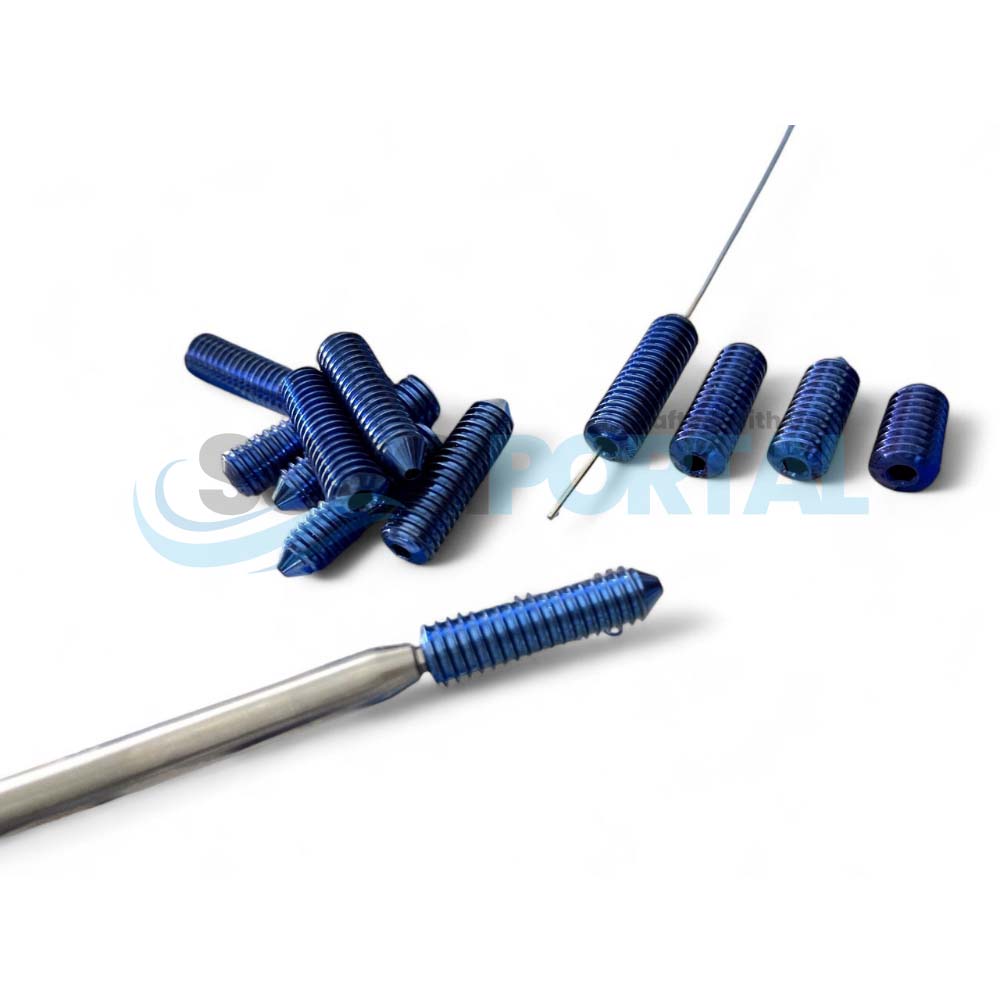
The ACL Interference Screws (10mm diameter, 20–35mm length) are specialized orthopedic implants used in anterior cruciate ligament reconstruction procedures to securely fix grafts within the femoral or tibial bone tunnels. These screws provide strong interference fixation by compressing the graft against the tunnel wall, ensuring stable positioning and promoting effective ligament healing.
The 10mm diameter offers strong fixation for larger grafts and high-load knee stability requirements, while the variable length range of 20mm to 35mm allows surgeons to select the appropriate size based on patient anatomy, tunnel depth, and graft type.
These screws are designed with a tapered, threaded profile to allow smooth insertion and controlled compression, minimizing graft slippage and improving overall stability of the reconstructed ligament.
Manufactured from premium surgical-grade titanium or bioabsorbable materials (depending on configuration), the implants offer excellent biocompatibility, corrosion resistance, and long-term durability or controlled absorption when applicable. Precision engineering ensures reliable fixation in cancellous bone.
ACL interference screws are widely used in sports medicine, orthopedic trauma, and reconstructive knee surgeries in both human and veterinary applications where ligament stabilization is required.
The screws are fully sterilizable and supplied in sterile surgical packaging for safe handling and efficient operating room workflow.
Specifications Table
| Feature |
Details |
| Product Name |
ACL Interference Screws |
| Application |
ACL reconstruction (knee ligament fixation) |
| Diameter |
10 mm |
| Length Range |
20 mm – 35 mm |
| Screw Type |
Interference fixation screw |
| Material |
Titanium / Bioabsorbable (varies by model) |
| Usage |
Orthopedic & sports medicine surgery |
| Function |
Graft fixation & stabilization |
| Design |
Tapered interference screw |
| Sterilization |
Fully sterilizable |
FAQs
Q1: What are ACL interference screws used for?
They are used to fix ligament grafts during ACL reconstruction surgery.
Q2: What does the 10mm diameter mean?
It indicates the screw thickness, suitable for larger graft fixation.
Q3: Why is length range important?
It allows selection based on tunnel depth and surgical requirements.
Q4: What materials are used?
They are made from titanium or bioabsorbable materials depending on the type.
Q5: Are these used in veterinary surgery?
Yes, similar systems are also used in veterinary ligament reconstruction procedures.