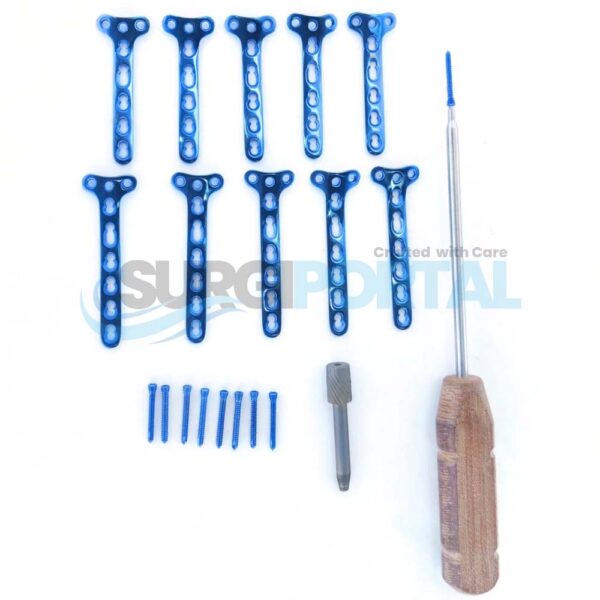
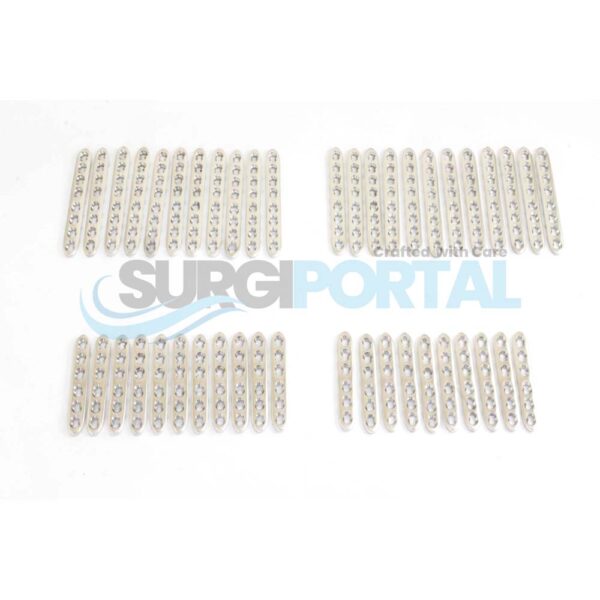
The 3.5mm Dynamic Compression Plate (DCP) Titanium is a precision-engineered orthopedic implant used for stable fixation of fractures in small to medium-sized bones. It is widely used in trauma, reconstructive, and veterinary orthopedic procedures where controlled compression and rigid stabilization are required.
The dynamic compression hole design allows axial compression across the fracture site when cortical screws are inserted, promoting optimal bone contact and enhancing the natural healing process. This compression feature improves stability and reduces healing time compared to standard plating systems.
Manufactured from premium medical-grade titanium, the plate offers excellent biocompatibility, lightweight strength, corrosion resistance, and long-term durability. Titanium construction ensures reduced implant reaction and reliable performance in load-bearing and non-load-bearing applications.
The 3.5mm system is commonly used in hand, foot, clavicle, radius, ulna, and other small bone fracture fixations. It is also widely used in veterinary orthopedic surgeries for small animal fracture management.
The plate is compatible with standard 3.5mm cortical screws and is fully sterilizable for safe surgical use. Precision machining ensures accurate screw placement and consistent surgical performance.
Specifications Table
| Feature |
Details |
| Product Name |
3.5mm Dynamic Compression Plate (DCP) Titanium |
| Application |
Small/medium bone fracture fixation |
| Plate Type |
Dynamic Compression Plate |
| Screw Size |
3.5 mm cortical screws |
| Material |
Medical-grade Titanium |
| Usage |
Orthopedic & veterinary surgery |
| Function |
Bone stabilization & compression fixation |
| Design |
Compression hole system (DCP) |
| Compatibility |
3.5mm cortical screw system |
| Sterilization |
Fully sterilizable |
FAQs
Q1: What is a DCP plate used for?
It is used for fracture fixation with controlled compression at the fracture site.
Q2: What does dynamic compression mean?
It means the plate generates compression when screws are tightened.
Q3: What bones is it commonly used for?
It is used for radius, ulna, clavicle, and other small bones.
Q4: Why is titanium used?
Titanium provides strength, corrosion resistance, and biocompatibility.
Q5: Is it used in veterinary surgery?
Yes, it is commonly used in small animal orthopedic procedures.