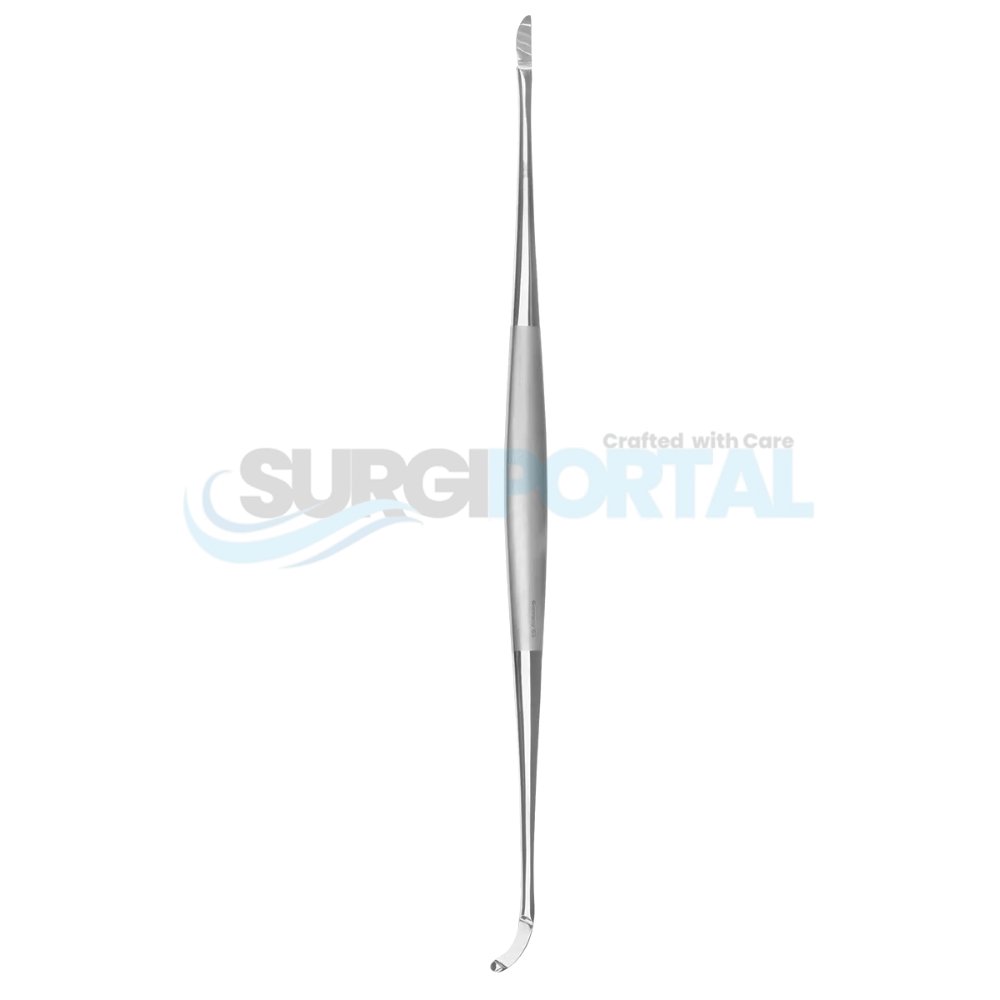
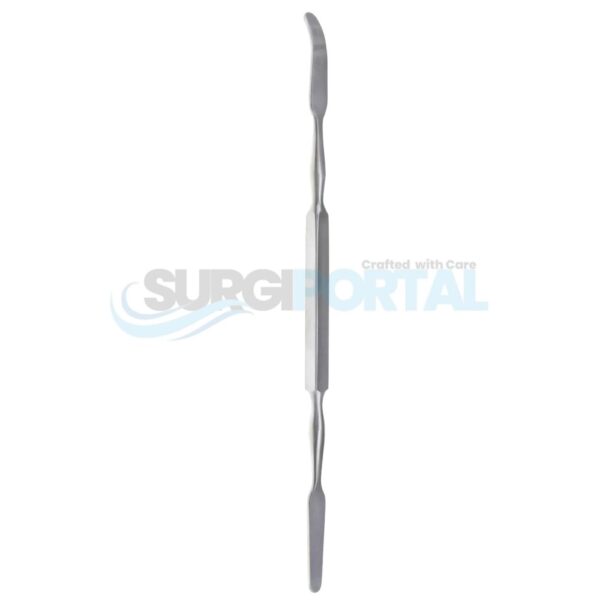
The 8″ Lothrop Tonsil Knife Dissector Double-Ended is a specialized ENT surgical instrument designed for qualified otolaryngology professionals who require controlled tissue dissection and manipulation during appropriate surgical procedures. With an overall length of approximately 8 inches and a double-ended configuration, the instrument combines two functional working ends into a single surgical tool.
The tonsil knife and dissector design is intended to support precise tissue separation and controlled manipulation within the operative field. Its double-ended construction can provide convenient access to different working profiles without requiring immediate instrument exchange, helping maintain an efficient surgical workflow.
The elongated 8-inch design provides useful reach while allowing the surgeon to maintain controlled manual positioning. The working ends are designed for deliberate tissue contact and manipulation, making the instrument suitable for appropriate tonsil-related and other ENT procedures where a dedicated knife/dissector is indicated.
The Lothrop tonsil knife dissector is designed with surgical handling in mind, providing a practical combination of reach, working-end versatility, and manual control. Its double-ended configuration can be particularly useful when different tissue manipulation requirements arise during the same procedure.
As a reusable surgical instrument, the 8″ Lothrop Tonsil Knife Dissector Double-Ended should be inspected before and after use to verify the condition, cleanliness, alignment, and integrity of its working ends. Proper cleaning, disinfection, sterilization, and maintenance should be performed according to the manufacturer’s instructions for use (IFU) and the healthcare facility’s validated reprocessing protocol.
This instrument is intended for use by trained and qualified healthcare professionals familiar with ENT surgical techniques and appropriate instrument handling.
Key Features
- Lothrop tonsil knife dissector design
- Approximately 8-inch overall length
- Double-ended configuration
- Two working profiles in one instrument
- Designed for controlled tissue dissection
- Suitable for tissue manipulation and separation
- Useful for appropriate tonsil-related procedures
- Designed for ENT and otolaryngology applications
- Provides extended surgical reach
- Manual operation and control
- Reusable surgical instrument
- Suitable for validated cleaning and reprocessing protocols
Product Specifications
| Specification |
Details |
| Product Name |
8″ Lothrop Tonsil Knife Dissector Double-Ended |
| Instrument Type |
ENT Tonsil Knife & Dissector |
| Design |
Lothrop |
| Overall Length |
8″ |
| Configuration |
Double-Ended |
| Function |
Tissue Dissection & Manipulation |
| Operation |
Manual |
| Application |
ENT & Otolaryngology |
| Common Use |
Tonsil-Related Surgical Procedures |
| Primary Function |
Controlled Tissue Dissection |
| Reusable |
Yes |
| Intended Users |
Qualified Healthcare Professionals |
| Sterilization |
Follow Manufacturer’s IFU and Validated Facility Protocol |
FAQs
What is an 8″ Lothrop Tonsil Knife Dissector used for?
It is designed for controlled tissue dissection and manipulation during appropriate ENT and tonsil-related surgical procedures.
What does double-ended mean?
The double-ended design incorporates two working profiles into one instrument, providing versatility for different tissue manipulation requirements.
Why is the instrument 8 inches long?
The approximately 8-inch length provides extended reach and allows controlled manual positioning during appropriate ENT procedures.
Is this instrument suitable for tonsil surgery?
It is designed for appropriate tonsil-related and ENT surgical applications where a tonsil knife or dissector is indicated.
Is the Lothrop Tonsil Knife Dissector reusable?
Yes. It is designed as a reusable surgical instrument when properly cleaned, inspected, maintained, and reprocessed according to applicable instructions.
Who should use this tonsil knife dissector?
It should be used by qualified ENT surgeons and trained healthcare professionals familiar with appropriate surgical techniques.
How should it be sterilized?
Cleaning, disinfection, sterilization, and maintenance should follow the manufacturer’s IFU and the healthcare facility’s validated reprocessing protocol.