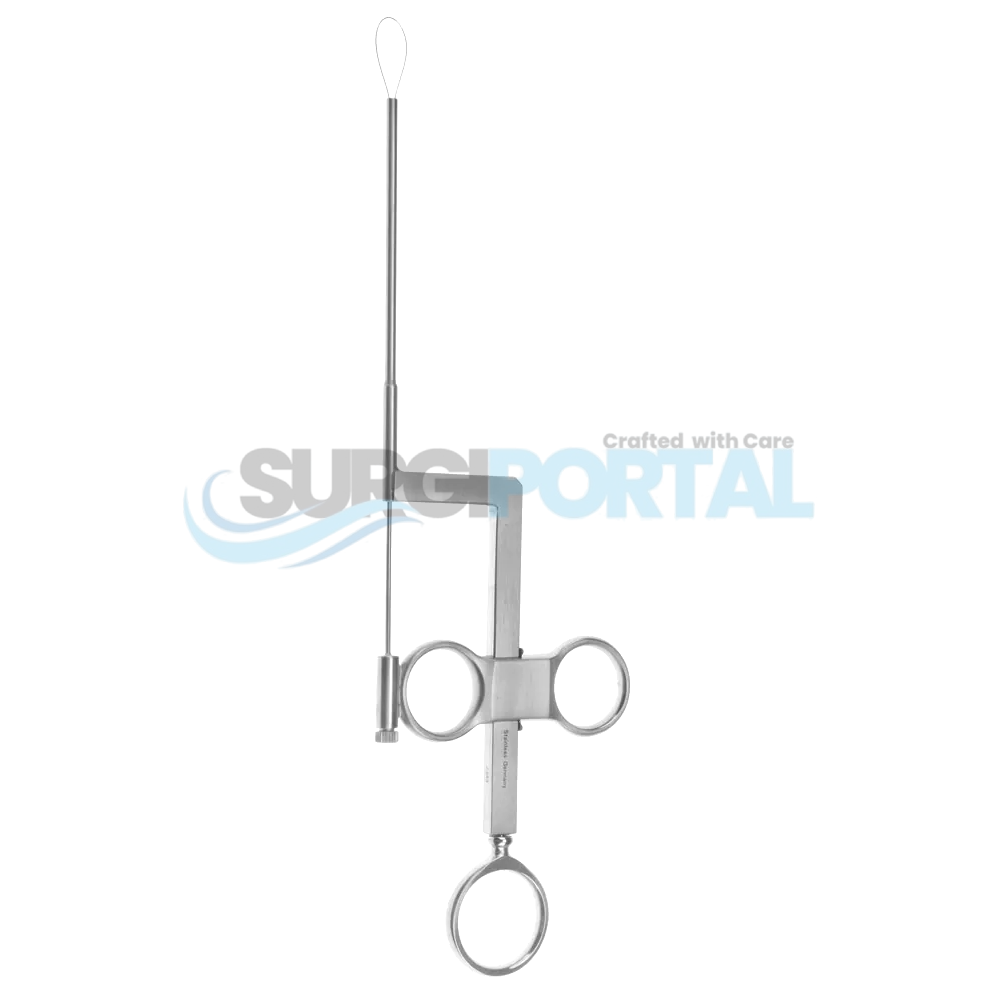
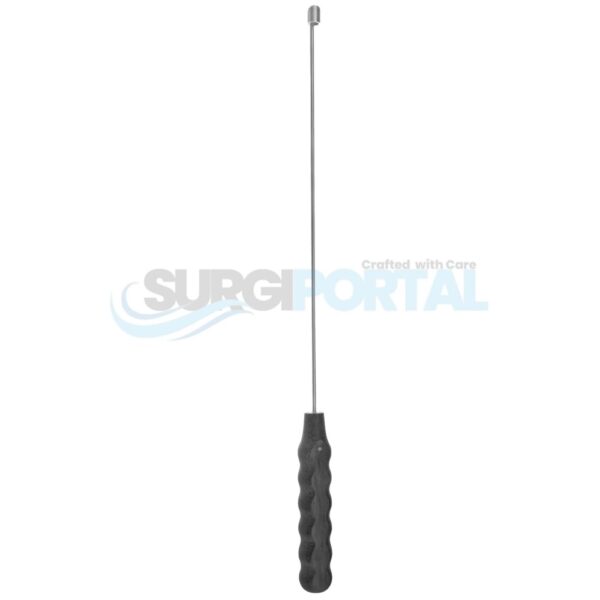
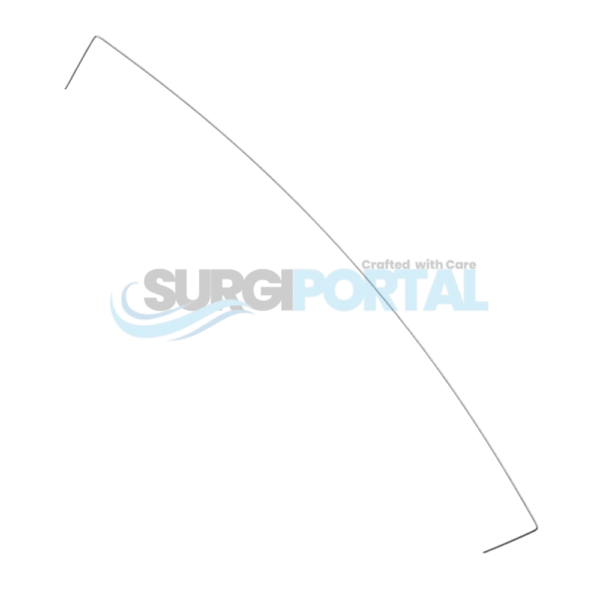
The Bruening Nasal Snare 9.875″ Bay is a specialized surgical instrument designed for controlled tissue capture and removal during ENT, nasal, and rhinology procedures. Its extended 9.875-inch length provides the reach needed for working within deeper or confined areas of the nasal cavity while keeping the handle outside the immediate operative field.
A nasal snare is designed to encircle targeted tissue using a controlled loop mechanism. Once positioned around the intended tissue, the snare can be progressively tightened to engage the tissue for removal according to the surgical technique being performed. This controlled approach makes nasal snares useful in procedures where accurate tissue capture and deliberate manipulation are required.
The Bruening design is particularly suited to nasal surgical applications where access and instrument positioning are important. The elongated profile allows the working end to reach areas that may be difficult to access with shorter instruments. The 9.875-inch length also provides a comfortable distance between the operative site and the surgeon’s hand, supporting controlled handling during delicate procedures.
The Bay configuration provides a specialized working profile intended for nasal access. Its geometry can assist with positioning the snare around the target tissue while maintaining appropriate visualization and instrument control. As with all specialized ENT instrumentation, the exact technique and application should be determined by the trained healthcare professional according to the procedure being performed.
The snare mechanism is intended to provide controlled movement of the working loop. Smooth operation is important for predictable tissue engagement, while proper alignment of the working components helps support consistent performance. The instrument should be inspected before use to ensure that the mechanism operates correctly and that the working end is free from deformation or damage.
The Bruening Nasal Snare can be incorporated into ENT and rhinology instrument sets for procedures involving the nasal cavity and related structures. Its extended shaft and specialized nasal working profile make it a practical option where controlled tissue capture is required.
When supplied as a reusable surgical instrument, it is commonly manufactured from surgical-grade stainless steel or another suitable medical-instrument material selected for strength, corrosion resistance, and repeated clinical processing. Exact material specifications may vary by manufacturer and should be confirmed from the supplied product documentation.
After use, the instrument should be thoroughly cleaned according to the manufacturer’s validated instructions. Particular attention should be given to the snare mechanism, working end, and any areas where biological material may accumulate. Proper cleaning before sterilization helps maintain the function and service life of reusable surgical instruments.
Reusable versions should be sterilized using an appropriate validated method in accordance with manufacturer instructions and the healthcare facility’s infection-control protocol. Regular inspection for corrosion, deformation, loose components, or impaired movement is recommended before each clinical use.
The Bruening Nasal Snare 9.875″ Bay combines extended reach, specialized nasal access, and controlled snare operation in a professional ENT surgical instrument. It is a useful choice for healthcare professionals seeking a dependable instrument for controlled tissue capture during nasal and rhinologic procedures.
Key Features
- Bruening nasal snare design
- 9.875-inch extended length
- Specialized Bay working configuration
- Designed for nasal surgical procedures
- Controlled tissue capture and removal
- Extended reach for deeper nasal access
- Suitable for ENT and rhinology applications
- Designed for precise snare positioning
- Controlled mechanical loop operation
- Suitable for professional surgical environments
- Durable construction for repeated clinical use
- Reusable versions support validated cleaning and sterilization procedures
Product Specifications
| Specification |
Details |
| Product Name |
Bruening Nasal Snare |
| Instrument Type |
Nasal Snare |
| Length |
9.875 inches |
| Configuration |
Bay |
| Working End |
Nasal Snare Loop |
| Primary Function |
Tissue Capture and Removal |
| Applications |
ENT, Nasal Surgery, Rhinology |
| Shaft |
Extended |
| Construction |
Surgical Instrument Material |
| Reusable |
Yes, when supplied as a reusable instrument |
| Sterilization |
Follow validated manufacturer/facility protocol |
FAQs
1. What is the Bruening Nasal Snare used for?
The Bruening Nasal Snare is designed for controlled capture and removal of targeted tissue during ENT, nasal, and rhinology procedures.
2. What is the length of this nasal snare?
This model has an extended length of 9.875 inches, providing useful reach for nasal surgical applications.
3. What does “Bay” refer to in this instrument?
“Bay” identifies the specific working configuration of the Bruening nasal snare and its associated working profile.
4. Is the Bruening Nasal Snare suitable for rhinology?
Yes. Its extended design and nasal working configuration make it suitable for specialized rhinology and ENT applications requiring controlled tissue capture.
5. What are the benefits of an extended nasal snare?
The extended length provides additional reach and can help the operator access deeper or less accessible areas of the nasal cavity while maintaining control from the handle.
6. Can this nasal snare be sterilized?
Reusable versions should be cleaned and sterilized according to the manufacturer’s validated instructions and the healthcare facility’s approved sterilization protocol.
7. How should the snare mechanism be maintained?
The working mechanism should be thoroughly cleaned after use and inspected for smooth operation, deformation, corrosion, or other signs of damage before reuse.
8. Is this instrument reusable?
When supplied as a reusable surgical instrument, it can be reprocessed according to the manufacturer’s validated cleaning, inspection, and sterilization instructions.