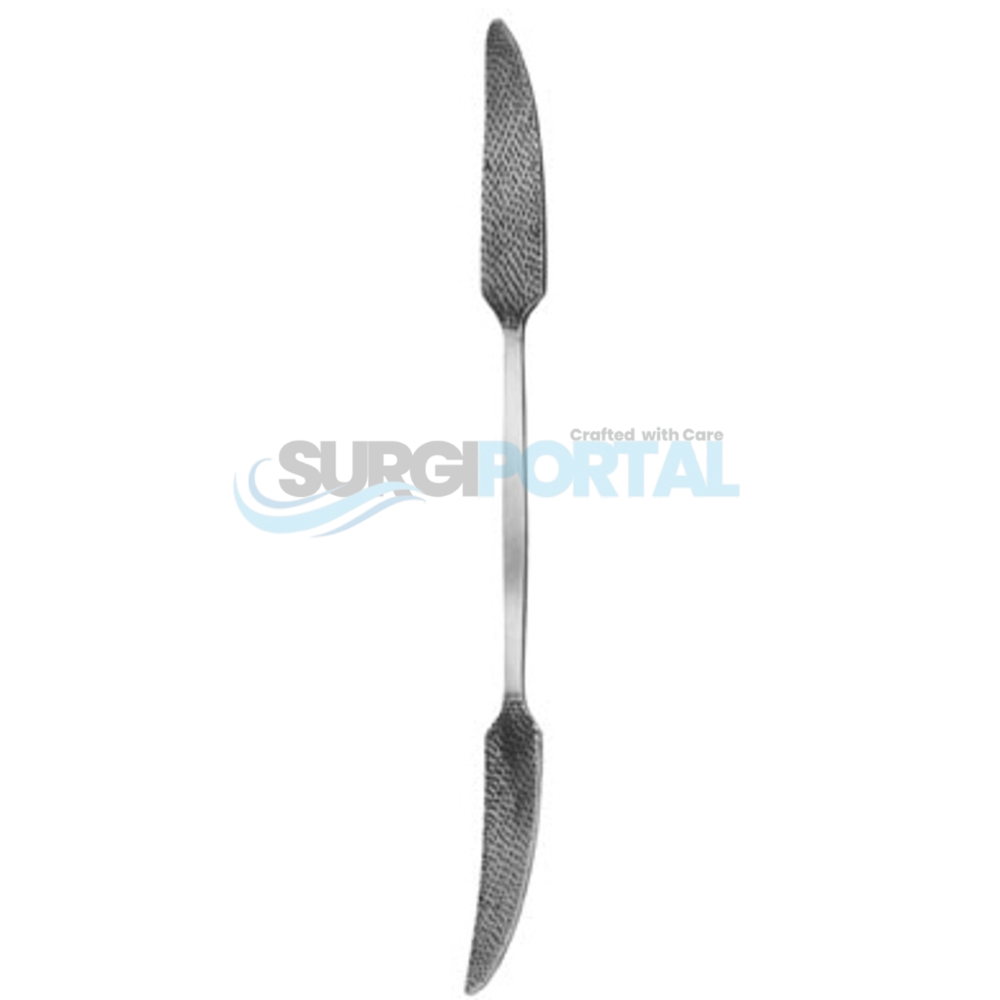
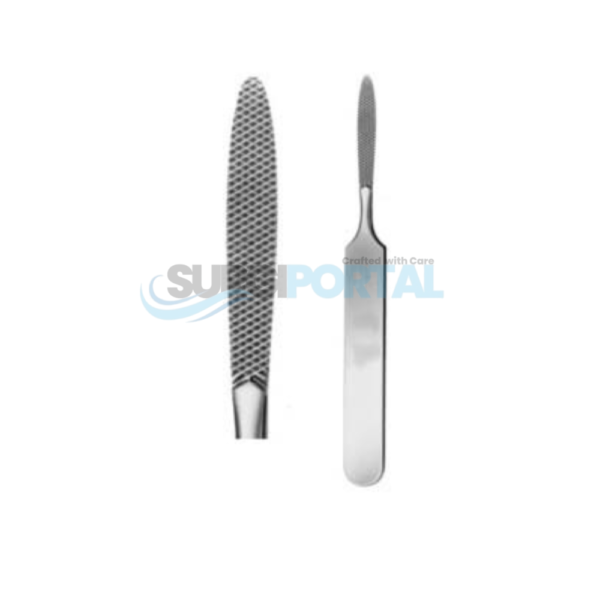
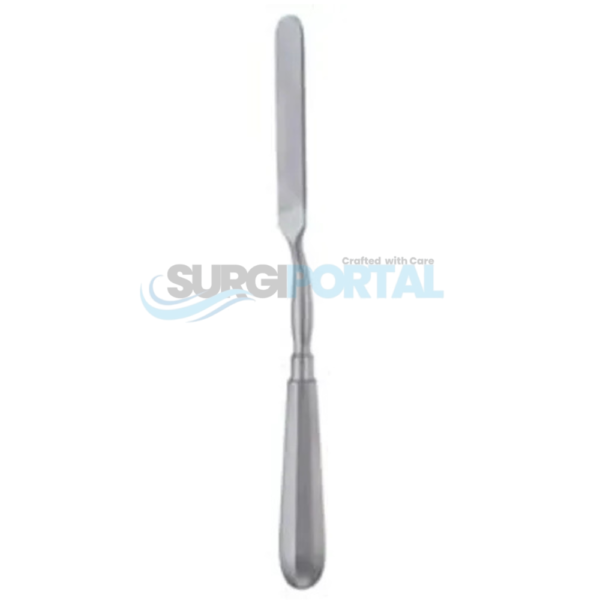
Tapered Bone Rasp is a specialized orthopedic surgical instrument used for accurate bone contouring, smoothing, and finishing during a variety of surgical procedures. Its tapered working end allows surgeons to access narrow or deep anatomical areas while maintaining controlled abrasion of bone surfaces. This makes it an essential tool in orthopedic, trauma, reconstructive, and maxillofacial surgeries where precision bone refinement is required.
Constructed from high-quality surgical-grade stainless steel, the Tapered Bone Rasp offers excellent resistance to corrosion, wear, and repeated sterilization cycles. The robust material ensures long-lasting durability and consistent performance in demanding surgical environments. Its strong yet finely crafted structure allows surgeons to perform precise bone shaping without compromising instrument integrity.
The key feature of the Tapered Bone Rasp is its gradually narrowing working surface, which provides enhanced access to confined surgical sites. This tapered design enables controlled removal of bone irregularities while minimizing damage to surrounding tissues. It is particularly effective in areas where standard rasps cannot easily reach, allowing for smooth and accurate bone finishing.
This instrument is widely used in orthopedic procedures such as fracture repair, bone reconstruction, and corrective surgeries. After bone cutting or fixation, the Tapered Bone Rasp is used to smooth sharp edges and refine bone surfaces to promote proper healing and reduce post-surgical complications. It is also frequently used in maxillofacial and dental surgical procedures where precise bone contouring is essential for functional and aesthetic outcomes.
The ergonomically designed handle provides a secure and comfortable grip, ensuring maximum control during delicate surgical procedures. Its balanced weight distribution reduces hand fatigue and enhances maneuverability, allowing surgeons to perform extended procedures with precision and stability. This ergonomic advantage is critical in complex surgeries requiring fine bone adjustments.
The Tapered Bone Rasp is compatible with standard sterilization methods, including steam autoclaving. Its surgical-grade stainless-steel construction ensures it maintains structural integrity, sharpness, and performance even after repeated sterilization cycles. This makes it fully compliant with strict infection control standards in operating rooms and surgical facilities.
Durability, precision, and efficiency make the Tapered Bone Rasp a valuable instrument in orthopedic surgical sets. Its reusable design ensures long-term cost-effectiveness while maintaining consistent performance across multiple procedures. Proper cleaning, inspection, and maintenance further extend its service life and reliability.
Surgeons prefer the Tapered Bone Rasp for its ability to provide controlled bone shaping in restricted and delicate areas. Its tapered structure enhances versatility, making it suitable for both routine and complex reconstructive procedures.
Designed to meet the high standards of modern surgical practice, the Tapered Bone Rasp delivers dependable performance, precision bone contouring, and long-lasting durability, making it an essential instrument in orthopedic and reconstructive surgery.
Key Features
- Tapered design for access to narrow surgical areas
- Ideal for controlled bone shaping and smoothing
- Manufactured from premium surgical-grade stainless steel
- High resistance to corrosion and repeated sterilization
- Suitable for orthopedic, trauma, and reconstructive surgeries
- Provides precise bone contouring and finishing
- Ergonomic handle ensures secure grip and control
- Balanced construction reduces surgeon fatigue
- Enables access to deep or confined bone surfaces
- Reusable and cost-effective surgical instrument
- Fully autoclavable for infection control compliance
- Durable design for long-term clinical use
Product Specifications
| Specification |
Details |
| Product Type |
Tapered Bone Rasp |
| Application |
Bone Shaping and Contouring |
| Material |
Surgical Grade Stainless Steel |
| Finish |
Satin / Matte Finish |
| Sterilization |
Autoclavable |
| Reusability |
Reusable |
| Specialty |
Orthopedic Surgery, Reconstructive Surgery |
| Instrument Type |
Bone Rasp |
| Usage |
Professional Surgical Use |
| Product Contents |
1 × Tapered Bone Rasp |
Product Contents
- 1 × Tapered Bone Rasp
- Individually inspected for quality assurance
- Supplied non-sterile and ready for sterilization before surgical use
Applications
Tapered Bone Rasp is commonly used in the following procedures:
- Orthopedic fracture repair surgeries
- Bone contouring after osteotomy
- Reconstructive bone surgery
- Maxillofacial surgical procedures
- Trauma surgery bone finishing
- Correction of irregular bone surfaces
- Bone graft preparation and refinement
- Surgical smoothing of confined bone areas
Frequently Asked Questions (FAQs)
1. What is a Tapered Bone Rasp used for?
A Tapered Bone Rasp is used for shaping, smoothing, and contouring bone surfaces, especially in narrow or deep surgical areas.
2. What is the advantage of the tapered design?
The tapered design allows access to confined anatomical regions where standard bone rasps cannot easily reach, enabling precise bone finishing.
3. Is the Tapered Bone Rasp reusable?
Yes. It is designed for repeated professional use when properly cleaned and sterilized according to surgical protocols.
4. Can the Tapered Bone Rasp be autoclaved?
Yes. It is fully compatible with standard steam autoclave sterilization methods used in hospitals and surgical centers.
5. What material is used to manufacture the Tapered Bone Rasp?
It is made from high-quality surgical-grade stainless steel for durability, corrosion resistance, and reliable performance.
6. Which surgical specialties use this instrument?
Orthopedic surgeons, trauma specialists, and maxillofacial surgeons commonly use Tapered Bone Rasps in surgical procedures.
7. How should a Tapered Bone Rasp be maintained?
The instrument should be thoroughly cleaned after each use, inspected for wear, and sterilized according to approved surgical instrument reprocessing guidelines to ensure optimal performance and longevity.